Pants and joggers are essential across fashion, athleisure, and workwear. Choosing the right custom pant manufacturer requires more than a low unit price—it demands expertise in fabrics, fits, stitching, and quality control that can scale with your business.
Why Pant Manufacturing Requires Specialists
Pants face more durability challenges than tops: higher abrasion zones, frequent wash cycles, and functional trims like zippers and drawstrings. A general apparel factory may not handle seam reinforcement or fit consistency across sizes. A specialized pant factory ensures consistent construction, fit reliability, and compliance with industry standards.
The Six-Factor Matrix for Choosing a Pant Factory
Buyers should evaluate factories against six essential factors to balance cost, quality, and scalability.
MOQ & Pricing
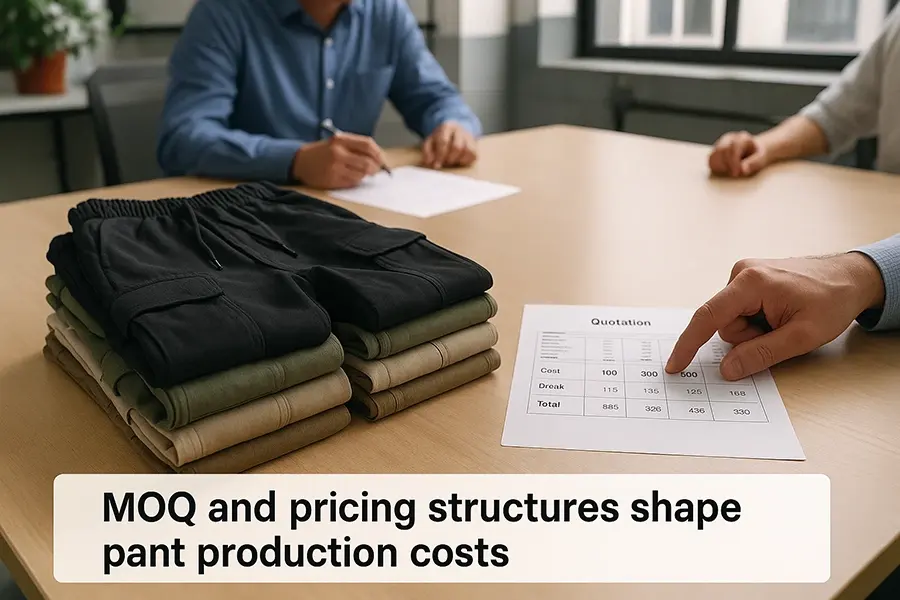
Pant MOQs typically start at 100–200 pcs, with price breaks at 300–500 pcs. Ask whether styles (e.g., joggers and cargos) can be combined under one MOQ. Startups should clarify if factories support lower pilot runs.
Fabric Choices & GSM
Fabric determines comfort and positioning:
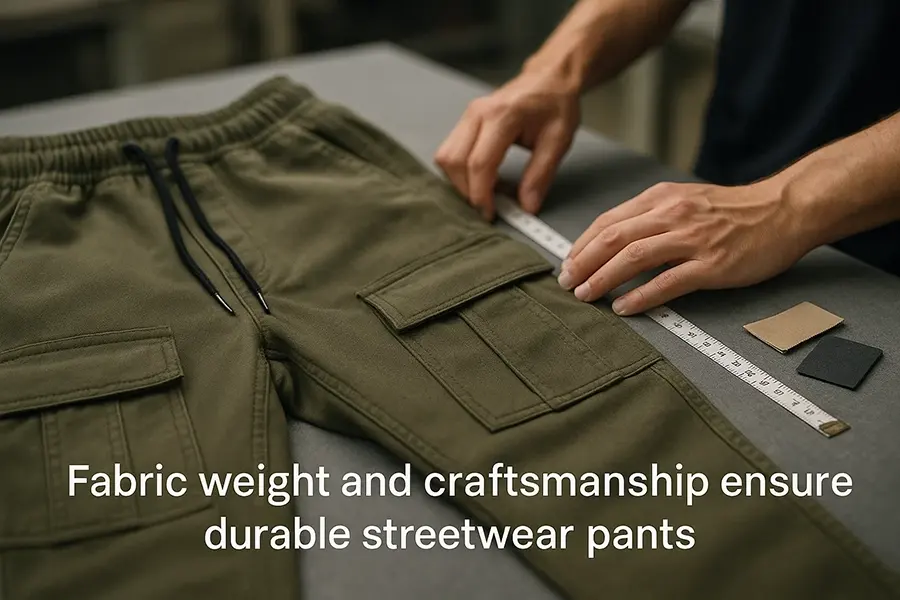
- Cotton fleece (280–350gsm): ideal for joggers and athleisure.
- Twill or denim: durable and structured.
- Polyester blends: wrinkle-resistant, cost-effective.
- Stretch fabrics: suitable for sportswear and work uniforms.
Always request shrinkage, abrasion, and pilling tests. To maintain consistency across collections, align sourcing with custom pants for better cohesion in design and fabric quality.
Fit, Construction & Custom Options
- Stitching: reinforced seams, double-needle construction, SPI consistency.
- Waistbands: elastic, drawstrings, or tailored finishes.
- Zippers and pockets: durability and placement impact usability.
- Custom options: panels, taping, or embroidery for branding.
Some buyers coordinate pants with custom tracksuits to build cohesive full-set offerings in streetwear or activewear lines.
Lead Times & Scalability
Standard timelines:
- Samples: 7–10 days
- PPS: 10–14 days
- Bulk: 30–40 days
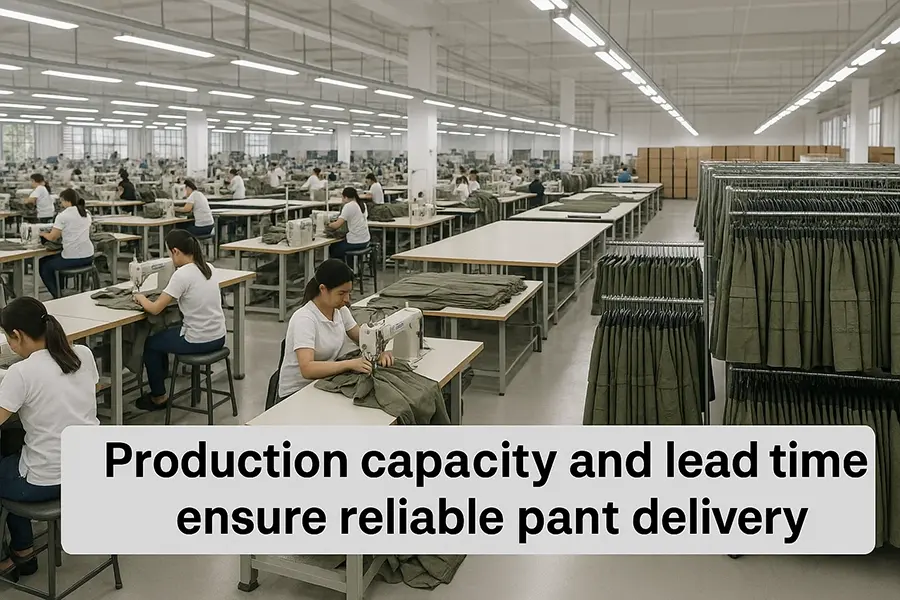
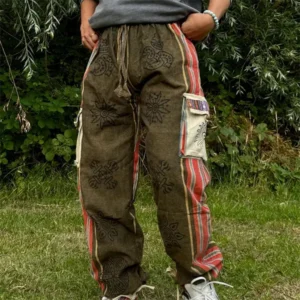
Complex pants (e.g., multi-pocket cargos) may extend production. Ensure the factory can scale across SKUs without compromising fit consistency.
QC Standards (Shrinkage, Seams, Durability)
QC must test for:
- Shrinkage ≤5%
- Seam strength and SPI density
- Abrasion resistance for knees and seat areas
- Colorfastness after multiple washes
Set AQL thresholds (Major 2.5, Minor 4.0) and conduct inline inspections.
Compliance & Certifications
Factories supplying workwear or retail buyers should hold ISO9001 or BSCI. OEKO-TEX-certified fabrics prove safe for consumers.
From Sampling to Bulk: A Buyer’s Timeline
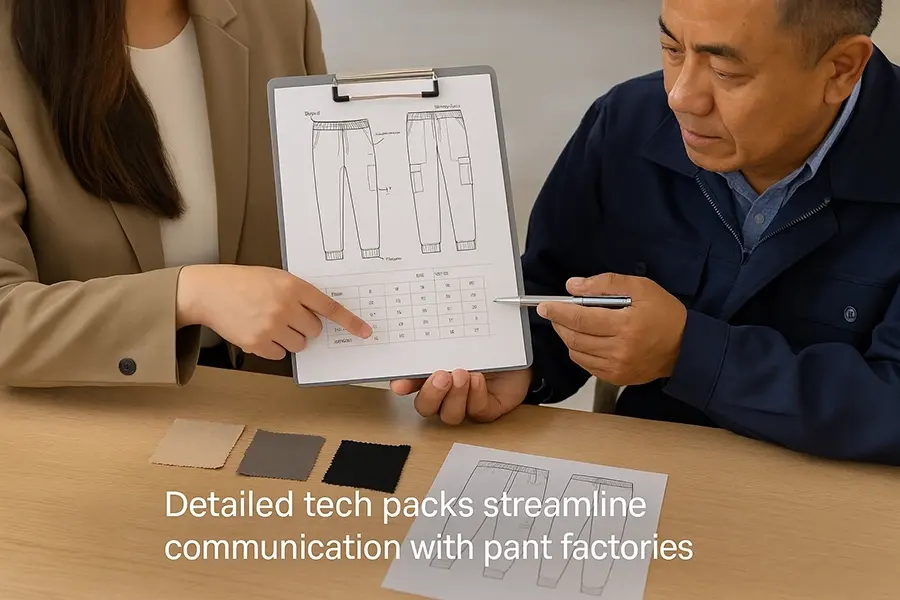
- Week 0–1: Tech pack, BOM, fabric sourcing
- Week 1–2: Sample development
- Week 3: Fit testing and shrinkage reports
- Week 4: PPS approval
- Week 5–8: Bulk production with inline QC
- Week 9+: Final inspection and shipment
Common Pitfalls in Pant Production
- Ignoring seam durability leads to early failures
- Not testing shrinkage across fabric batches
- Selecting trims (zippers, drawstrings) that don’t withstand repeated use
- Overlooking fit consistency across sizes
Scenario Playbook: Startup vs Scaling Brand
Startup: Choose simple jogger or sweatpant designs, low MOQ (100–200 pcs), and stable fabrics like cotton fleece or twill. Limit SKUs to validate fit and demand.
Scaling brand: Expand into cargos, technical fabrics, and premium trims. Secure fabrics in bulk and standardise fit grading across SKUs.
Working with the right pant supplier ensures durability, comfort, and scalability. Explore Mingxing Clothing for end-to-end pant and jogger manufacturing solutions.
Looking to launch or scale your pant line? Contact us today to request samples, compare MOQ tiers, and align production with your brand’s goals.
FAQs