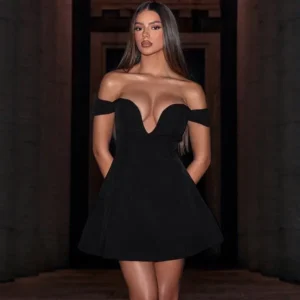
Dresses remain a cornerstone of women’s fashion, covering everything from everyday casual wear to high-end evening gowns. Choosing the right custom dress manufacturer is about securing expertise in fabrics, drape, fit, and finishing details that define garment quality.
Why Dress Manufacturing Requires Specialists
Unlike simpler garments, dresses demand advanced patternmaking and construction skills. Elements like pleats, zippers, lining, and drape control require technical precision. General factories may fail to maintain fit consistency across sizes or achieve high-end finishing. A specialized dress manufacturer ensures stable sourcing, reliable fit, and fine workmanship.
The Six-Factor Matrix for Choosing a Dress Factory
Evaluating a factory through these six factors helps balance cost, quality, and long-term scalability.
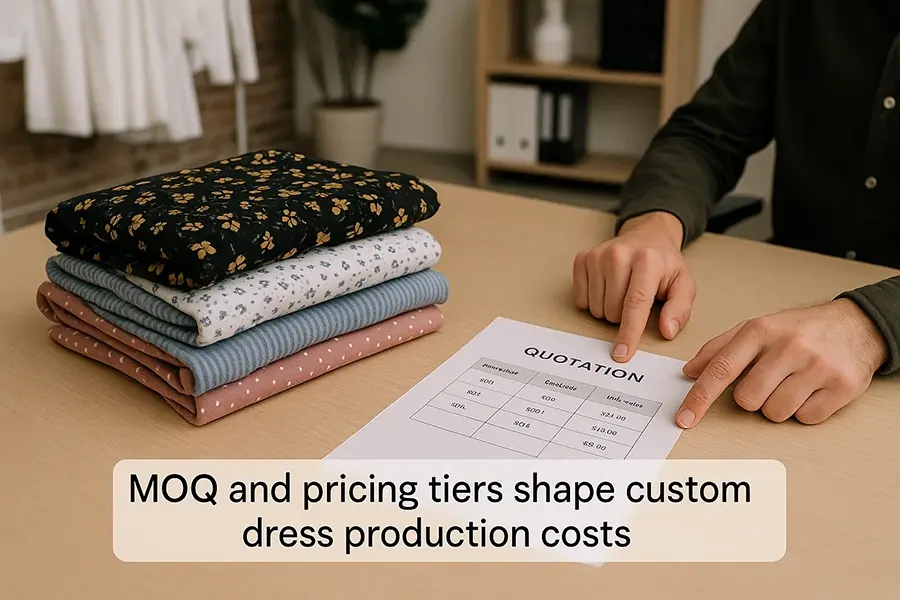
MOQ & Pricing
Most factories start at 100–200 pcs per style. Price breaks occur at 300–500 pcs. Confirm whether variations in length or sleeve design can share a combined MOQ.
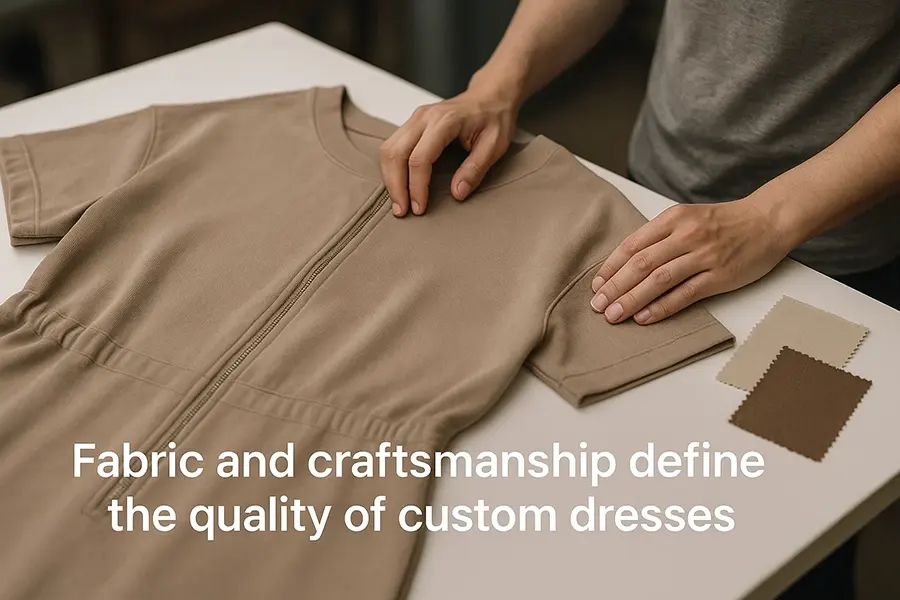
Fabric Choices & Drape
Fabric defines drape and positioning:
- Cotton: breathable, cost-effective, casual appeal.
- Chiffon: lightweight, requires lining, ideal for summer/wedding dresses.
- Knits: comfortable and stretch-friendly.
- Silk & satin: luxury appeal, delicate handling required.
Always request shrinkage and colourfastness tests. To maintain collection cohesion, align sourcing with custom dresses to ensure fabric and drape consistency.
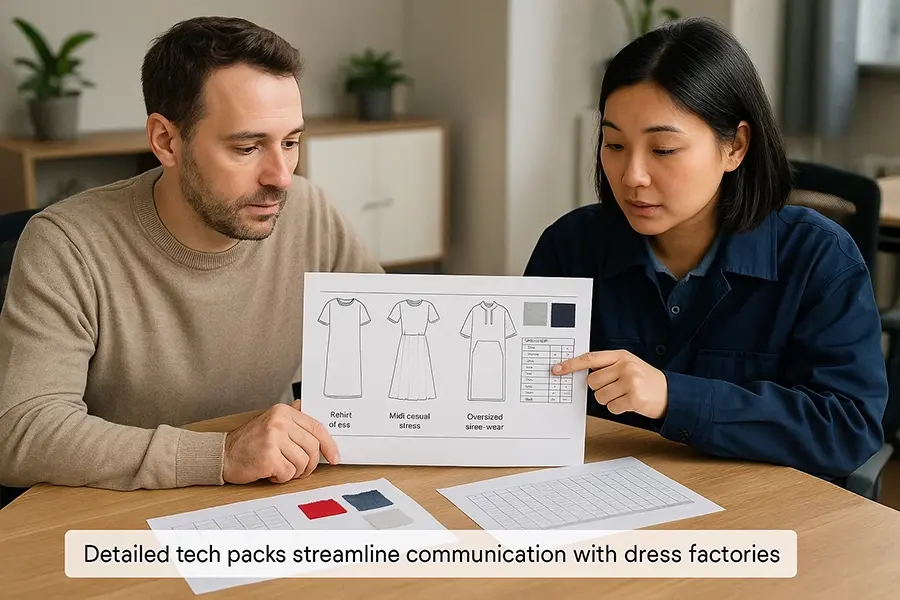
Fit, Patternmaking & Custom Options
- Pattern grading is critical for multi-size runs.
- Construction details: pleats, darts, and waist shaping determine the final silhouette.
- Closures: zippers, buttons, or ties must balance durability and aesthetics.
- Lining: ensures comfort and opacity for light fabrics.
Some brands integrate dresses with custom t-shirts for seasonal capsule collections, ensuring versatility across product lines.
Lead Times & Scalability
Standard timelines:
- Samples: 7–12 days
- PPS: 10–14 days
- Bulk: 30–45 days
Complex dresses with lining or embroidery may extend production. Ensure the factory can scale for seasonal launches.
QC Standards (Shrinkage, Colorfastness, Stitching)
QC for dresses must include:
- Shrinkage ≤5%
- Colorfastness ≥3–4 grade
- Stitching consistency (SPI) and seam strength
- Zipper and trim durability
Conduct inline inspections to confirm silhouette and fit remain consistent across batches.
Compliance & Certifications
ISO9001 and BSCI audits prove process consistency, while OEKO-TEX or GRS fabrics validate sustainability and safety.
From Sampling to Bulk: A Buyer’s Timeline
- Week 0–1: Design, tech pack, fabric sourcing
- Week 1–2: Sample development and fit testing
- Week 3: PPS approval
- Week 4–6: Bulk production with inline QC
- Week 6+: Final inspection and shipment
Common Pitfalls in Dress Production
- Ignoring fit consistency across size grading
- Using delicate fabrics without adequate lining
- Underestimating longer timelines for luxury materials
- Skipping QC on trims (zippers, buttons)
Scenario Playbook: Startup vs Scaling Brand
Startup: Begin with cotton or chiffon dresses, low MOQ (100–200 pcs), and simplified trims. Limit styles to test demand.
Scaling brand: Expand into silk, satin, and embroidered dresses, secure fabric in bulk, and build fit libraries for multi-style launches.
The right dress supplier ensures precision, quality, and scalability. Explore Mingxing Clothing for end-to-end dress manufacturing support.
Looking to start your next dress collection? Contact us today to request samples, compare MOQ tiers, and align production with your market strategy.
FAQs