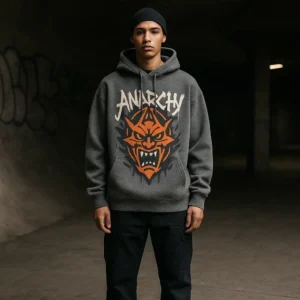
Hoodies are the workhorse of modern apparel—equally at home in streetwear capsules, corporate merch, team uniforms, and DTC staples. Picking the right custom hoodie manufacturer is less about “finding a name” and more about securing a specialist who can prove consistency across fabric, construction, decoration, and timing.
Why Hoodie Manufacturing Requires Specialists
Hoodies may look simple, but they require precision in GSM control (240–400gsm), fleece vs. French terry selection, oversized or drop-shoulder patterns, and wash-resistant decoration techniques like puff prints or embroidery. General factories often miss key details, while specialists maintain fabric libraries, sampling systems, and structured QC to minimise costly errors.
In bulk orders, “invisible details” drive repeat sales: balanced hood seams, durable drawstring holes, ribbing elasticity, smooth brushed fleece, and stitch density (SPI). These require hoodie-specific expertise.
How to Choose a Hoodie Factory: The Seven-Factor Matrix
Choosing the right custom hoodie manufacturer isn’t only about cost. You need to evaluate seven essential factors that directly shape your margins, quality consistency, and ability to scale. Each of these dimensions will help you compare factories more objectively and avoid common traps.
MOQ & Tiered Pricing
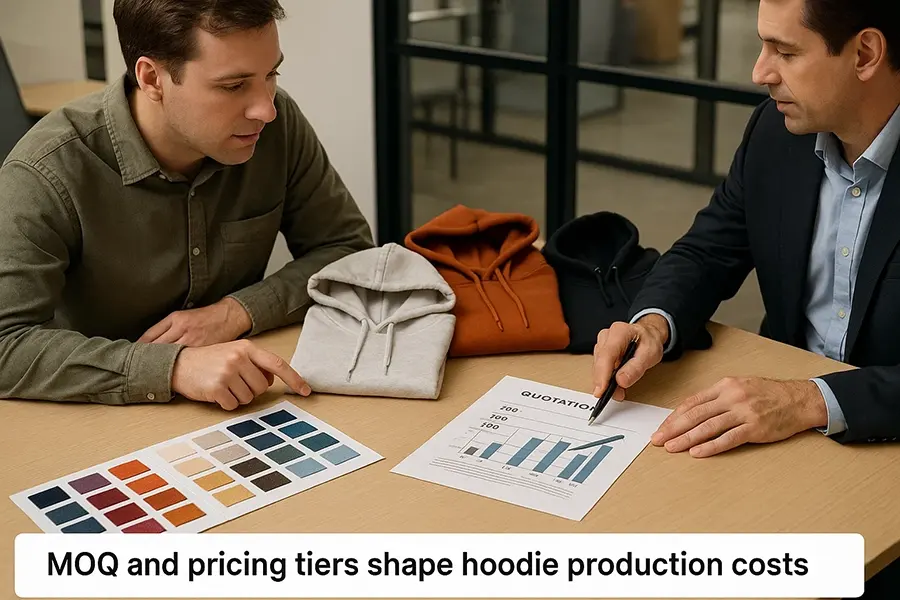
Good factories offer tiered MOQs (100/300/500/1000+) with unit price reductions and allow combining colours/sizes under one design. Confirm whether fabric MOQ differs from garment MOQ and whether recolours require new minimums.
Fabric, GSM & Handfeel Options
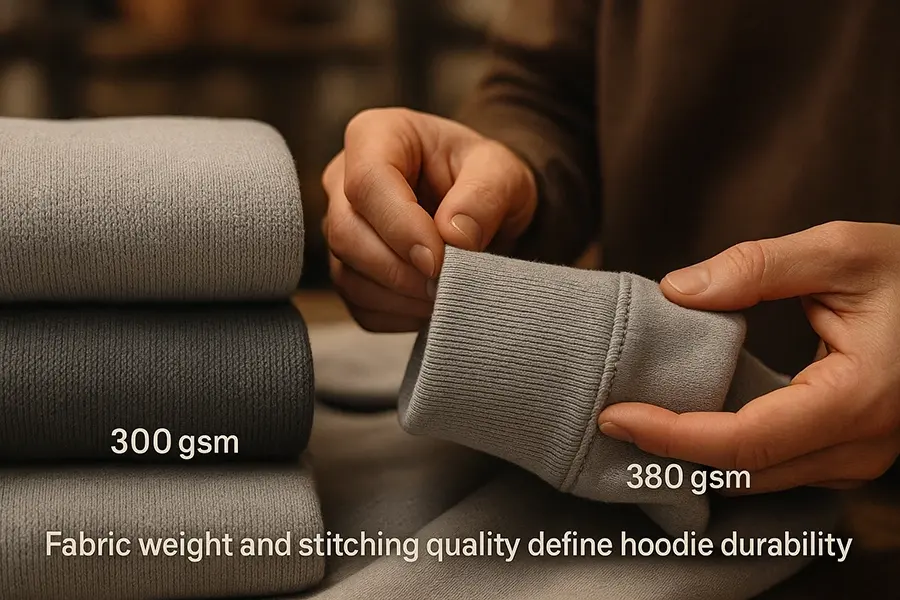
Fabric defines touch and drape. Typical ranges:
- 240–300gsm: lighter seasonal drops
- 300–360gsm: standard retail
- 380–400gsm: premium streetwear/winter fleece
- Request shrinkage, pilling, and colourfastness tests; ask for OEKO-TEX or organic cotton options. If you’re building a capsule around coordinated sets, align your hoodies with custom hoodies to ensure GSM and dye batch consistency across collections.
Decoration Capabilities (Screen, DTG, DTF, Puff, Embroidery)
- Screen print: cost-effective for volume
- DTG: flexible but best on light bases
- DTF: strong for small runs with coverage
- Puff: trendy texture, must be wash-tested
- Embroidery: density, backing, and thread define comfort and durability
Always check post-wash durability to avoid cracking or fading.
Lead Times, Capacity & Seasonality
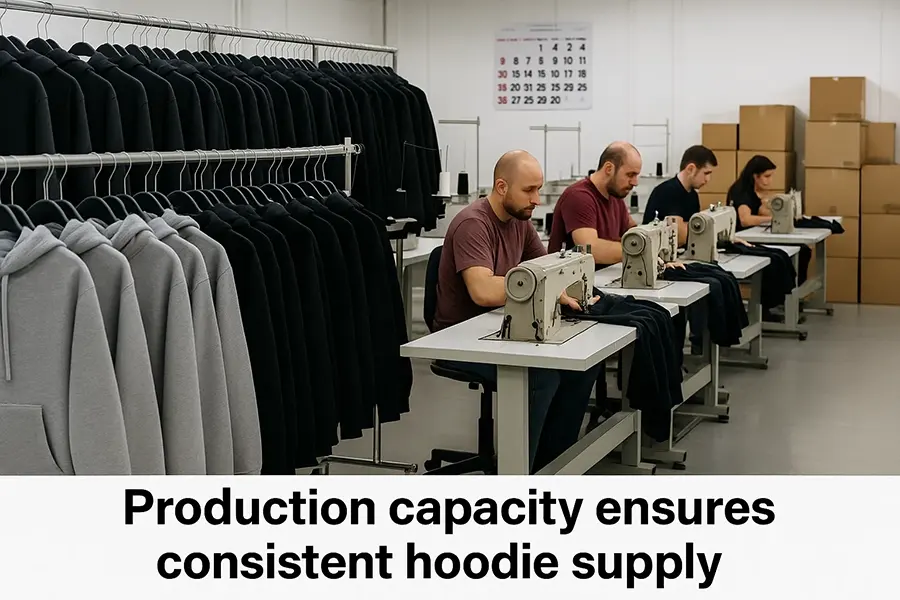
Typical SLA: dev samples 5–10 days, PPS 7–12 days, bulk 30–45 days. In peak seasons, add 1–2 weeks. Confirm in-house vs. outsourced processes and whether the factory can handle multiple colours in parallel.
Quality Control (AQL, Tests, Checkpoints)
Set mid- and final inspections. Recommended AQL: Major 2.5 / Minor 4.0. Critical tests: shrinkage ≤5%, colorfastness ≥3–4 grade, SPI seam strength, rib recovery. Put QC checkpoints in contracts.
Compliance & Sustainability (ISO/BSCI/OEKO-TEX)
For brand and retail buyers, look for ISO9001 and BSCI audits. Fabric certifications like OEKO-TEX or GOTS are increasingly expected. Sustainable talking points: recycled polyester, low-formaldehyde, traceable dyeing.
Communication & Change Management
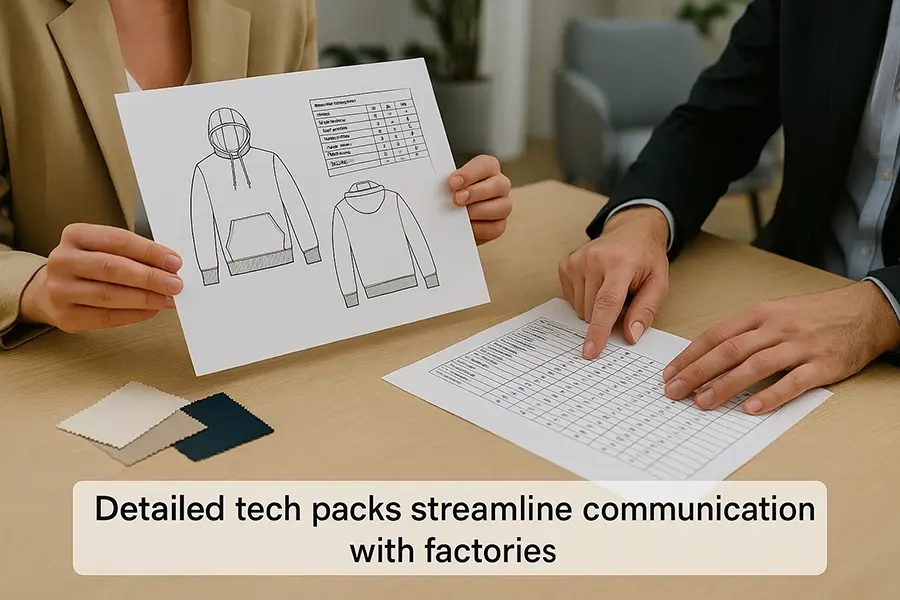
Set weekly update cadence; log all changes with PPS re-confirmation; use shared checklists (BOM, tech pack, size chart) to prevent misalignment.
Sampling → Production: A Practical Timeline
- Week 0–1: BOM and fabric sourcing
- Week 1–2: Dev samples
- Week 3: Lab dips, shrinkage, and colourfastness tests
- Week 3–4: PPS approval
- Week 5–9: Bulk production with inline QC
- Week 10+: Shipping (20–35 days sea / 5–8 days air)
Brands scaling collections should align hoodies with OEM jogger production for fabric and style consistency.
Common Pitfalls & How to Avoid Them
- Focusing on unit cost, not total landed cost
- Skipping testing, leading to shrinkage or cracking of prints
- Ignoring seasonal buffers and missing launch dates
- Making undocumented design changes
Solve these with written SLAs, QC thresholds, and milestone checks.
Scenario Playbook: Startup vs. Scaling Brand
Startup: Small-batch runs (100–300 pcs), basic GSM (300–330gsm), and simple screen/DTF prints; stick to one core fit and colourways.
Scaling: Multi-colourway, advanced fabric booking, rolling forecasts, and continuous QC feedback loops.
Working with an experienced partner reduces your learning curve. Explore Mingxing Clothing for end-to-end hoodie manufacturing solutions.
Ready to start? Contact Mingxing Clothing today to request samples, check tiered MOQs, and align production with your launch timeline.
FAQs