Best Fabric for T-shirts
Choosing the right fabric is one of the most important decisions when developing a T-shirt product. There is no single best fabric for all T-shirts—the right choice depends on your brand positioning, product purpose, customer expectations, and production requirements.
A basic everyday T-shirt, a premium retail product, and a heavyweight streetwear piece all require different materials. This is why many brands work with a custom clothing manufacturer to align fabric selection with design goals and manufacturing feasibility.
What Makes a Great T-shirt Fabric?
A great T-shirt fabric is not defined by its name, but by how it performs in real use and production.
The best fabrics usually share several key qualities:
- Comfortable
- Soft and skin-friendly for daily wear
- Breathable
- Allows air circulation, especially for warm climates
- Durable
- Maintains shape and quality after repeated washing
- Printable
- Works well with screen printing, DTG, or embroidery
- Consistent
- Can be reproduced reliably in bulk production
A fabric that looks good as a sample but performs poorly after washing or printing is not a good choice.
A great T-shirt fabric is defined by how it performs in the finished product, not just how it looks as raw material.
Decision Tip: Start by defining what your customers expect from the final product before choosing a fabric.
How Does Your T-shirt Type Affect Fabric Choice?
Not all T-shirts require the same fabric. Different product types demand different material characteristics.
Your fabric decision should always follow your product direction.
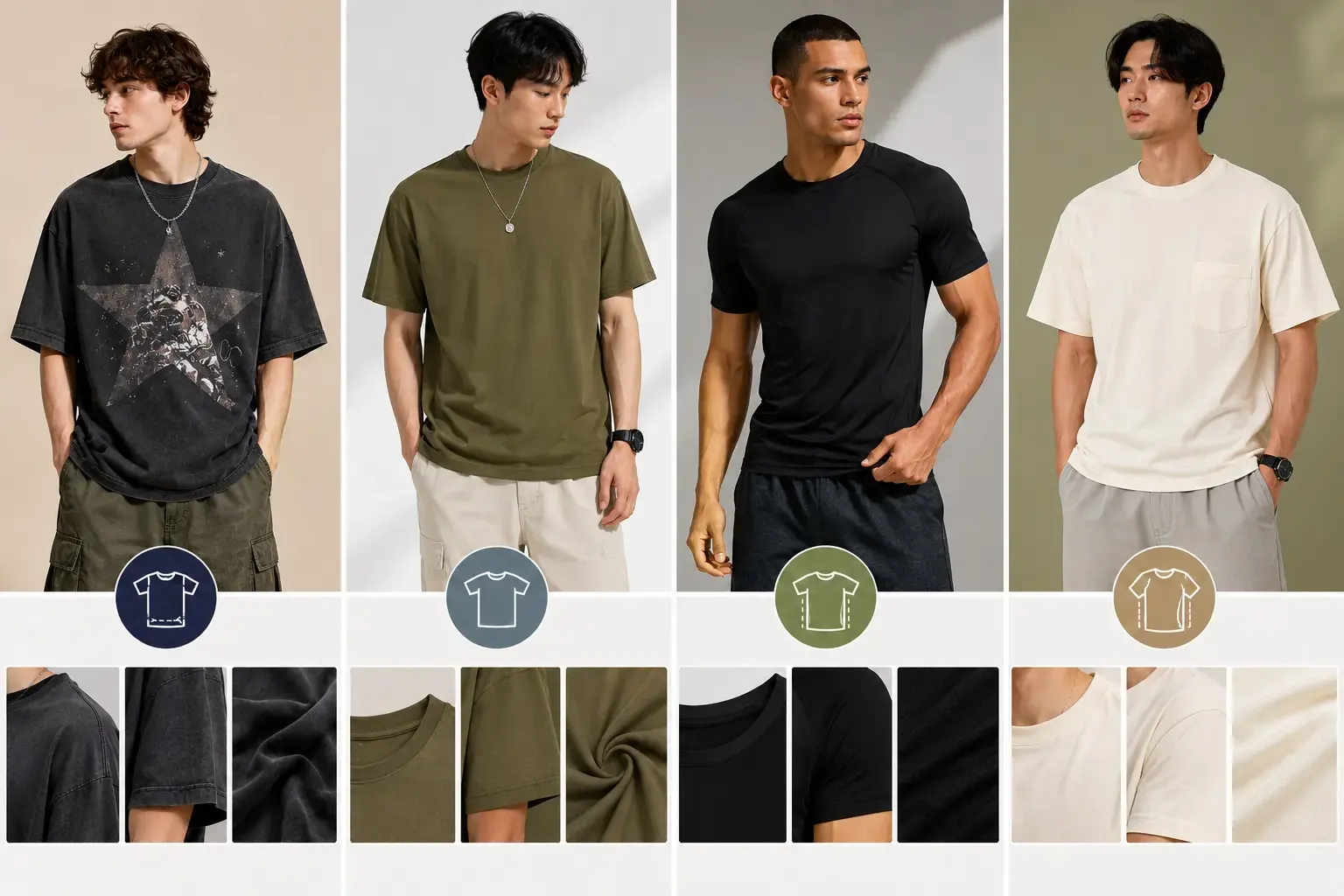
T-shirt Types and Fabric Direction
| T-shirt Type | Primary Goal | Fabric Direction |
|---|---|---|
| Basic T-shirt | Everyday comfort | Cotton |
| Premium T-shirt | Better hand feel | Combed Cotton |
| Oversized T-shirt | Structure and shape | Heavyweight Cotton |
| Sports T-shirt | Moisture management | Polyester |
| Promotional T-shirt | Cost efficiency | Cotton Blend |
For example, a heavyweight cotton fabric helps oversized T-shirts maintain structure, while polyester fabrics are more suitable for performance wear due to moisture-wicking properties.
Manufacturer Insight
Many product issues come from choosing fabric before defining the product type. Manufacturers usually start by understanding the intended use, not by immediately recommending materials.
Decision Tip: Define your product first, then choose the fabric.
Which Fabric Characteristics Matter Most?
Fabric performance determines how a T-shirt feels, fits, and lasts over time.
Instead of focusing only on fibre type, brands should evaluate the following characteristics:
Breathability
Breathable fabrics allow airflow and improve comfort, especially for summer or daily wear.
Cotton fabrics are commonly used for their natural breathability.
Softness
Softness affects how comfortable a T-shirt feels against the skin.
Combed cotton and cotton blends are often used for premium products because they offer a smoother hand feel.
Weight (GSM)
Fabric weight influences structure and perception.
- Lightweight → soft and flexible
- Medium weight → balanced everyday use
- Heavyweight → structured and premium feel
Shape Retention
Good fabrics maintain their shape after washing and wearing.
Poor-quality fabrics may shrink or lose structure over time.
Print Compatibility
Some fabrics work better with printing techniques.
- Cotton → ideal for screen printing and DTG
- Polyester → suitable for sublimation
- Blends → balanced performance
Fabric performance directly affects comfort, durability, and printing results in T-shirt production.
Decision Tip: Evaluate how the fabric performs, not just what it is made of.
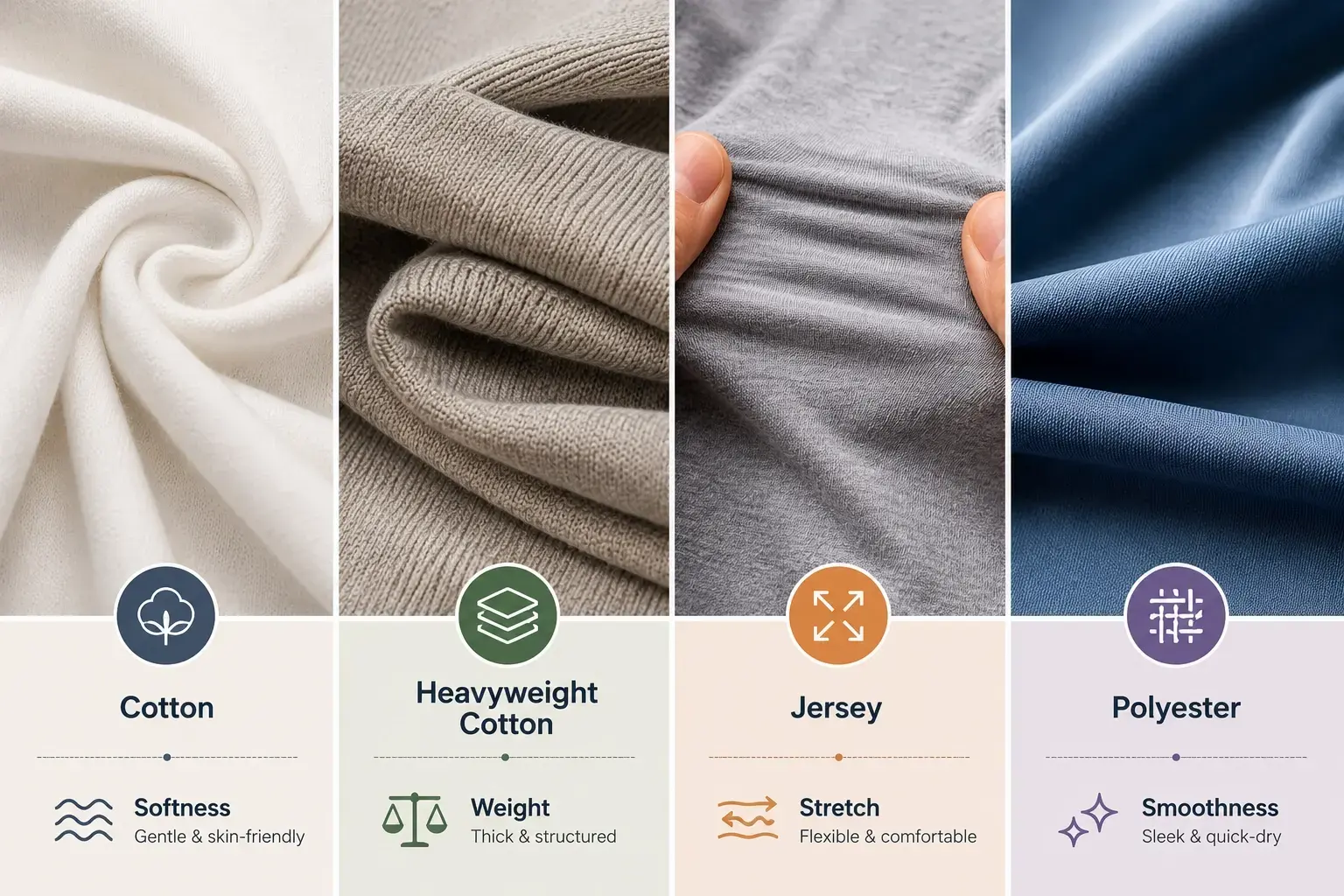
Which Fabrics Are Commonly Used for T-shirts?
Different fabrics are suitable for different product goals. Each material offers a unique balance of comfort, durability, and cost.
Common T-shirt Fabrics
| Fabric | Best For | Main Advantage |
|---|---|---|
| Cotton | Everyday T-shirts | Comfortable and breathable |
| Cotton Blend | Versatile collections | Balance of comfort and cost |
| Polyester | Sportswear | Moisture-wicking and durable |
| Combed Cotton | Premium products | Softer and smoother feel |
| Heavyweight Cotton | Streetwear | Structure and durability |
Cotton
Cotton is the most widely used fabric for T-shirts due to its comfort and breathability. It is suitable for everyday wear and most casual styles.
Cotton Blend
Blends combine cotton with polyester or other fibres to improve durability, reduce shrinkage, and control cost.
Polyester
Polyester is commonly used for sports T-shirts because of its moisture-wicking performance and durability.
Combed Cotton
Combed cotton offers a smoother and softer surface, making it suitable for higher-end products.
Heavyweight Cotton
Heavyweight cotton fabrics are often used in streetwear and oversized designs because they provide structure and a premium feel.
Manufacturer Insight
Fabric selection is not only about comfort. Manufacturers also consider:
- Fabric stability
- Printing performance
- Bulk consistency
- Supply reliability
Many brands rely on custom T-shirt manufacturers to balance these factors during development.
Decision Tip: Choose fabrics that work for both product design and production.
How Should Brands Choose the Right Fabric?
The best fabric choice comes from aligning product goals with fabric performance and manufacturing reality.
Decision Checklist
Before finalising a fabric, ask:
- Who is your target customer?
- What price range are you targeting?
- What type of T-shirt are you developing?
- Which printing method will you use?
- What fabric weight supports your design?
- Can the fabric maintain consistent quality in production?
Common Mistakes to Avoid
- Choosing fabric based only on price
- Ignoring printing compatibility
- Selecting materials before defining the product
- Overlooking production consistency
The best T-shirt fabric is the one that fits your brand positioning, not the one that sounds the most premium.
From Fabric Selection to Production
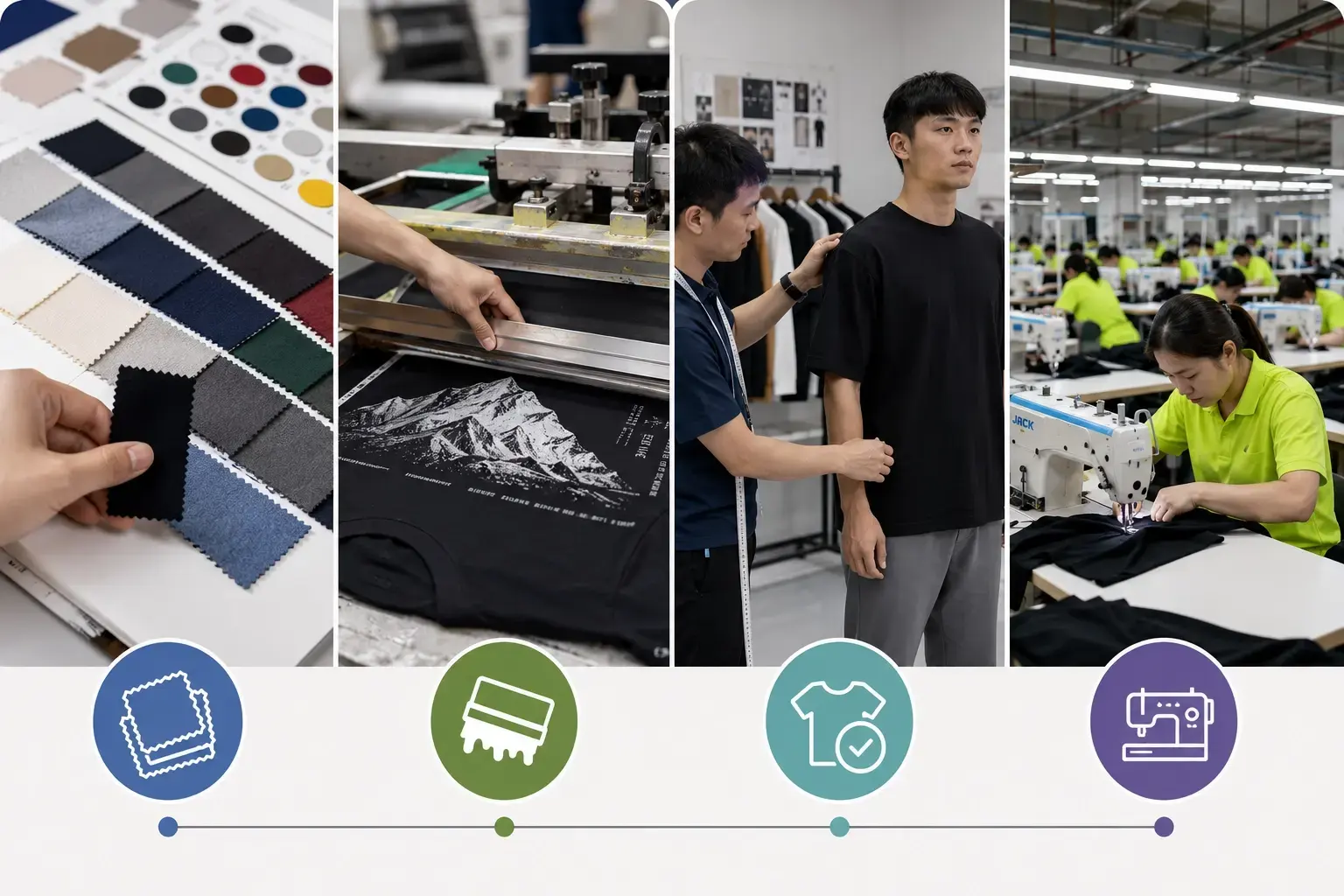
Choosing fabric is only the first step in developing a successful T-shirt product. After material selection, brands must go through sampling, printing tests, quality checks, and bulk production.
A reliable partner helps ensure that your fabric performs consistently throughout the entire process—from the first sample to final delivery.
If you are planning to launch or scale a T-shirt collection, you can contact Mingxing Clothing for support with fabric selection, sampling, and private-label production.
FAQS
What is the best fabric for T-shirts?
The best fabric depends on the product type. Cotton is ideal for everyday wear, while polyester works better for sportswear.
Is 100% cotton better than cotton blends?
Not always. Cotton is more breathable, while blends offer better durability and cost control.
Which fabric is best for printed T-shirts?
Cotton is widely used for screen printing and DTG, while polyester is suitable for sublimation printing.
What GSM is best for T-shirts?
Lightweight fabrics (140–180 GSM) are good for basic tees, while heavier fabrics (220–300 GSM) are used for premium and oversized styles.
Can T-shirt fabrics be customised?
Yes. Manufacturers can customise fabric weight, composition, and finishing based on product requirements.