Best Fabric for Jackets
Choosing the right fabric is one of the most important decisions in jacket development. The material you select directly affects performance, comfort, durability, and production cost, which means fabric selection is not just a design choice—it is a product decision.
In real manufacturing, brands don’t start by choosing fabrics. They start by defining what the jacket needs to achieve. That is why many businesses work with custom clothing manufacturers early in the process to align fabric selection with real production requirements.
Quick Answer: Fabric Starting Points by Jacket Type
| Jacket Type | Recommended Starting Fabric |
|---|---|
| Outdoor Jacket | Ripstop Nylon |
| Rain Jacket | Coated Polyester |
| Winter Jacket | Softshell + Fleece |
| Fashion Jacket | Cotton Twill |
| Casual Jacket | Cotton Blend |
| Work Jacket | Canvas |
These are starting points, not final answers. The right fabric always depends on product requirements and production conditions.
Why There Is No Single Best Fabric for Every Jacket
There is no universal best fabric because jackets are designed for different purposes. Each type of jacket has its own performance priorities, and those priorities determine which material is suitable.
An outdoor jacket must protect against wind and rain. A winter jacket must retain heat. A fashion jacket must look structured and visually appealing. Even if two jackets use the same fibre, differences in construction and finishing can lead to completely different results.
Jacket Types and Their Priorities
| Jacket Type | Primary Goal | Key Fabric Priorities |
|---|---|---|
| Outdoor Jacket | Weather protection | Waterproof, windproof, durable |
| Winter Jacket | Warmth | Insulation, comfort |
| Rain Jacket | Waterproof | Coating, lightweight |
| Fashion Jacket | Appearance | Structure, drape |
| Casual Jacket | Comfort | Softness, breathability |
| Work Jacket | Durability | Strength, abrasion resistance |
Key takeaway: There is no best fabric—only the most suitable fabric for a specific product.
What Factors Should You Consider Before Choosing Jacket Fabric?
Before comparing materials, you need to define the product direction clearly. Fabric selection becomes much easier once these key factors are established.
Key Decision Factors
| Factor | Why It Matters |
|---|---|
| Product Purpose | Defines overall design direction |
| Target Users | Determines comfort expectations |
| Environment | Defines performance needs |
| Performance | Determines fabric behavior |
| Budget | Limits material options |
When these factors are unclear, fabric selection becomes trial and error. When they are clear, the process becomes structured and efficient.
Manufacturer Perspective
In real production, fabric decisions are part of the product development and sampling workflow, where materials are evaluated based on actual use conditions instead of assumptions.
Decision Tip: Define the product first. Fabric selection comes second.
Which Fabric Properties Matter Most for Jackets?
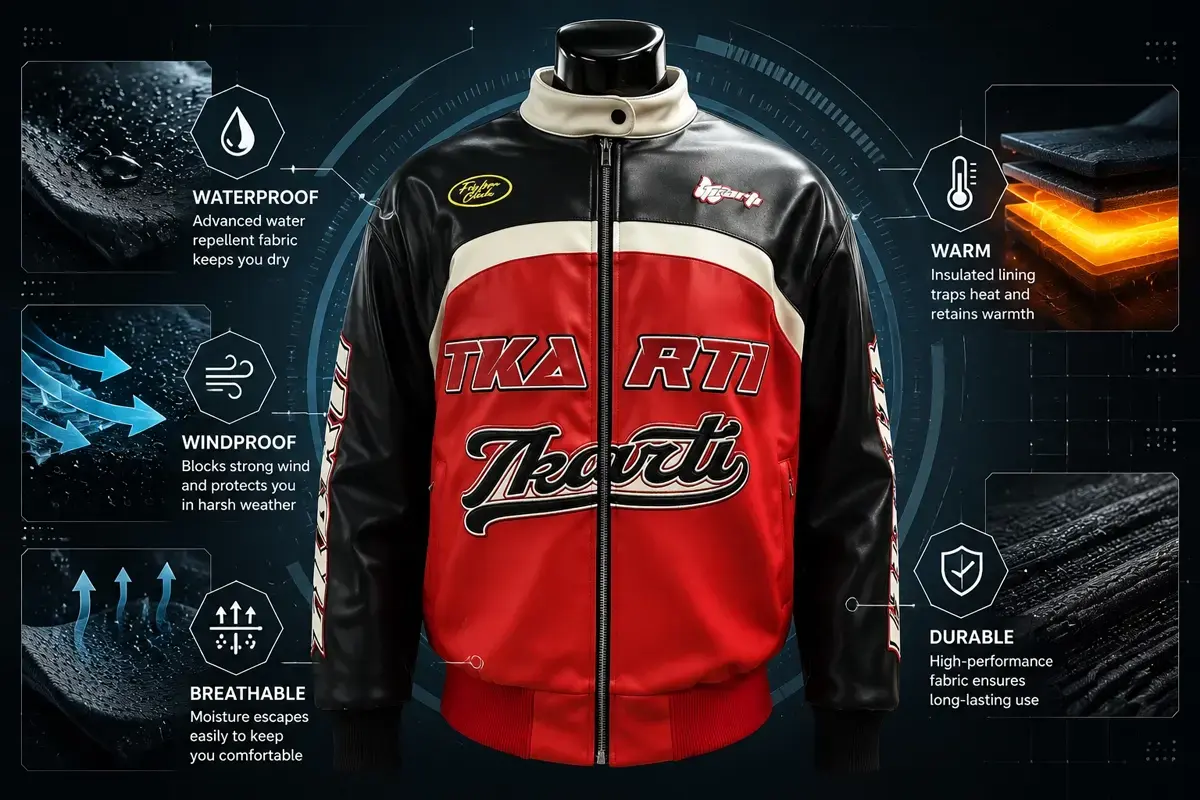
Jacket fabrics are selected based on performance requirements, not just fibre type. The most important properties determine how the jacket behaves in real use.
Key Fabric Properties
| Property | Why It Matters |
|---|---|
| Water Resistance | Protects against rain |
| Wind Resistance | Blocks cold air |
| Breathability | Improves comfort |
| Insulation | Retains warmth |
| Durability | Extends product life |
| Weight | Affects mobility |
Each jacket type prioritises different properties. For example, outdoor jackets prioritise protection, while fashion jackets prioritise structure and comfort.
Manufacturer Perspective
Manufacturers evaluate fabrics as a combination of properties. Improving one performance aspect often affects another, so the final material must balance multiple requirements.
Decision Tip: Focus on performance needs, not material names.
Which Fabrics Are Best for Different Types of Jackets?
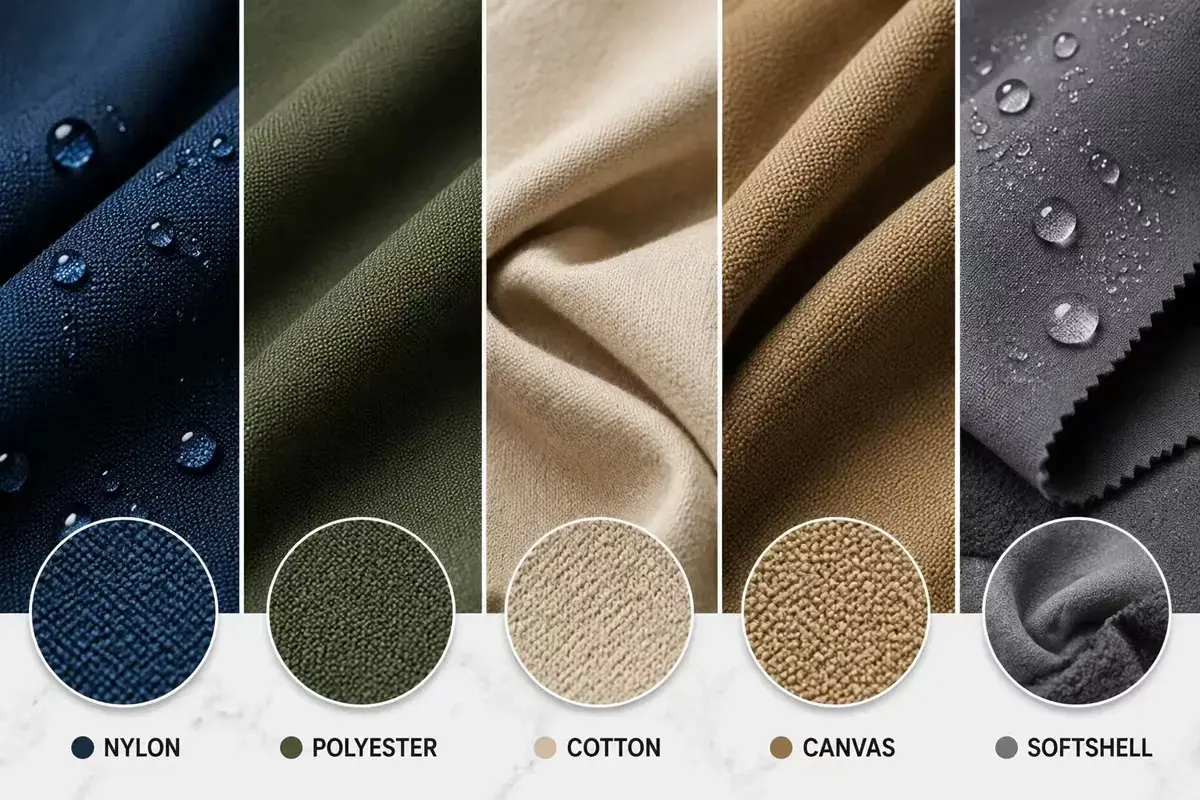
Different fabrics are suitable for different applications because each material provides a different balance of performance, comfort, durability, and cost.
Fabric Selection Matrix
| Jacket Type | Recommended Fabric | Why It Fits | Alternative |
|---|---|---|---|
| Outdoor | Ripstop Nylon | Lightweight + Durable | Taslan |
| Rain | Coated Polyester | Waterproof | PU Nylon |
| Winter | Softshell + Fleece | Warm | Heavy Polyester |
| Fashion | Cotton Twill | Structured look | Cotton Blend |
| Casual | Cotton Blend | Comfortable | French Terry |
| Workwear | Canvas | Heavy-duty | Oxford Fabric |
Manufacturer Insight
Fabric selection is influenced more by construction and finishing than by fibre alone. Two fabrics made from the same fibre can perform very differently depending on how they are produced.
No single fabric is best for every jacket because different applications require different performance combinations.
Many brands rely on experienced apparel manufacturers to guide this process instead of selecting materials independently.
Decision Tip: Treat fabric types as a starting point, not a final decision.
How to Choose the Best Jacket Fabric for Your Project
The best jacket fabric is the one that matches your product goals, performance requirements, and production conditions.
Decision Framework
Product Purpose
↓
Environment
↓
Performance
↓
Fabric Properties
↓
Material Selection
↓
Factory Recommendation
Practical Checklist
- Define the jacket type
- Identify target users
- Analyse wearing conditions
- Prioritise performance requirements
- Set a realistic budget
- Validate materials with samples
Before Finalising Your Decision
Avoid these common mistakes:
- Choosing fabric based only on fibre type
- Ignoring performance requirements
- Skipping sampling validation
- Focusing only on price instead of quality
The best fabric is not the most popular one—it is the one that fits your product.
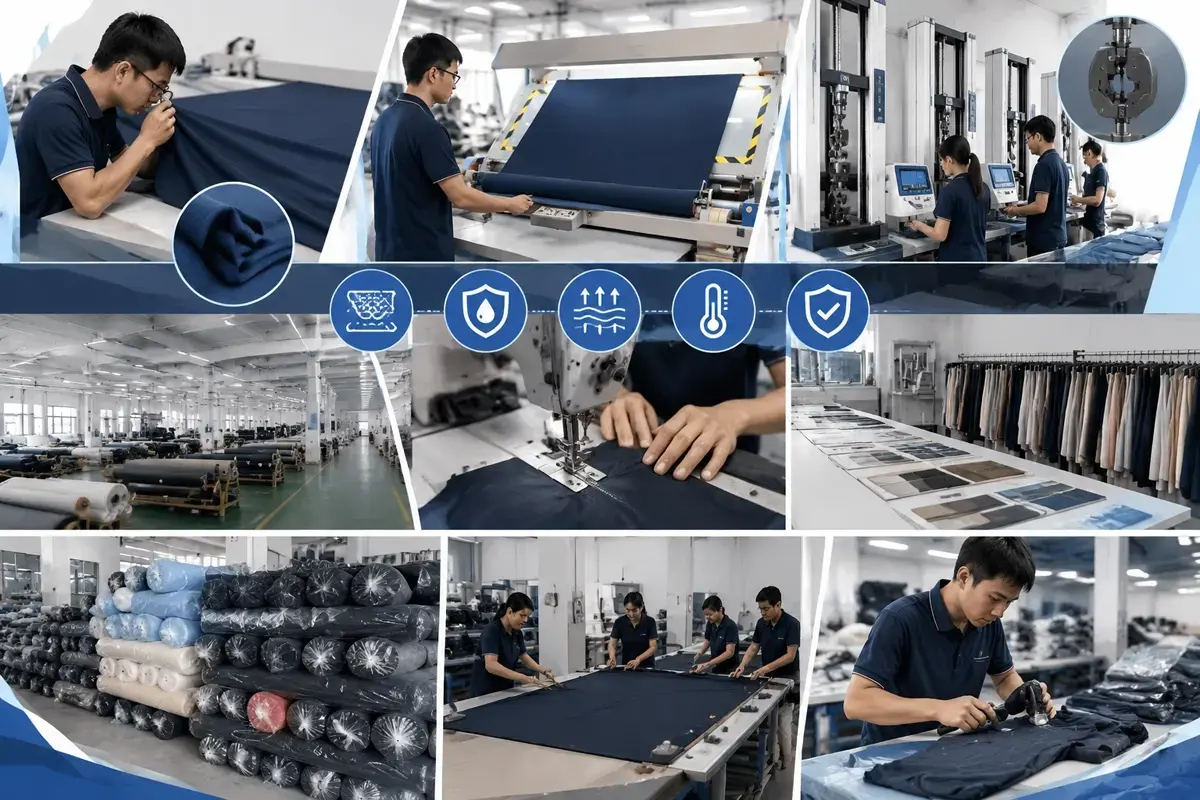
How to Move From Fabric Selection to Production
Once the fabric direction is clear, the next step is turning your idea into a real product. This involves confirming specifications, developing samples, testing performance, and preparing for bulk production.
Fabric selection alone does not guarantee product success. Consistency, quality control, and production experience are equally important.
If you are planning to develop a jacket collection, working with a team that understands both materials and production can significantly improve efficiency. You can contact mingxing clothing to see how fabric decisions are translated into finished products.
FAQS
What is the best fabric for winter jackets?
Softshell and fleece provide strong insulation and warmth.
Is nylon or polyester better for jackets?
Nylon is stronger and lighter, while polyester is more cost-effective.
What fabric is waterproof?
Coated polyester and nylon fabrics are commonly used.
Is cotton good for jackets?
Cotton is suitable for fashion and casual jackets, but not ideal for waterproof use.
Can jacket fabrics be customised?
Yes, including weight, coating, and finishing.
Share With
Related Articles
Hot Products