Best Fabric for Joggers
Choosing the right fabric is one of the most important decisions when developing joggers.
Many brands focus first on the design, color, and silhouette, but the fabric determines how the finished garment actually performs.
A good pair of joggers needs more than softness. It needs to support movement, maintain shape after repeated wear, and create the right visual appearance for the intended customer.
This is why experienced clothing manufacturers usually do not start with a fabric name. They start by understanding how the garment needs to perform, then select a fabric that supports those requirements.
Quick Answer
There is no single best fabric for every jogger.
The right choice depends on the balance between:
- Comfort
- Stretch
- Shape retention
- Fabric weight
- Final garment appearance
Cotton blends, French terry, fleece, polyester blends, and cotton spandex fabrics are all commonly used, but each creates a different wearing experience.
Why Jogger Fabric Choice Matters More Than You Think
Joggers may look simple, but they are highly dependent on fabric performance.
Unlike many upper-body garments, joggers need to handle continuous movement while maintaining their original shape.
The fabric affects:
- How comfortable the wearer feels
- How easily the garment moves
- Whether the silhouette stays consistent
- How premium the product appears
For example, two joggers with the same design can feel completely different because one fabric provides better recovery and structure.
The difference is not always visible during the first sample review.
It often appears after repeated wear and washing.
The Key Fabric Properties That Define Jogger Quality
When evaluating jogger fabrics, brands should look beyond the material name.
The more important question is:
What performance characteristics does this fabric bring to the final garment?
Stretch and Freedom of Movement
Stretch determines how naturally joggers move with the wearer.
This is especially important for:
- Athletic joggers
- Slim-fit joggers
- Active lifestyle products
A suitable level of stretch improves comfort during:
- Walking
- Training
- Sitting
- Daily activities
However, more stretch does not always mean better quality.
Excessive stretch can reduce structure and make the garment lose its intended silhouette.
The goal is a balance between flexibility and stability.
Shape Retention and Recovery
One of the biggest differences between average and premium joggers is how well the fabric maintains shape.
Common issues include:
- Knees are becoming stretched out
- Waistbands losing recovery
- Fabric is becoming loose after washing
A good jogger fabric should recover after movement and continue supporting the original fit.
This is particularly important for:
- Premium casualwear
- Streetwear joggers
- Slim-fit designs
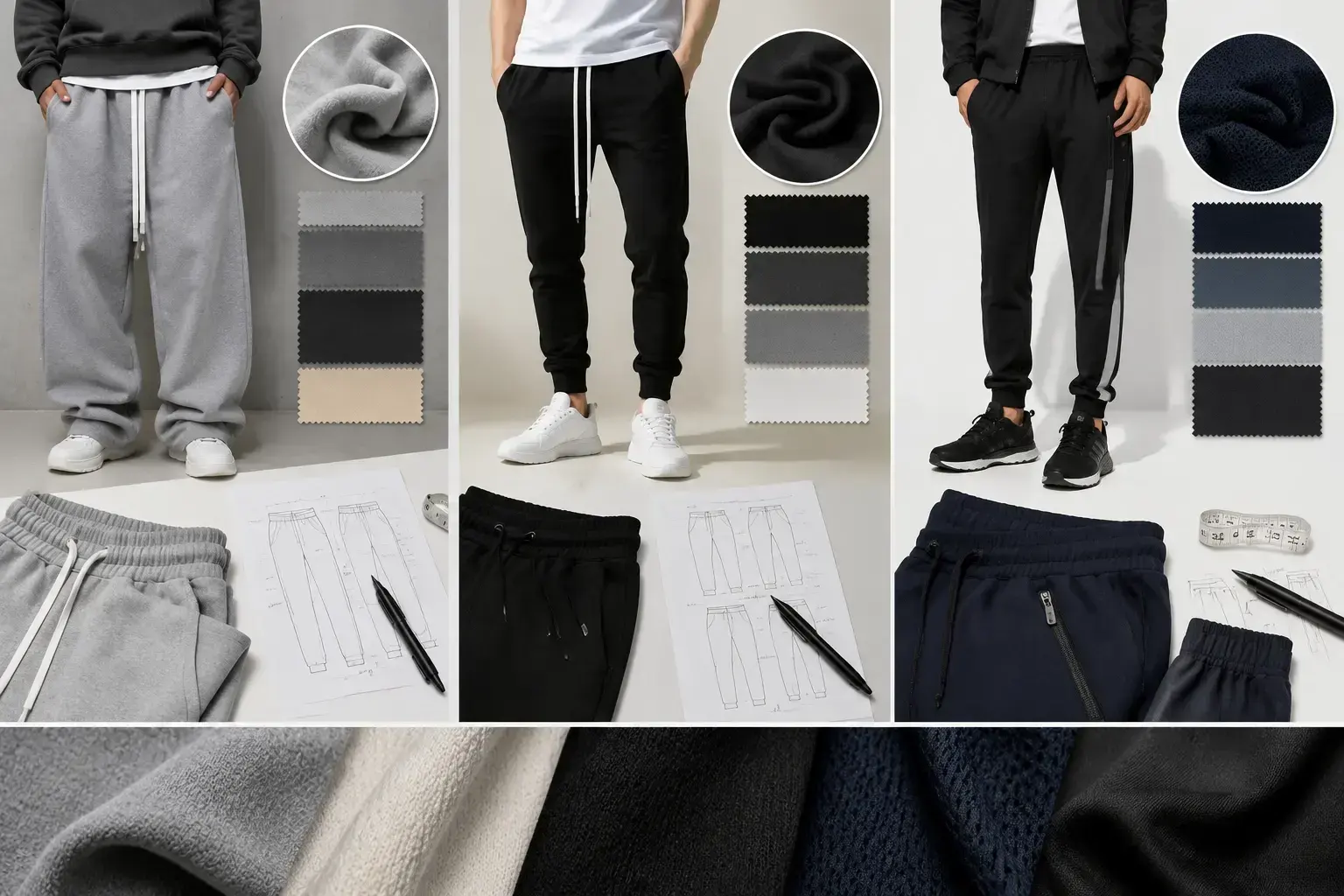
Fabric Weight and Structure
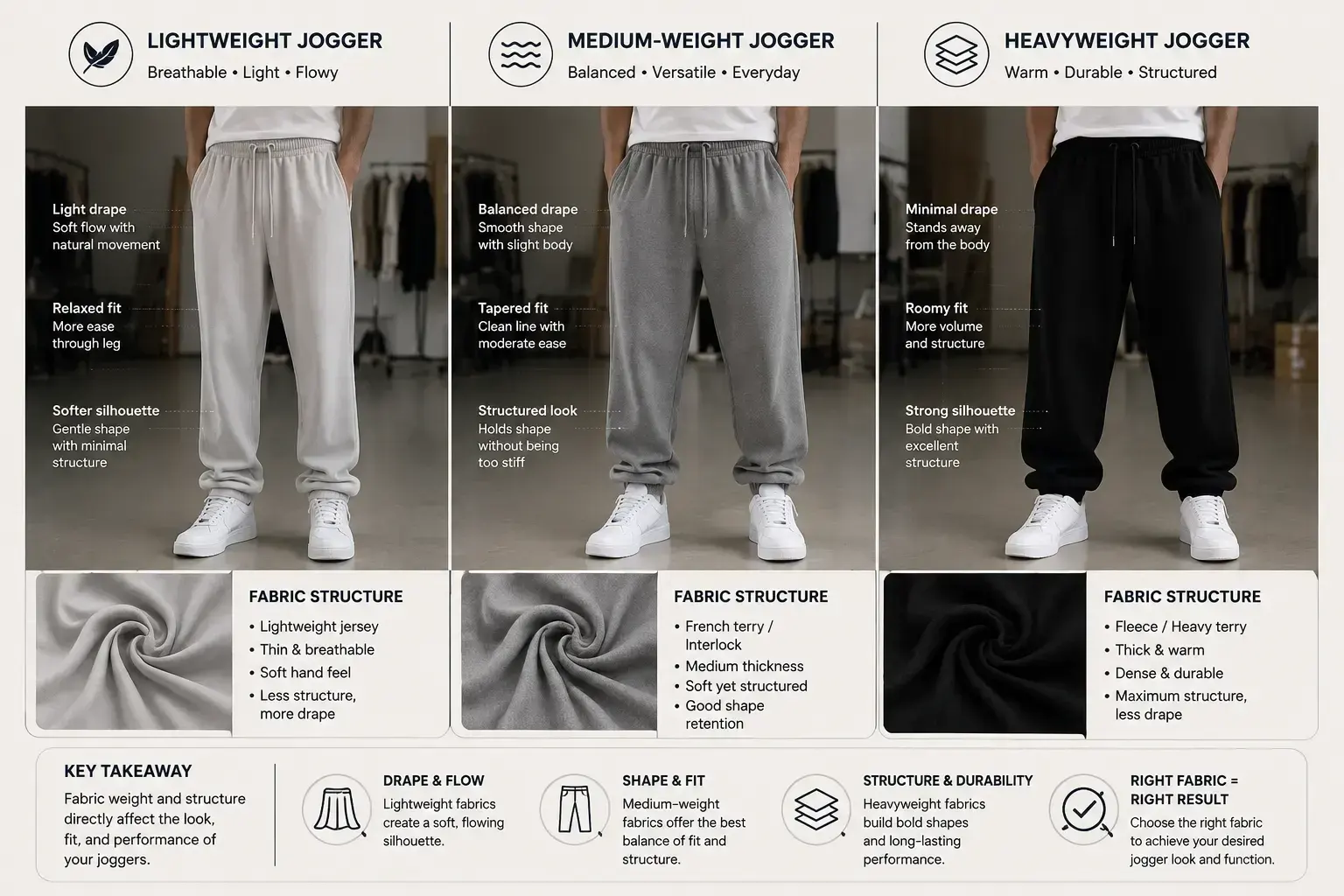
Fabric weight directly influences the appearance of joggers.
Heavier fabrics usually create:
- Stronger structure
- Better drape
- More premium appearance
Lighter fabrics usually provide:
- Better breathability
- Easier movement
- A softer wearing experience
For example:
A heavyweight streetwear jogger needs enough structure to create a strong silhouette.
An athletic jogger usually requires a lighter construction for flexibility.
Softness and Wearing Comfort
Softness is important, but it should not be the only measurement.
A very soft fabric may feel comfortable initially, but may not provide enough durability or shape recovery.
Professional product development requires balancing:
- Hand feel
- Performance
- Durability
- Appearance
Comfort should support the product goal, not replace it.
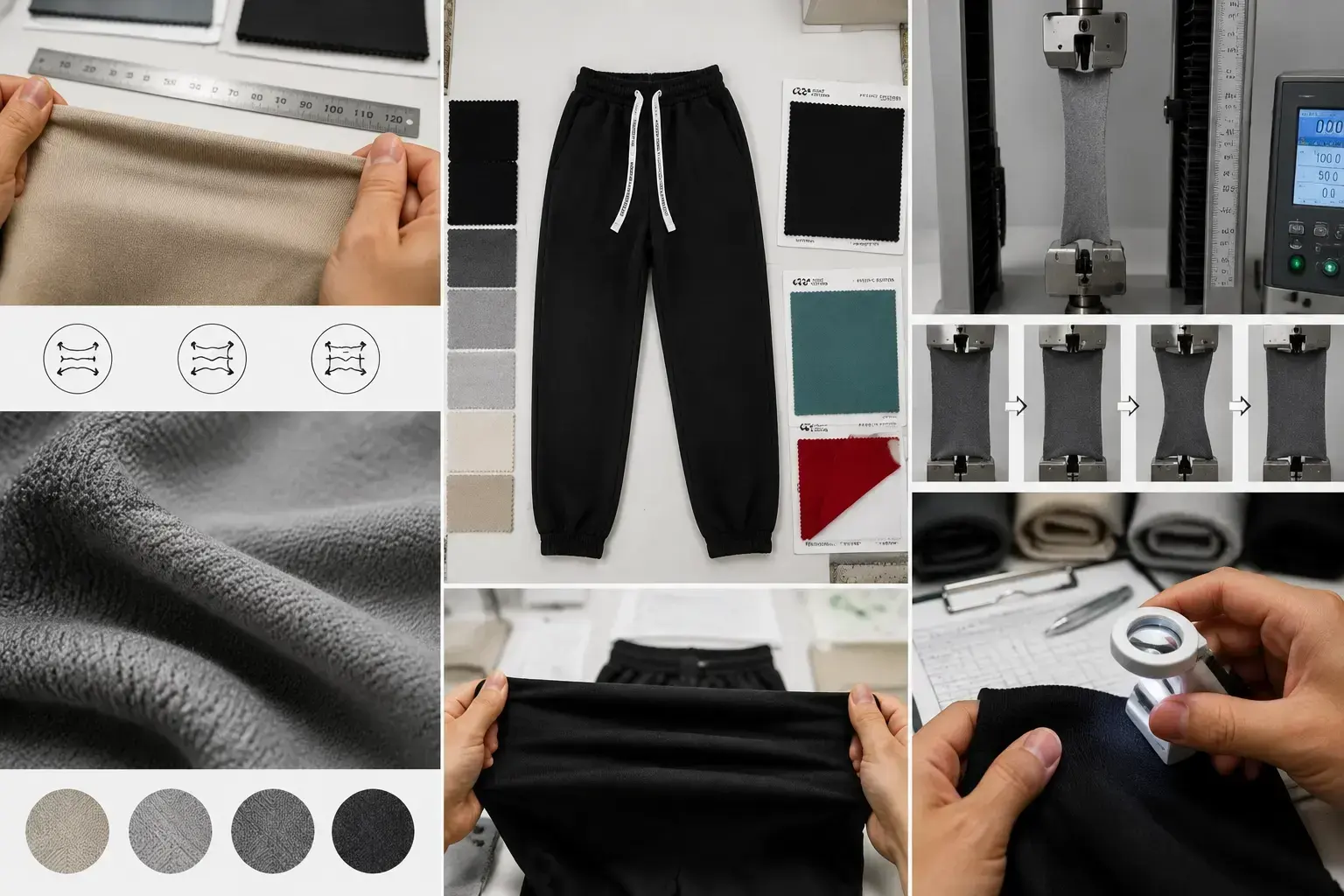
How Different Fabrics Affect Jogger Performance
Once the required performance characteristics are clear, brands can compare different fabric options.
| Fabric Type | Comfort | Stretch | Structure | Best Use |
|---|---|---|---|---|
| Cotton Blend | High | Medium | Medium | Lifestyle joggers |
| French Terry | High | Medium | Medium | Casual and streetwear joggers |
| Fleece | High | Low-Medium | High | Winter joggers |
| Polyester Blend | Medium | High | Medium | Athletic joggers |
| Cotton Spandex | High | High | Medium | Slim-fit joggers |
Cotton Blend
Cotton blends are among the most common fabrics used for everyday joggers.
They provide a balanced combination of:
- Comfort
- Durability
- Practical maintenance
Compared with pure cotton, blended fabrics usually offer better shape stability and production consistency.
They are commonly used for:
- Casual joggers
- Lifestyle collections
- Everyday apparel
For brands looking for reliable comfort with stable production performance, cotton blends are often a practical solution.
French Terry
French terry is widely used for lightweight and comfortable joggers.
The fabric provides a soft interior feel while remaining more breathable than brushed fleece.
It works well for:
- Casual joggers
- Transitional seasons
- Lightweight streetwear products
French terry is often selected when brands want comfort without excessive thickness.
Fleece
Fleece is mainly selected when warmth is the priority.
The brushed inner surface provides insulation and a soft wearing experience.
It is suitable for:
- Winter joggers
- Heavyweight casual products
- Cold-weather collections
However, fleece is generally less breathable than lighter fabrics, making it less suitable for high-intensity movement.
Polyester Blend
Polyester blends are commonly used for performance-focused joggers.
They provide:
- Lightweight construction
- Moisture management
- Durability
- Better movement flexibility
They are commonly selected for:
- Fitness joggers
- Training products
- Activewear collections
The limitation is that polyester usually creates a different hand feel compared with cotton-based fabrics.
Cotton Spandex Blend
Cotton spandex blends are often selected for fitted jogger styles.
The added stretch improves:
- Body fit
- Movement comfort
- Shape recovery
They work especially well for brands looking for a cleaner silhouette while maintaining comfort.
Choosing Fabric Based on Jogger Fit
Fabric selection should also match the desired garment silhouette.
The same fabric may perform differently depending on the fit and construction of the jogger.
Oversized Joggers
Oversized joggers usually require:
- Higher fabric weight
- Better structure
- Stronger drape
Heavy cotton and French terry are commonly considered because they help create a more premium streetwear appearance.
Slim-fit Joggers
Slim-fit joggers require:
- Stretch
- Shape recovery
- Comfortable movement
Cotton spandex blends are often suitable because they provide better fit retention.
Athletic Joggers
Athletic joggers usually prioritise:
- Lightweight performance
- Flexibility
- Moisture control
Polyester blends are commonly selected for this application.
A Real Jogger Fabric Decision Process
In professional development, brands usually do not choose fabric first.
The decision process normally follows this order:
Product concept
↓
Desired fit
↓
Performance requirements
↓
Fabric characteristics
↓
Final selection
For example:
A streetwear brand developing oversized joggers may need heavier fabric with a stronger structure.
A fitness brand developing training joggers may need lightweight fabric with better stretch and moisture management.
The fabric decision should always support the final product objective.
Wrong vs Right Jogger Fabric Decisions
Many jogger development problems happen because brands focus on the wrong priorities.
Wrong Decision Path
Common mistakes include:
- Choosing the softest fabric without considering durability
- Selecting the cheapest material without considering fit
- Choosing heavyweight fabric without considering movement
- Ignoring shape recovery after washing
A jogger may feel good during the first sample review but fail to maintain their appearance during actual use.
Right Decision Path
A better approach is:
- Define the product goal first
- Understand customer expectations
- Identify required garment performance
- Select fabric based on those requirements
The best jogger fabric is not the softest or thickest option.
It is the fabric that allows the garment to perform as intended.
Common Mistakes When Choosing Jogger Fabrics
Some brands make fabric decisions without considering the complete product.
Common issues include:
- Choosing softness over long-term performance
- Ignoring fabric recovery
- Using an unsuitable weight for the silhouette
- Selecting materials without considering washing performance
- Focusing only on fabric cost
A successful jogger requires a balance between comfort, movement, durability, and appearance.
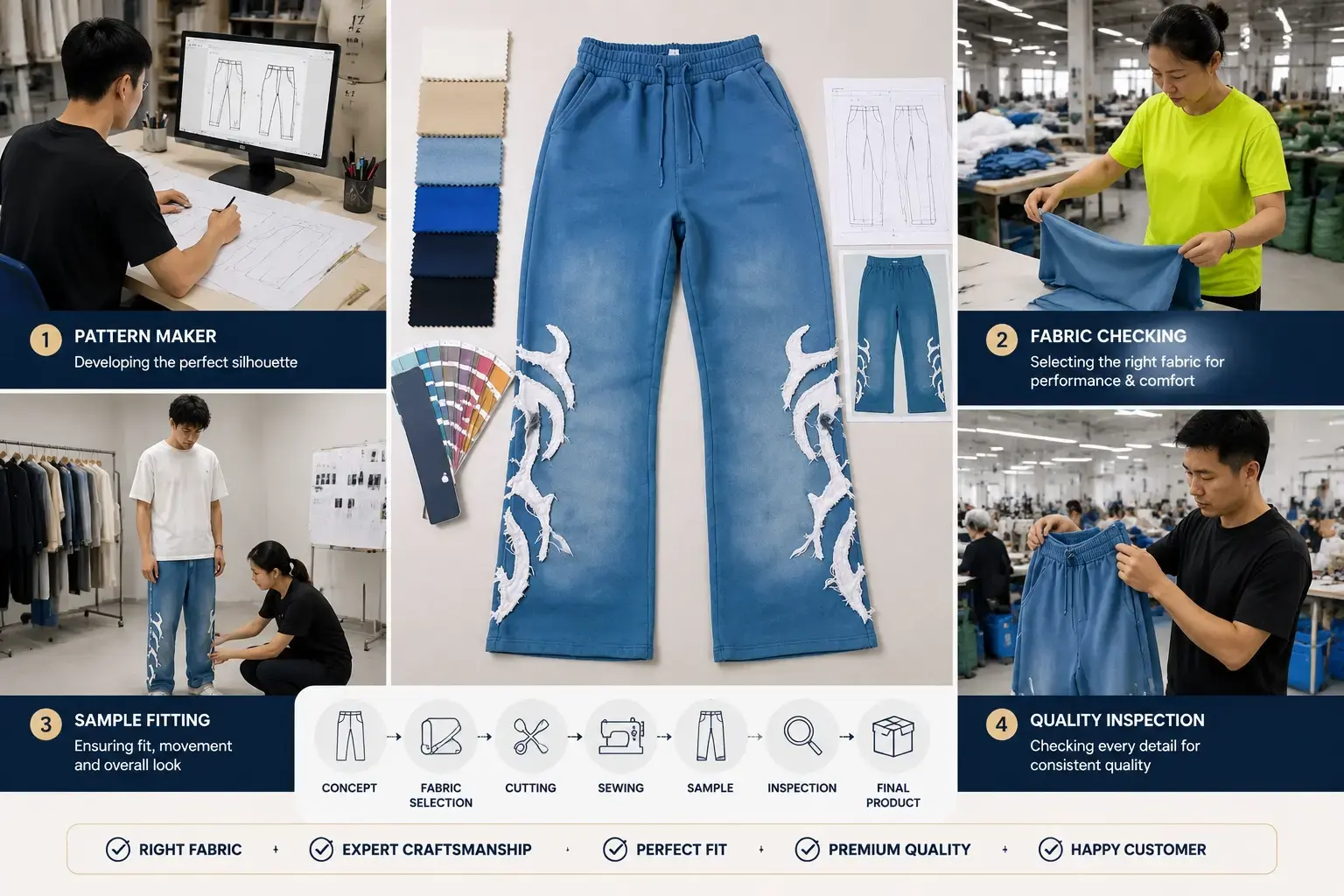
How Manufacturers Evaluate Jogger Fabrics Before Production
Professional manufacturers usually evaluate more than the fabric itself.
Before production, they consider:
- Pattern structure
- Intended fit
- Fabric weight
- Stretch requirement
- Washing performance
- Production consistency
Fabric selection is connected with the whole garment development process.
A good material choice helps create a smoother sampling process and a more reliable bulk production result.
Choosing the Right Jogger Fabric Means Choosing the Right Performance
The best fabric for joggers is not determined by softness alone.
The right material should support:
- Comfort
- Movement
- Shape retention
- Durability
- Brand positioning
When the product goal is clear, fabric selection becomes easier and more predictable.
If you are developing a jogger collection and need support choosing the right material, you can contact Mingxing Clothing for practical recommendations based on real manufacturing experience.
FAQS
What fabric makes joggers comfortable?
Cotton blends and French terry are commonly chosen for comfortable joggers because they provide softness, breathability, and everyday wearability.
What fabric is best for heavyweight joggers?
Heavyweight cotton or French terry is commonly used for premium and streetwear joggers because it provides better structure and a stronger silhouette.
Why do some joggers lose their shape after washing?
Joggers may lose shape when the fabric has poor recovery, unsuitable construction, or insufficient stability after repeated washing.
Is French terry good for joggers?
Yes. French terry is a popular choice for joggers because it provides comfort, breathability, and a lightweight feel.
How do manufacturers choose jogger fabrics?
Manufacturers usually consider product purpose, fit requirements, fabric performance, weight, stretch, and production details before recommending a fabric.
Share With
Related Articles
Hot Products