Choosing the right hoodie fabric is one of the most important decisions in early product development.
Many brands begin their fabric selection process by comparing materials directly. But in practice, experienced manufacturers approach it differently—they start with product definition, not fabric comparison.
A lightweight hoodie, a structured streetwear piece, and a winter fleece hoodie are fundamentally different products. Treating them as the same often leads to poor fabric choices.
So instead of asking what fabric is best, the more useful question is:
What fabric fits the hoodie I’m trying to build?
Quick Answer
There is no single best fabric for hoodies.
French terry, fleece, cotton blends, heavyweight cotton, and polyester blends are all widely used—but each works best for a specific product direction.
Start With the Hoodie You Want to Build
Before evaluating materials, it helps to define the product clearly.
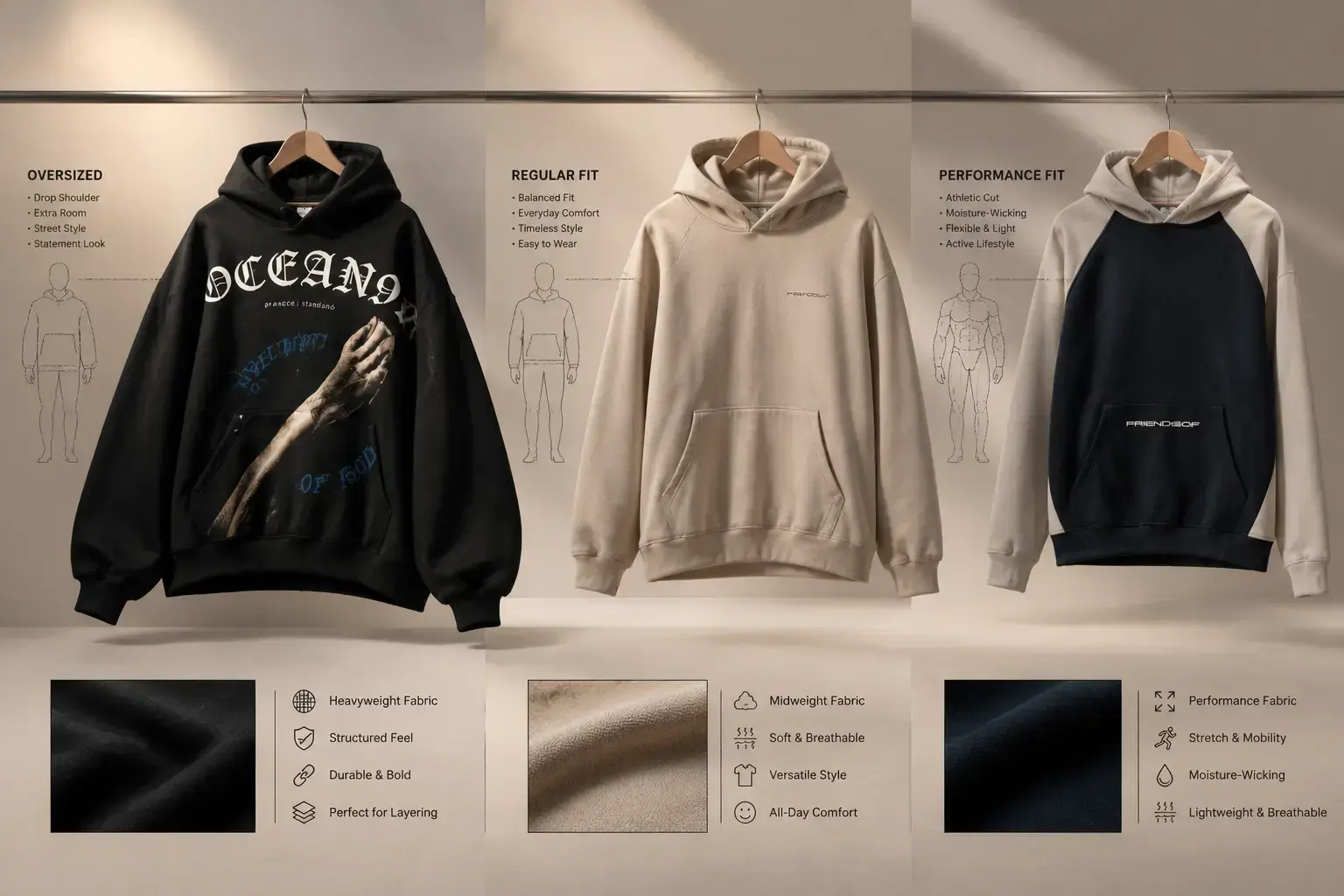
Most hoodie developments fall into one of these directions:
- A basic retail hoodie focused on cost and consistency
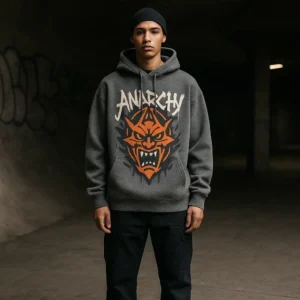
- A heavyweight streetwear hoodie with structure and visual impact
- A performance hoodie designed for movement and moisture control
- A winter hoodie built for warmth
- A lightweight hoodie for layering or mild weather
Once this is defined, fabric selection becomes much more straightforward.
Matching Hoodie Type With Fabric
This reflects how hoodie fabric selection typically works in real production environments.
Understanding the Main Fabric Options
After the product direction is clear, the next step is understanding how different fabrics behave.
Cotton blends are commonly used for everyday hoodies because they offer a balance between comfort, durability, and cost.
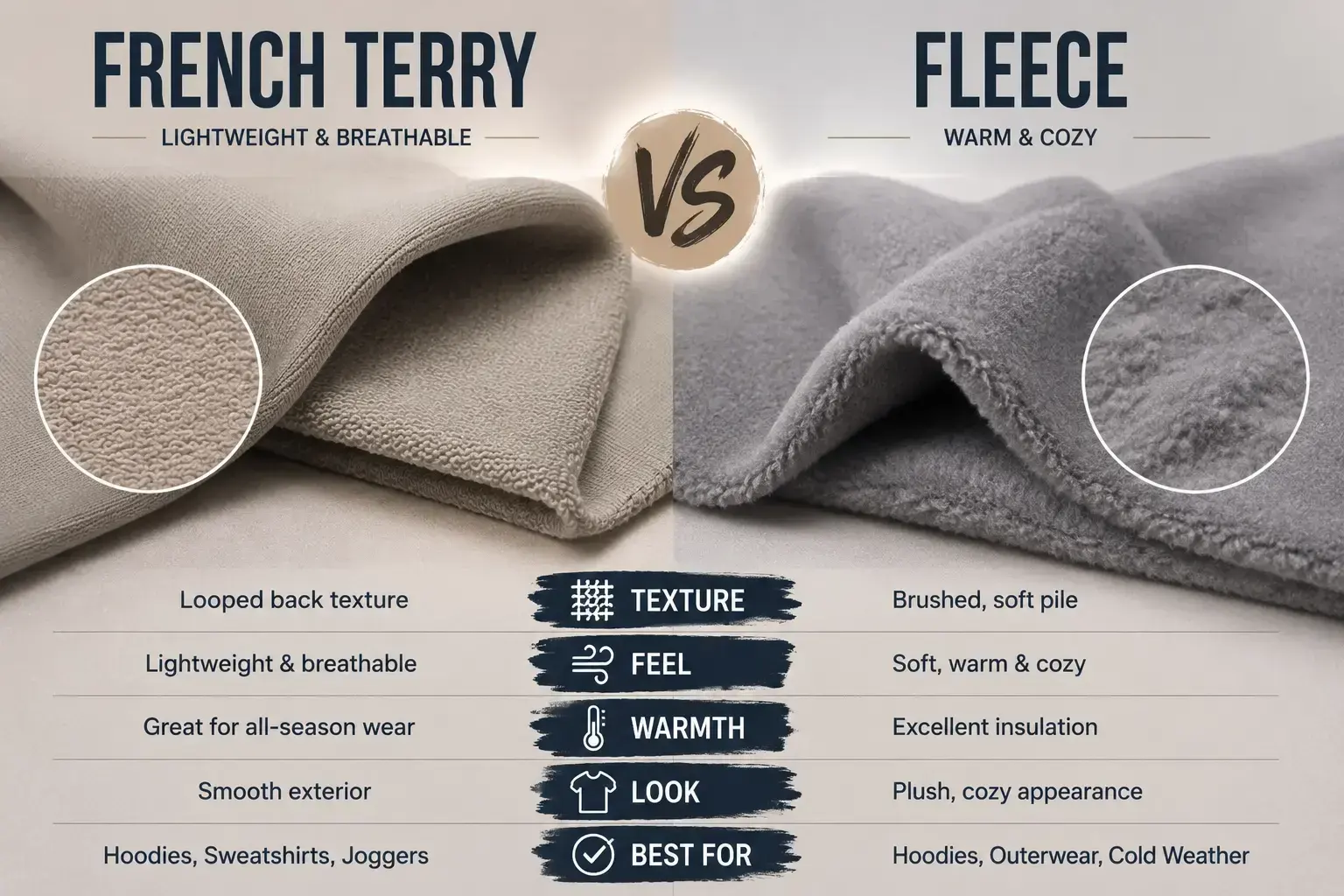
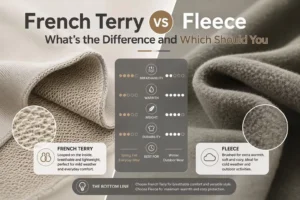
French terry is lighter and more breathable, making it suitable for transitional seasons or all-day wear.
Fleece is designed for insulation. Its brushed inner surface helps retain heat, which makes it the standard choice for winter hoodies.
Heavyweight cotton is often used in premium or streetwear products where structure and shape are important.
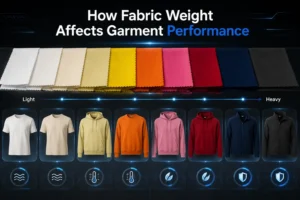
Polyester blends are widely used in performance hoodies due to their moisture control and lightweight feel.
A Quick Fabric Comparison
A Real Decision Path (How Brands Actually Choose)
In practice, hoodie fabric is rarely chosen by comparing materials side by side.
The decision usually follows a sequence:
- Define the hoodie type (e.g. oversized streetwear hoodie)
- Identify the target market (e.g. US or EU consumers)
- Set a price level
- Consider seasonality
- Evaluate design requirements such as weight, drape, and structure
At that point, the fabric choice becomes clear.
For example:
A fall streetwear hoodie with a structured fit naturally leads to heavyweight cotton or French terry.
A winter-focused product almost always leads to fleece.
A gym hoodie typically leads to polyester blends.
Fabric is not the starting point—it is the result of earlier decisions.
Wrong vs Right Fabric Decision Path
This is where many brands make costly mistakes.
A typical incorrect approach looks like this:
- Start by comparing fabrics
- Choose fleece because it feels thicker
- Try to adjust the design afterward
- Realise the product doesn’t fit the intended market
A more effective approach looks like this:
- Start with the product concept
- Define customer, season, and price
- Decide the required performance (warmth, breathability, structure)
- Select the fabric that meets those requirements
The difference between these two paths often determines whether a hoodie succeeds or fails in the market.
How Fabric Selection Works in Real Production
In actual manufacturing, fabric is chosen after several key factors are clarified:
- Who the product is for
- Where it will be sold
- When will it be worn
- What price range does it need to fit
- What design and branding methods are required
Once these are defined, the fabric choice becomes much more predictable.
Making the Right Fabric Decision
A good hoodie fabric choice is not about finding the most expensive or the most popular option.
It is about choosing the one that fits the product.
When the product direction is clear, fabric selection becomes simple. When it is unclear, even high-quality materials can lead to the wrong result.
If you’re still unsure how to approach hoodie fabric selection, you can contact Mingxing Clothing for practical guidance based on real production experience.
FAQS