Best Fabric for Dresses
Choosing the right fabric is one of the most important decisions when developing a dress collection. The best choice depends on the dress style, desired silhouette, comfort expectations, and brand positioning.
Different fabrics create different garment effects. Some create soft movement and elegant drape, while others provide stretch, structure, or everyday comfort.
Experienced manufacturers select dress fabrics based on how they perform in the finished garment, not only on how they look as raw materials. Many brands work with a custom clothing manufacturer to connect fabric selection with design goals and production requirements.
Why Dress Style Should Decide Your Fabric Choice
There is no single best fabric for every dress because each style requires different fabric behaviour. A flowing maxi dress, a fitted bodycon dress, and a structured formal dress all need different material characteristics.
The right fabric should support the design intention. Instead of choosing a fabric first, brands should define the desired garment effect and then select materials that can achieve that result.
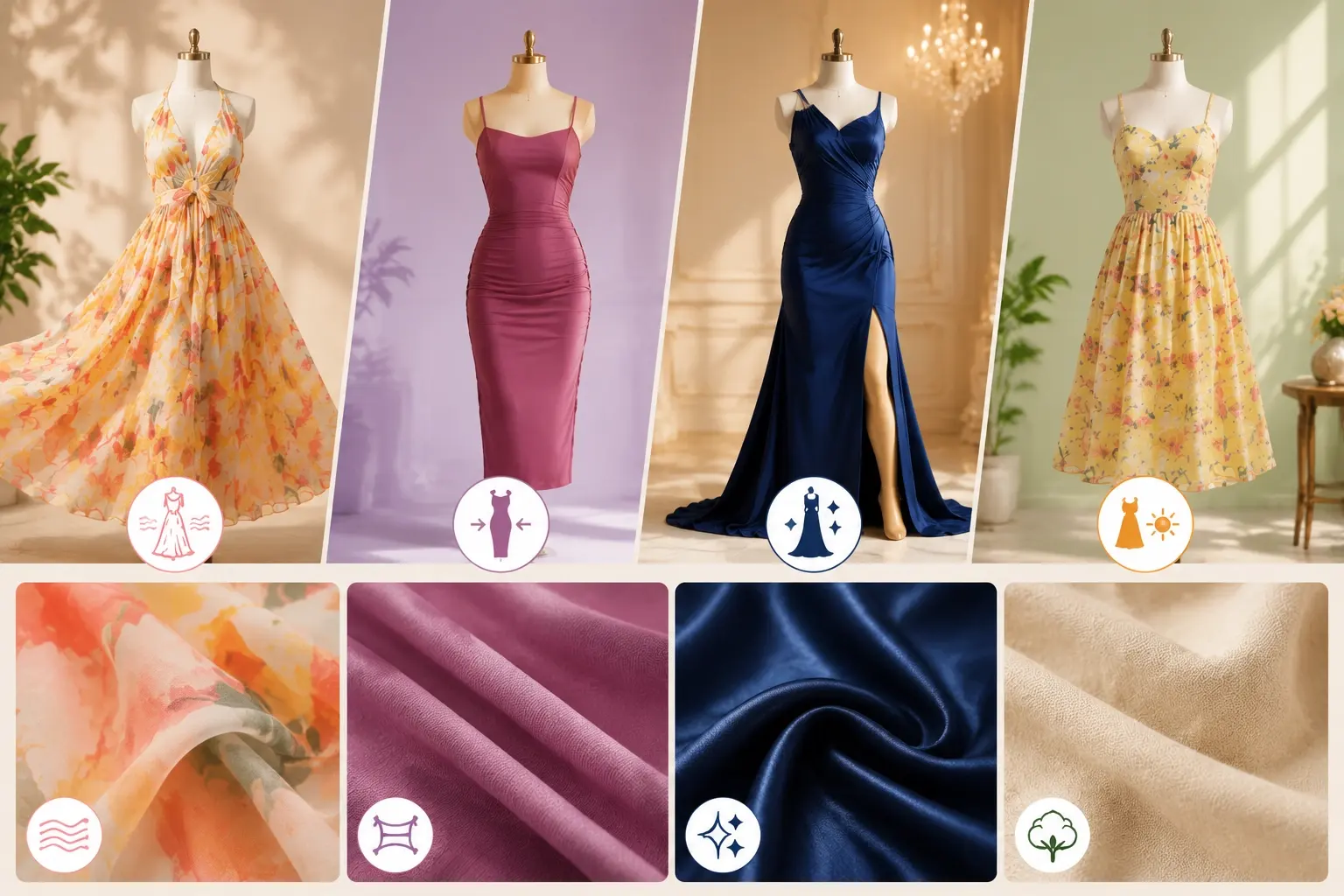
Dress Styles and Fabric Direction
| Dress Style | Desired Effect | Fabric Direction |
|---|---|---|
| Summer Dress | Light and breathable | Cotton / Linen Blend |
| Maxi Dress | Flowing movement | Chiffon / Rayon |
| Bodycon Dress | Close fit | Jersey / Knit Fabric |
| Evening Dress | Elegant appearance | Satin / Silk Blend |
| Casual Dress | Everyday comfort | Cotton Blend |
Key takeaway: The best dress fabric is the one that creates the right silhouette and wearing experience.
What Should Brands Consider Before Choosing Dress Fabric?
Before selecting a fabric, brands should understand how the material supports the final product. Fabric decisions should be based on both design expectations and production requirements.
When choosing dress fabrics, consider:
- Dress silhouette
- Whether the design requires a flowing shape, fitted appearance, or structured form.
- Fabric behavior
- How the material moves, stretches, drapes, and maintains shape.
- Target customer
- Different customers have different expectations for comfort, appearance, and price.
- Season and usage
- Summer collections usually require lightweight and breathable materials, while formal collections may prioritize appearance and structure.
- Production requirements
- The fabric should perform well during cutting, sewing, and bulk manufacturing.
Manufacturer Perspective
Professional manufacturers evaluate fabrics beyond appearance. A material may look attractive as a fabric sample but perform differently after sewing into a complete garment.
This is why experienced suppliers consider both creative requirements and manufacturing feasibility during product development.
Decision Tip: Choose fabric based on the final dress, not only the fabric swatch.
How Fabric Characteristics Affect Dress Appearance
Dress fabrics are mainly selected by how they influence the final look and wearing experience. Unlike performance garments, dresses are often judged by movement, comfort, and visual effect.
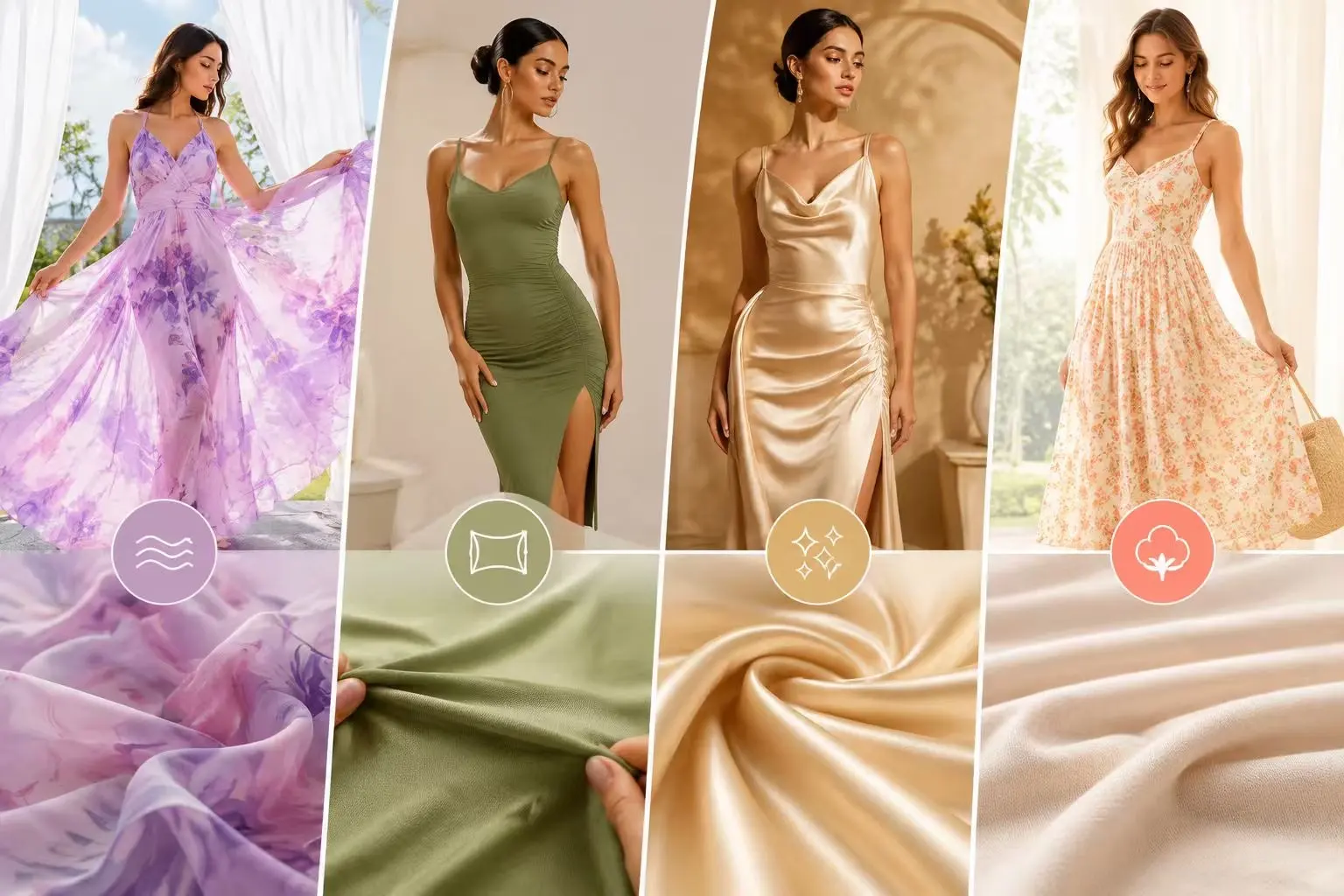
Drape
Drape determines how naturally a fabric falls and moves on the body.
Fabrics with good drape are suitable for:
- Maxi dresses
- Elegant dresses
- Flowing silhouettes
Chiffon and rayon are popular choices because they create soft movement and a lightweight appearance.
Stretch
Stretch affects how closely a dress fits the body while maintaining comfort.
Stretch fabrics are commonly used for:
- Bodycon dresses
- Fitted casual dresses
- Everyday styles requiring flexibility
Jersey and knit blends are often selected because they combine comfort with shape adaptation.
Softness
Softness directly affects wearing comfort, especially for casual and daily dresses.
Soft fabrics are suitable for:
- Everyday dresses
- Relaxed styles
- Comfortable lifestyle collections
Cotton and cotton blends are commonly chosen for their natural comfort.
Structure
Some dresses require fabrics that help maintain shape and create a defined silhouette.
Structured fabrics are suitable for:
- Formal dresses
- Premium styles
- Designs requiring support
The best dress fabric is determined by how it shapes the final garment, not only by its fiber composition.
Decision Tip: Focus on fabric behavior before focusing on fabric names.
Which Fabrics Are Commonly Used for Dresses?
Different fabrics are used for different dress styles because each material provides a different balance of comfort, appearance, and production performance.
| Fabric | Main Characteristics | Suitable Dress Styles |
|---|---|---|
| Cotton | Breathable and comfortable | Casual, Summer Dresses |
| Linen Blend | Lightweight and natural feel | Summer Dresses |
| Jersey | Stretchy and soft | Bodycon, Casual Dresses |
| Chiffon | Lightweight with flowing drape | Maxi, Evening Dresses |
| Satin | Smooth and elegant surface | Formal Dresses |
| Polyester Blend | Versatile and cost-effective | Various Dress Styles |
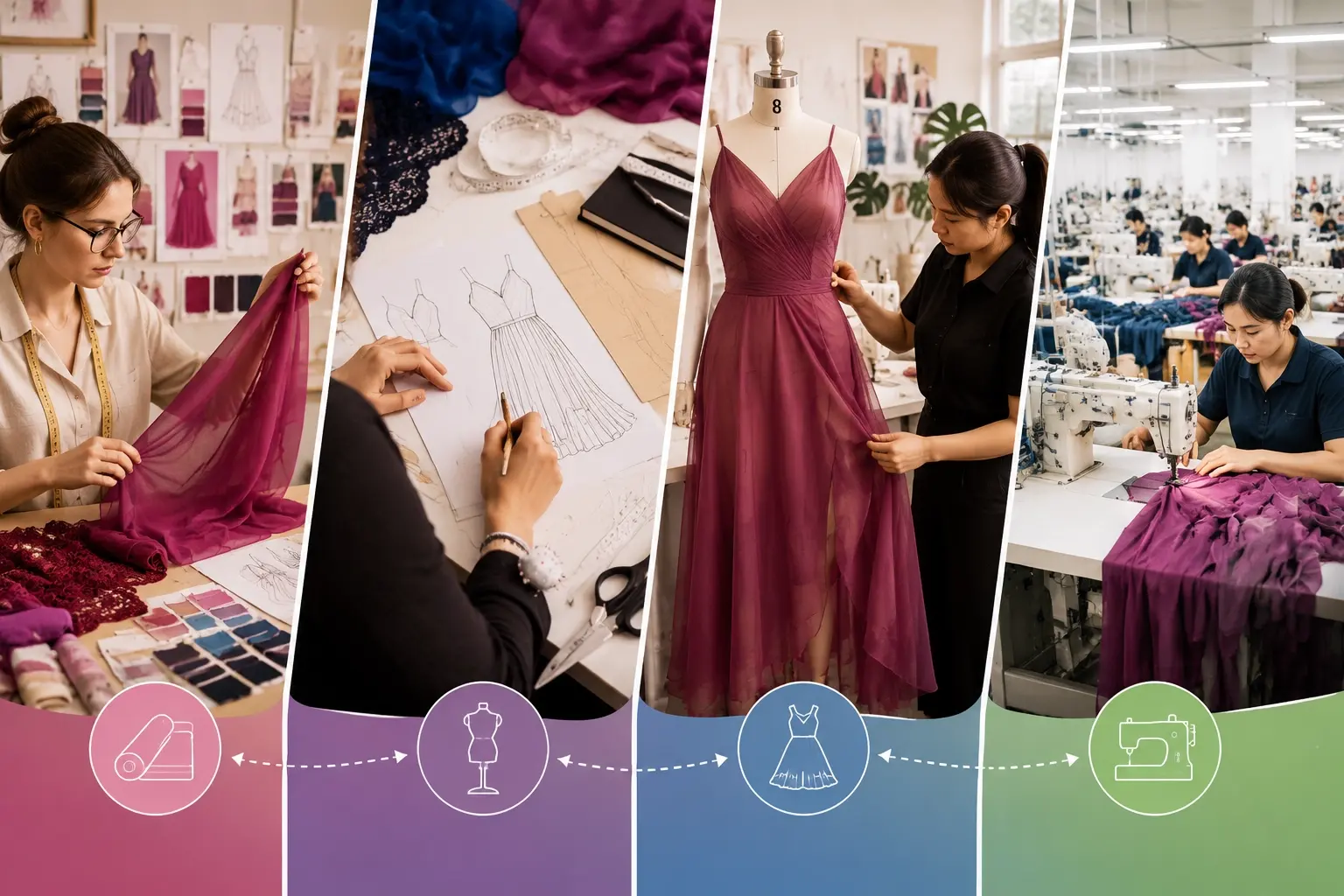
Manufacturer Insight
Fabric selection is not only about how a material looks. Manufacturers also evaluate:
- Sewing performance
- Fabric stability
- Quality consistency
- Production efficiency
For example, a premium-looking fabric may not always be the best choice for large-scale production if it creates difficulties during manufacturing.
Many fashion brands choose to work with custom dresses manufacturers because they need support balancing design expectations, fabric selection, and production requirements.
Decision Tip: Select fabrics that work for both the design and the manufacturing process.
How to Choose the Best Dress Fabric for Your Project
The best dress fabric is the one that matches your design goals, target customers, and production requirements.
A practical decision process looks like this:
Dress Concept
↓
Desired Appearance
↓
Fabric Behavior
↓
Material Selection
↓
Sample Validation
↓
Production
Before confirming a fabric choice, brands should ask:
- What type of dress am I developing?
- What silhouette should the garment create?
- Should the fabric feel soft, structured, or flexible?
- What experience should customers have when wearing it?
- Does the fabric match the target price level?
- Can the material maintain consistent quality during production?
Common Mistakes to Avoid
Many fabric problems happen because brands focus only on appearance.
Avoid:
- Choosing fabric only because it looks attractive
- Ignoring how the fabric behaves after sewing
- Selecting materials without considering production needs
- Focusing only on price instead of overall value
The best fabric for a dress is not the most expensive material. It is the material that best matches the design purpose and production requirements.
From Fabric Selection to Dress Production
Choosing the right fabric is the first step in developing a successful dress collection. After material selection, brands still need to complete sampling, fitting adjustments, quality evaluation, and bulk production planning.
A reliable production partner helps ensure that the selected fabric performs well throughout the entire manufacturing process.
If you are developing a new dress collection and need support with fabric selection, sampling, or production planning, you can contact Mingxing Clothing to discuss your project with our team.
FAQS
What is the most comfortable fabric for dresses?
Cotton, cotton blends, and jersey fabrics are popular choices because they provide softness, comfort, and good wearability.
What fabric is best for summer dresses?
Cotton, linen blends, and lightweight breathable fabrics are commonly used for summer dresses.
What fabric makes dresses flow?
Chiffon, rayon, and other fabrics with good drape create soft movement and flowing silhouettes.
Is polyester good for dresses?
Yes. Polyester blends are widely used because they provide versatility, durability, and cost efficiency for different dress styles.
Can dress fabrics be customized for brands?
Yes. Manufacturers can customize fabric composition, weight, finishing, and other requirements based on product needs.
Share With
Related Articles


Hot Products