Best Fabric for Tracksuits
Choosing the right fabric is one of the most important decisions when developing a tracksuit.
Many brands focus first on design, colours, and styling, but fabric selection directly affects comfort, performance, durability, and the final product’s market positioning.
A performance tracksuit designed for training requires different fabric characteristics from a fashion-focused streetwear tracksuit. A winter tracksuit also requires a completely different solution than a lightweight lifestyle set.
This is why professional brands usually approach fabric selection by first understanding the product’s purpose, then choosing the material that supports that goal.
Quick Answer
There is no single best fabric for every tracksuit.
Polyester blends, cotton blends, jersey, fleece, and nylon blends are all widely used in tracksuit production, but each material works better for different applications.
The right choice depends on:
- How the tracksuit will be used
- Who the target customer is
- What performance does the product need
- How the brand wants the final product to feel and look
Start With How the Tracksuit Will Be Used
Before comparing different fabrics, brands should first define what type of tracksuit they are developing.
A tracksuit is no longer only a sports product. Modern brands use tracksuits across multiple categories, including:
- Performance sportswear
- Casual lifestyle collections
- Streetwear fashion
- Winter apparel
- Outdoor functional clothing
Each category has different fabric requirements.
For example, an athlete needs lightweight and breathable materials, while a streetwear brand may prioritise structure, weight, and visual impact.
The product purpose should always come before the fabric decision.
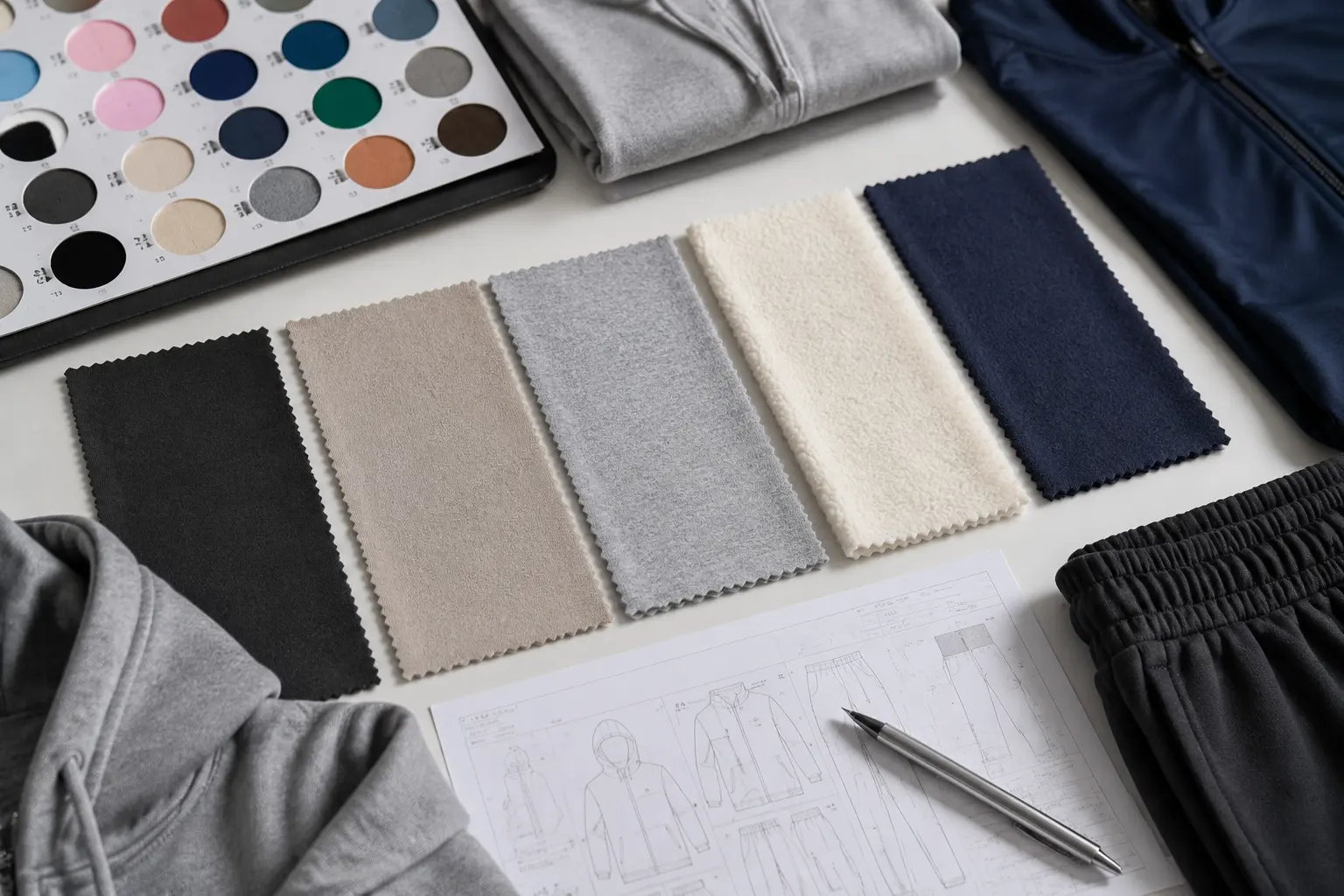
Matching Tracksuit Types With Fabric Choices
| Tracksuit Type | Recommended Fabric | Main Reason |
|---|---|---|
| Performance Tracksuit | Polyester Blend | Lightweight, durable, moisture control |
| Lifestyle Tracksuit | Cotton Blend | Comfortable and versatile |
| Streetwear Tracksuit | Heavy Jersey / Cotton Blend | Structure and premium appearance |
| Winter Tracksuit | Fleece | Warmth and insulation |
| Outdoor Tracksuit | Nylon Blend | Durability and protection |
Understanding the Main Tracksuit Fabric Options
Once the product direction is clear, the next step is understanding how each fabric performs.
Polyester Blend
Polyester blends are one of the most common choices for performance tracksuits.
They are widely used because they provide:
- Lightweight construction
- Good durability
- Faster drying performance
- Better moisture management
They are suitable for:
- Sports training
- Teamwear
- Active lifestyles
- Performance-focused products
The limitation is that polyester usually provides a different hand feel compared with natural fiber fabrics.
Cotton Blend
Cotton blends are popular for lifestyle and casual tracksuits.
They combine the comfort of cotton with improved durability and stability from synthetic fibers.
Common advantages include:
- Soft-wearing experience
- Better shape retention
- Balanced cost and performance
They are often selected for:
- Everyday tracksuits
- Casual collections
- Fashion lifestyle products
For brands looking for comfort without sacrificing practicality, cotton blends are usually a balanced choice.
Jersey Fabric
Jersey fabric is commonly selected for tracksuits that focus on comfort, drape, and appearance.
Compared with technical sports fabrics, jersey provides a softer feel and a more relaxed visual style.
It works well for:
- Lightweight tracksuits
- Fashion collections
- Casual matching sets
For brands developing lifestyle-focused products, jersey can provide a more premium clothing feel.
Fleece
Fleece is mainly chosen when warmth is the priority.
The brushed inner surface helps create insulation and a soft wearing experience.
It is commonly used for:
- Winter tracksuits
- Cold-weather collections
- Comfortable casual sets
However, fleece is generally less breathable than lightweight performance fabrics, making it less suitable for intense physical activity.
Nylon Blend
Nylon blends are often selected when durability and protection are important.
They can provide:
- Better abrasion resistance
- Stronger outdoor performance
- More functional characteristics
They are commonly used for:
- Outdoor tracksuits
- Travel apparel
- Functional sports products
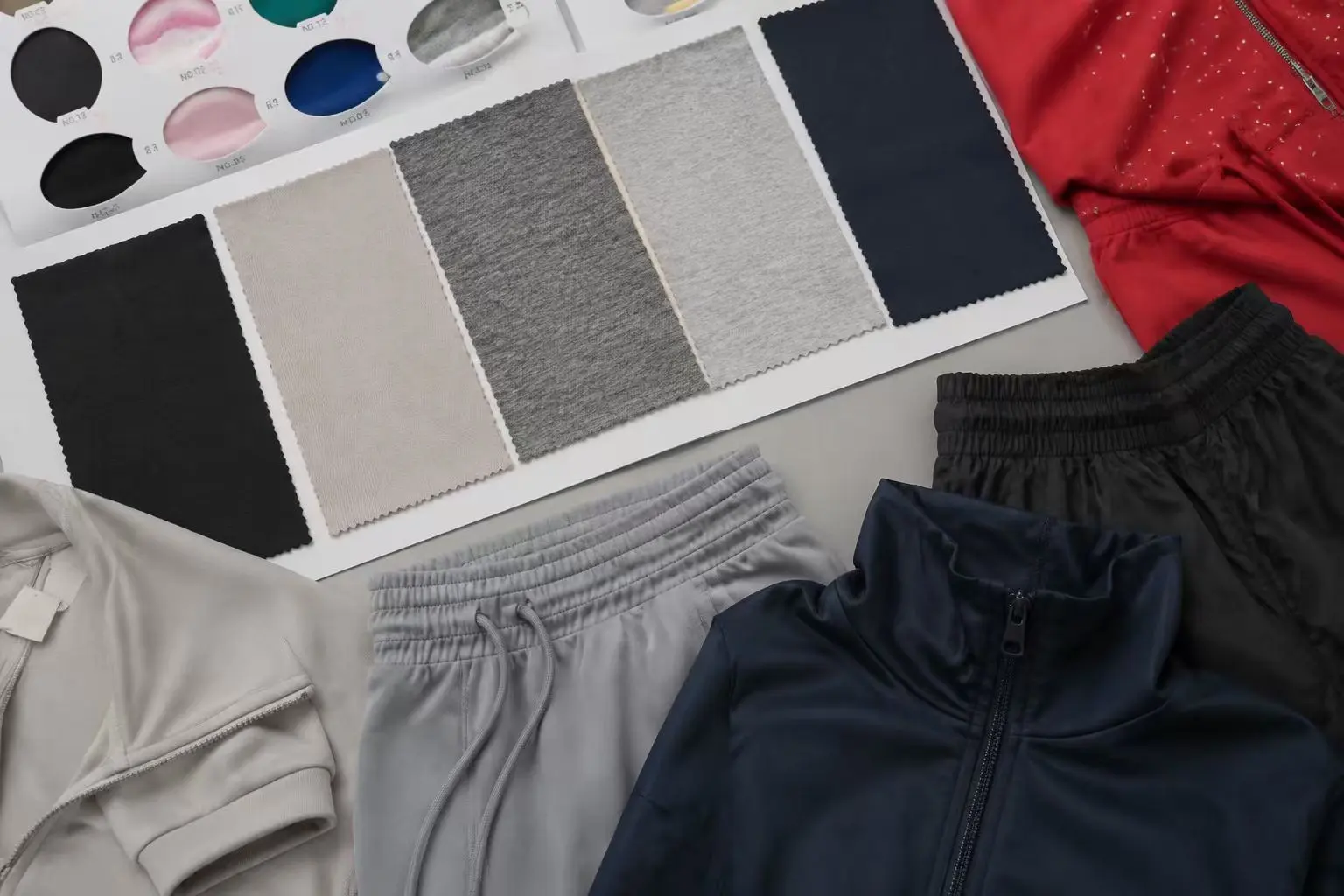
Tracksuit Fabric Comparison Guide
| Fabric Type | Main Advantage | Best Application |
|---|---|---|
| Polyester Blend | Performance and moisture control | Sports tracksuits |
| Cotton Blend | Comfort and versatility | Lifestyle tracksuits |
| Jersey | Soft drape and appearance | Fashion tracksuits |
| Fleece | Warmth and softness | Winter tracksuits |
| Nylon Blend | Durability and protection | Outdoor tracksuits |
A Real Tracksuit Fabric Decision Path
In real product development, brands rarely begin by asking:
“What is the best tracksuit fabric?”
Instead, experienced teams usually follow a decision process.
Step 1: Define the Product Purpose
The first question is:
What role will this tracksuit play?
Examples:
- Training equipment
- Daily casual wear
- Fashion collection
- Seasonal product
The answer determines the fabric requirements.
Step 2: Understand the Target Customer
Different customers have different expectations.
A sports customer may care about:
- Lightweight feel
- Breathability
- Quick drying
A fashion customer may care about:
- Silhouette
- Fabric drape
- Premium appearance
Step 3: Confirm Performance Requirements
Before selecting fabric, brands should consider:
- Weight
- Stretch
- Warmth
- Breathability
- Durability
These factors influence how the final product performs.
Step 4: Select the Fabric Solution
Only after the previous steps are clear should the fabric be selected.
This approach reduces unnecessary sampling changes because the material is chosen based on the actual product goal.

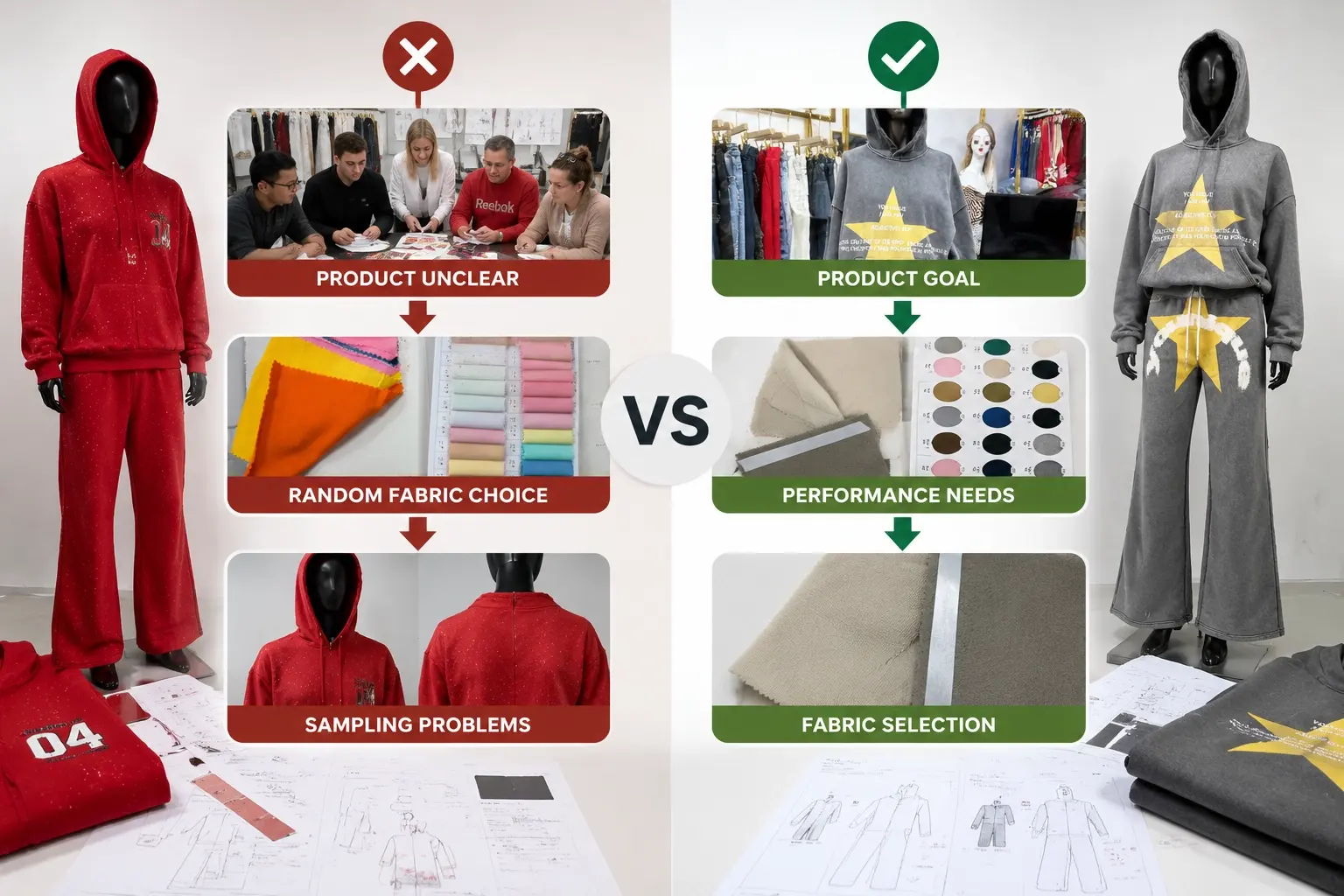
Wrong vs Right Tracksuit Fabric Decisions
Many tracksuit development problems happen because brands select fabric too early.
Wrong Decision Path
- Choosing a fabric because it is commonly used
- Selecting based only on price
- Ignoring the actual wearing scenario
- Adjusting the product after sampling problems appear
Example:
A brand wants to create a premium streetwear tracksuit but chooses a lightweight sports polyester fabric because it is cheaper.
The result may be:
- Weak structure
- Lower perceived value
- Different customer expectations
Right Decision Path
- Define the tracksuit positioning first
- Identify customer expectations
- Determine required performance
- Select the fabric that supports the product concept
The difference is not only in fabric quality.
It is choosing the correct fabric for the correct product.
Common Mistakes When Choosing Tracksuit Fabrics
Fabric selection mistakes usually happen when brands focus on only one factor.
Common issues include:
- Choosing fabric only based on price
- Selecting heavy materials for products that require flexibility
- Ignoring stretch requirements for active products
- Choosing warm fabrics without considering breathability
- Focusing only on appearance while ignoring performance
A successful tracksuit requires a balance between design, function, and comfort.
How Manufacturers Recommend Tracksuit Fabrics
In professional manufacturing, fabric recommendations are based on multiple product factors.
Manufacturers usually evaluate:
- Target market
- Product usage
- Seasonality
- Fabric weight
- Construction method
- Printing or decoration requirements
For example, a streetwear brand developing a premium tracksuit may need a heavier fabric with better structure, while a sports brand may require lightweight performance materials.
This is why experienced manufacturers usually recommend fabrics according to the product concept rather than simply choosing the most common material.
Choosing the Right Tracksuit Fabric Starts With Product Goals
The best tracksuit fabric is not always the most expensive option.
It is the fabric that best matches the product’s purpose, customer expectations, and brand positioning.
A clear product direction makes fabric selection easier and helps avoid unnecessary development changes.
If you are developing a tracksuit collection and need support choosing the right material, you can contact Mingxing Clothing for practical recommendations based on real manufacturing experience.
FAQS
What fabric is most commonly used for tracksuits?
Polyester blends and cotton blends are among the most common tracksuit fabrics because they provide a balance between performance, comfort, and durability.
Is polyester better than cotton for tracksuits?
Neither is universally better. Polyester is usually better for performance applications, while cotton blends are often preferred for comfort-focused products.
What fabric is best for winter tracksuits?
Fleece is commonly used for winter tracksuits because it provides warmth and a soft inner surface.
Are cotton tracksuits good for sports?
Cotton tracksuits can be comfortable, but they are generally less suitable for intense sports because they absorb moisture and dry more slowly.
How do manufacturers choose tracksuit fabrics?
Manufacturers usually consider product purpose, target market, season, performance requirements, and production details before recommending a fabric.
Share With
Related Articles


Hot Products