French terry and fleece are often grouped because they are used for the same types of garments—hoodies, sweatshirts, and casual wear.
But in reality, they are not competing materials.
They are two different fabric constructions designed to solve different problems.
Understanding this difference is the key to choosing the right one.
Quick Answer
French terry and fleece are often made from similar fibres, but they are built differently.
French terry uses a looped inner structure that allows airflow, making it lighter and more breathable.
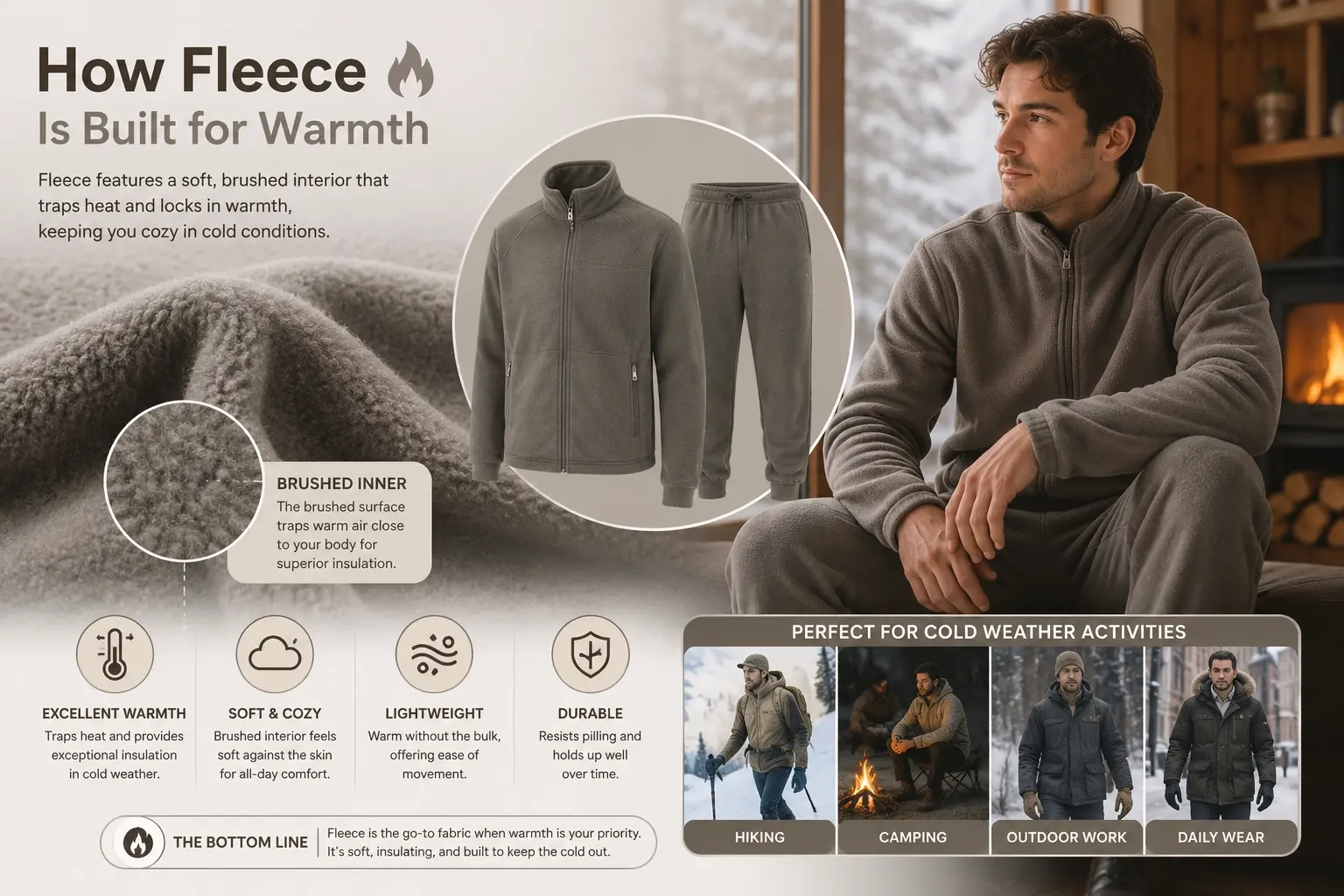
Fleece is brushed on the inside to trap air, making it warmer and more insulating.
The difference is not the material—it is the structure.
Why People Often Confuse French Terry and Fleece
At first glance, French terry and fleece look very similar.
They are both commonly used in sweatshirts and hoodies, and their outer surfaces often appear almost identical.
This leads many people to assume they are simply different types of fabric.
In reality, the confusion comes from the fact that both fabrics belong to the same category—knit fabrics used for comfort wear—but are finished differently during production.
The real difference is hidden inside.
The Real Difference Starts Inside the Fabric
The most important difference between French terry and fleece is what happens on the inside of the fabric.
French terry has a loopback construction. The inner side is made up of small loops of yarn that are left unbrushed.
Fleece is created by brushing the inner surface, which raises the fibres and creates a soft, fuzzy texture.
This structural difference determines how the fabric behaves:
- Loops allow air to move → breathable
- Brushed fibres trap air → insulating
Once you understand this, the rest of the differences become intuitive.
How French Terry Is Built for Breathability
French terry is designed to provide comfort without excessive warmth.
Because the loops remain intact:
- Air circulates more freely
- Heat does not build up easily
- The fabric feels lighter on the body
This makes it especially suitable for:
- Mild weather
- Indoor environments
- Layering pieces
- Transitional seasons
French terry is often chosen when flexibility and comfort are more important than insulation.
How Fleece Is Built for Warmth
Fleece is engineered to retain heat.
During production, the inner surface is brushed to create a soft layer that traps air.
This process results in:
- Strong insulation
- A softer, plush feel
- Better heat retention in cold conditions
Fleece is typically used when warmth is the priority, especially in colder climates or outdoor settings.
Why They Feel Completely Different When Worn
Even if two garments look similar on the outside, the experience of wearing them is very different.
French terry feels:
- Light
- Breathable
- Easy to wear for long periods
Fleece feels:
This difference becomes obvious during use. French terry is comfortable across a wider range of temperatures, while fleece is more specialised for colder environments.
Which One Works Better in Different Weather?
The simplest way to understand the difference is to look at how each fabric performs in real conditions.
French terry works best in:
- Spring and autumn
- Mild outdoor weather
- Indoor environments
Fleece performs better in:
- Winter
- Cold outdoor conditions
- Situations where warmth is essential
This is why many brands release both French terry and fleece products within the same collection.
Why Clothing Brands Use Both
From a manufacturing and product strategy perspective, French terry and fleece are not interchangeable—they serve different roles.
Brands often use French terry for:
- Lightweight hoodies
- Premium casualwear
- Year-round basics
Fleece is used for:
- Winter apparel
- Cold-weather collections
- Performance layering
Instead of choosing one over the other, most brands use both to cover different seasons and customer needs.
French Terry vs Fleece at a Glance
This comparison is not about which is better—it shows how each fabric is designed for a different purpose.
This comparison is not about which is better—it shows how each fabric is designed for a different purpose.
So, Which One Should You Choose?
The right choice depends entirely on how the garment will be used.
If your priority is breathability, comfort, and versatility:
→ French terry is the better choice
If your priority is warmth and cold-weather performance:
→ Fleece is the better option
If you are building a product line:
→ Using both allows you to cover different seasons and customer needs
Need Help Choosing the Right Fabric for Your Product?
Choosing between French terry and fleece is not about preference—it is about product positioning.
As an experienced custom clothing manufacturer, Mingxing Clothing helps brands select the right fabric structure based on season, use case, and target market.
If you’re developing hoodies or sweatshirts, you can contact Mingxing Clothing to get tailored recommendations and sample support.
FAQs