How Fabric Shrinkage Affects Clothing Quality
When developing a clothing product, brands usually focus on fabric composition, color, design, and construction details. However, one factor that can directly affect the final customer experience is often overlooked: fabric shrinkage.
A garment may look perfect during sampling and production, but uncontrolled shrinkage can change its fit, shape, and overall performance after washing.
Understanding fabric quality means looking beyond how a material feels before production. It also means understanding how the fabric behaves throughout the entire product lifecycle.
Quick Answer
Fabric shrinkage affects much more than garment size.
It can influence:
- Fit accuracy
- Garment shape
- Size consistency
- Customer satisfaction
Professional manufacturers control shrinkage during fabric selection, testing, and sampling stages because quality problems caused by shrinkage are difficult to fix after mass production begins.
Why Shrinkage Is More Than Just a Washing Problem
Many people associate shrinkage only with washing.
However, shrinkage is not simply a consumer care issue. It is a manufacturing quality factor that needs to be considered before a garment reaches the customer.
During production, fabrics experience different processes such as:
- Knitting or weaving tension
- Dyeing
- Washing
- Drying
- Finishing treatments
These processes can create internal tension within the fabric structure.
After washing, the fabric may naturally relax and return closer to its original state, causing dimensional changes.
This is why professional clothing manufacturers consider shrinkage before cutting and production instead of waiting until customers report problems.

What Causes Fabric Shrinkage?
Fabric shrinkage happens because different fibers and fabric structures respond differently to moisture, heat, and mechanical movement.
Several factors can influence shrinkage:
Fiber Characteristics
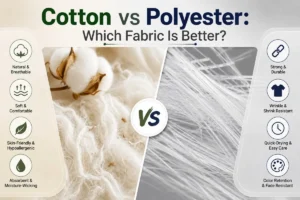
Natural fibers such as cotton can absorb moisture and relax after washing, which may lead to dimensional changes.
Synthetic fibers such as polyester generally have better dimensional stability because of their manufactured structure.
Fabric Construction
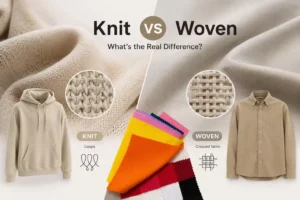
The way yarns are knitted or woven also affects how much movement can occur inside the fabric.
For example, knitted fabrics usually have more flexibility because of their loop structure, while woven fabrics tend to maintain more stability.
Manufacturing Processes
Heat, washing, and finishing methods during production can influence how much the fabric will shrink later.
This is why fabric testing is an important step before bulk production.
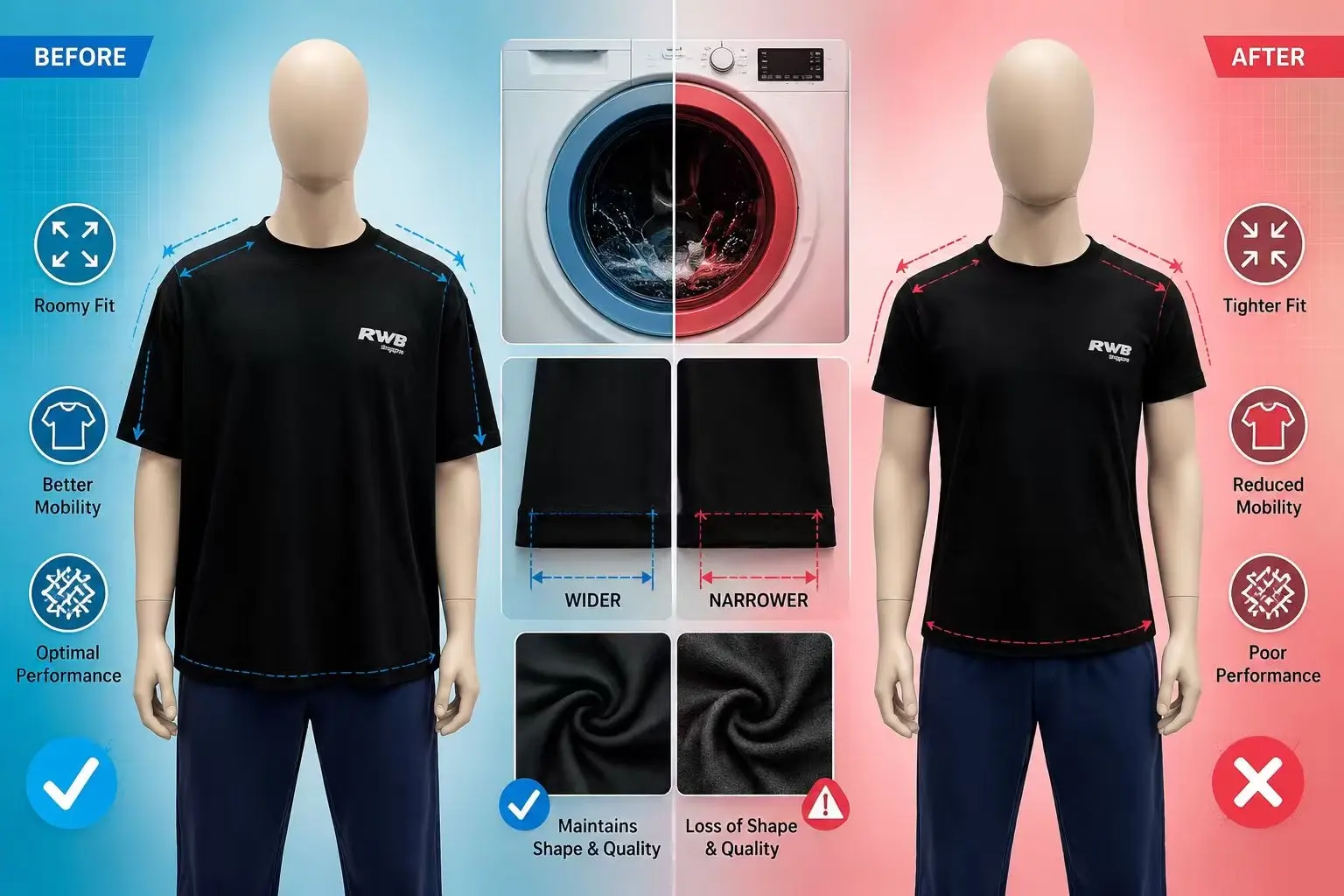
How Shrinkage Changes Garment Performance
The biggest impact of shrinkage is not the number itself—it is how the garment changes after the customer starts wearing it.
Fit Changes
Even small dimensional changes can affect how a garment fits.
Shrinkage may change:
- Body length
- Sleeve length
- Chest measurement
- Overall proportions
A garment that fits correctly before washing may feel noticeably different afterward if shrinkage is not controlled.
Shape Changes
Shrinkage can also affect the visual appearance of clothing.
Common issues include:
- Twisted seams
- Uneven hems
- Changed neckline shape
- Altered silhouette
This is especially important for fashion products where the intended shape and proportion are part of the design value.
Size Consistency Problems
For brands producing large quantities, consistency is critical.
If shrinkage is not properly controlled, garments from the same production batch may not perform equally after washing.
This can lead to:
- Customer complaints
- Increased returns
- Negative brand perception
Why Small Shrinkage Can Create Big Quality Problems
One of the biggest misconceptions about shrinkage is that a small percentage does not matter.
In reality, even a small change can affect garment measurements.
For example:
A T-shirt with a body length of 70cm.
If the fabric shrinks by 3%:
70cm × 3% = approximately 2.1cm reduction.
A difference of 2cm may not sound significant, but in apparel sizing, it can affect:
- Fit expectations
- Size grading
- Customer comfort
For professional brands, shrinkage control is not about achieving zero change. It is about ensuring the final garment remains within acceptable production standards.
How Manufacturers Control Shrinkage Before Production
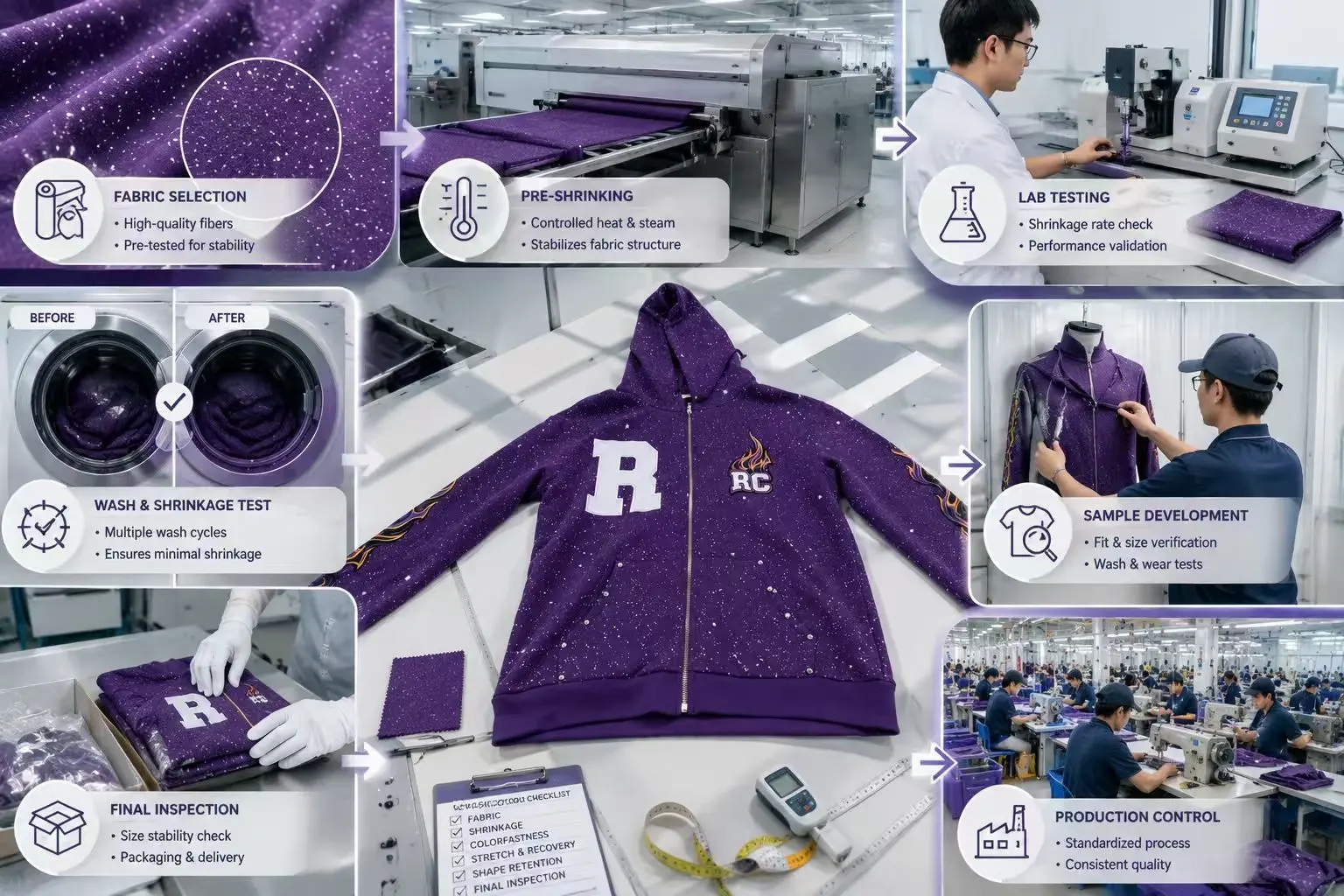
Shrinkage control begins before bulk manufacturing.
Experienced manufacturers usually manage shrinkage through several stages.
Fabric Testing
Before production starts, fabrics can be tested to understand their expected behavior after washing.
This helps determine whether adjustments are needed.
Pre-Shrunk or Stabilised Fabric
Some fabrics receive treatments designed to reduce future dimensional changes.
This improves stability during customer use.
Sample Testing
Before mass production, samples are washed and evaluated to check:
- Size changes
- Shape retention
- Overall appearance
Pattern Adjustment
If fabric shrinkage is expected, pattern measurements can be adjusted during development to ensure the final garment reaches the intended size.
This is why professional sampling is not only about checking appearance—it is also about validating performance.
How Different Fabrics Shrink Differently
Different fibres and constructions have different shrinkage behaviors.
| Fabric Type | Shrinkage Behavior | Common Consideration |
|---|---|---|
| Cotton | More likely to shrink after washing | Pre-shrinking and testing are important |
| Polyester | Generally more stable | Suitable when dimensional stability is important |
| Cotton Blend | Depends on fiber ratio | Balance between comfort and stability |
| French Terry | Can shrink depending on fiber and finishing | Testing is needed for hoodies and sweatshirts |
| Rayon | More sensitive to moisture and care | Requires careful handling |
These are general tendencies. The actual result depends on fabric construction, finishing, and production methods.
What Shrinkage Level Is Acceptable?
There is no single shrinkage percentage that applies to every garment.
Acceptable shrinkage depends on:
- Fabric type
- Garment category
- Customer expectations
- Brand positioning
For example:
A premium fashion brand may require tighter shrinkage control because fit accuracy is part of the product value.
A casual product may allow slightly more variation if the overall wearing experience remains consistent.
The goal is not always eliminating shrinkage—it is controlling shrinkage within an acceptable range.
Why Shrinkage Should Be Considered Before Sampling
One of the biggest mistakes brands make is considering shrinkage only after receiving finished products.
By that stage, changes are expensive and difficult.
Shrinkage should be evaluated during:
- Fabric selection
- Sample development
- Fit approval
- Production planning
For brands developing products for the first time, understanding how to Choose Fabric for Custom T-shirts can help avoid selecting fabrics based only on appearance while ignoring long-term performance.
A good fabric decision considers how the material behaves before, during, and after production.
Making Better Garments Starts Before Production
High-quality garments do not maintain their shape by accident.
They perform well because important factors—such as fabric stability, shrinkage control, and construction quality—are considered before production begins.
Fabric shrinkage is not simply a technical measurement. It directly influences how customers experience the product after purchase.
For brands developing custom apparel, working with an experienced manufacturing partner can help identify potential risks before they become production problems.
If you are developing a new clothing collection and need professional support with fabric testing and production planning, you can contact Mingxing Clothing for practical recommendations.
FAQS
What is fabric shrinkage?
Fabric shrinkage refers to the reduction in fabric dimensions after processes such as washing, drying, or heat exposure.
Why does cotton shrink more than polyester?
Cotton fibres naturally absorb moisture and relax after washing, while polyester has a more stable synthetic structure.
Can fabric shrinkage be completely prevented?
No. However, proper fabric selection, testing, finishing, and production control can significantly reduce shrinkage issues.
How do manufacturers test fabric shrinkage?
Manufacturers usually test fabrics by washing samples under controlled conditions and measuring dimensional changes.
Does higher quality fabric shrink less?
Not always. Shrinkage depends on fibre type, fabric construction, finishing methods, and manufacturing control.
Share With
Related Articles


Hot Products