Best Fabric for Shorts
There is no single best fabric for all shorts. The right choice depends on how the shorts will be used, including comfort needs, movement requirements, durability expectations, and product positioning.
Casual shorts, sports shorts, sweat shorts, and outdoor shorts all require different fabric performance. For clothing brands, selecting the right material is not only about appearance but also about how the fabric performs during wear and production.
Working with an experienced custom clothing manufacturer can help brands evaluate fabric options, develop samples, and choose materials that match their product goals.
What Makes a Good Shorts Fabric?
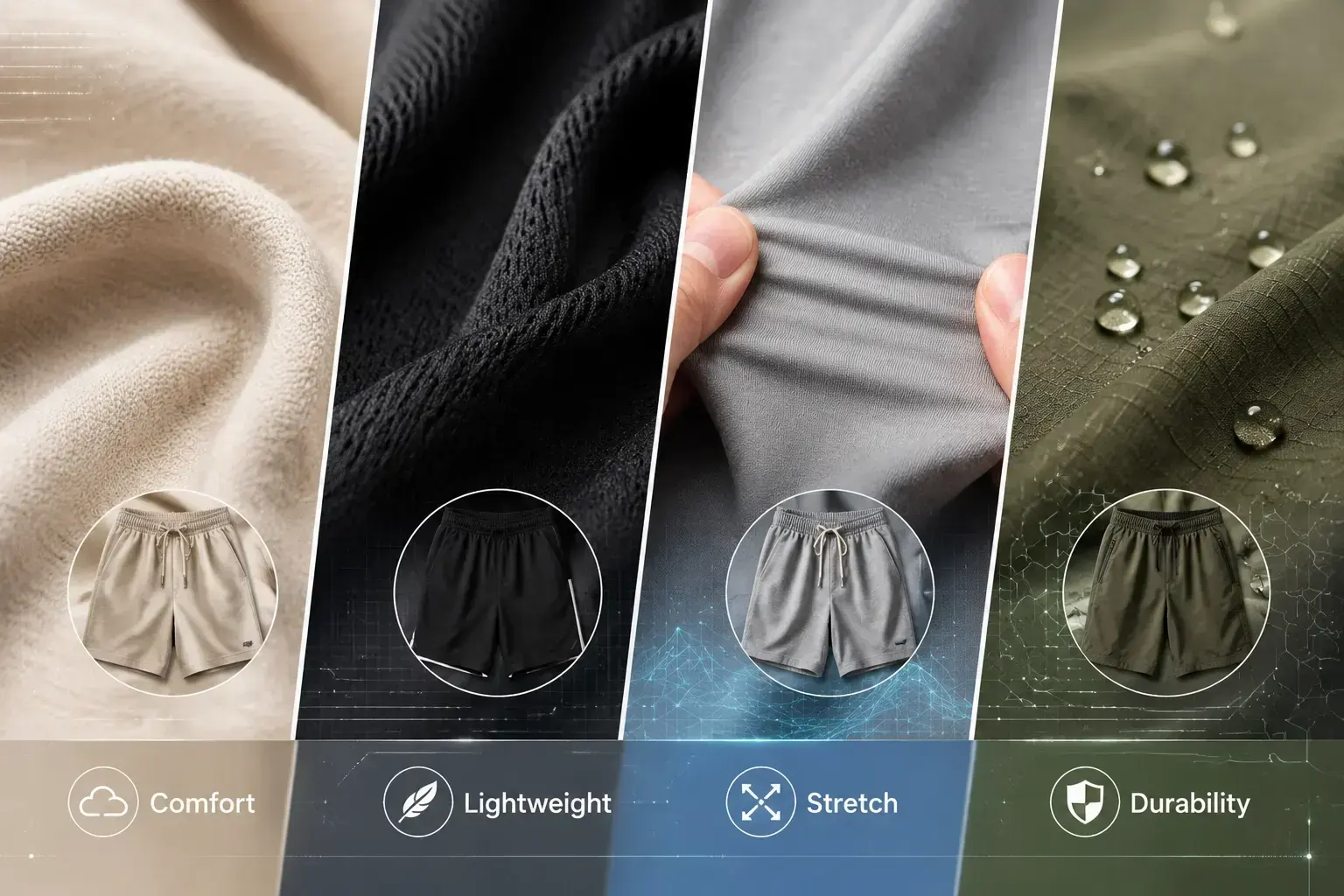
A good shorts fabric should provide the right balance of comfort, movement, durability, and performance for its intended use.
Unlike some apparel categories that focus mainly on appearance, shorts need to support daily activities and body movement. The fabric should feel comfortable while maintaining the required structure and performance.
The most important characteristics include:
- Comfort
- Soft fabrics improve the overall wearing experience, especially for everyday shorts.
- Breathability
- Breathable materials help maintain comfort during warm weather and extended wear.
- Flexibility
- Stretch and movement support are important for active lifestyles.
- Lightweight Performance
- Lightweight fabrics provide better mobility for sports and outdoor activities.
- Durability
- Strong materials help shorts maintain quality after repeated use and washing.
The best shorts fabric is not simply the softest or most expensive option. It is the material that matches the intended use of the product.
Decision Tip: Choose fabric based on how the shorts will be worn, not only how the material feels.
How Does Shorts Purpose Affect Fabric Choice?
Different shorts require different fabric characteristics because each product serves a different purpose.
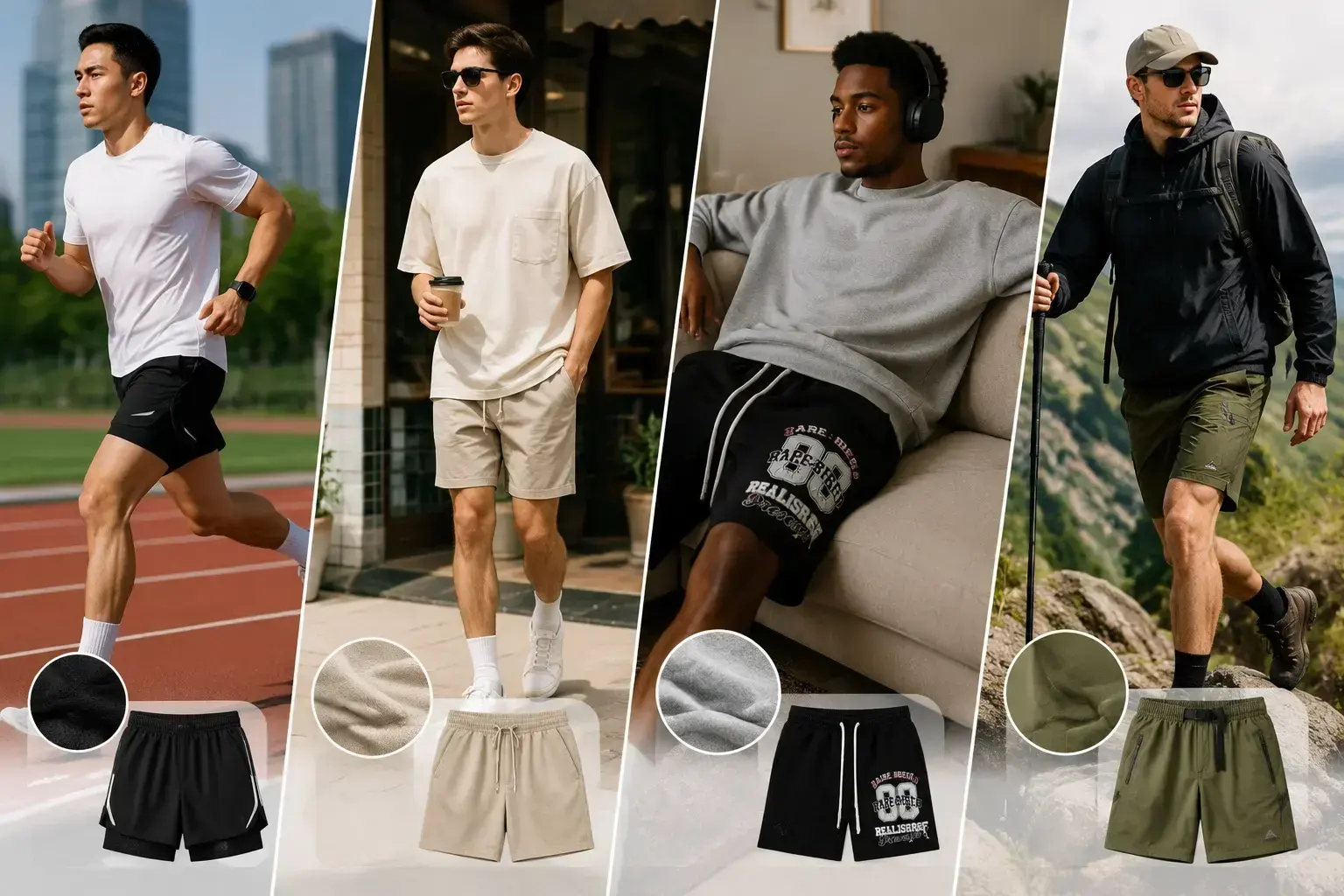
A casual lifestyle short needs comfort and softness, while a sports short needs lightweight performance and quick drying. Choosing fabric based on product purpose helps brands create better-performing garments.
Shorts Types and Fabric Direction
| Shorts Type | Main Goal | Fabric Direction |
|---|---|---|
| Casual Shorts | Comfort | Cotton |
| Sports Shorts | Performance | Polyester |
| Sweat Shorts | Softness & Structure | French Terry |
| Outdoor Shorts | Durability | Nylon |
Casual Shorts
Casual shorts are designed for everyday comfort.
They usually prioritise:
- Soft hand feel
- Breathability
- Easy wearing experience
Cotton and cotton blends are commonly used because they provide natural comfort and versatility.
Sports Shorts
Sports shorts require fabrics that support movement and physical activity.
Important properties include:
- Lightweight construction
- Quick drying
- Moisture management
- Flexibility
Polyester is commonly selected because it provides strong performance characteristics for activewear.
Sweat Shorts
Sweat shorts focus on comfort and relaxed style.
They usually require:
- Soft interior feel
- Moderate thickness
- Better structure
French Terry is popular because it provides a balance between softness and shape.
Outdoor Shorts
Outdoor shorts need stronger performance for more demanding environments.
Important features include:
- Durability
- Resistance
- Structure retention
Nylon is often used because it provides strength and long-lasting performance.
Manufacturer Insight:
Professional manufacturers do not select shorts fabrics only by popularity. They evaluate whether the material matches the product purpose, construction method, and expected customer experience.
Which Fabric Characteristics Matter Most for Shorts?
Shorts fabrics should support both comfort and movement. The right material depends on how the garment will perform during daily wear, exercise, or outdoor activities.
Breathability
Breathability affects how comfortable shorts feel, especially in warm climates.
Breathable fabrics are commonly used for:
- Summer shorts
- Casual shorts
- Lifestyle collections
Cotton and cotton blends are popular choices because they allow comfortable everyday wear.
Stretch and Flexibility
Stretch helps shorts move naturally with the body.
Flexible fabrics are useful for:
- Sports activities
- Training shorts
- Active lifestyles
Materials with good stretch recovery help maintain comfort without losing shape.
Lightweight Performance
Lightweight fabrics improve freedom of movement and reduce restriction.
They are especially suitable for:
- Running shorts
- Training shorts
- Outdoor activities
Polyester and nylon are commonly used for lightweight performance products.
Quick Dry Performance
Quick-drying fabrics help manage moisture during physical activities.
This characteristic is important for:
- Sportswear
- Fitness products
- Outdoor performance shorts
Durability
Durability determines how well shorts maintain quality over time.
Strong fabrics are especially important for:
- Cargo shorts
- Outdoor shorts
- Work-inspired styles
Shorts fabrics should support movement and comfort while maintaining durability during regular use.
Decision Tip: Focus on fabric performance before choosing the material name.
Which Fabrics Are Commonly Used for Shorts?
Different fabrics are selected for different product goals. Each material provides a different balance of comfort, performance, structure, and production value.
| Fabric | Best For | Main Advantage |
|---|---|---|
| Cotton | Casual Shorts | Comfort |
| Cotton Blend | Everyday Shorts | Balance |
| Polyester | Sports Shorts | Quick Dry |
| Nylon | Outdoor Shorts | Durability |
| French Terry | Sweat Shorts | Soft Structure |
Cotton
Cotton is one of the most popular choices for casual shorts because of its softness and breathability.
It works well for:
- Everyday shorts
- Lifestyle products
- Casual collections
Cotton Blend
Cotton blends combine comfort with improved durability.
They are suitable for brands looking for:
- Better shape retention
- Reduced shrinkage
- Cost balance
Polyester
Polyester is commonly used for performance shorts because it provides:
- Quick drying
- Lightweight feel
- Moisture management
It is especially suitable for sports and activewear products.
Nylon
Nylon is often selected for outdoor and utility-focused shorts.
Its advantages include:
- Strong durability
- Resistance
- Lightweight performance
French Terry
French Terry is popular for premium casual shorts and sweat shorts.
It provides:
- Soft texture
- Comfortable weight
- Relaxed structure
Manufacturer Insight:
Fabric selection is not only about comfort. Manufacturers also evaluate:
- Fabric stability
- Sewing performance
- Shrinkage control
- Bulk production consistency
Many brands work with custom shorts manufacturers to balance product design, fabric performance, and manufacturing requirements.
How Should Brands Choose the Right Shorts Fabric?
The best shorts fabric is the one that matches the product purpose, wearing experience, and manufacturing requirements.
Before confirming a fabric choice, brands should evaluate:
- What type of shorts are you developing?
- Who is the target customer?
- How much movement does the product require?
- What comfort level should the garment provide?
- What price level are you targeting?
- Can the fabric maintain consistent quality during production?
Common Mistakes to Avoid
Brands often make fabric decisions based only on appearance or price. This can create problems during development and production.
Avoid:
- Choosing fabric only based on cost
- Ignoring movement requirements
- Selecting materials before defining the product purpose
- Overlooking production consistency
A successful shorts collection requires a balance between design goals, customer expectations, and manufacturing feasibility.
From Fabric Selection to Shorts Production
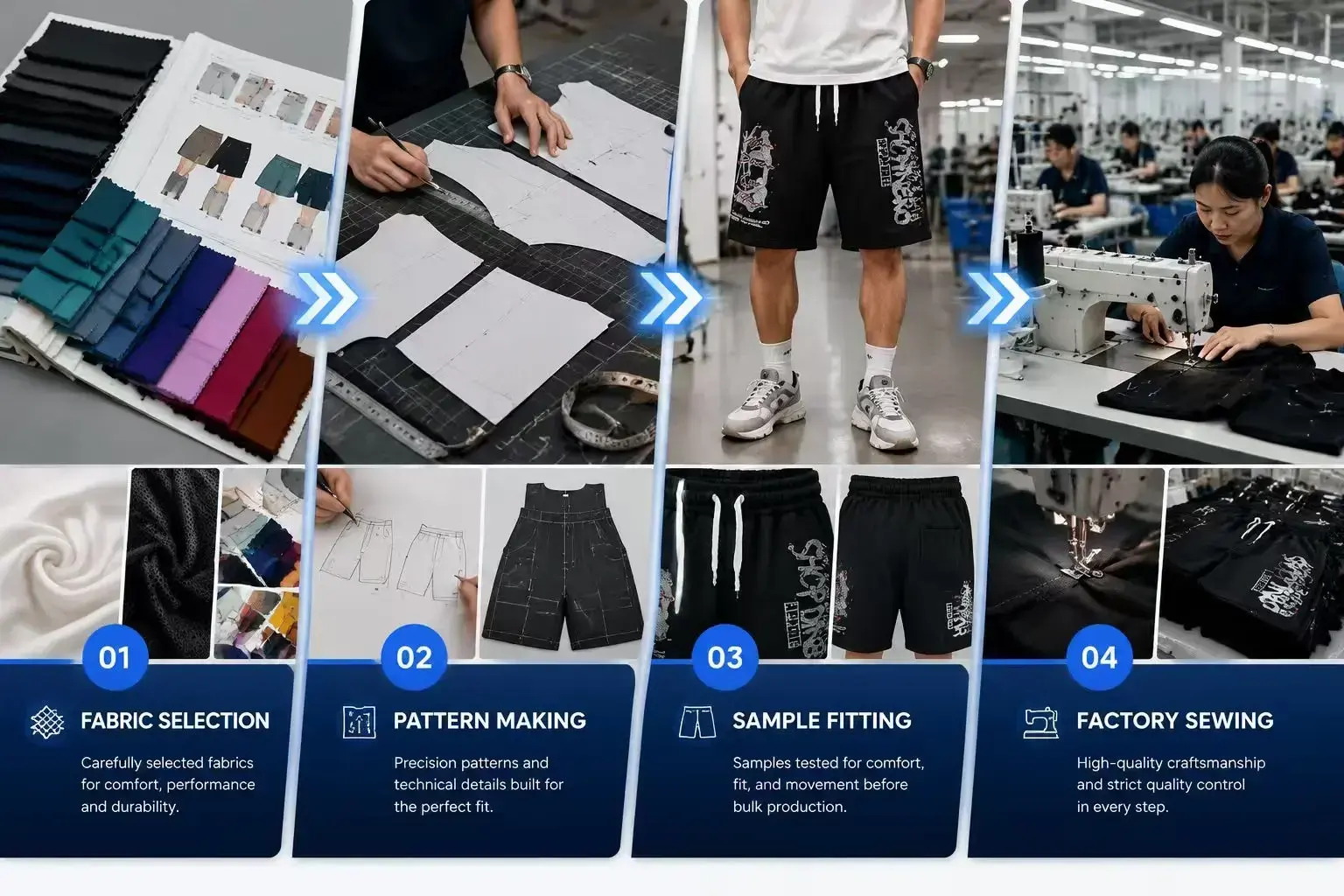
Choosing the right fabric is the first step in developing successful shorts. After material selection, brands still need to complete sampling, fit adjustments, quality evaluation, and bulk production planning.
A reliable production partner helps ensure that the selected fabric performs consistently from the first sample to final manufacturing.
If you are developing custom shorts and need support with fabric selection, sampling, or production planning, you can contact Mingxing Clothing to discuss your project.
FAQS
What is the best fabric for shorts?
The best fabric depends on the purpose of the shorts. Cotton works well for casual styles, while polyester is commonly used for sports shorts.
What fabric is best for casual shorts?
Cotton and cotton blends are popular choices because they provide softness, comfort, and breathability.
What fabric is best for sports shorts?
Polyester is commonly used for sports shorts because it offers lightweight performance and quick-drying properties.
Are cotton shorts better than polyester shorts?
Neither is always better. Cotton provides comfort, while polyester offers better performance for active use.
Can manufacturers customise shorts fabrics?
Yes. Manufacturers can customise fabric composition, weight, finishing, and other requirements based on product needs.