Knit and woven fabrics are not just two categories of textiles—they are the foundation of how all garments are made.
From T-shirts to dress shirts, from sportswear to formalwear, almost every piece of clothing is built using one of these two fabric structures.
Understanding the difference between knit and woven fabrics is essential because it explains why clothes stretch, fit, and feel the way they do.
Quick Answer
Knit and woven fabrics differ in how they are constructed.
Knit fabrics are made by looping yarns together, which creates flexibility and stretch.
Woven fabrics are made by interlacing yarns in a grid pattern, which creates structure and stability.
This difference defines how garments perform, fit, and behave in real use.
Why Knit and Woven Are the Foundations of All Fabrics
At the most fundamental level, fabrics are not defined by fibre—but by structure.
Whether a material is made from cotton, polyester, or blends, it ultimately falls into one of two construction types:
This means that before choosing a fabric, manufacturers first decide how the fabric should behave—and that decision starts with choosing between knit and woven construction.
Two Different Ways to Build Fabric
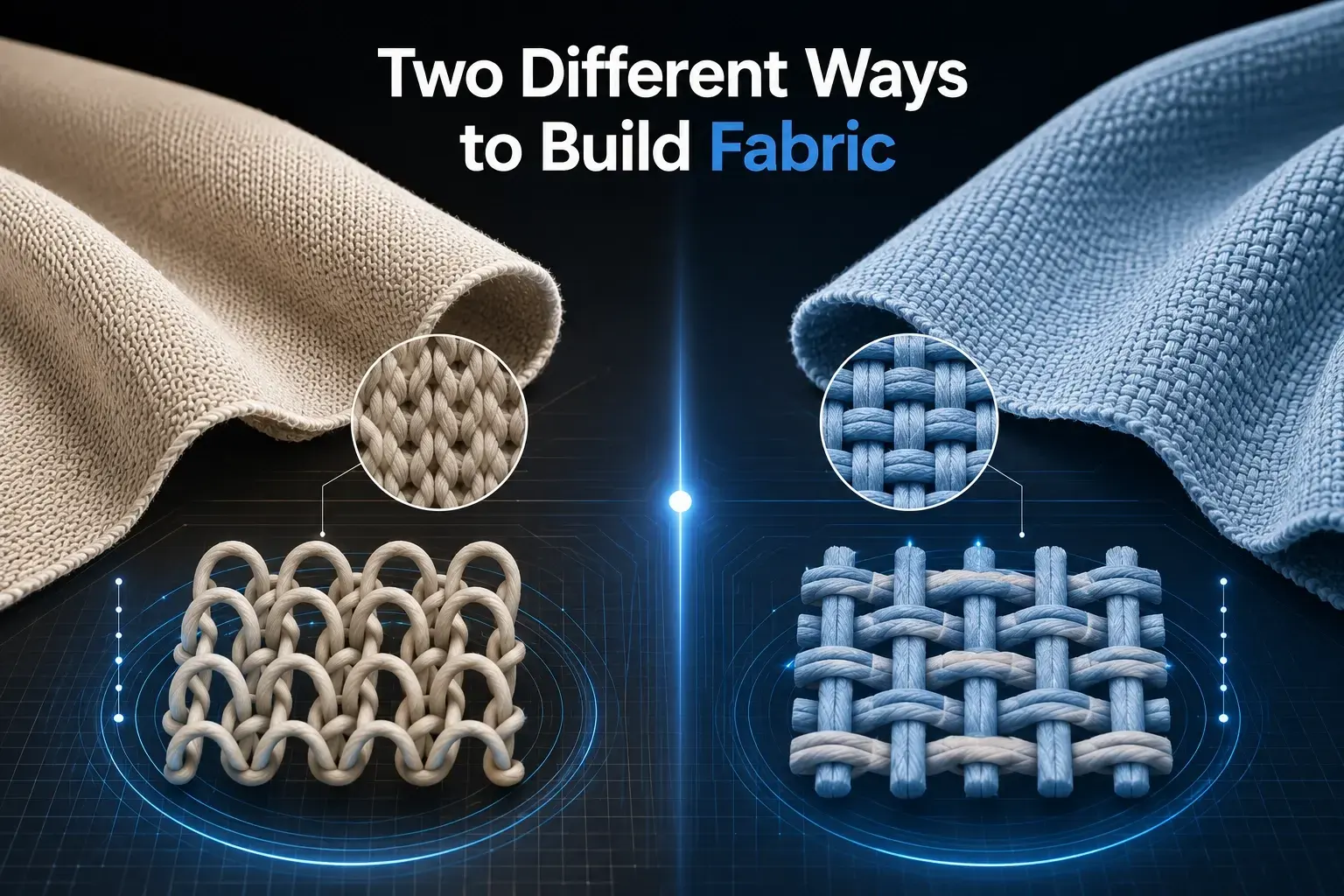
The difference between knit and woven fabrics comes from how yarns are assembled.
Knit fabrics are created by forming loops that interconnect with each other. This looped structure allows movement and flexibility.
Woven fabrics are created by interlacing two sets of yarns—warp and weft—at right angles. This creates a tight and stable structure.
These two methods produce completely different fabric behaviours, even if the same fibre is used.
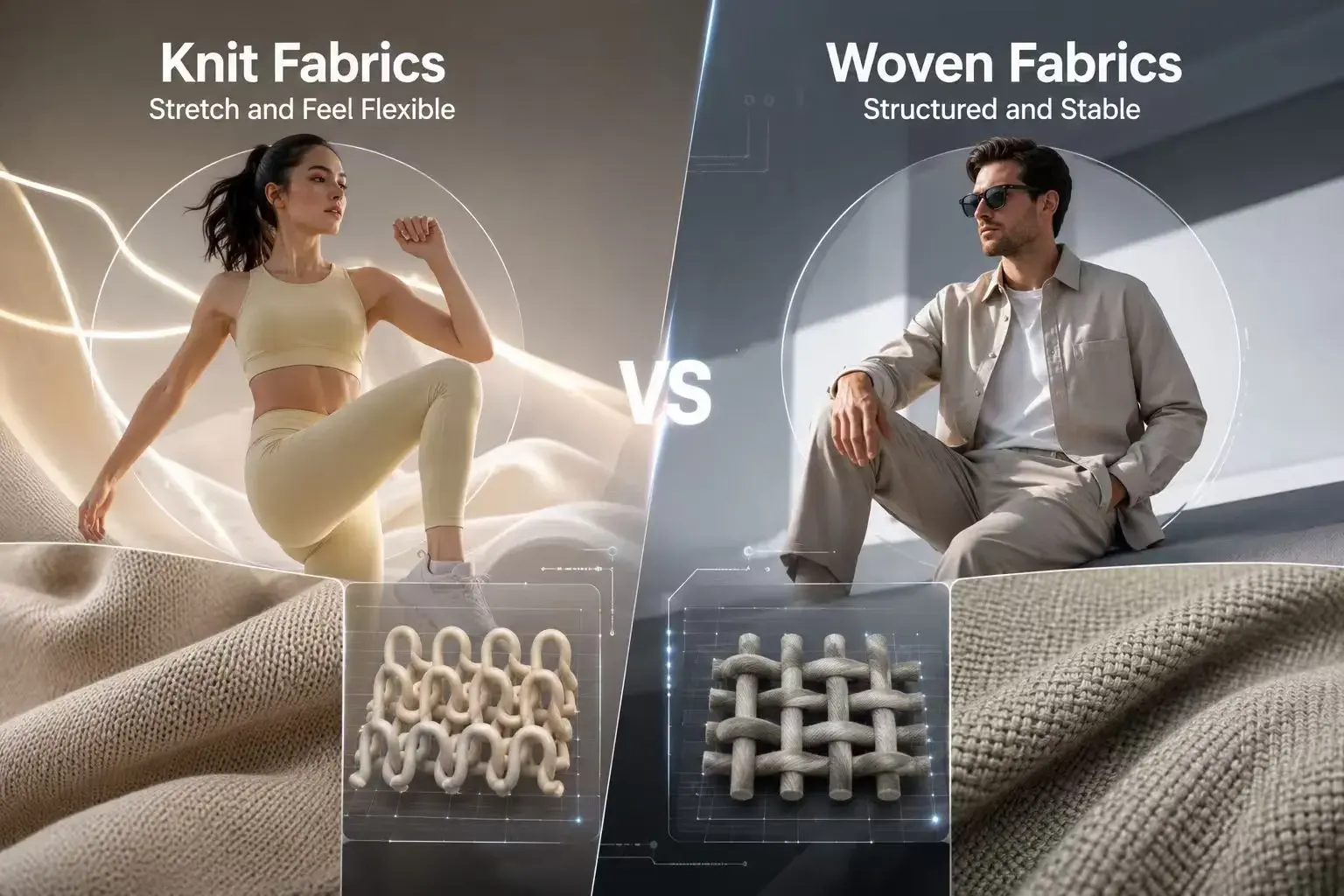
Why Knit Fabrics Stretch and Feel Flexible
The looped structure of knit fabrics allows the yarns to move when tension is applied.
This is why knit fabrics:
- Stretch naturally without added elastane
- Conform to body shape
- Provide greater comfort during movement
Because of this flexibility, knit fabrics are commonly used in garments that require comfort and ease of wear.
Why Woven Fabrics Feel Structured and Stable
Woven fabrics, by contrast, are designed to hold their shape.
The interlaced structure restricts movement between yarns, which results in:
- Minimal stretch (unless blended with elastic fibres)
- Better shape retention
- A more structured appearance
This makes woven fabrics ideal for garments that require form, sharpness, or durability.
How This Difference Changes the Way Clothes Fit
The structural difference between knit and woven fabrics directly affects garment fit.
Knit garments tend to:
- Stretch and adapt to the body
- Feel more relaxed and flexible
- Require less precise sizing
Woven garments tend to:
- Maintain a fixed shape
- Offer a more tailored fit
- Require more accurate sizing and pattern development
This is why two garments made from the same fibre can feel completely different depending on their construction.
Why T-shirts Are Knit and Shirts Are Woven
This is one of the simplest ways to understand the difference.
T-shirts are made from knit fabrics because they need to be soft, stretchable, and comfortable for everyday wear.
Dress shirts are made from woven fabrics because they need to hold structure, maintain shape, and present a more formal appearance.
This is not a design preference—it is a structural requirement.
How Knit and Woven Fabrics Perform in Real Use
In practical terms, knit and woven fabrics serve different purposes.
Knit fabrics perform better in:
- Casual wear
- Sportswear
- Stretch garments
- Comfort-focused clothing
Woven fabrics perform better in:
- Formal wear
- Outerwear
- Structured garments
- High-durability applications
Each fabric type is optimised for a different use case.
Why Most Brands Use Both
From a product development perspective, brands do not choose between knit and woven—they use both strategically.
A single brand may use:
- Knit fabrics for T-shirts, hoodies, and activewear
- Woven fabrics for shirts, jackets, and structured garments
This allows them to cover different product categories and customer needs.
Knit vs Woven at a Glance
This comparison shows that knit and woven fabrics are designed for different purposes rather than competing directly.
So, When Should You Use Knit vs Woven?
Choosing between knit and woven depends on what your product needs to achieve.
If your priority is comfort, flexibility, and ease of wear:
→ Knit fabric is the better choice
If your priority is structure, durability, and shape retention:
→ Woven fabric is more suitable
For most clothing brands, the decision is not either-or, but how to use both effectively across different product categories.
Need Help Choosing the Right Fabric Structure for Your Product?
Fabric selection is not just about fibre—it starts with choosing the right construction.
As an experienced custom clothing manufacturer, Mingxing Clothing helps brands select suitable fabric structures, develop samples, and ensure consistent production quality.
If you’re planning a new clothing line, you can contact Mingxing Clothing to get professional guidance based on your product and market.
FAQs