Cotton and polyester are not just two popular fabrics—they represent two fundamentally different approaches to making clothing.
For decades, these two materials have dominated the global textile industry. Yet instead of replacing one another, they continue to coexist across almost every category of apparel.
Understanding why both fabrics are still widely used is the key to choosing the right one.
Quick Answer: Cotton or Polyester?
Neither cotton nor polyester is inherently better.
Cotton is designed for comfort, breathability, and a natural feel.
Polyester is engineered for durability, performance, and efficiency.
They are not competitors—they solve different problems.
Why Cotton and Polyester Are Often Compared
Among all fabric combinations, cotton and polyester are compared the most.
This is because they represent the two extremes of textile manufacturing:
- Natural vs synthetic
- Comfort vs performance
- Tradition vs engineering
Most modern clothing decisions are essentially a choice between these two directions.
That is why this comparison matters—not because one replaces the other, but because nearly every product sits somewhere between them.
Natural vs Synthetic: Two Different Design Philosophies
Before comparing performance, it is important to understand the philosophy behind each material.
Cotton comes from nature. It was developed through agriculture and refined for human comfort. Its strength lies in how it feels against the skin.
Polyester is created through industrial engineering. It was designed to solve problems that natural fibres cannot—such as moisture control, durability, and consistency.
This difference explains almost every performance gap between the two fabrics.
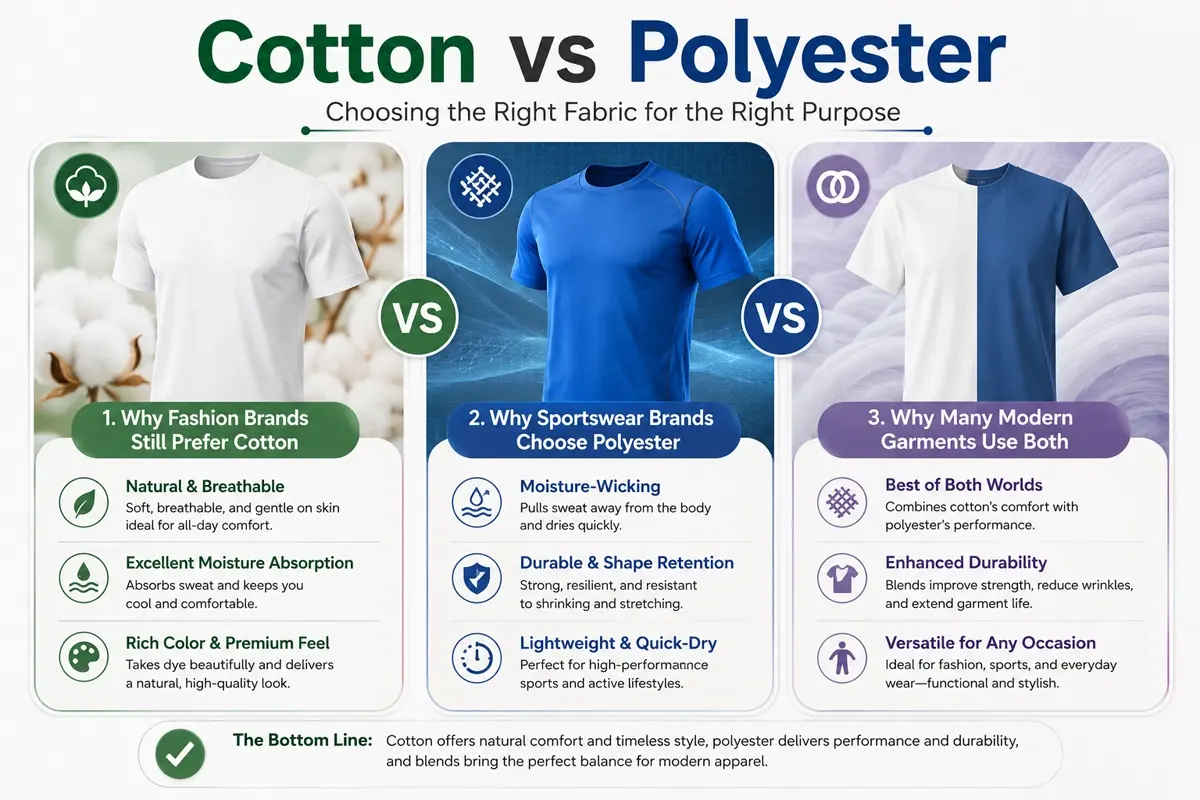
Why Fashion Brands Still Prefer Cotton
Despite advances in synthetic materials, cotton remains the dominant choice for fashion and retail.
This is not accidental.
Brands choose cotton because it delivers what customers instinctively value:
- A soft, natural feel
- Breathability for everyday wear
- Better perception of quality
- Strong compatibility with printing
From a brand perspective, cotton helps create products that feel more authentic and comfortable, which directly influences customer satisfaction.
Why Sportswear Brands Choose Polyester
In contrast, polyester dominates the world of sportswear and performance apparel.
This is because it solves a completely different set of problems.
Athletic and outdoor brands prioritise:
- Moisture-wicking performance
- Quick drying
- Lightweight durability
- Consistent performance under stress
Polyester is engineered for movement and function, making it the natural choice for active environments where cotton would struggle.
Why Many Modern Garments Use Both
If cotton is better for comfort and polyester is better for performance, it raises an important question:
Why not use both?
This is exactly why cotton blends have become so common.
Modern apparel often combines cotton and polyester to balance:
- Comfort and durability
- Natural feel and performance
- Quality and cost efficiency
This approach allows brands to position products between pure comfort and pure function, depending on their market.
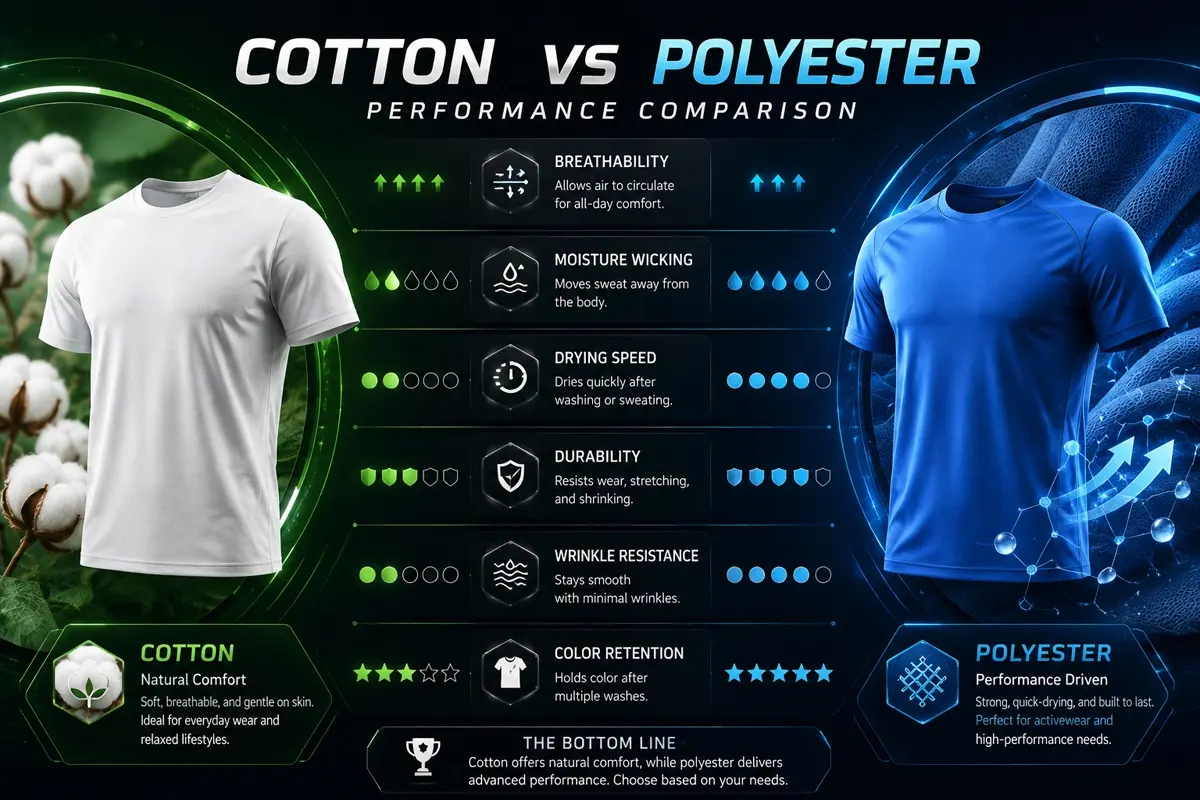
Which Fabric Performs Better in Real Life?
Once the purpose of each material is clear, performance comparison becomes more meaningful.
Cotton performs better in comfort and wearability.
Polyester performs better in terms of durability and performance.
The result is not a winner, but a clear division of roles.
How Manufacturers Decide Between Cotton and Polyester
In real production, the decision is rarely based on preference alone.
Manufacturers typically evaluate:
- Product type and use case
- Target customer expectations
- Printing requirements
- Budget and production scale
For example:
Cotton is often recommended for retail and fashion products because it provides a better customer experience and print quality.
Polyester is recommended for performance or high-frequency use products because it maintains structure and function over time.
The decision is always contextual, not absolute.
So, Which Fabric Should You Choose?
The simplest way to decide is to align fabric choice with your product’s purpose.
If your priority is comfort, natural feel, and everyday wear:
→ Cotton is the better choice
If your priority is durability, moisture control, and performance:
→ Polyester is the better option
If your product needs a balance of both:
→ A blend of cotton and polyester is often the most practical solution
Need Help Choosing the Right Fabric for Your Product?
Fabric selection becomes much easier when it is guided by real manufacturing experience rather than assumptions.
As an experienced custom clothing manufacturer, Mingxing Clothing helps brands evaluate fabric options, test materials through sampling, and ensure consistent production quality.
If you’re developing a new apparel product, you can contact Mingxing Clothing to get tailored recommendations based on your product and market.
FAQs