How to Evaluate Fabric Quality Before Production
Many garment quality problems do not start on the production line—they start much earlier, at the fabric selection stage.
A fabric may look good, feel soft, and match the design concept perfectly. But once it enters production and real use, issues such as shrinkage, color fading, or shape distortion can appear.
This is why professional manufacturers treat fabric selection as a critical decision point. Evaluating fabric quality before production is not optional—it is essential for ensuring consistent results.
Quick Answer
Fabric quality should be evaluated before production through four key areas:
- Appearance
- Performance
- Consistency
- Production suitability
A fabric that looks good is not always suitable for manufacturing. Reliable fabric quality is defined by how the material performs during production and after customer use.
Why Fabric Quality Should Be Evaluated Before Production
Many brands focus heavily on design, color, and initial hand feel when selecting fabrics.
However, most production issues are not caused by poor sewing or workmanship—they are caused by fabric limitations that were not identified early.
Common problems include:
- Unexpected shrinkage
- Color inconsistency
- Poor durability
- Shape distortion after washing
These issues are difficult and expensive to fix once bulk production has started.
Evaluating fabric quality before production helps prevent these risks rather than reacting to them later.
Fabric Appearance Is Only the First Step
The first impression of fabric quality usually comes from appearance.
Manufacturers typically inspect:
- Surface smoothness
- Texture consistency
- Color uniformity
- Visible defects such as holes or irregularities
While these factors are important, they only reflect the surface condition of the fabric.
Appearance alone cannot predict how the fabric will behave during washing, wearing, or production.
A fabric that looks perfect can still perform poorly if its internal structure or stability is not suitable.

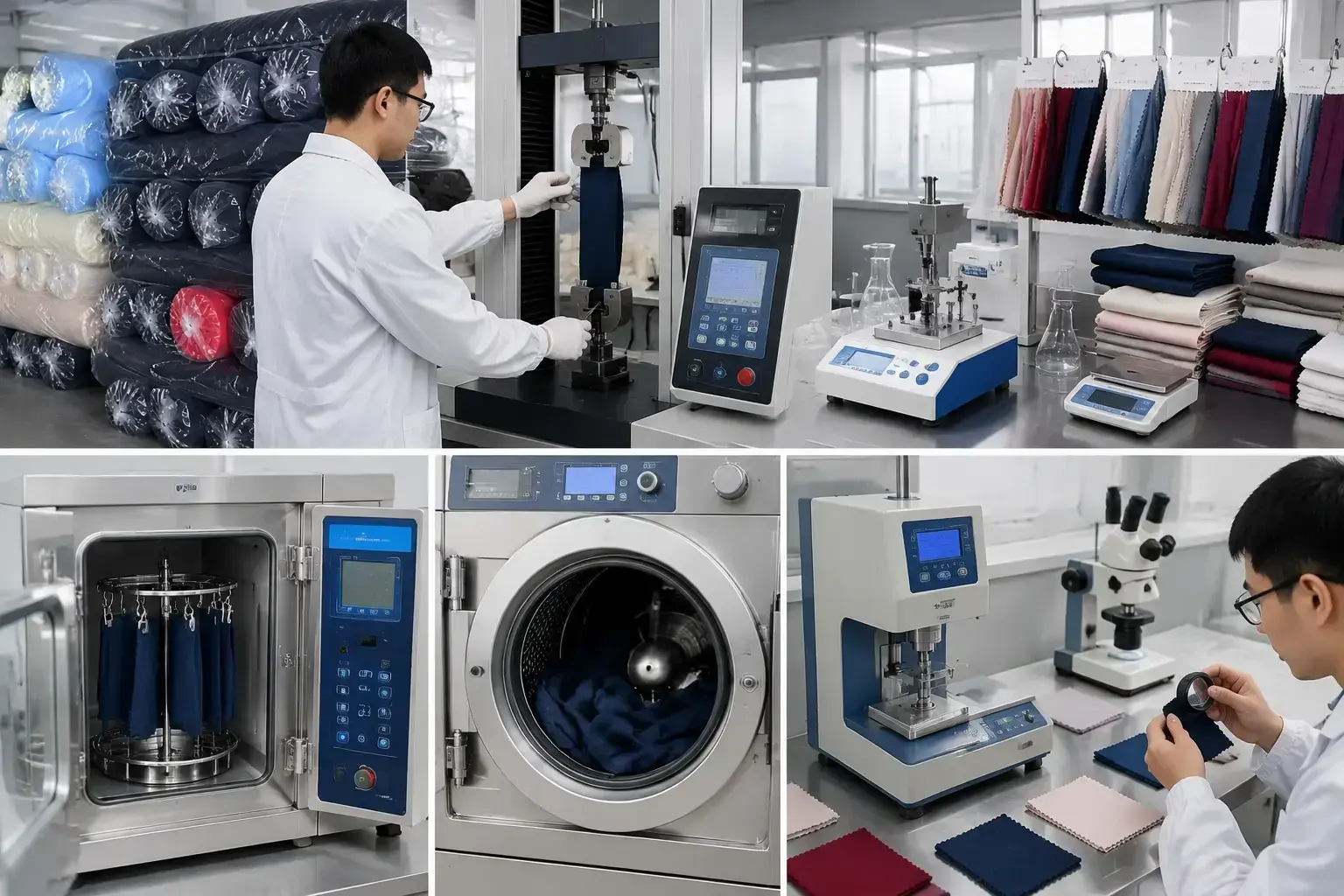
How Manufacturers Evaluate Fabric Performance
Beyond appearance, manufacturers focus on how the fabric performs under real conditions.
Several key aspects are evaluated.
Strength and Durability
The fabric must be able to withstand repeated use without tearing or excessive wear.
This is especially important for garments intended for frequent use.
Stretch and Recovery
For flexible garments, the fabric should stretch when needed and return to its original shape.
Poor recovery can lead to deformation over time.
Shrinkage Stability
Shrinkage is one of the most critical performance factors.
If not properly controlled, it can change garment dimensions after washing.
This is why fabric shrinkage testing is often conducted before production to understand how the material will behave.
Color Fastness
Fabric color should remain stable after washing, rubbing, and exposure to light.
Poor color fastness can result in fading or staining, which directly affects customer satisfaction.
Why Fabric Consistency Matters for Bulk Production
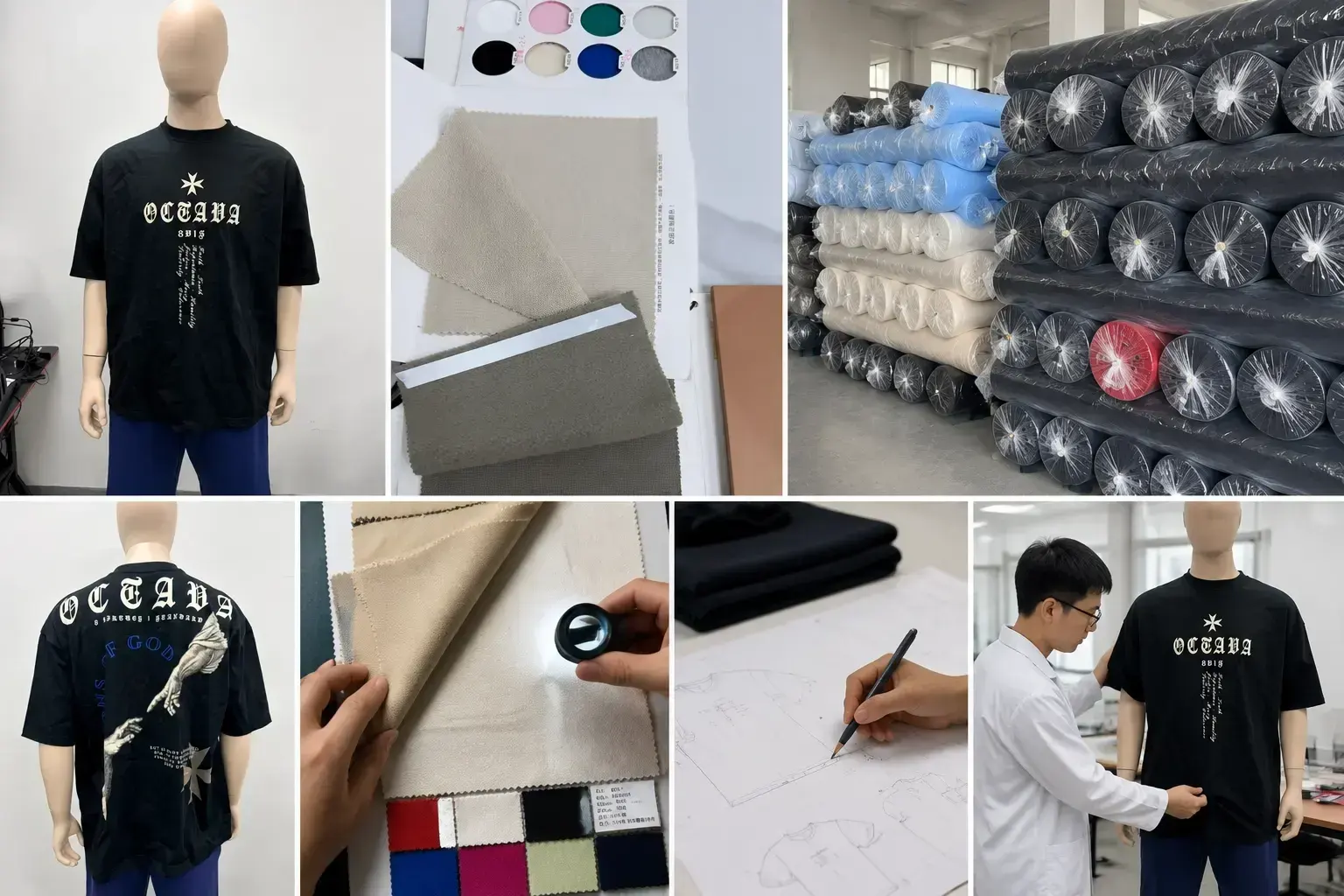
One of the biggest differences between sampling and mass production is consistency.
A sample may perform well, but bulk production requires hundreds or thousands of units to behave the same way.
Manufacturers pay close attention to:
- Batch-to-batch consistency
- Color shade variation
- Fabric weight consistency
- Texture uniformity
Even small variations can lead to noticeable differences in finished garments.
Consistency is what allows brands to deliver reliable products at scale.
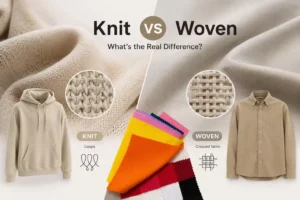
How Fabric Structure Affects Quality Perception
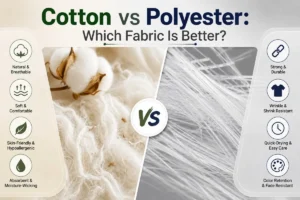
Fabric quality is not determined by fiber alone.
Structure also plays a major role in how a garment feels and performs.
For example:
- Knit fabrics tend to be more flexible and comfortable
- Woven fabrics tend to be more structured and stable
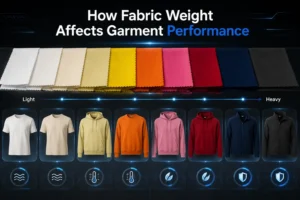
Understanding fabric weight and construction helps explain why two fabrics with similar composition can feel completely different.
This is why experienced manufacturers evaluate both material and structure before making a decision.
Why Testing Samples Before Production Reduces Risk
Sampling is not only about checking design and fit—it is also a critical stage for evaluating fabric performance.
During sampling, manufacturers can:
- Test fabric behaviour after washing
- Evaluate shrinkage and shape retention
- Check how the fabric works with construction methods
- Identify potential issues before bulk production
Skipping proper testing increases the risk of costly production problems later.
Testing helps confirm whether the selected fabric is truly suitable for the intended product.
Common Fabric Quality Checks Before Bulk Production
| Quality Factor | What Manufacturers Check | Why It Matters |
|---|---|---|
| Appearance | Surface, texture, defects | Ensures visual quality |
| Fabric Weight | GSM consistency | Affects structure and feel |
| Shrinkage | Dimensional stability | Prevents size issues |
| Color Fastness | Resistance to fading | Maintains product appearance |
| Strength | Tear and wear resistance | Ensures durability |
| Construction | Knit or woven structure | Influences performance |
These checks help ensure that the fabric can meet both production requirements and customer expectations.
Why the Cheapest Fabric Is Not Always the Best Choice
Price is often a key factor in fabric selection, but it should not be the only one.
Lower-cost fabrics may reduce initial expenses, but they can increase long-term costs through:
- Higher defect rates
- Increased returns
- Customer dissatisfaction
- Damage to brand reputation
Professional sourcing decisions focus on overall product value rather than just material cost.
Choosing Fabric Quality Based on Product Goals
Fabric quality should always be evaluated in relation to the intended product.
Different garments require different performance characteristics.
For example:
A T-shirt may prioritize comfort, softness, and breathability.
A hoodie may require more structure and warmth.
Sportswear may focus on durability, flexibility, and moisture control.
There is no universal definition of “high-quality fabric.” The right fabric is the one that meets the performance needs of the product.
Quality Starts Before Production
High-quality garments are not created by chance.
They are the result of careful decisions made before production begins—especially in fabric selection and evaluation.
A fabric that performs well in real conditions, maintains consistency, and supports the intended design will always produce better results than one chosen based only on appearance.
For brands developing new apparel products, working with an experienced manufacturing partner can help identify potential risks early and ensure smoother production.
If you need professional support in evaluating fabrics and preparing for production, you can contact Mingxing Clothing to discuss your project.
FAQS
How do manufacturers check fabric quality before production?
Manufacturers evaluate fabric through appearance inspection, performance testing, consistency checks, and sample validation.
Why is fabric appearance not enough to judge quality?
Because appearance does not reveal how the fabric will perform during washing, wearing, or production.
What fabric tests are important before bulk production?
Common tests include shrinkage testing, color fastness testing, strength testing, and fabric weight consistency checks.
Does higher fabric weight mean better quality?
Not always. Fabric weight affects structure and feel, but the best choice depends on the product purpose.
Why should brands test fabrics before manufacturing?
Testing helps identify potential issues early, reducing production risks and ensuring consistent product quality.
Share With
Related Articles

Hot Products