Best Fabric for Sportswear
There is no single best fabric for sportswear. In performance apparel, the right material depends on how the garment will be used, how the body moves, and how the fabric performs during activity.
Unlike casual clothing, sportswear is designed to support physical performance. Fabric selection should always start with performance requirements, not material preference. Many brands work with a custom clothing manufacturer to evaluate functional fabrics, develop samples, and ensure consistent performance in production.
Why Performance Matters More Than Fabric Type in Sportswear
In sportswear, performance requirements are more important than the fibre itself when selecting fabrics.
A fabric may feel soft or look premium, but if it cannot manage sweat, support movement, or maintain comfort during activity, it is not suitable for performance wear.
The key performance factors include:
Moisture Management
This is the most important factor in sportswear.
Fabrics must:
- Move sweat away from the skin
- Dry quickly
Without this, garments become heavy and uncomfortable during exercise.
Breathability
Breathable fabrics allow airflow and help release heat.
This is critical for:
- Running
- Training
- Outdoor activities
Stretch and Recovery
Sportswear must move with the body.
Good stretch fabrics:
- Allow full range of motion
- Return to original shape after movement
Lightweight Performance
Lightweight materials reduce restriction and improve comfort during activity.
They are especially important for high-intensity sports.
Durability
Sportswear experiences repeated stress.
Fabrics must withstand:
- Friction
- Washing
- Long-term use
In sportswear, performance requirements are more important than the fibre itself when selecting fabrics.
Performance Note:
Moisture-wicking fabrics help move sweat away from the skin, improving comfort during exercise.
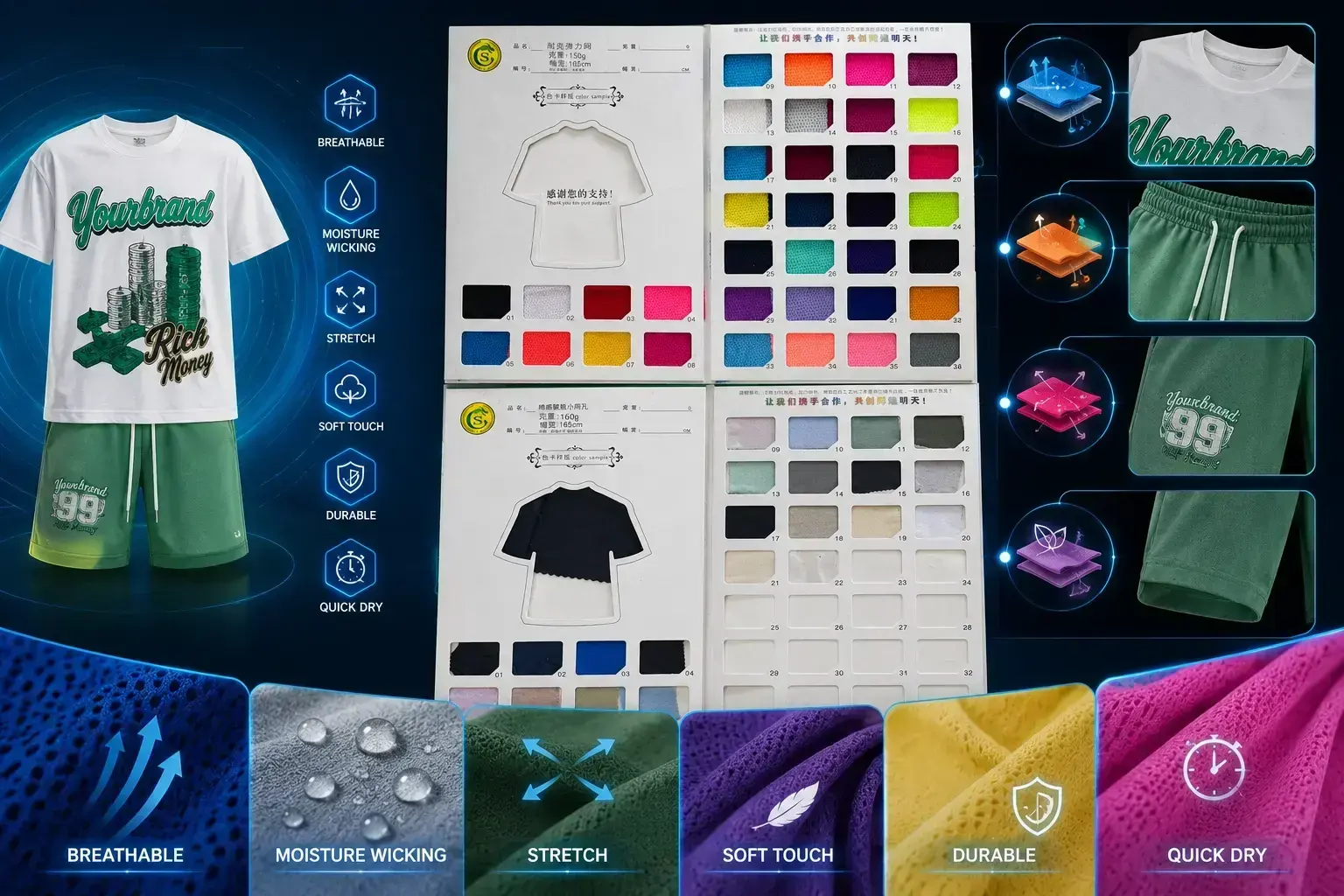
How Does Activity Type Affect Sportswear Fabric Choice?
Different sports require different fabric performance. Choosing fabric based on activity type helps brands develop products that perform correctly in real use.
Activity Type and Fabric Direction
| Activity Type | Main Requirement | Fabric Direction |
|---|---|---|
| Running | Lightweight & Breathable | Polyester |
| Training | Stretch & Durability | Polyester Blend |
| Yoga | Soft & Flexible | Stretch Fabric |
| Outdoor | Durable & Resistant | Nylon |
Running
Running garments require:
- Lightweight construction
- Quick drying
- Breathability
Fabrics must reduce heat buildup and allow airflow during continuous movement.
Training
Training wear needs to handle:
- Repetitive movement
- Sweat
- Friction
Stretch fabrics with durability are commonly used.
Yoga
Yoga and low-impact activewear require:
- Soft touch
- High stretch
- Skin comfort
Comfort and flexibility are more important than moisture management.
Outdoor Activities
Outdoor sports require:
- Durability
- Resistance
- Structure
Nylon-based fabrics are often preferred for their strength.
Manufacturer Insight:
Professional manufacturers do not select sportswear fabrics by material alone. They start by identifying activity requirements and then match the correct performance characteristics.
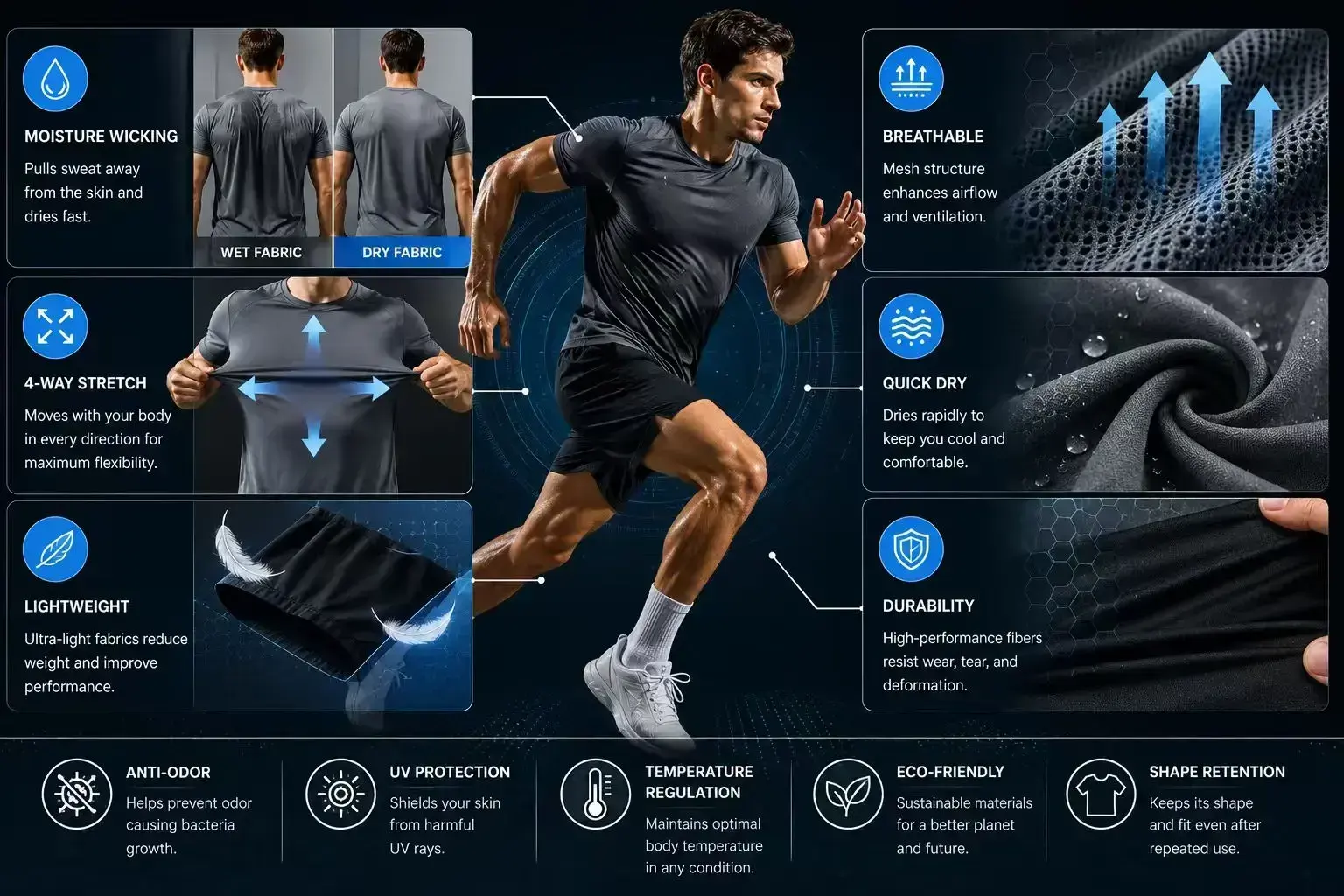
Which Fabric Functions Matter Most in Sportswear?
Sportswear fabrics are defined by what they do, not what they are made of.
Moisture-Wicking Function
This function moves sweat away from the body and speeds up evaporation.
It improves comfort during high-intensity activities.
Breathable Structure
Breathable fabrics allow heat to escape.
This helps regulate body temperature during exercise.
Stretch Fabric Behaviour
Stretch fabrics allow natural body movement.
They are essential for:
- Training
- Yoga
- Performance wear
Lightweight Construction
Lightweight fabrics reduce resistance and improve mobility.
They are commonly used in running and endurance sports.
Durability Performance
Durable fabrics maintain performance after repeated use.
They are important for:
- Training
- Outdoor sports
Sportswear fabrics must manage moisture, support movement, and maintain comfort during physical activity.
Performance Note:
Stretch fabrics improve mobility, but they must also recover shape to maintain garment structure.
Which Fabrics Are Used in Performance Sportswear?
After defining performance needs, brands can select materials that deliver those functions.
| Fabric | Role | Key Advantage |
|---|---|---|
| Polyester | Core performance fabric | Moisture-wicking |
| Nylon | Durable fabric | Strength |
| Elastane (Spandex) | Stretch provider | Flexibility |
| Polyester Blend | Balanced performance | Multi-function |
Polyester
Polyester is the most widely used fabric in sportswear.
It provides:
- Quick drying
- Moisture management
- Lightweight performance
Nylon
Nylon is known for its durability and strength.
It is often used in:
- Outdoor wear
- High-friction areas
Elastane (Spandex)
Elastane is added to fabrics to improve stretch.
It allows garments to:
- Move with the body
- Maintain fit
Polyester Blends
Blends combine performance features.
They offer:
- Better stretch
- Improved comfort
- Balanced functionality
Cotton
Cotton is comfortable but has limitations in sportswear.
It:
- Absorbs moisture
- Dries slowly
This makes it less suitable for high-performance sports.
Manufacturer Insight:
Manufacturers evaluate sportswear fabrics based on performance consistency during movement, washing, and long-term use—not just fiber composition.
How Should Brands Choose the Right Sportswear Fabric?
The best sportswear fabric is the one that delivers consistent performance during movement and repeated use.
Before selecting a fabric, brands should evaluate:
- What activity is the product designed for?
- What performance features are required?
- Does the fabric support movement?
- Can it manage sweat effectively?
- Will it maintain performance after washing?
- Can it be produced consistently in bulk?
Common Mistakes in Sportswear Fabric Selection
Avoid the following:
- Choosing fabric based only on softness
- Ignoring moisture management
- Overusing cotton in performance products
- Failing to consider durability
The best sportswear fabric is the one that matches performance requirements, not personal preference.
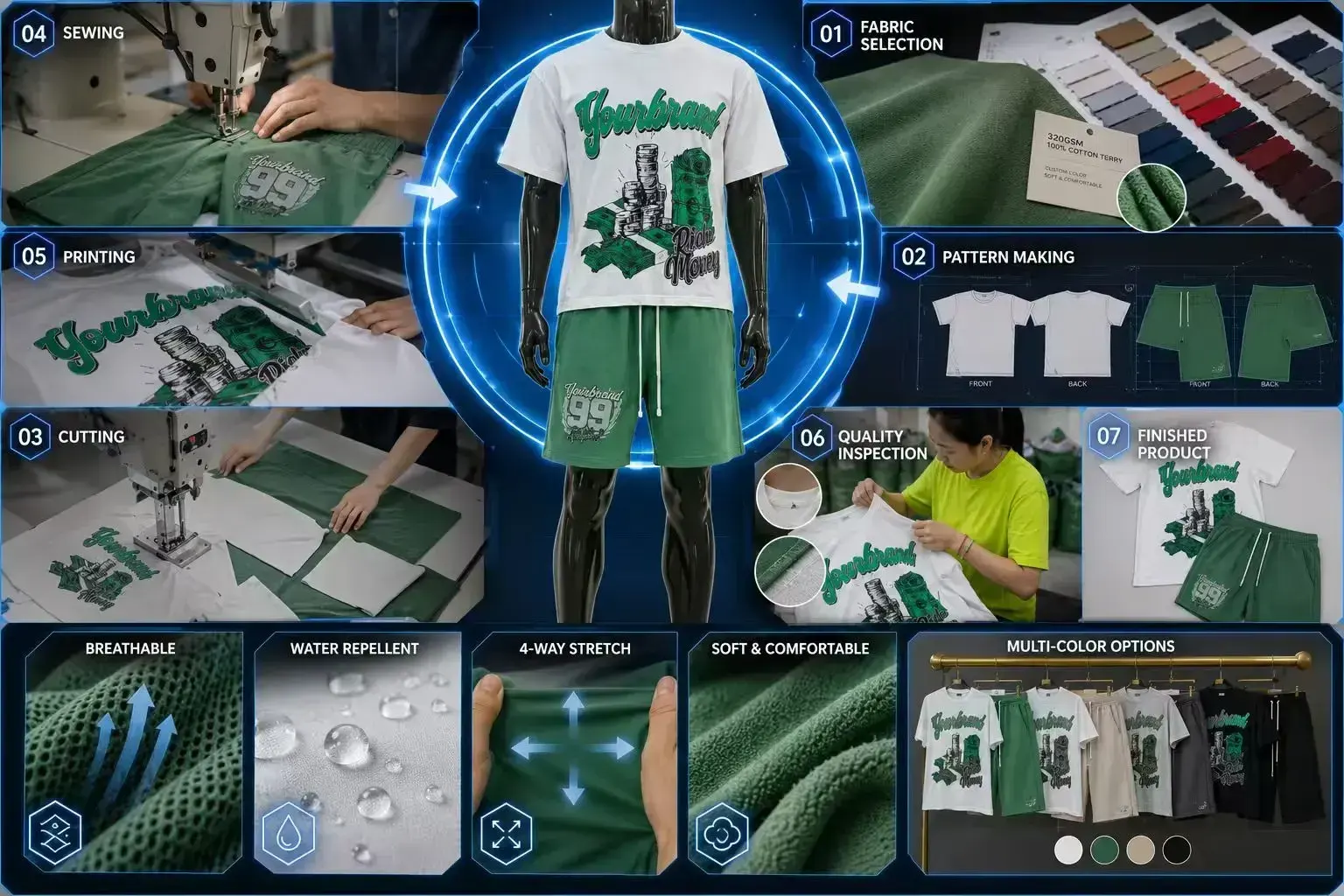
From Performance Fabric to Sportswear Production
Fabric selection is only the first step in sportswear development. After choosing the right material, brands must go through sampling, performance testing, and production planning.
Reliable manufacturers help ensure that fabrics maintain their performance from sample stage to bulk production.
If you are developing performance sportswear and need support selecting functional fabrics, you can contact Mingxing Clothing to discuss your project.
FAQS
What is the best fabric for sportswear?
The best fabric depends on the activity type. Polyester and its blends are commonly used for their moisture-wicking and quick-drying properties.
Why is polyester used in sportswear?
Polyester is lightweight, dries quickly, and helps manage moisture, making it ideal for performance clothing.
Is cotton good for sportswear?
Cotton is comfortable but absorbs moisture and dries slowly, so it is not suitable for high-performance sportswear.
What fabric is best for gym wear?
Polyester blends with elastane are commonly used because they provide stretch, durability, and moisture control.
Can sportswear fabrics be customised?
Yes. Manufacturers can customise fabric composition, weight, stretch, and performance features to meet product requirements.