How Fabric Weight Affects Garment Performance
When developing a clothing product, brands often focus on fabric composition, colour, and design details. However, one factor that is equally important but frequently overlooked is fabric weight.
Fabric weight affects much more than how thick a garment feels. It influences how the garment moves, how it holds its shape, how warm it feels, and how customers perceive its quality.
Understanding fabric weight is essential to fabric selection because the right weight helps align the garment with its intended market, season, and customer expectations.
Quick Answer
Fabric weight affects how a garment feels, fits, and performs.
A lighter fabric usually provides:
- Better breathability
- More flexibility
- A softer and lighter wearing experience
A heavier fabric usually provides:
- More structure
- Better shape retention
- A stronger premium feel
However, higher fabric weight does not always mean better quality. The right choice depends on the product’s purpose.
Why Fabric Weight Matters More Than Most People Think
Many people associate heavier fabrics with higher quality because they feel thicker and more substantial.
However, fabric weight is not a direct measurement of quality. It is a measure of how much material is present within a specific area of fabric.
For example, a lightweight T-shirt and a heavyweight streetwear T-shirt may both use 100% cotton, but they are designed for completely different purposes.
A lightweight fabric may be better for a breathable summer collection, while a heavier fabric may be more suitable for a structured oversized style.
The key question is not:
“Which fabric weight is better?”
The better question is:
“Which fabric weight creates the right product experience?”
What Fabric Weight Actually Means
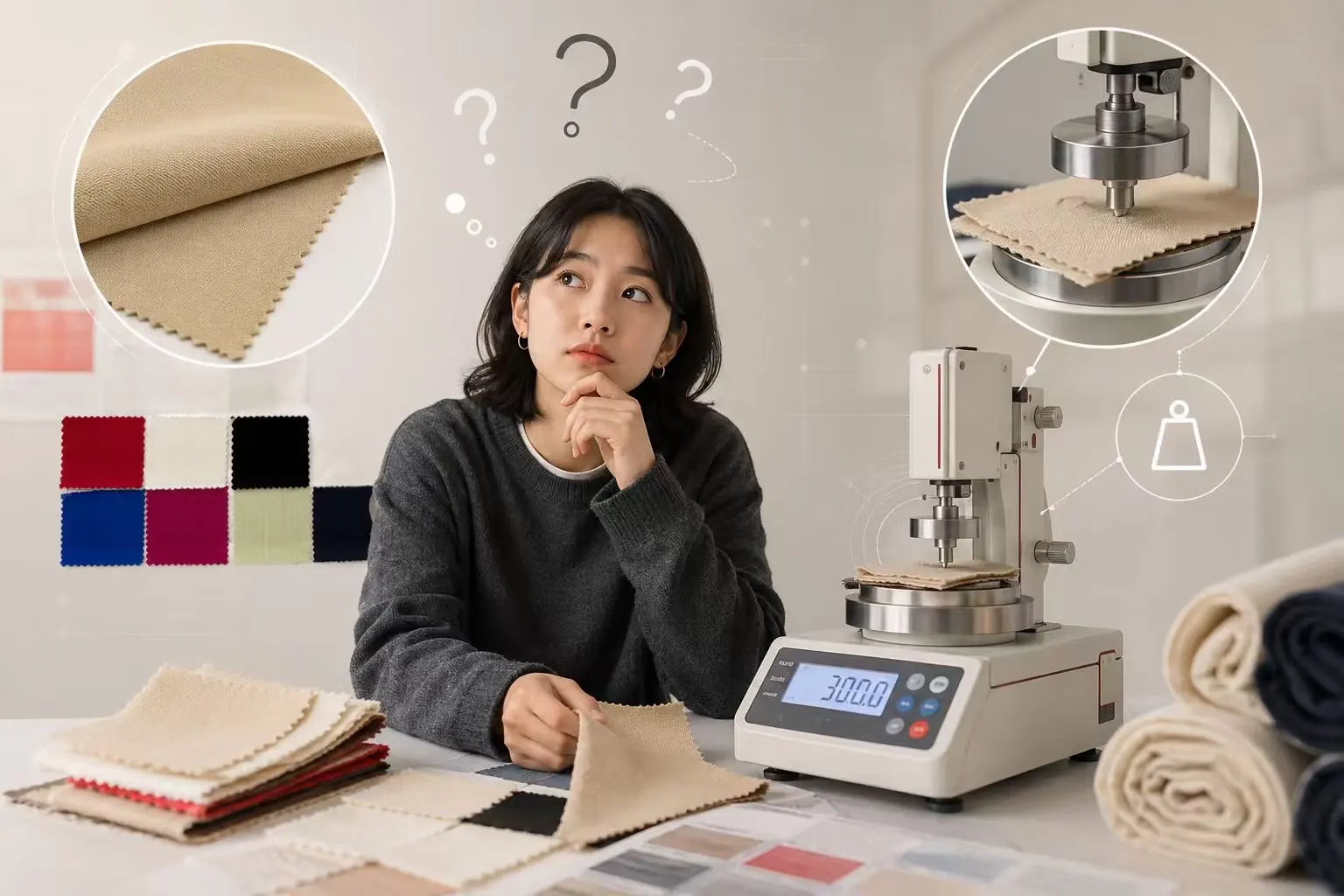
Fabric weight is commonly measured by GSM, which stands for grams per square meter.
GSM indicates how much one square meter of fabric weighs.
In simple terms:
- Lower GSM usually means lighter fabric
- Higher GSM usually means heavier fabric
For example:
- 160–180gsm cotton is commonly used for lightweight T-shirts
- 180–220gsm cotton is widely used for everyday retail T-shirts
- 240–300gsm cotton is often chosen for heavyweight and streetwear styles
However, GSM alone does not determine the final performance of a garment.
Fibre type, fabric construction, finishing process, and garment design also influence the final result.
How Fabric Weight Changes the Feel of a Garment
The first difference customers notice is often how the garment feels when worn.
Lightweight fabrics usually create a softer and more relaxed experience.
They tend to offer:
- Easier movement
- Better airflow
- Less weight on the body
This makes them suitable for casual everyday clothing and warmer climates.
Heavier fabrics create a different experience.
They often provide:
- A more substantial hand feel
- A stronger visual presence
- A premium product impression
This is why many premium fashion brands and streetwear labels prefer heavyweight fabrics when they want garments to feel more valuable.
How Fabric Weight Affects Fit and Shape
Fabric weight plays an important role in how a garment looks after production.
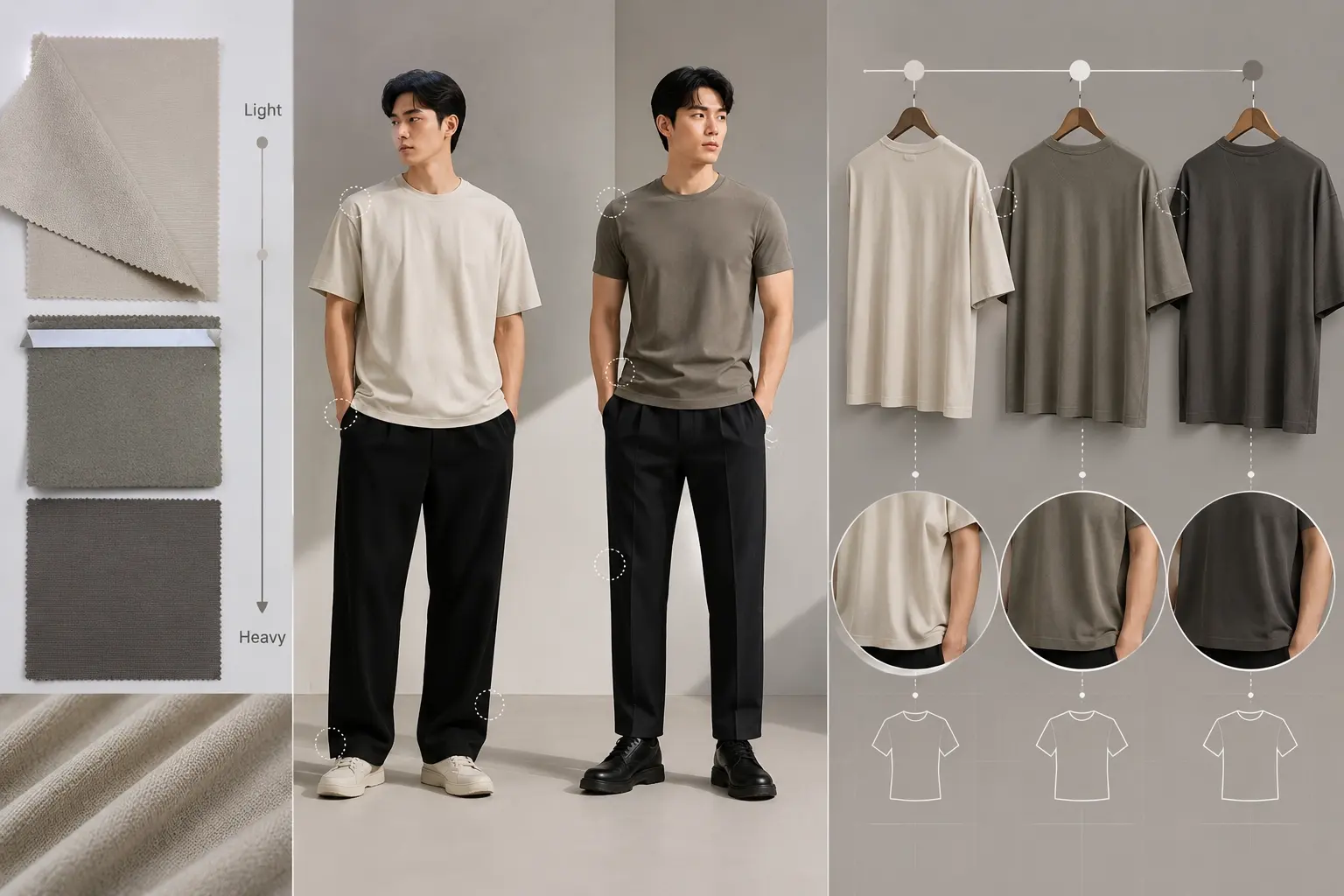
A lighter fabric usually has a softer drape and follows the body’s movement more naturally.
A heavier fabric provides more structure and helps garments maintain their silhouette.
This is especially important for products such as oversized T-shirts, hoodies, and fashion-focused apparel.
For example:
A lightweight oversized T-shirt may appear relaxed, but it can lose its shape easily.
A heavyweight oversized T-shirt can maintain a stronger shoulder structure and a more defined silhouette.
This is why fabric weight is often considered together with pattern design and garment construction during product development.
How Fabric Weight Influences Warmth and Season
Fabric weight naturally affects warmth, but it is not the only factor.
A heavier fabric generally provides better insulation because it contains more material and can trap more air.
However, warmth also depends on:
- Fiber composition
- Fabric structure
- Brushing or finishing methods
For example:
A heavyweight French terry hoodie and a brushed fleece hoodie may have similar weights but feel different because their structures are different.
In general:
Lightweight fabrics are better suited for:
- Summer clothing
- Transitional seasons
- Layering products
Heavier fabrics are better suited for:
- Winter collections
- Cold climates
- Outer layers
Why Heavyweight Does Not Always Mean Better Quality
One of the most common misconceptions in clothing development is:
Higher GSM = Better quality.
This is not always true.
A heavyweight fabric may be ideal for:
- Premium streetwear
- Structured silhouettes
- Cold-weather products
But it may not be suitable for:
- Hot climates
- Lightweight summer collections
- Products focused on maximum comfort
For example, a 300gsm T-shirt may feel premium in a fashion collection, but a 180gsm T-shirt may provide a much better customer experience for a summer lifestyle brand.
Professional product development is not about choosing the heaviest fabric.
It is about choosing the fabric weight that matches the product goal.
How Brands Choose the Right Fabric Weight
Professional brands usually consider multiple factors before selecting fabric weight.
The decision is based on:
Product Category
Different garments require different weight ranges.
A T-shirt, hoodie, jacket, and tracksuit all have different performance expectations.
Market Positioning
Premium brands may choose heavier fabrics to create a stronger product impression.
Mass-market products may prioritise comfort, versatility, and cost efficiency.
Target Climate
A brand selling in tropical regions may prefer lighter fabrics, while colder markets often require heavier options.
Garment Design
Oversized fits, structured silhouettes, and streetwear styles often require heavier fabrics to achieve the intended look.
For brands that are still developing their first collection, understanding how to choose fabric for custom T-shirts can help avoid selecting materials based only on appearance rather than actual product performance.

Common Fabric Weight Ranges for Different Apparel
| Garment Type | Typical Weight | Product Purpose |
|---|---|---|
| Lightweight T-shirt | 160–180gsm | Breathable everyday wear |
| Standard T-shirt | 180–220gsm | Retail and casual clothing |
| Heavyweight T-shirt | 240–300gsm | Premium and streetwear styles |
| French Terry Hoodie | 280–350gsm | Lightweight sweatshirt |
| Brushed Fleece Hoodie | 340–450gsm | Warm winter apparel |
These ranges are general references. The final recommendation depends on fabric composition, construction, and the target product positioning.
Choosing the Right Fabric Weight for Your Product
The right fabric weight depends on what you want the garment to achieve.
Choose lightweight fabrics when your priority is:
- Breathability
- Comfort
- Easy movement
- Warm-weather use
Choose midweight fabrics when your priority is:
- Versatility
- Everyday wear
- Balance between comfort and structure
Choose heavyweight fabrics when your priority is:
- Premium feel
- Strong silhouette
- Streetwear positioning
- Cold-weather performance
There is no universal “best” fabric weight.
The best choice is the one that supports your product concept and customer expectations.
Need Professional Guidance Before Developing Your Product?
Fabric weight is one of the first decisions that shapes the final garment experience.
Choosing the right GSM requires understanding how fabric structure, garment design, and market positioning work together.
As an experienced custom clothing manufacturer, Mingxing Clothing helps brands evaluate fabric options, develop samples, and select suitable materials for their products.
If you are planning a new apparel collection and need practical fabric recommendations, you can contact Mingxing Clothing for professional support.
FAQS
What does GSM mean in fabric weight?
GSM means grams per square meter. It measures the weight of fabric based on a standard area and helps indicate whether a fabric is lightweight or heavyweight.
Is higher GSM always better quality?
No. Higher GSM usually means a heavier and more structured fabric, but the best weight depends on the garment’s purpose and target market.
What GSM is best for T-shirts?
Most everyday T-shirts use around 180–220gsm, while heavyweight and streetwear styles often use 240–300gsm.
Does heavier fabric make clothing warmer?
Generally, yes, but warmth also depends on fibre type, fabric construction, and finishing methods.
How do brands choose the right fabric weight?
Brands consider product category, climate, customer expectations, garment design, and market positioning before selecting fabric weight.
Share With
Related Articles


Hot Products