Screen printing remains one of the most popular decoration methods in custom clothing production. Known for its durability and vibrant colors, it is the go-to choice for bulk orders of custom t-shirts and custom hoodies.
What Is Screen Printing in Apparel?
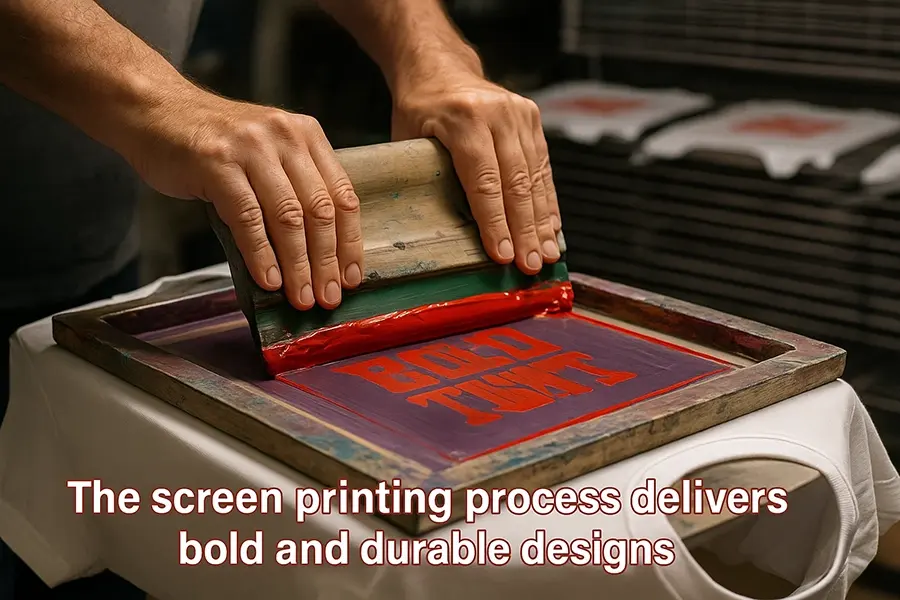
Screen printing uses a stencil (or “screen”) to push ink directly onto fabric. Each color requires a separate screen, making the setup process more involved than digital printing. This method works best for bold, simple designs and large production runs.
Advantages of Screen Printing
Screen printing is favoured for its reliability in bulk manufacturing.
- Durability: Prints can withstand repeated washing without fading.
- Vibrant Colors: Especially effective for bold logos and solid graphics.
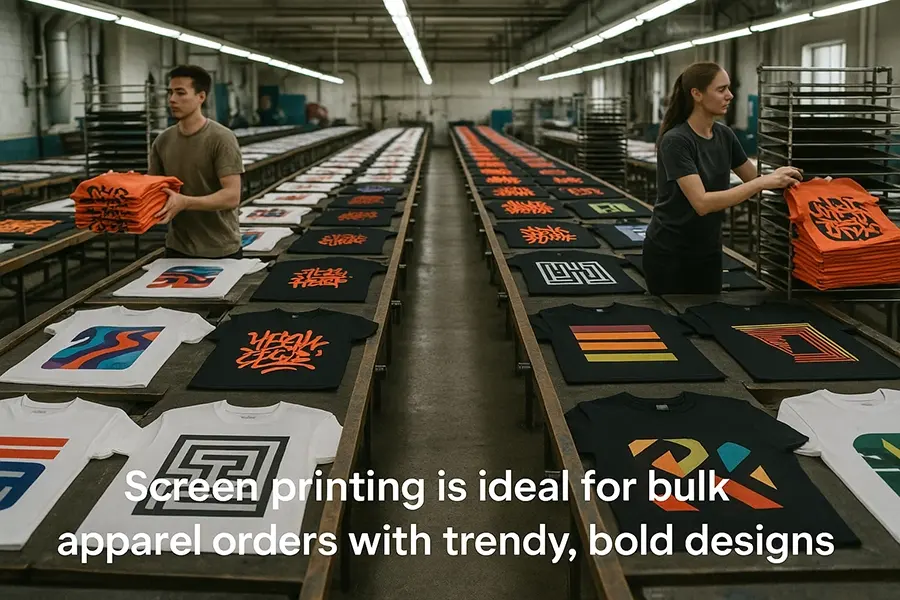
- Cost-Effective at Scale: Once setup is complete, per-unit costs drop significantly for orders above 100 pcs.
Factories offering custom screen printing typically recommend it for promotional wear, uniforms, and streetwear collections.
Limitations of Screen Printing
Despite its strengths, screen printing has limits.
- Higher MOQ: Most factories require at least 100 pcs per design to cover setup costs.
- Limited Color Range: Complex, multi-color gradients are not practical.
- Longer Setup Time: Compared to DTG or DTF, screen printing requires more preparation.
Best Use Cases for Screen Printing
Screen printing is best suited for:
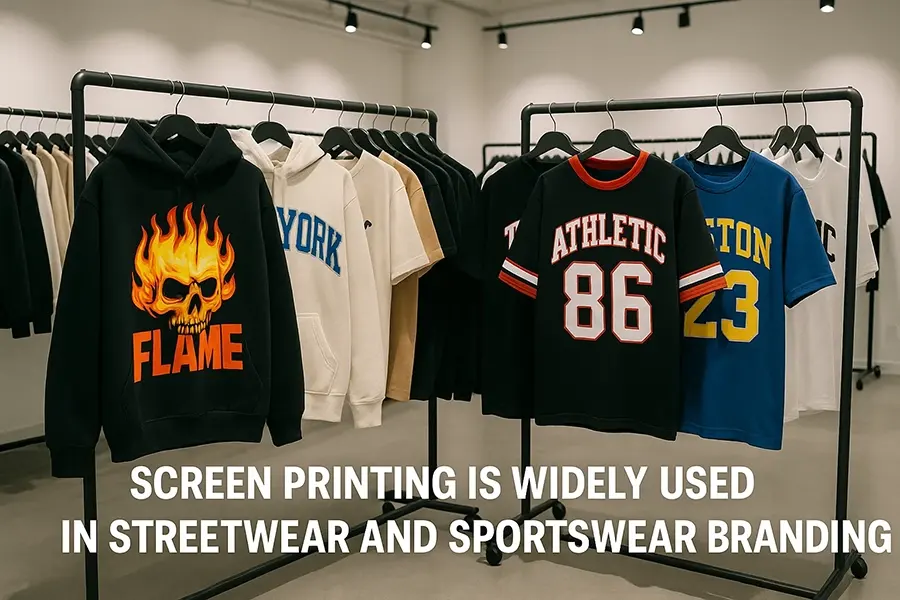
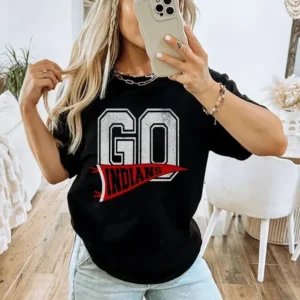
- Custom T-Shirts: Ideal for bold logos and team apparel.
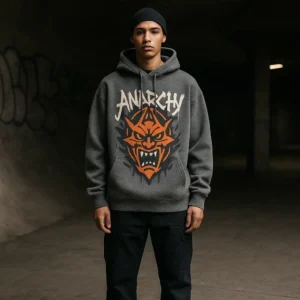
- Custom Hoodies: Durable prints that withstand heavier fabrics.
- Corporate Uniforms: Cost-effective for consistent branding at scale.
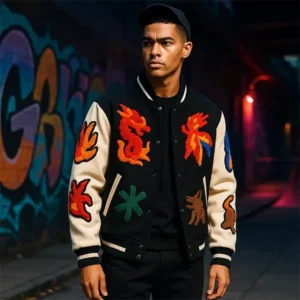
- Streetwear Brands: Appeal to buyers seeking bold, lasting designs.
For premium projects, scaling brands may opt for embroidery instead, especially when creating custom jackets.
QC & Production Considerations
When planning screen-printed orders, check for:
- Ink adhesion and wash tests (colorfastness grade ≥3–4)
- Proper curing to prevent cracking or peeling
- Registration accuracy (alignment of multi-color prints)
- MOQ flexibility—some factories allow combined styles under one order
Screen Printing vs Other Methods
- DTG Printing: Better for detailed, photo-like designs, but less durable.
- DTF Printing: Works on polyester and blends, offering more flexibility.
- Heat Transfer: Good for small runs, but less durable than screen printing.
Ultimately, screen printing is the strongest choice for bold designs and large-scale production.
Screen printing remains a proven choice due to its durability, scalability, and cost efficiency. Explore our Mingxing Clothing services to learn how screen printing can elevate your next collection.
Ready to start bulk production? Contact us today to request screen printing samples and evaluate MOQ options.
FAQs