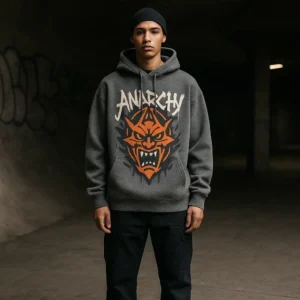
Printing and embroidery are two crucial decisions in the custom apparel manufacturing process. The technique you choose impacts the look, durability, and overall cost of your garments. From bulk custom hoodies to detailed fashion custom t-shirts, understanding these methods helps brands create the right balance of style and quality.
Why Printing & Embroidery Matter in Custom Apparel
Decoration is what turns a blank garment into a unique, branded product. Buyers need to evaluate techniques not only for appearance but also for scalability, pricing, and wash durability. Poorly chosen methods can result in fading, cracking, or weak stitching. The right factory partner ensures these methods align with your niche and market needs.
Main Printing Methods for Apparel
Different printing techniques suit different fabrics, quantities, and designs.
Screen Printing
Screen printing is the most widely used technique for bulk apparel. It offers vibrant, durable prints but requires a higher MOQ (often 100+ pcs per design) due to setup costs. Best for bold logos or simple designs on custom screen printing service pages.
DTG vs DTF Printing
- DTG (Direct-to-Garment): Best for detailed, full-color designs on cotton-based fabrics. Suitable for smaller runs.
- DTF (Direct-to-Film): More versatile, can print on polyester blends and withstand multiple washes.
- Factories often provide both custom DTG printing and custom DTF printing depending on fabric requirements.
Sublimation & Heat Transfer Printing
- Sublimation: Ideal for polyester sportswear and all-over prints. Lightweight, breathable, and permanent.
- Heat Transfer: Flexible for smaller runs, but less durable than sublimation.
- These are key services in our custom sublimation printing and custom heat transfer printing categories.
Embroidery Options for Apparel
Embroidery adds texture and premium appeal. Unlike printing, it uses stitched threads for decoration.
Flat & 3D Embroidery
- Flat embroidery provides classic detail.
- 3D embroidery uses foam backing for raised logos, ideal for caps and outerwear.
- Both are available under our custom embroidery services.
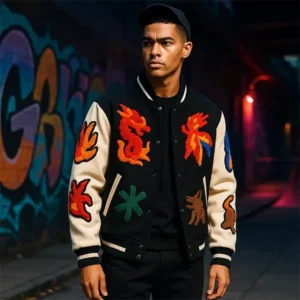
Chenille, Sequin, Applique & Rhinestone
- Chenille: Soft, varsity-style texture.
- Sequin: Sparkling, fashion-forward embellishments.
- Applique: Adds layered fabrics for depth.
- Rhinestone: Eye-catching shine for stage or event wear.
Special Effects & Value-Added Finishes
Factories can add unique finishes that stand out:
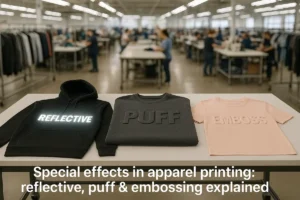
- Reflective Printing: Safety wear and night visibility.
- Puff Printing: Raised texture for bold graphics.
- Embossing: Subtle, tactile logos pressed into fabric.
- Washed Effects: Vintage, worn-in look.
These options are part of our custom reflective printing, puff printing, and embossing services.
From Sampling to Bulk Orders: How to Plan Ahead
Typical timeline:
- Sampling: 7–10 days for print/embroidery tests
- Pre-production samples: 10–14 days
- Bulk production: 25–35 days, depending on complexity
Align sampling with your bulk order window to avoid delays. Always test durability during washing cycles.
QC & Certification Considerations
Quality control points include:
- Colorfastness tests (grade 3–4 for print durability)
- Thread pull tests for embroidery strength
- Wash shrinkage ≤5%
- Certification: OEKO-TEX fabrics, ISO9001, or BSCI audits for compliance
When to Use Printing vs Embroidery
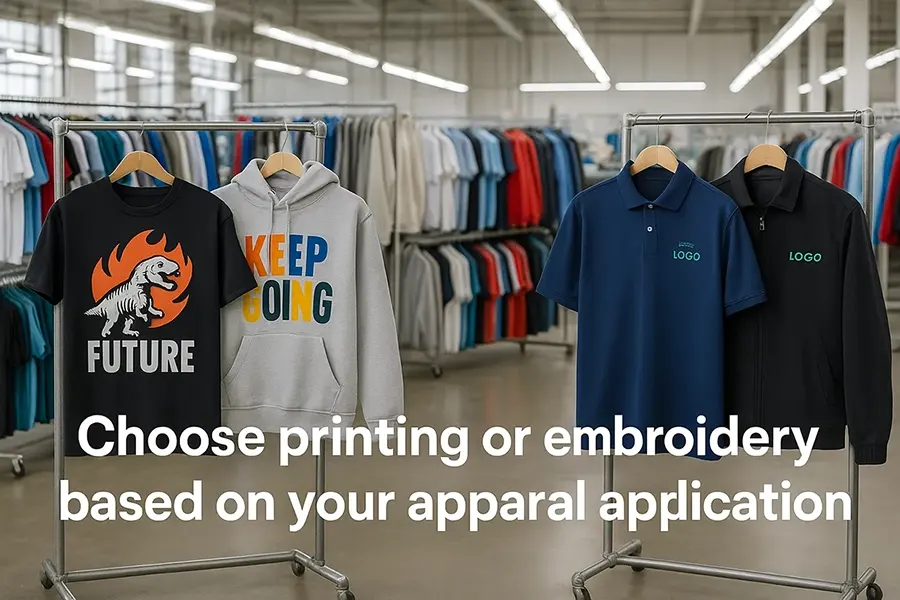
- Printing: Best for large graphics, lightweight sportswear, or high-color detail.
- Embroidery: Preferred for logos, premium branding, and durable outerwear.
For example, startups may launch a basic custom hoodie collection with screen printing, while scaling brands often upgrade to embroidered logos on custom jackets for premium positioning.
The right decoration method helps your apparel stand out in a crowded market. Explore the full range of options with Mingxing Clothing and create durable, stylish collections.
Ready to customize your line? Contact us to request print and embroidery samples, compare MOQ tiers, and launch your next collection.
FAQs