How to Communicate Fabric & Trim Requirements Clearly?

Table of Contents

šŸŽÆ Why Fabric & Trim Clarity Matters in Apparel Production

Fabric and trims make up the core of your product. Miscommunication here leads to sample mismatch, unexpected costs, or production delays.

Factories can’t read your mind—precise specs = predictable results.

šŸ“¢ Buyer quote: ā€œWe asked for ā€˜thick cotton’—and got a rough 400GSM French terry instead of the soft jersey we wanted.ā€

šŸ“– Related: Common Mistakes to Avoid When Working with an Apparel Factory

🧶 Key Information to Include for Fabrics

Use these standard fields when describing fabric requirements:

Field What to Specify
Fiber content E.g. 100% cotton, 95% cotton + 5% spandex
GSM (weight) E.g. 180 GSM for light T-shirt, 350 GSM for hoodie
Weave or knit type Jersey, twill, fleece, rib, etc.
Stretch type 2-way or 4-way stretch (if applicable)
Finish Brushed, peach skin, enzyme wash, preshrunk, etc.
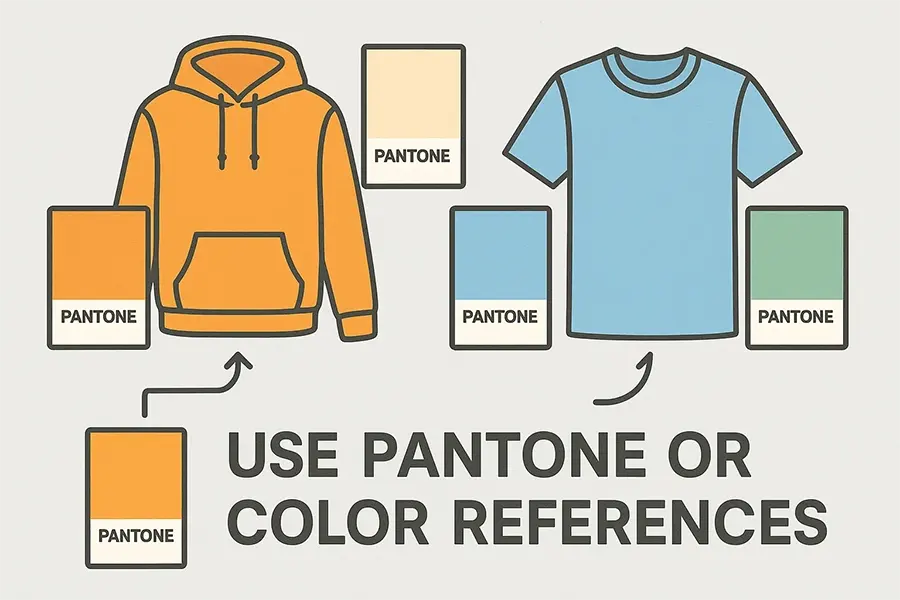
Color code Use Pantone TPX or submit swatch
Dye method (if needed) Reactive, pigment, garment dye
Field What to Specify
Fiber content E.g. 100% cotton, 95% cotton + 5% spandex
GSM (weight) E.g. 180 GSM for light T-shirt, 350 GSM for hoodie
Weave or knit type Jersey, twill, fleece, rib, etc.
Stretch type 2-way or 4-way stretch (if applicable)
Finish Brushed, peach skin, enzyme wash, preshrunk, etc.
Color code Use Pantone TPX or submit swatch
Dye method (if needed) Reactive, pigment, garment dye

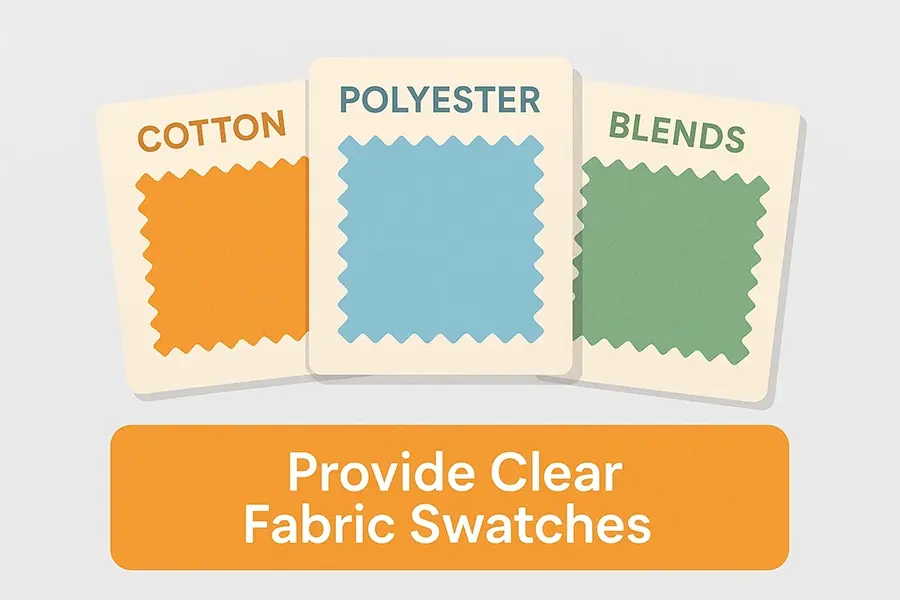
šŸ“Œ Best practice: Send both a swatch + digital reference + clear terminology.

šŸ“– Related: How to Send a Tech Pack to Your Clothing Manufacturer?

Fabric Swatches
Pantone & Color References

🧷 How to Describe Trim Requirements Effectively

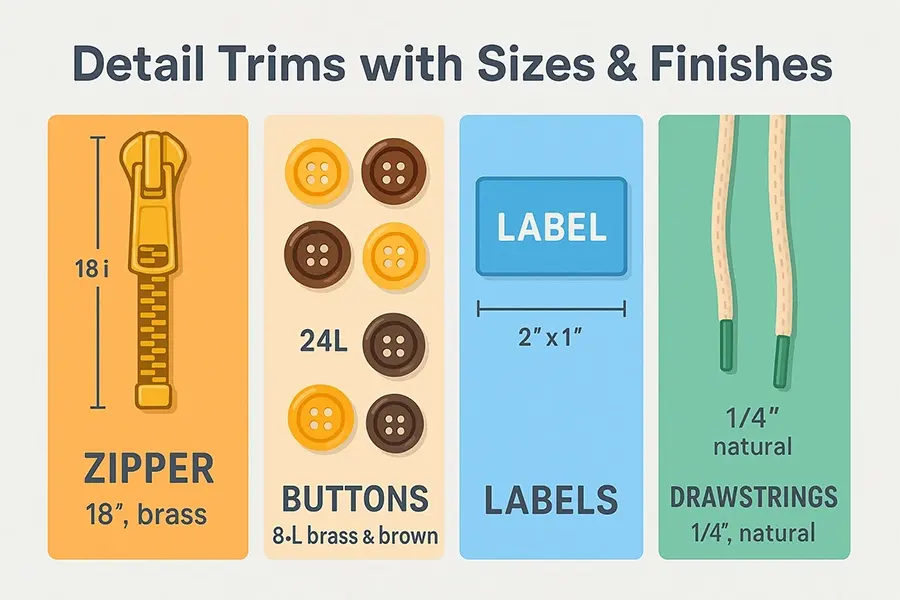
Trims include everything that’s not the main fabric: zippers, buttons, elastic, labels, drawcords, hangtags, and print details.

Use a BOM (Bill of Materials) to specify:

Trim Type Sample Specs
Zipper YKK #5 metal, antique brass finish, 25cm length
Main Label Woven satin, 80x20mm, 1-color print, center back neck
Hangtag 350gsm kraft card, die-cut, size: 55x85mm
Drawcord Round cotton cord, tipped ends, matching main fabric
Thread Poly core-spun, color match to Pantone 19-4025
Trim Type Sample Specs
Zipper YKK #5 metal, antique brass finish, 25cm length
Main Label Woven satin, 80x20mm, 1-color print, center back neck
Hangtag 350gsm kraft card, die-cut, size: 55x85mm
Drawcord Round cotton cord, tipped ends, matching main fabric
Thread Poly core-spun, color match to Pantone 19-4025

šŸ“Œ Tip: Use annotated diagrams in your tech pack to show trim placement.

šŸ“– Related: How to Handle Sample Revisions with Clothing Manufacturers?

Trim Details

šŸ“„ Sample Phrases & Templates for Tech Pack Usage

  1. ā€œUse 100% cotton single jersey, 240 GSM, reactive dyed, enzyme wash finish.ā€
  2. ā€œMain label to be woven, 80x20mm, black on white satin, centred at neckline.ā€
  3. ā€œPlease refer to the attached swatch for the exact hand feel and colour.ā€
  4. ā€œPrint: Front chest, 10x10cm, CMYK, water-based ink, soft hand.ā€
  5. ā€œInclude branded hangtag as per previous order #MX2305.ā€

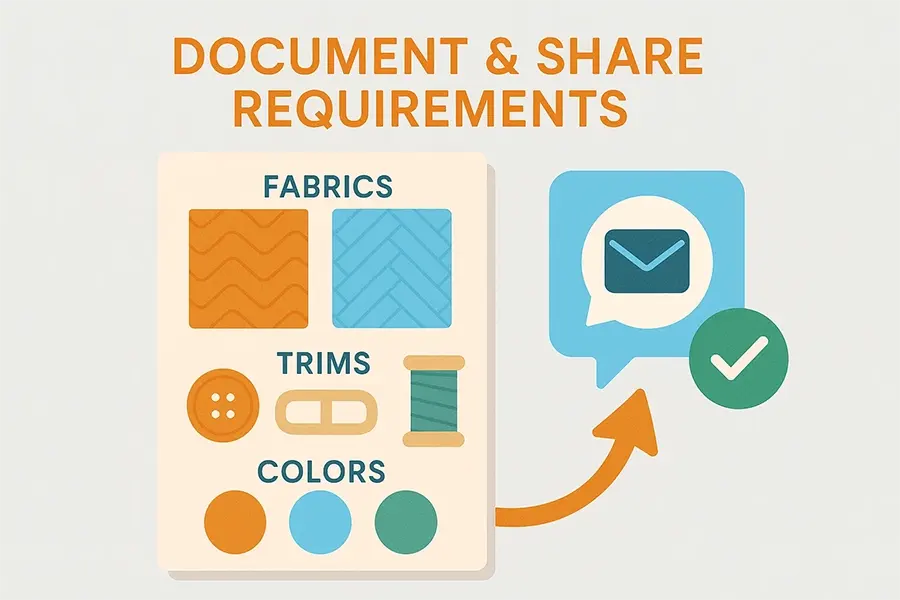
šŸ“Œ You can create a standardised spec sheet to fill in per style.

Documentation & Communication

šŸ“© Call to Action

Want to avoid miscommunication on your next order?

šŸŽ Download our Fabric & Trim Spec Sheet Template to standardise your requests and reduce revisions.

šŸ“§ Request Now

šŸ™‹ā€ā™€ļø FAQs: Fabric & Trim Communication
Is it OK to just say ā€œorganic cottonā€ in my instructions?

Too vague. Always specify weight (GSM), knit/weave, and finish to avoid mismatches.

Yes, but include context: what you expect in feel, stretch, and end-use. Swatch + description is best.

Use a diagram or flat sketch in your tech pack, with arrows and labels. This removes ambiguity.

Always request a sample before approval. Document all substitutions in writing.

Preferably both. The tech pack shows usage; a BOM table summarises all components.