Best Fabric for Sweatshirts
Many people assume that thicker sweatshirts are always more comfortable. In reality, comfort depends on the balance between softness, structure, breathability, and fabric weight.
A well-designed sweatshirt is not just about warmth. It should feel comfortable throughout the day, maintain its shape, and match the intended use. Brands often work with a custom clothing manufacturer to evaluate fabrics, develop samples, and ensure consistent comfort in production.
Why Comfort Matters More Than Thickness in Sweatshirts
The best sweatshirt fabric balances softness, warmth, structure, and everyday comfort.
A heavier fabric does not always create a better product. If the material is too thick, it can feel restrictive and uncomfortable for daily wear. Instead, a comfortable sweatshirt depends on how different fabric properties work together.
Soft Hand Feel
Softness affects how the fabric feels against the skin.
A smooth and soft surface improves comfort, especially for everyday wear.
Balanced Warmth
Sweatshirts should provide warmth without overheating.
The goal is not maximum insulation, but a comfortable balance for indoor and outdoor use.
Breathability
Breathable fabrics help regulate body temperature.
This is important for long periods of wear, especially in transitional seasons.
Freedom of Movement
Sweatshirts should not feel stiff.
The fabric must allow natural movement without losing shape.
Weight Balance
Fabric weight influences comfort more than thickness alone.
Lightweight fabrics feel flexible, while heavier fabrics provide structure and presence.
The best sweatshirt fabric balances softness, warmth, structure, and everyday comfort.
Comfort Insight:
Comfort comes from balance, not thickness.
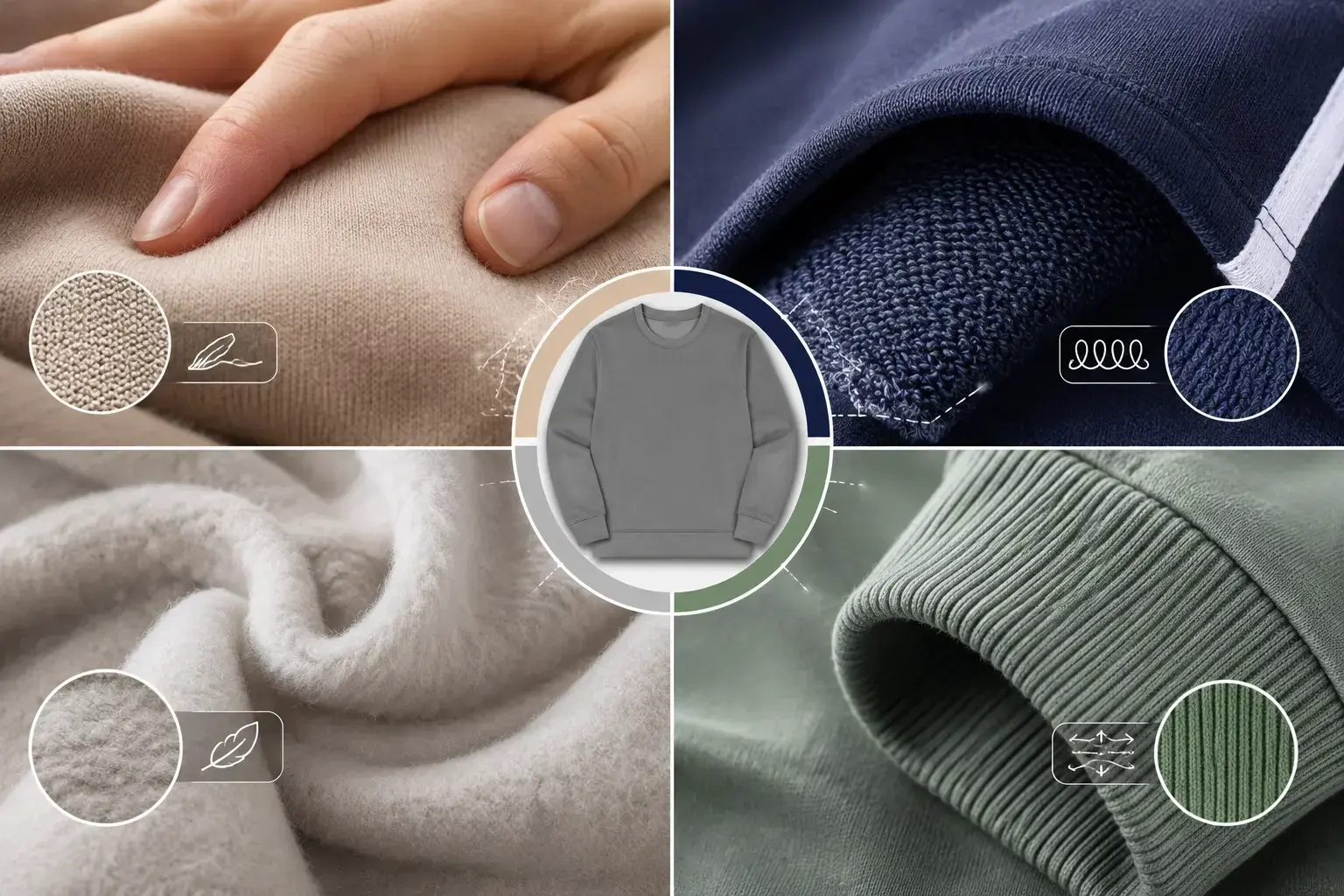
How Do Fabric Feel and Structure Affect Sweatshirt Comfort?
Comfort is not only about the material itself, but also about how the fabric is constructed and finished.
Different fabric structures create completely different wearing experiences.
Surface Texture
The outer surface affects appearance and initial feel.
A smooth surface creates a cleaner, more premium look.
Inner Texture
The inside of the fabric has the biggest impact on comfort.
This is where softness, warmth, and breathability are experienced.
French Terry Interior
French Terry has looped yarns on the inside.
It provides:
- Breathability
- Lightweight comfort
- Everyday usability
Brushed Fleece Interior
Brushed fleece has a soft, fuzzy interior.
It provides:
- Soft touch
- Additional warmth
- A more cosy feeling
Shape Retention
Structure determines how the sweatshirt holds its shape.
Good structure prevents sagging and maintains a clean silhouette.
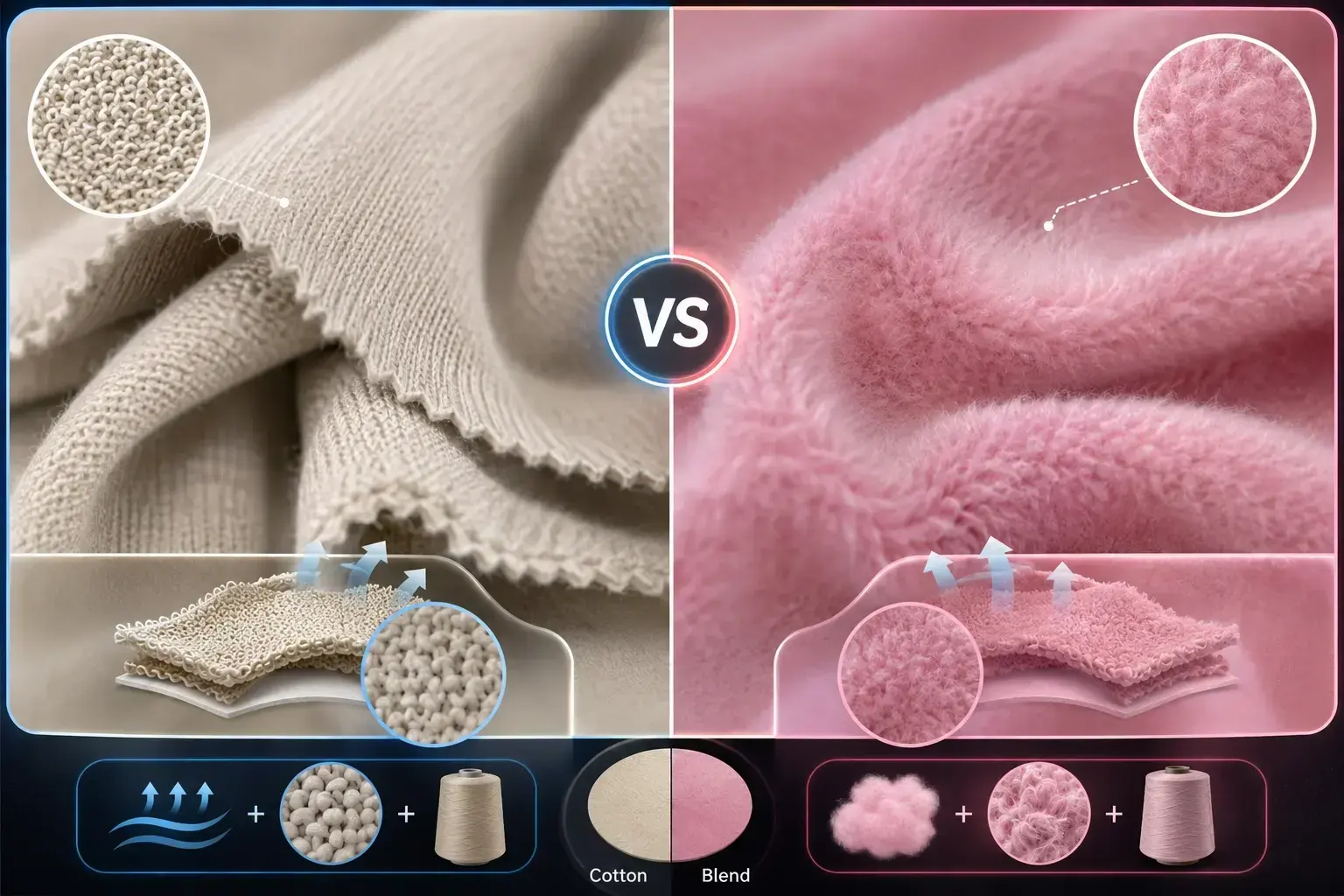
Fabric Feel Comparison
| Fabric Feature | Wearing Experience |
|---|---|
| Smooth Surface | Clean appearance |
| French Terry Loops | Breathable comfort |
| Brushed Fleece | Soft warmth |
| Stable Rib | Better shape retention |
Manufacturer Insight:
Even when using the same material, differences in fabric finishing and structure can significantly affect comfort.
Which Fabrics Are Commonly Used for Sweatshirts?
Once comfort and structure are defined, brands can choose the right materials to achieve the desired result.
| Fabric | Best For | Main Advantage |
|---|---|---|
| French Terry | Everyday wear | Breathable comfort |
| Brushed Fleece | Cool weather | Soft warmth |
| Cotton | Natural feel | Comfort |
| Cotton Blend | Daily production | Shape retention |
| Heavyweight Cotton | Premium streetwear | Structured feel |
French Terry
French Terry is widely used for everyday sweatshirts.
It offers:
- Breathability
- Lightweight comfort
- Versatility
Brushed Fleece
Brushed fleece provides a softer and warmer interior.
It is suitable for cooler environments and cosy designs.
100% Cotton
Cotton delivers natural comfort and softness.
It is often used in basic and premium sweatshirt styles.
Cotton Blend
Blended fabrics improve:
- Durability
- Shape retention
- Production consistency
Heavyweight Cotton
Heavyweight fabrics are commonly used in premium or streetwear products.
They provide:
- Strong structure
- A more substantial feel
Performance Note:
Different fabrics serve different product purposes. There is no single “best” material for all sweatshirts.
How Should Brands Choose Sweatshirt Fabrics?
The right fabric depends on the intended product and target customer.
Before selecting a fabric, brands should consider:
- What level of comfort is required?
- Is the sweatshirt for layering or standalone wear?
- What season will it be worn in?
- What is the target price level?
- Does the product require a structured or relaxed fit?
- Will the fabric maintain quality after repeated washing?
Common Mistakes to Avoid
Avoid these common issues:
- Choosing fabric based only on thickness
- Ignoring breathability
- Overlooking shrinkage and shape retention
- Selecting materials without defining product positioning
The right sweatshirt fabric depends on product positioning rather than thickness alone.
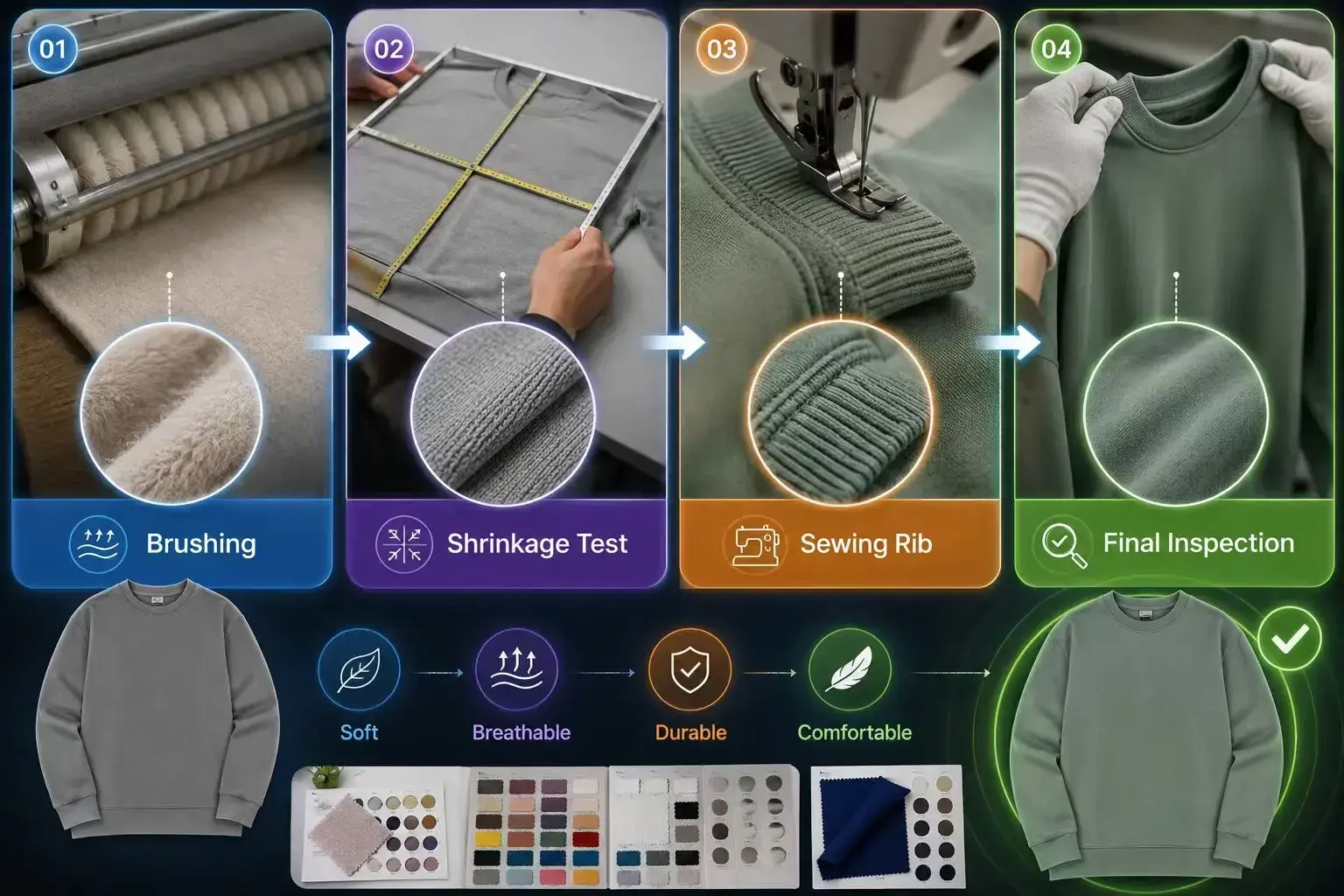
How Do Manufacturers Maintain Comfort in Mass Production?
Comfort must be consistent from sample to bulk production.
Manufacturers focus on controlling multiple factors during production.
Fabric Weight Consistency
Each batch must maintain the same weight and feel.
Shrinkage Control
Proper treatment prevents size changes after washing.
Brushing Quality
For fleece fabrics, brushing must be even and stable.
Rib Recovery
Cuffs and hems must retain elasticity after use.
Anti-pilling Performance
High-quality fabrics reduce surface pilling over time.
A comfortable sweatshirt depends not only on fabric selection but also on consistent manufacturing quality.
From Comfortable Fabrics to Reliable Sweatshirt Production
Choosing the right fabric is only the first step in developing a successful sweatshirt.
Brands must also consider sample development, fabric testing, fit adjustment, and production consistency to ensure the final product delivers the intended comfort.
If you are developing custom sweatshirts and need support selecting fabrics that balance comfort, structure, and durability, you can contact Mingxing Clothing to discuss your project.
FAQS
What is the best fabric for sweatshirts?
The best fabric depends on the balance between comfort, structure, warmth, and everyday use. French Terry and brushed fleece are
Is French Terry better than brushed fleece?
French Terry is more breathable and suitable for everyday wear, while brushed fleece provides more warmth and a softer interior.
Is 100% cotton good for sweatshirts?
Yes. Cotton offers natural comfort and softness, but it may require blending for better durability and shape retention.
Does a heavier sweatshirt always feel more comfortable?
No. Heavier fabrics provide more structure, but comfort depends on weight balance and intended use.
Can manufacturers customize sweatshirt fabrics?
Yes. Manufacturers can adjust fabric composition, weight, finishing, and structure based on product requirements.