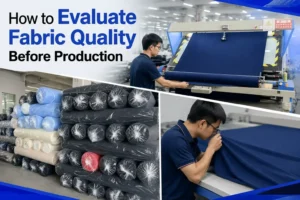
Many clothing quality issues start long before garments are sewn. Fabric defects that go unnoticed during sourcing can lead to shrinkage, color variation, pilling, or inconsistent product quality after production.
The good news is that most of these problems can be identified and prevented before bulk production begins. Working with an experienced custom clothing manufacturer helps brands establish reliable quality control from fabric approval to final inspection.
What Are the Most Common Fabric Quality Problems?
Before focusing on solutions, brands must understand the most common fabric quality issues that affect production.
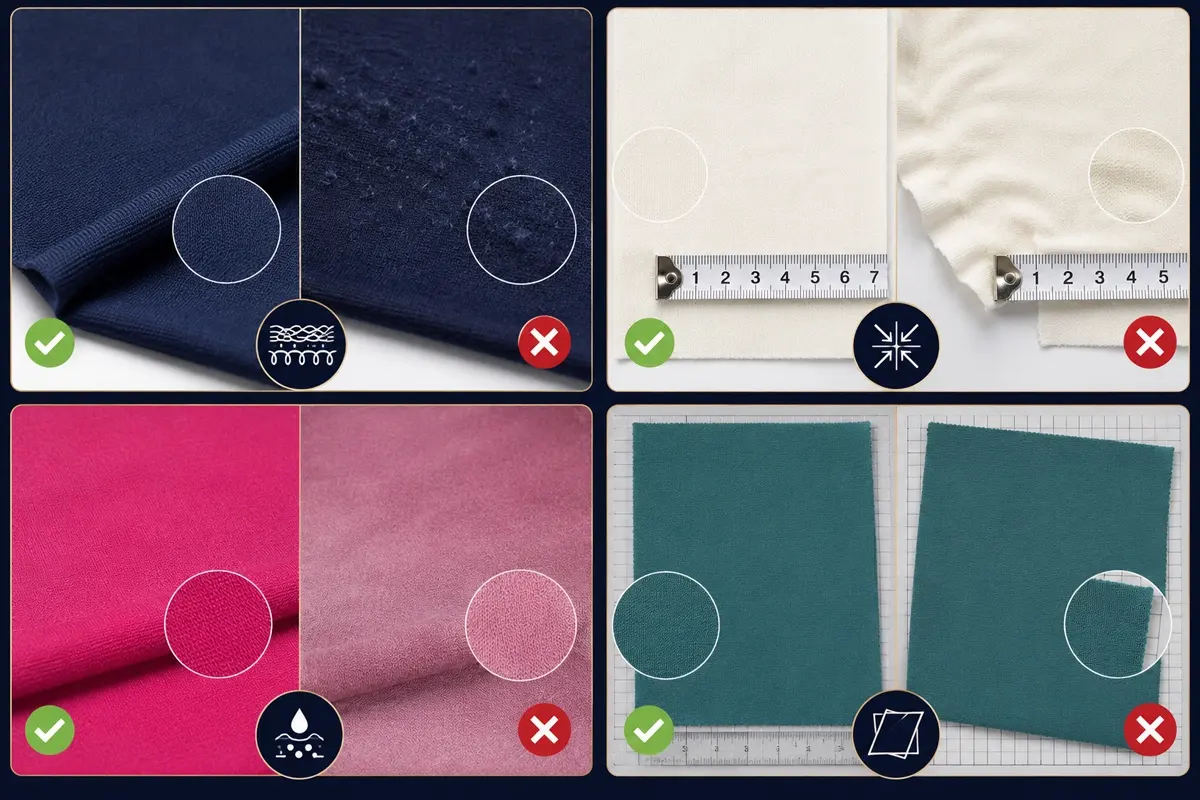
Common Fabric Problems
- Pilling
- Small fiber balls appear on the surface after wear or washing
- Shrinkage
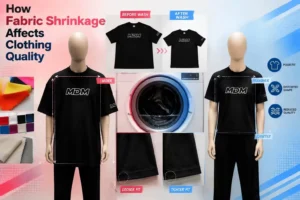
- Fabric reduces in size after washing, affecting garment fit
- Color fading
- Dye loses intensity after washing or exposure to light
- GSM variation
- Fabric weight is inconsistent across different batches
- Fabric skewing
- Fabric twists after washing, causing garment distortion
- Uneven surface texture
- Fabric appears inconsistent due to knitting or finishing issues
Most fabric defects are easier to prevent before production than to correct afterwards.
What Causes Fabric Quality Problems?
Fabric defects rarely happen by accident. Problems in materials, production processes, or finishing cause most quality issues.
Common Root Causes
- Poor yarn quality → leads to pilling and weak durability
- Inconsistent knitting or weaving → causes uneven texture
- Unstable dyeing → results in color fading or variation
- Improper finishing → affects shrinkage and hand feel
- Incorrect storage → leads to moisture damage or distortion
Understanding these causes helps brands identify risks before they become production problems.
How Can Fabric Quality Be Inspected Before Production?
Inspection is the most effective way to prevent fabric problems before they affect finished garments.
Fabric Inspection Checklist
- Visual inspection to detect defects
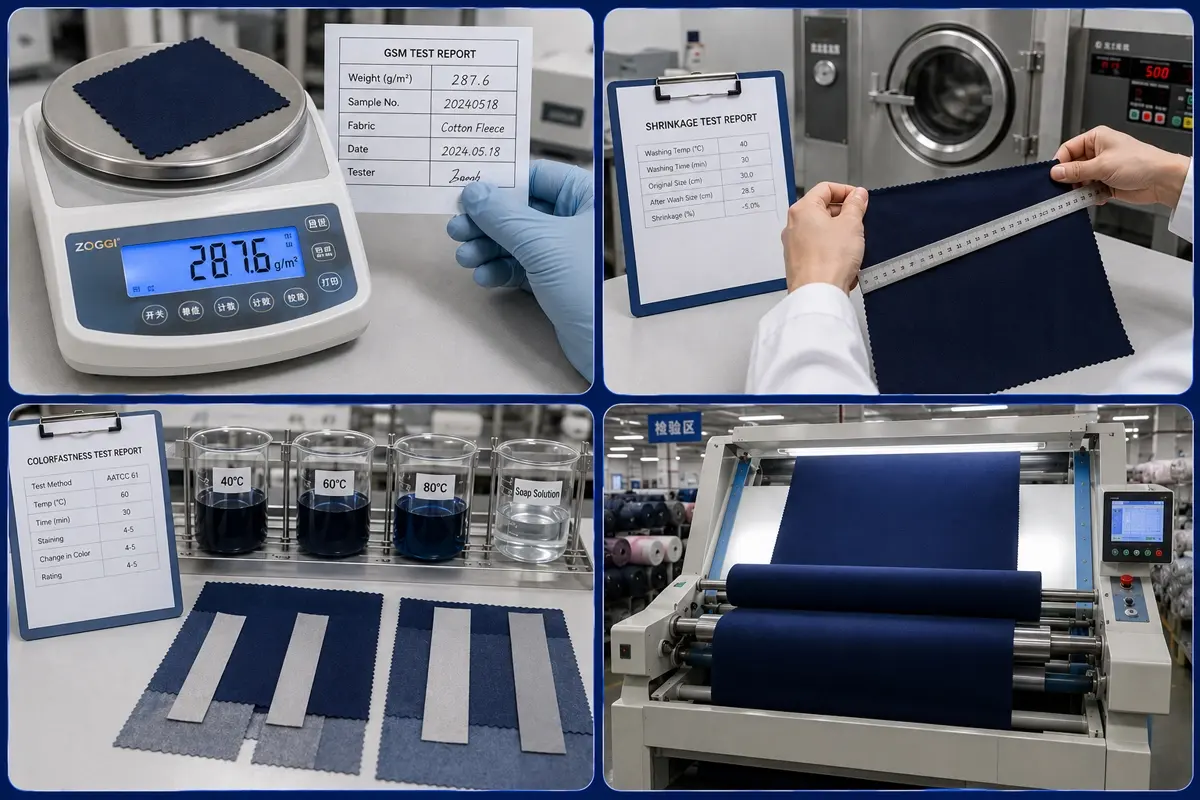
- GSM measurement to confirm fabric weight
- Shrinkage testing before cutting
- Colourfastness testing for dye stability
- Hand feel evaluation for consistency
- Fabric roll inspection for batch quality
Inspection Reference Table
Proper inspection before production can prevent most fabric-related issues.
How Can Brands Prevent Fabric Quality Problems?
Prevention starts with proper planning and approval processes before bulk production begins.
Prevention Checklist
- Approve fabric quality before bulk production
- Confirm lab dips for color accuracy
- Conduct shrinkage and wash testing
- Verify GSM consistency
- Review supplier quality reports
- Approve pre-production samples
Common Mistakes to Avoid
- Approving fabric based only on color
- Skipping testing steps
- Ignoring GSM tolerance
- Rushing into bulk production
- Not validating samples
Preventing fabric problems is always more efficient than fixing them after production.
How Do Manufacturers Maintain Fabric Quality During Production?
Fabric quality must be controlled throughout production—not just checked at the end.
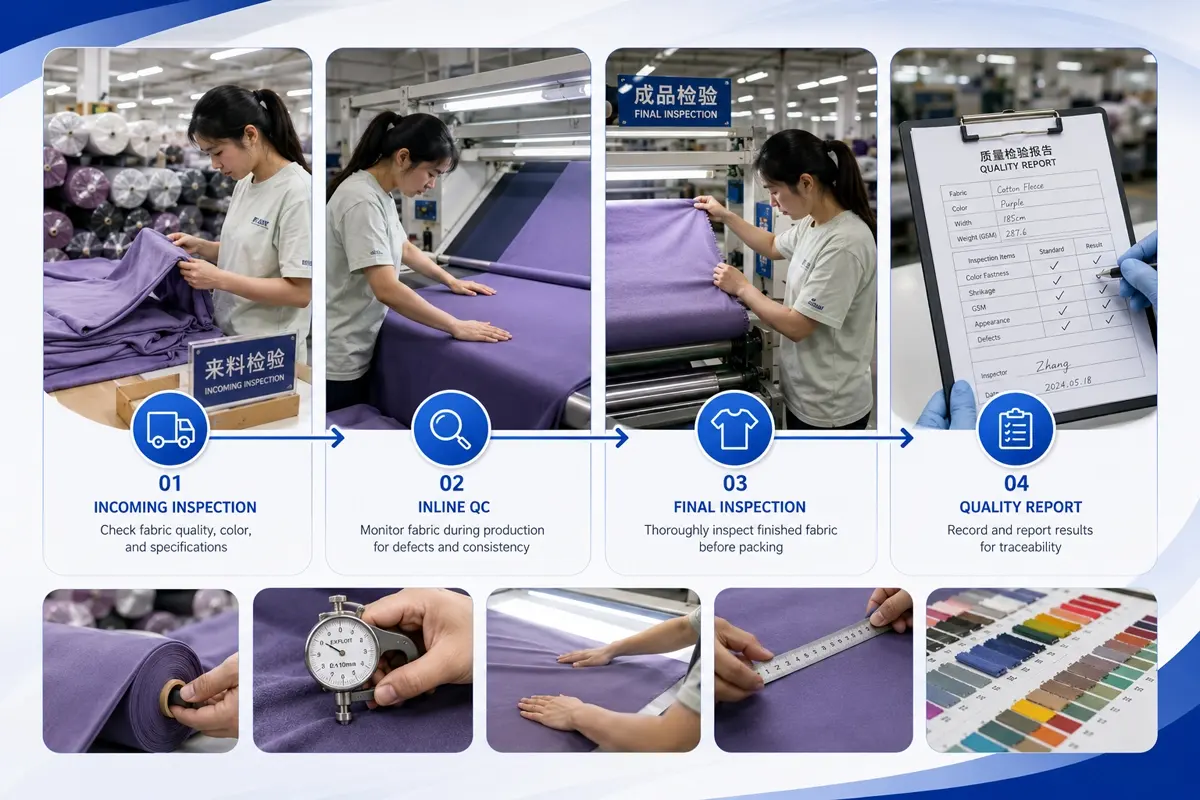
Key Production Controls
- Incoming fabric inspection before cutting
- Inline quality monitoring during sewing
- Batch consistency checks during production
- Final garment inspection before packing
- Quality reports and testing documentation
Consistent fabric quality depends on systematic inspection throughout the entire production process.
From Fabric Inspection to Reliable Production
Fabric quality problems are easier to prevent than to fix. Establishing clear inspection standards before production helps reduce delays, improve consistency, and protect product quality.
If you need support with fabric testing, quality control, or bulk production, you can contact Mingxing Clothing to discuss your project and ensure reliable production results.
FAQS