Best Fabric for Polo Shirts
Choosing the best fabric for polo shirts is not just about cotton or polyester. In most cases, what defines a high-quality polo shirt is its fabric construction—how the fabric is built, how it holds shape, and how it performs over time.
A well-made polo shirt should look structured, feel breathable, and remain presentable after repeated washing. This is why many brands rely on a custom clothing manufacturer to test fabric construction, refine collar structure, and ensure consistent quality in bulk production.
If you are developing a polo product line, understanding fabric structure is essential before making any material decision.
Why Fabric Structure Matters More Than Material in Polo Shirts
Fabric construction has a greater impact on a polo shirt’s appearance than fibre composition alone.
Two polo shirts made from the same cotton can look completely different depending on how the fabric is knitted. One may appear structured and professional, while the other looks soft and casual.
Instead of starting with material, brands should first understand what defines a high-quality polo shirt.
What Defines a Quality Polo Shirt
- Structured silhouette
- Maintains a clean, semi-formal shape instead of collapsing like a T-shirt
- Textured surface
- Creates visual depth and a more refined appearance
- Breathability
- Allows airflow for comfortable all-day wear
- Collar stability
- Keeps the collar upright after washing and repeated use
- Shape retention
- Ensures the garment continues to look presentable over time
Fabric construction has a greater impact on a polo shirt’s appearance than fibre composition alone.
How Does Fabric Construction Affect Polo Shirt Performance?
Fabric construction is what separates a classic polo shirt from a casual one.
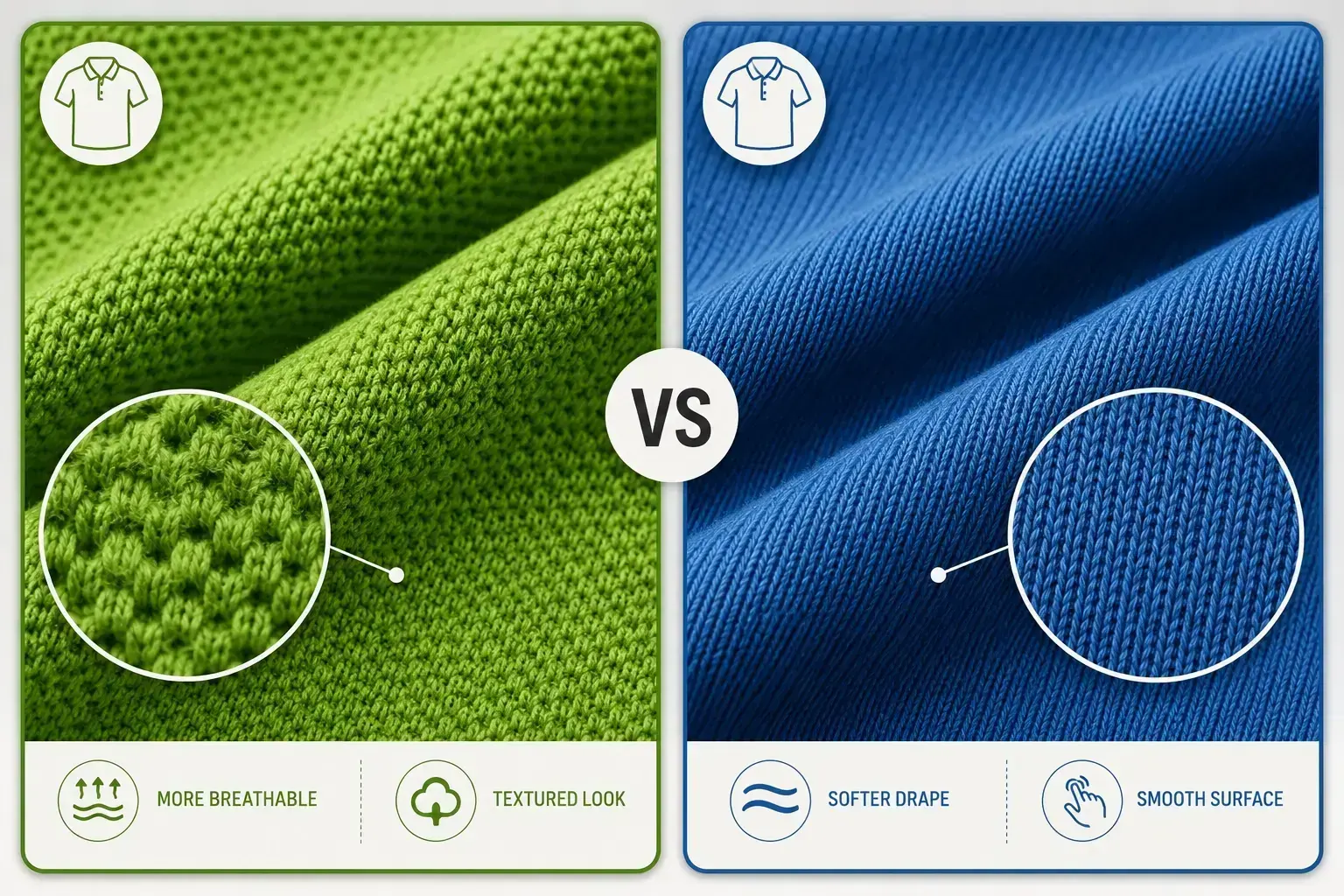
The most important distinction is not cotton vs polyester—but pique vs jersey.
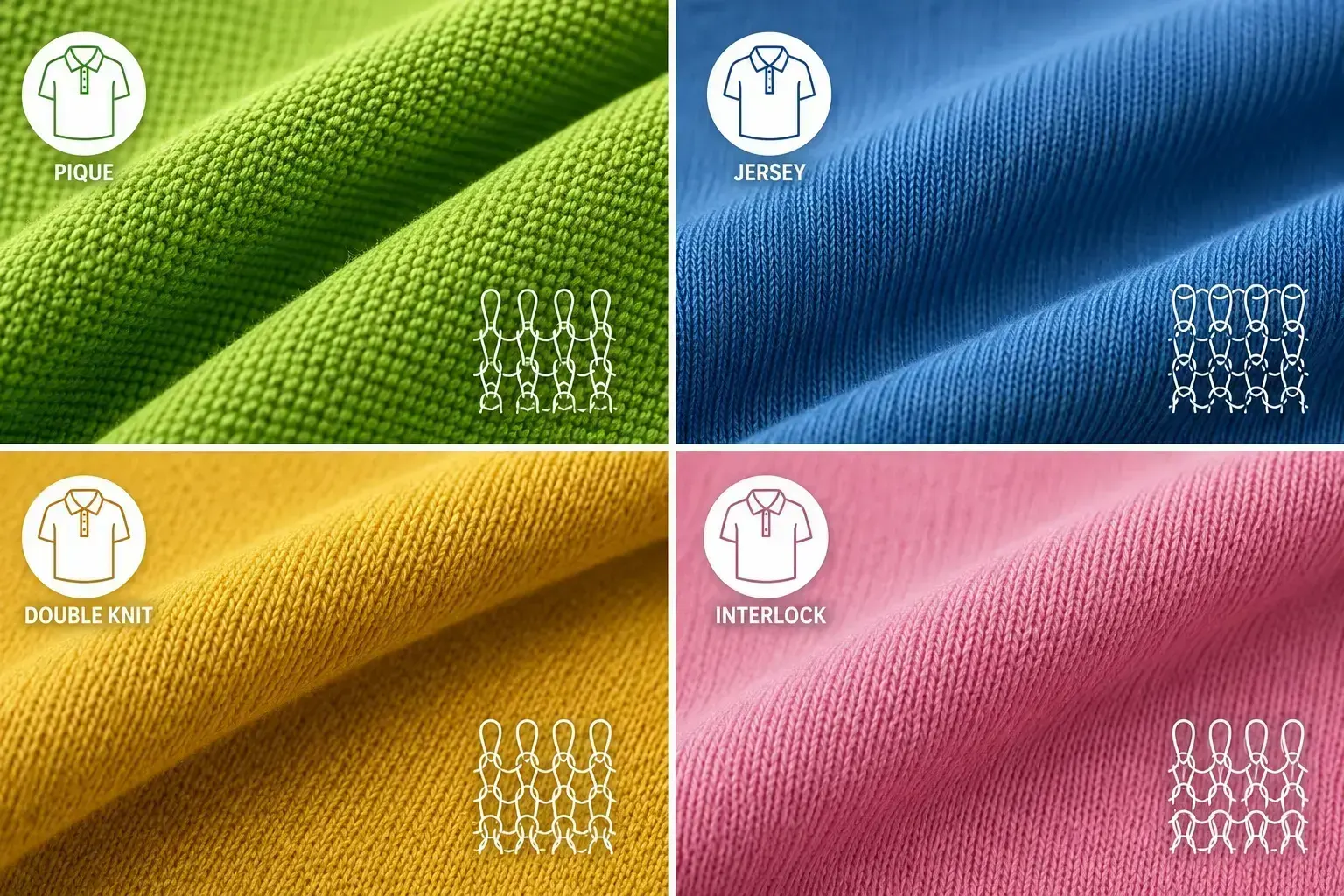
Construction Comparison
| Construction | Appearance | Positioning |
|---|---|---|
| Pique | Textured & structured | Classic polo |
| Jersey | Smooth & soft | Casual polo |
| Double Knit | Firm & stable | Premium polo |
| Interlock | Dense & smooth | Luxury polo |
How Each Construction Performs
- Pique knit Breathable due to open structure
- Holds shape well
- Looks more professional
- Jersey knit Softer and smoother
- Less structure
- More relaxed appearance
- Double knit / Interlock Higher density
- Stronger stability
- Better for premium positioning
Manufacturer Insight:
Even with identical material composition, construction determines whether a polo shirt looks premium or casual.
Which Fabrics Are Commonly Used for Polo Shirts?
Once the right construction is selected, materials can be chosen based on product positioning and cost.
If you are working across multiple product categories, it becomes clear that fabric selection is always tied to the final product goal—not just fibre type. This is especially important in custom apparel production, where construction and material must align.
Common Fabric Options
- Cotton PiqueNatural feel
- Breathable
- Classic polo appearance
- Cotton Blend Pique: Improved durability
- Better shape retention
- More stable for bulk production
- Polyester PiqueWrinkle-resistant
- Easy care
- Suitable for uniforms
- Jersey Cotton Soft and smooth
- Comfortable
- More casual positioning
- Performance BlendsMoisture-wicking
- Lightweight
- Used for golf or sports polos
There is no single best fabric—only the best option for a specific product positioning.
How Should Brands Choose Polo Shirt Fabrics?
Choosing the right fabric is a product decision, not a material decision.
Fabric Selection Checklist
- What image should the polo shirt present? (formal vs casual)
- Does the product require strong structure or soft drape?
- Will it be used for uniforms, retail, or sportswear?
- What climate will it be worn in?
- How important is long-term shape retention?
- What is the target price range?
Common Mistakes to Avoid
- Focusing only on cotton content
- Ignoring fabric construction
- Overlooking collar structure
- Choosing softness over structure
- Ignoring washing performance
The best polo shirt fabric depends on structure, positioning, and long-term appearance—not material alone.
How Do Manufacturers Maintain Polo Shirt Quality in Mass Production?
A good sample does not guarantee a good bulk order. Consistency is what defines real product quality.
Key Production Control Points
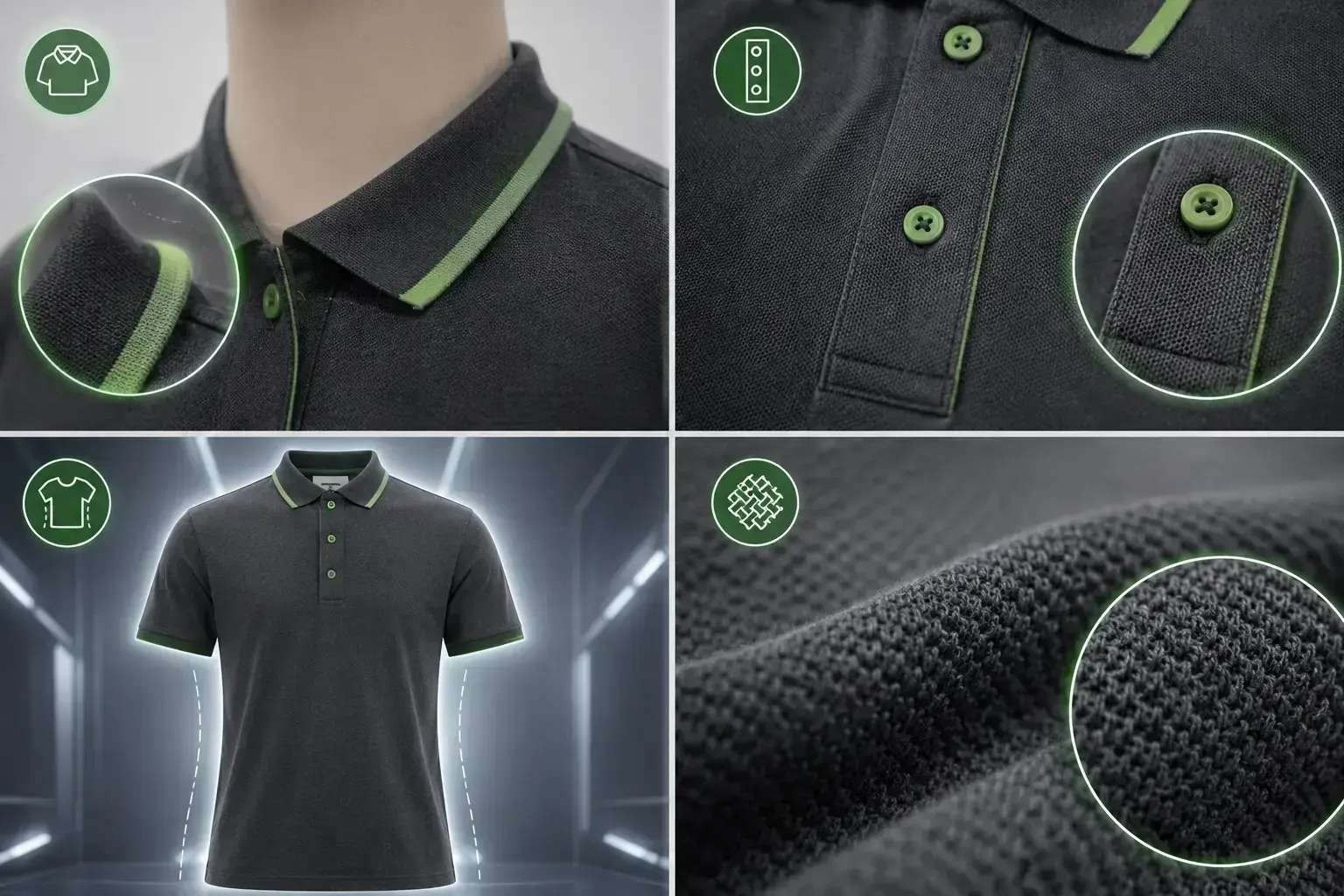
- Collar construction
- Ensures the collar holds its shape
- Placket reinforcement
- Maintains alignment and structure
- Fabric consistency
- Keeps texture and appearance uniform
- Shrinkage control
- Prevents deformation after washing
- Button attachment
- Improves durability and longevity
A premium polo shirt depends on consistent fabric construction and precise manufacturing quality.
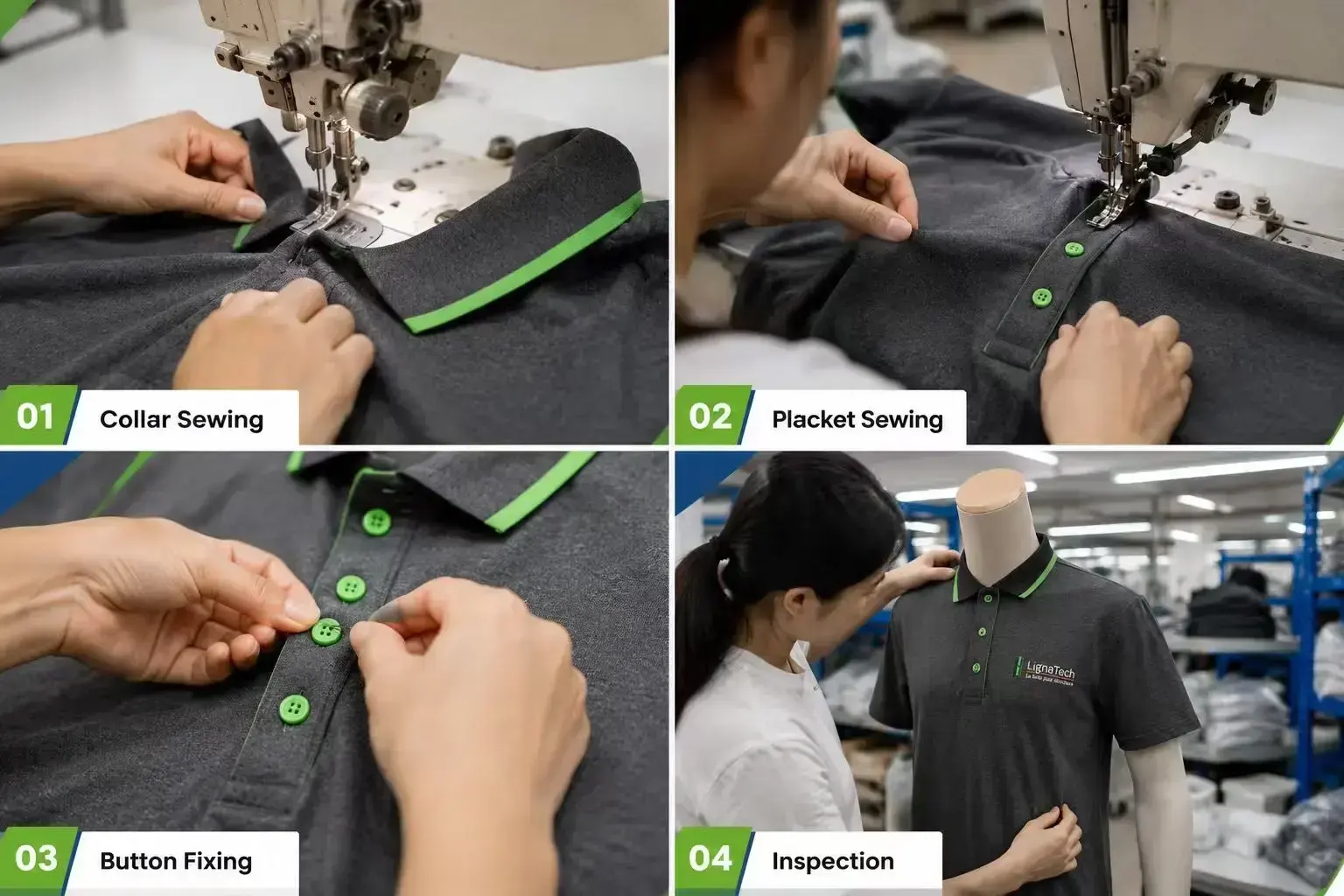
From Fabric Construction to Reliable Polo Shirt Production
Fabric selection is only the starting point. To create a successful polo shirt, brands must combine construction, sampling, and production control into one consistent system.
If you are developing a new polo collection and need support with fabric selection, structure optimisation, and bulk production, you can contact Mingxing Clothing to discuss your project and receive practical manufacturing guidance.
FAQS
What is the best fabric for polo shirts?
The best fabric depends on structure, breathability, and product positioning. Pique knit fabrics are the most widely used choice.
Why is pique fabric used for polo shirts?
Pique fabric provides texture, airflow, and structure, helping polo shirts maintain a more professional appearance.
Is jersey fabric suitable for polo shirts?
Yes, but it is more suitable for casual styles because it lacks the structure of pique fabric.
Which fabric is best for corporate polo shirts?
Cotton blend pique or polyester pique are commonly used because they offer durability, structure, and easy maintenance.
Can manufacturers customize polo shirt fabrics?
Yes. Fabric composition, construction, weight, and finishing can all be customised based on product requirements.