Choosing fabric for custom T-shirts is not about picking the most popular material—it’s about selecting the right fabric for your specific product, customers, and production goals.
Many brands make the mistake of choosing fabric based on price or feel alone. In reality, the right decision depends on how the T-shirt will be used, how it will be printed, and who will wear it.
This guide breaks down the process step by step, based on how professional clothing manufacturers approach fabric selection.
Quick Answer: How Should You Choose Fabric for Custom T-shirts?
To choose the right fabric, you need to match three key factors:
- The type of T-shirt you are creating
- Your target customers
- Your production requirements
There is no single “best” fabric. The best choice is the one that fits your product’s purpose.
Why Choosing the Right Fabric Matters
Fabric is not just a material decision—it directly affects your final product.
The fabric you choose will influence:
- How comfortable the T-shirt feels
- How well the prints and logos appear
- How the product performs after washing
- How customers perceive your brand
A poor fabric choice can lead to shrinking, fading prints, or an inconsistent product experience. A good choice improves product quality and reduces long-term issues.
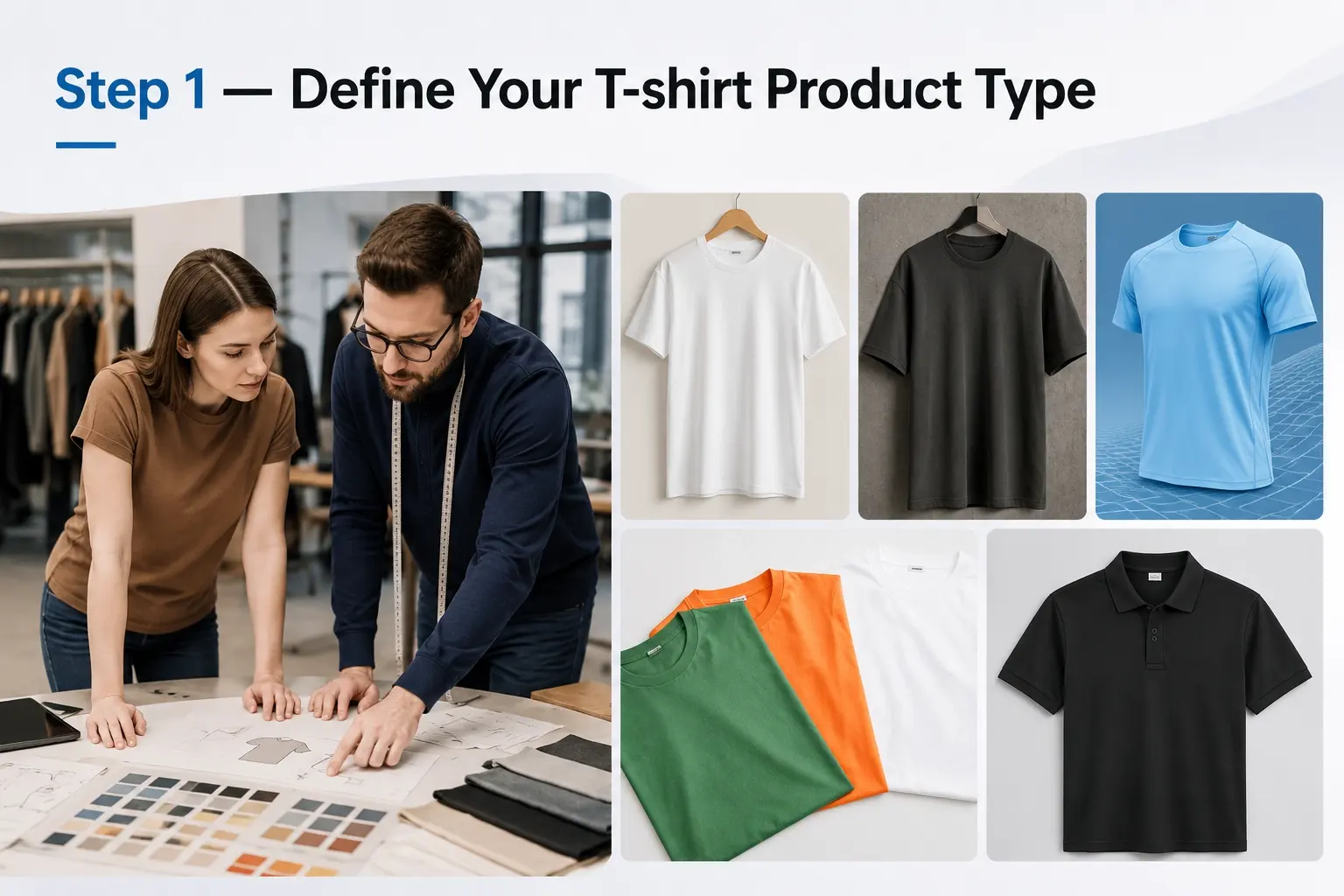
Step 1 — Define Your T-shirt Product Type
The first step is to clearly define what you are making.
Different types of T-shirts require completely different fabric characteristics.
For example:
- Fashion and retail T-shirts prioritise comfort and appearance
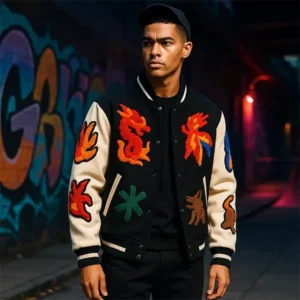
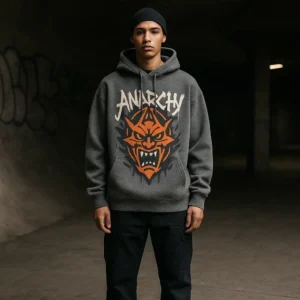
- Streetwear focuses on structure and heavier fabric
- Sportswear requires performance and moisture control
- Promotional T-shirts focus on cost and scalability
- Corporate uniforms need durability and consistency
Until you define your product type, choosing fabric will always be unclear.
Step 2 — Understand Your Target Customers
Fabric selection should always align with customer expectations.
Ask yourself:
- Are you targeting premium or budget customers?
- Will they prioritise comfort, durability, or price?
- Is your product for daily wear or specific use (sports, events, etc.)?
For example, customers buying fashion T-shirts expect softness and quality, while customers ordering promotional T-shirts often prioritise affordability.
Understanding your audience helps you avoid over-specifying or under-delivering your product.
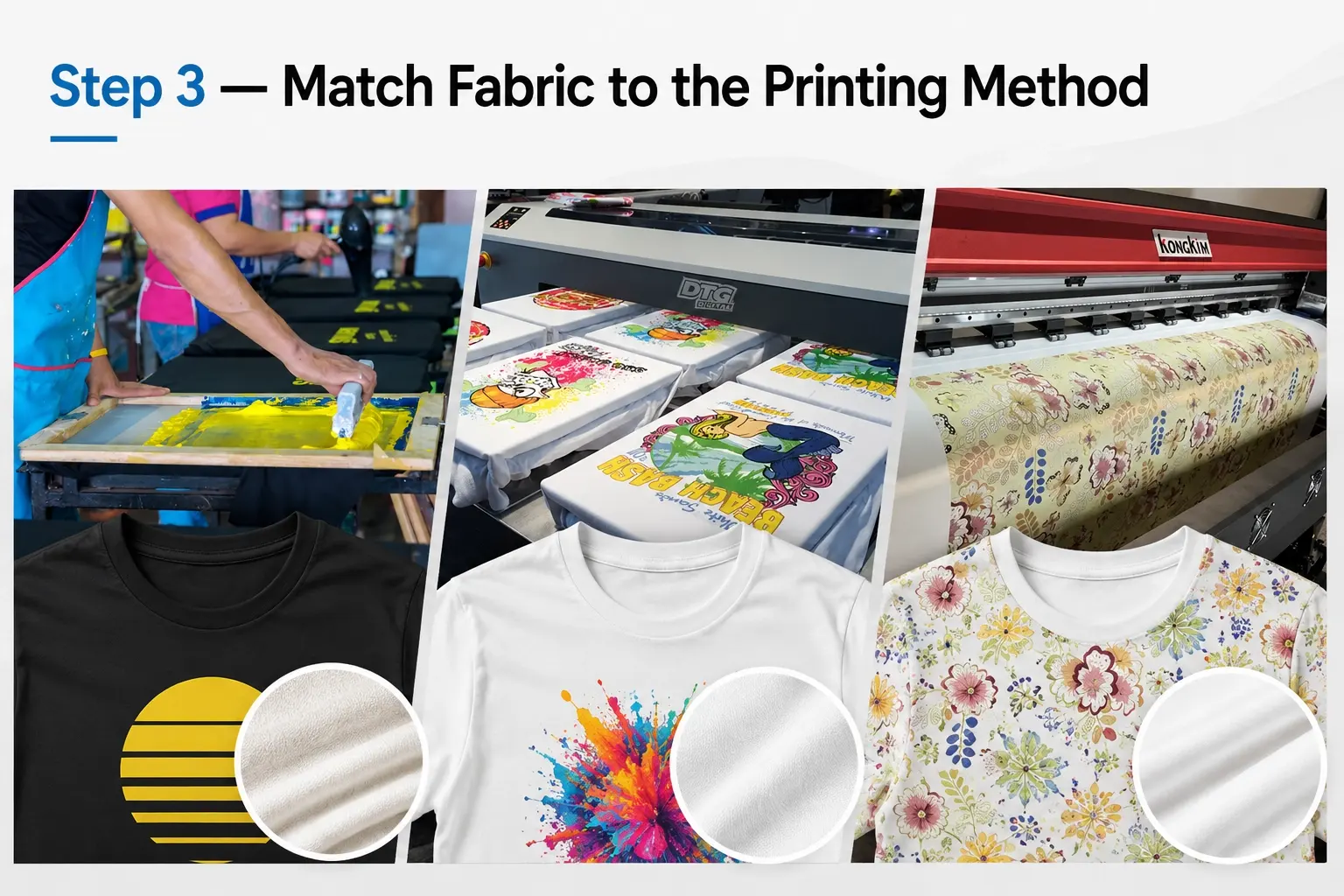
Step 3 — Match Fabric to the Printing Method
One of the most common mistakes is choosing fabric without considering how the T-shirt will be printed.
Different printing methods work best with different materials.
For example:
- Screen printing performs best on cotton-based fabrics
- DTG printing requires smooth, high-quality cotton surfaces
- Sublimation printing only works effectively on polyester
If fabric and printing are mismatched, the result can be poor print quality, fading, or increased production issues.
Fabric and printing should always be decided together, not separately.
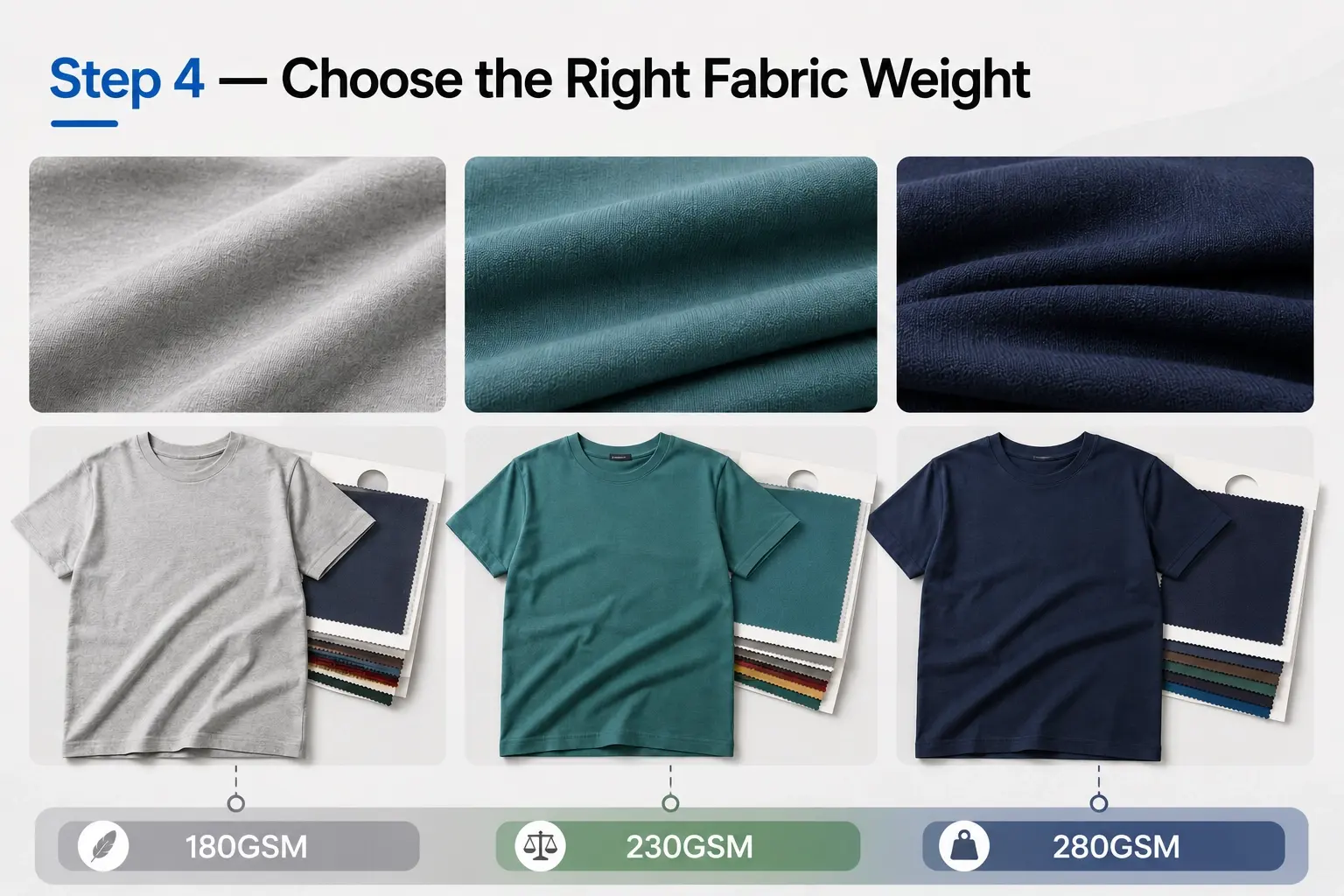
Step 4 — Choose the Right Fabric Weight
Fabric weight plays a major role in how a T-shirt looks and feels.
In general:
- Lightweight fabrics are softer and more breathable, but less structured
- Medium-weight fabrics offer the best balance for most retail products
- Heavyweight fabrics create a more premium or streetwear look
For most custom T-shirt projects, mid-weight fabrics are the safest starting point. Heavier fabrics are often used when structure and style are more important than comfort.
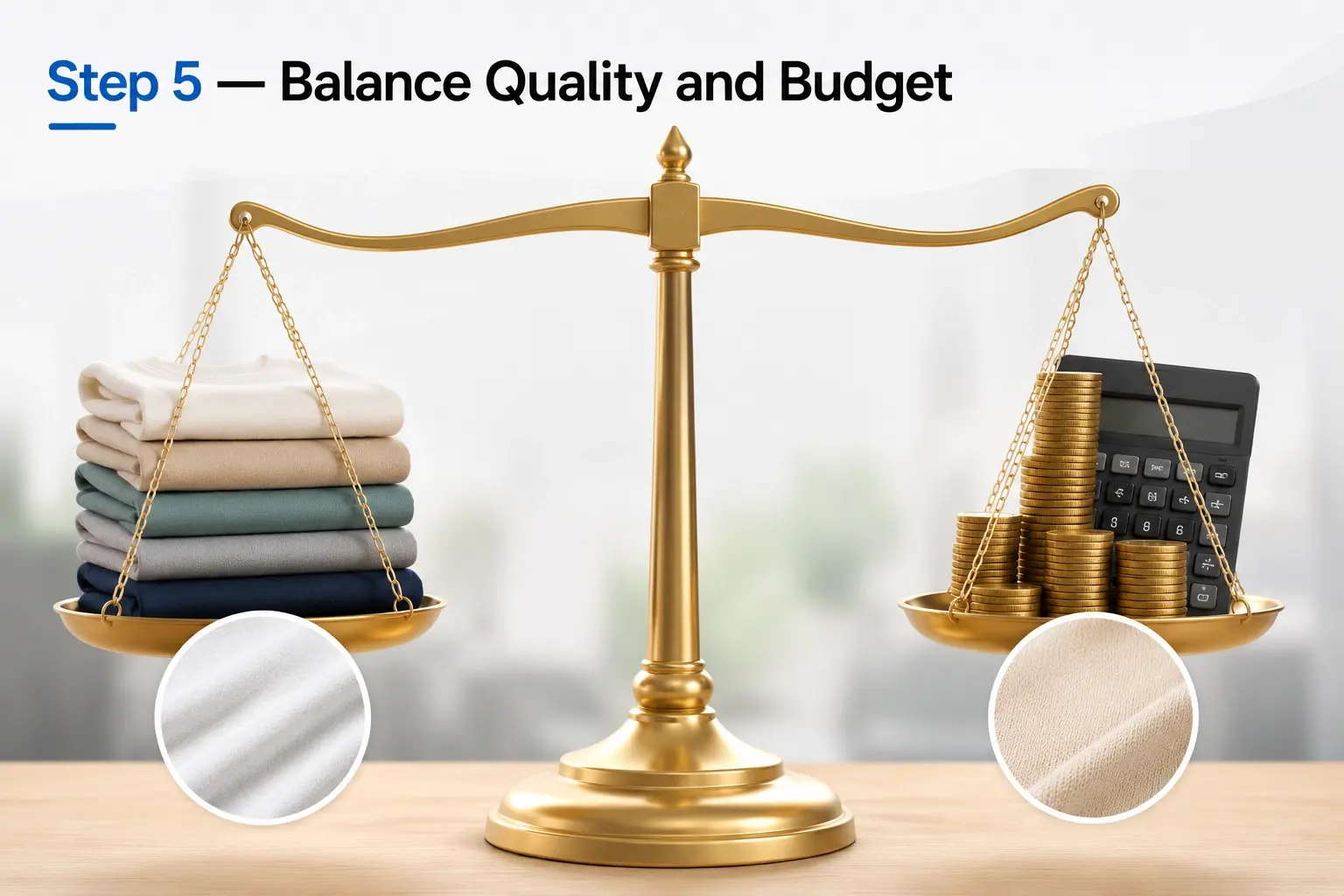
Step 5 — Balance Quality and Budget
Fabric selection is always a balance between quality and cost.
Higher-quality fabrics improve:
- Comfort
- Brand perception
- Customer satisfaction
But they also increase production costs.
For large-scale orders such as promotional T-shirts or uniforms, slightly lower-cost fabrics are often more practical. For fashion brands, investing in higher-quality materials usually provides better long-term value.
The goal is not to choose the most expensive fabric, but the most suitable one for your price point.
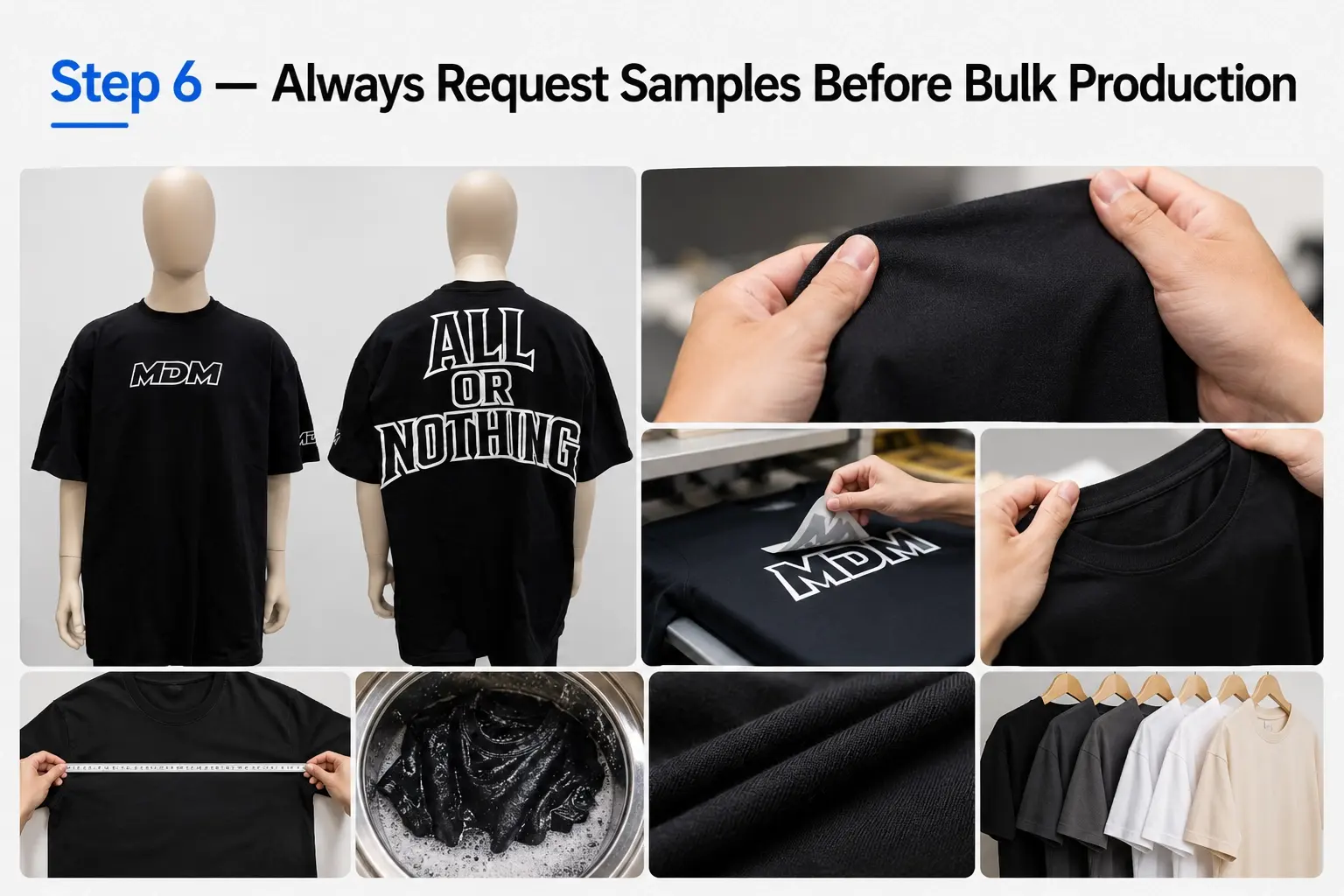
Step 6 — Always Request Samples Before Bulk Production
No matter how good a fabric looks on paper, it should always be tested in real production.
Sampling allows you to check:
- Fabric feel and quality
- Print results
- Fit and structure
- Shrinkage after washing
Skipping the sampling stage is one of the most common reasons for production issues.
A reliable manufacturer will always recommend sampling before bulk production.
Common Fabric Selection Mistakes to Avoid
Many problems in custom T-shirt production come from simple mistakes during fabric selection.
Some of the most common ones include:
- Choosing fabric based only on price
- Ignoring how the fabric works with printing
- Selecting fabric without defining the product type
- Assuming all cotton or polyester fabrics are the same
- Skipping sample testing
Avoiding these mistakes can significantly improve your final product quality.
How Manufacturers Choose Fabric (Industry Approach)
Professional manufacturers do not choose fabric randomly. They follow a structured process.
Typically, the process includes:
- Understanding the product and brand positioning
- Recommending suitable fabric options
- Evaluating printing compatibility
- Producing samples for testing
- Finalising fabric for bulk production
This approach ensures that the fabric is not only suitable but also consistent in production.
Our Fabric Selection Recommendation
If you are starting a new project and are unsure where to begin, follow this simple approach:
- Start by defining your product type
- Choose a fabric that matches your customer’s expectations
- Ensure compatibility with your printing method
- Test the fabric through sampling
For most first-time projects, starting with a proven, widely used fabric is the safest option before exploring more specialised materials.
Need Help Choosing Fabric for Your Custom T-shirts?
Choosing the right fabric becomes much easier when you have guidance based on real manufacturing experience.
As an experienced custom clothing manufacturer, Mingxing Clothing helps brands select suitable fabrics, test samples, and ensure smooth production from development to bulk manufacturing.
If you’re planning a custom T-shirt project, you can contact Mingxing Clothing to get professional recommendations based on your product and market.
FAQs