What Is Private Label Clothing Manufacturing?
Many brands looking for a reliable clothing manufacturer eventually explore private label manufacturing as a faster way to launch products under their own brand name.
Instead of building a factory, sourcing materials independently, or managing production teams, brands can work with an experienced manufacturer while focusing on branding, marketing, and sales.
Private label manufacturing has become one of the most popular business models for startups, eCommerce brands, wholesalers, and established apparel companies.
This guide explains what private label clothing manufacturing is, how it works, what can be customised, and whether it is the right solution for your business.
What Is Private Label Clothing Manufacturing?
Private label clothing manufacturing is a production model where garments are produced by a manufacturer but sold under another company’s brand name.
Rather than promoting the factory’s brand, the manufacturer allows the buyer to add their own logo, labels, packaging, and brand identity to the products.
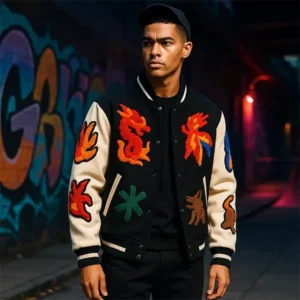
For example, a manufacturer may produce hoodies, T-shirts, activewear, or jackets, while the buyer applies custom branding and sells the products as part of their own collection.
This approach allows brands to enter the market more quickly while leveraging the expertise, equipment, and production capabilities of an established manufacturer.
How Does Private Label Clothing Manufacturing Work?
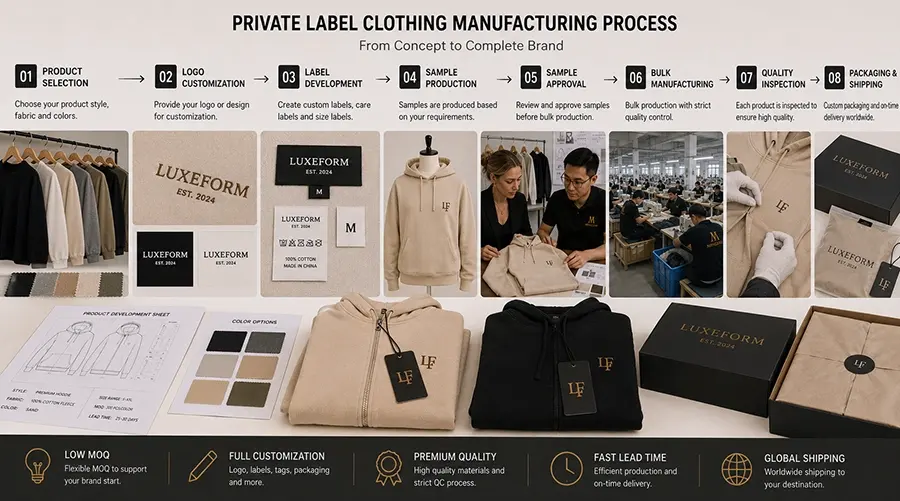
Most private label projects follow a similar workflow.
Product Selection
↓
Customization Requirements
↓
Sample Development
↓
Sample Approval
↓
Bulk Production
↓
Packaging & Shipping
Brands typically start by selecting a product style and defining branding requirements such as logos, labels, packaging, and color options.
After sample approval, the project moves into bulk production before the finished products are packed and shipped.
Compared with fully custom product development, private label manufacturing often requires less development time and lower upfront investment.
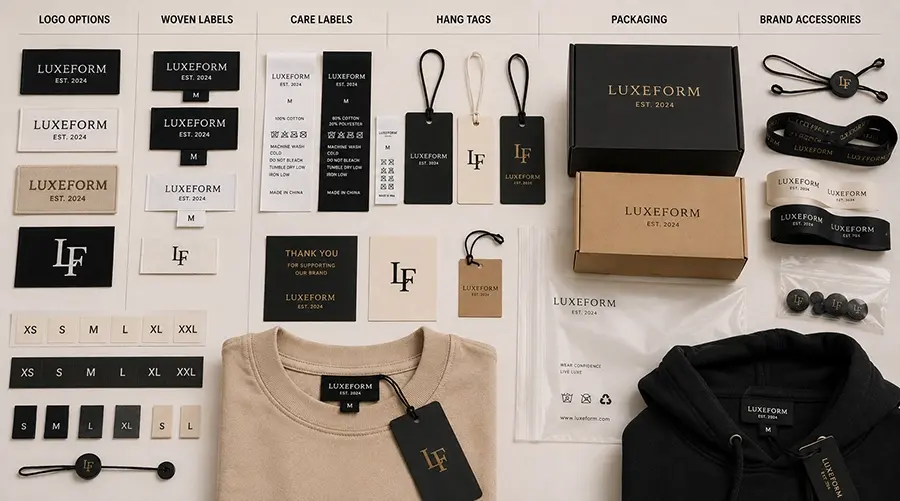
What Can You Customize With Private Label Clothing?
One of the biggest advantages of private label manufacturing is the ability to create a recognizable brand identity.
Depending on the manufacturer and product category, customization options may include:
Logo Application
Screen printing, embroidery, heat transfer, patches, and other branding methods.
Neck Labels
Custom woven labels, printed labels, or tear-away labels.
Wash Labels
Brand-specific care labels and composition labels.
Hangtags
Custom hangtags featuring your logo, product information, and brand story.
Packaging
Custom polybags, boxes, stickers, inserts, and branded packaging materials.
Colors
Custom color selections based on available fabrics and production capabilities.
Sizing
Customized size specifications for your target market.
Fabric Options
Different fabric compositions, weights, and performance features depending on the product.
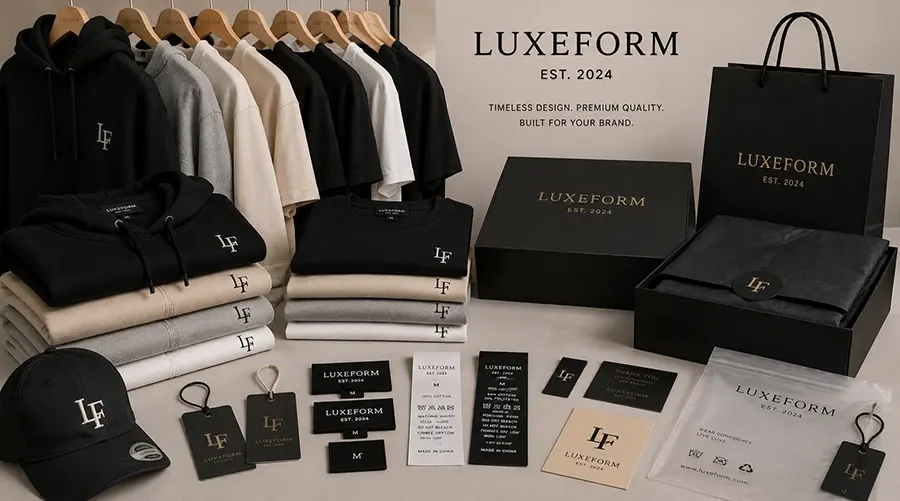
Many brands use private label clothing services to create a more professional customer experience while maintaining consistent branding across their product range.
Benefits of Private Label Clothing Manufacturing
Private label manufacturing offers several advantages for growing apparel brands.
Faster Brand Launch
Using an existing manufacturing foundation often allows brands to launch products more quickly than developing everything from scratch.
Lower Development Costs
Private label projects usually require less development work compared with fully custom garment programs.
Stronger Brand Identity
Custom labels, logos, packaging, and branding elements help create a professional customer experience.
Manufacturing Expertise
Brands gain access to experienced production teams, quality control systems, and sourcing networks.
Scalable Growth
Many private label programs allow brands to begin with manageable quantities and increase production as demand grows.
For many businesses, private label manufacturing provides an effective balance between customization, speed, and cost efficiency.
Is Private Label Manufacturing Suitable for Startups?
In many cases, yes.
Private label manufacturing is often an ideal option for startups because it reduces product development complexity while still allowing brands to establish a unique identity.
Many startup brands use private label programs to:
- Test new markets
- Launch their first collection
- Build brand recognition
- Validate product demand
- Reduce development risks
However, startups should still prepare clear branding requirements, realistic quantity expectations, and product specifications before contacting manufacturers.
The more organized the project, the smoother the development process tends to be.
Private Label vs OEM Clothing Manufacturing
Although the terms are sometimes used interchangeably, private label manufacturing and OEM manufacturing are not the same.
| Feature | Private Label | OEM |
|---|---|---|
| Product Development | Existing or modified styles | Fully custom products |
| Customization Level | Moderate | High |
| Development Cost | Lower | Higher |
| Time to Market | Faster | Slower |
| Technical Complexity | Lower | Higher |
Private label manufacturing is often preferred by brands seeking faster market entry, while OEM manufacturing is commonly chosen by brands developing unique products from the ground up.
Common Misunderstandings About Private Label Manufacturing
Many new buyers misunderstand how private label manufacturing works.
Private Label Is Not Dropshipping
Private label products are produced specifically for your brand and are not simply shipped from generic inventory.
Private Label Is Not Buying Random Stock Products
Most private label projects involve branding customization and product adjustments rather than purchasing generic products without modification.
Private Label Does Not Mean Zero Customization
Many private label programs allow customization of labels, packaging, logos, colors, and selected product features.
Understanding these differences helps brands choose the right manufacturing model for their goals.
How to Choose a Private Label Clothing Manufacturer
Not all manufacturers offer the same capabilities.
When evaluating potential suppliers, consider:
Product Experience
Do they regularly manufacture products similar to yours?
MOQ Requirements
Are their minimum order quantities compatible with your project?
Sample Development Capability
Can they develop samples efficiently and accurately?
Communication Quality
Do they respond clearly and professionally?
Quality Control Systems
How do they maintain consistency during production?
Selecting the right manufacturing partner is often just as important as selecting the right product.
Ready to Launch Your Own Clothing Brand?
Private label clothing manufacturing can help brands launch products faster, build stronger brand identities, and scale more efficiently.
Whether you are launching your first collection or expanding an existing apparel business, working with an experienced manufacturer can simplify the entire process.
If you’re ready to contact us, our team can help you explore private label clothing manufacturing solutions and develop products tailored to your brand.
FAQs
Can I Use My Own Logo on Private Label Clothing?
Yes. Most private label manufacturers allow brands to add custom logos through printing, embroidery, patches, labels, and other branding methods.
What Can Be Customized Under a Private Label Program?
Common customization options include logos, neck labels, wash labels, hangtags, packaging, colors, and selected product features.
Is Private Label Manufacturing Suitable for Small Brands?
Yes. Many startups and emerging brands use private label manufacturing to launch products without investing in large-scale product development.
Do Private Label Manufacturers Provide Samples?
Most manufacturers offer sample development before bulk production. Samples allow brands to evaluate quality, fit, construction, and branding details before placing larger orders.
Is Private Label Clothing the Same as OEM Manufacturing?
No. Private label manufacturing usually focuses on existing or modified product styles with custom branding, while OEM manufacturing typically involves fully custom product development from the ground up.
Share With
Related Articles
Hot Products