How to Work With a Clothing Manufacturer
Many brands believe the hardest part of apparel manufacturing is finding a factory.
In reality, finding a supplier is often the easy part. The bigger challenge is managing the relationship, communicating requirements clearly, approving samples properly, and keeping projects moving smoothly through production.
A successful manufacturing project requires cooperation between both sides. The better a brand works with its manufacturer, the better the results tend to be.
Whether you are developing your first product or expanding an existing collection, working effectively with an apparel manufacturing partner can help reduce mistakes, improve efficiency, and create a stronger foundation for long-term growth.
This guide explains how to work with a clothing manufacturer and what successful brands do differently throughout the development and production process.
Prepare Your Project Before Contacting a Manufacturer
One of the biggest reasons apparel projects experience delays is incomplete project information.
Manufacturers can only evaluate products based on the information they receive. The more organised your project is, the easier it becomes to receive accurate quotations, develop samples, and move into production.
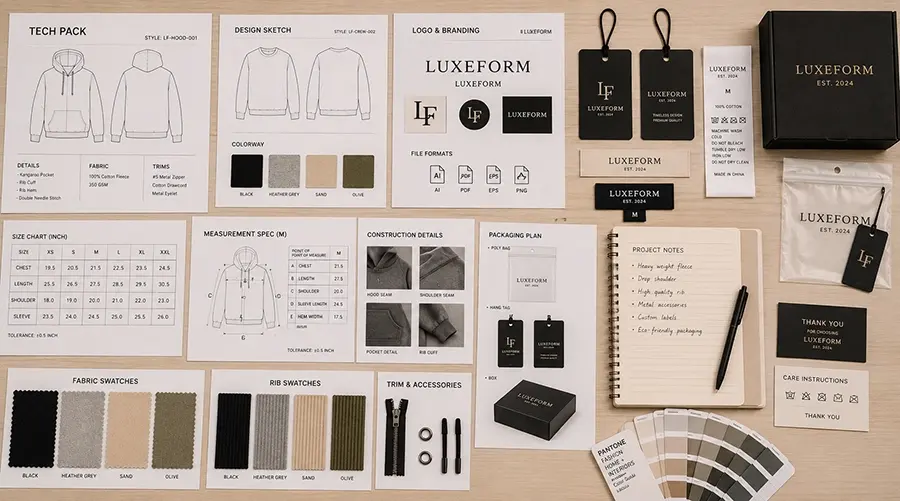
Before beginning a project, it is helpful to prepare:
- Product descriptions and design requirements
- Reference images, sketches, or inspiration photos
- Logo files and branding requirements
- Fabric preferences and performance expectations
- Size information and target market details
- Estimated order quantities
- Packaging requirements
- Delivery destination information
Providing complete information from the beginning often reduces misunderstandings and speeds up development.
Establish Clear Communication From The Beginning
Many manufacturing problems are actually communication problems.
Factories cannot read minds. If requirements are unclear, the final product may not match expectations.
Successful brands typically focus on several communication principles:
- Document important decisions in writing
- Confirm revisions clearly
- Provide feedback promptly
- Use photos and visual references whenever possible
- Keep all parties updated on changes
Clear communication becomes especially important during sampling and production because even small misunderstandings can affect timelines and product quality.
The goal is not simply sending messages. The goal is ensuring both sides understand the project in the same way.
Understand Your Role During Sample Development
Many first-time buyers misunderstand the purpose of samples.
A sample is not only a product preview. It is also a testing and verification stage.
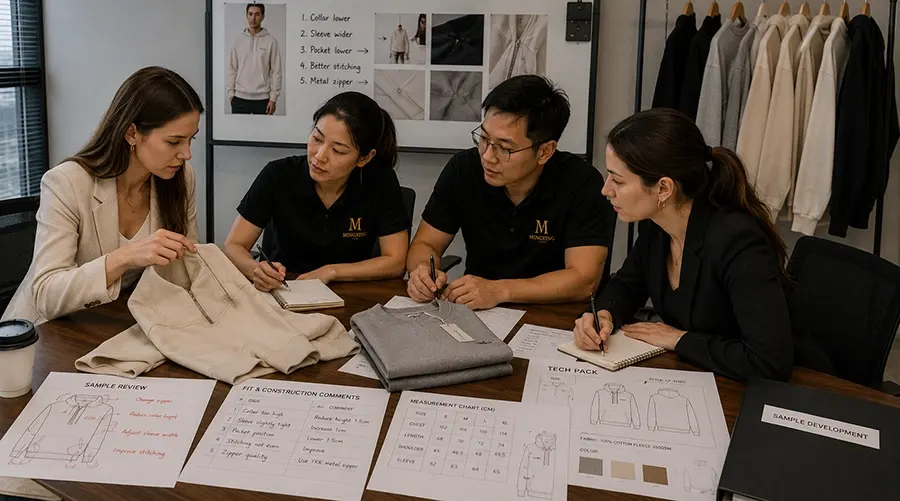
The sample process allows brands to evaluate:
- Fit and sizing
- Fabric selection
- Construction quality
- Logo placement
- Labels and packaging
- Overall product appearance
One common mistake is expecting the first sample to be perfect.
In reality, many apparel projects require one or more revisions before reaching final approval. This is a normal part of product development and should not automatically be viewed as a problem.
The sample stage is often where the most valuable improvements are made.
Confirm Everything Before Bulk Production
Once a sample is approved, the project moves into bulk production.
This transition is one of the most important stages in the manufacturing process because production errors become much more expensive after manufacturing begins.
Before approving production, brands should carefully verify:
- Size charts and measurements
- Fabric composition and weight
- Color selections
- Logo size and placement
- Neck labels and wash labels
- Hangtags and packaging
- Carton requirements
- Production quantities
Many successful brands perform a final review checklist before production starts.
Taking extra time during this stage often prevents costly mistakes later.
Common Mistakes When Working With Manufacturers
Even experienced brands occasionally encounter manufacturing challenges.
Many of these issues are avoidable.
Constantly Changing Product Specifications
Frequent changes can create confusion, delay production, and increase costs.
Whenever possible, finalise product requirements before development begins.
Approving Samples Too Quickly
Rushing approvals may allow sizing, construction, or branding issues to reach production.
Careful sample reviews often save significant time and money later.
Ignoring Production Timelines
Factories manage multiple projects simultaneously.
Unrealistic deadlines can create unnecessary pressure and increase production risks.
Providing Incomplete Feedback
Comments such as “Please improve this” are often too vague.
Specific feedback helps manufacturers identify and solve issues more efficiently.
Focusing Only on Price
The lowest price does not always deliver the best overall result.
Communication quality, consistency, sampling capability, and production reliability are often equally important.
How to Build a Long-Term Manufacturing Relationship
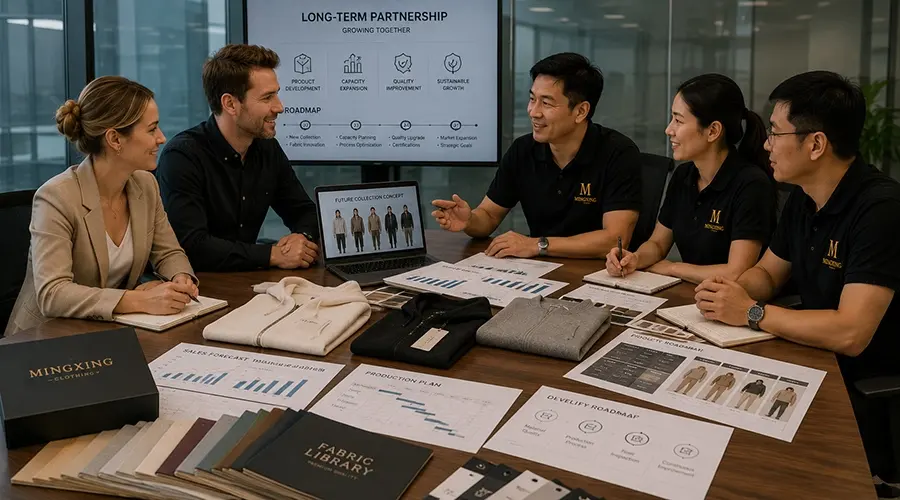
The strongest apparel brands often work with the same manufacturers for years.
Long-term relationships benefit both sides.
Manufacturers gain a better understanding of the brand’s expectations, while brands benefit from greater consistency and efficiency.
Successful long-term partnerships are often built on:
- Honest communication
- Realistic expectations
- Timely feedback
- Respect for agreed timelines
- Consistent order planning
- Mutual trust
A manufacturer that understands your products, quality standards, and business goals can often become a valuable extension of your team.
How to Identify a Good Manufacturing Partner
Not all manufacturers offer the same level of service.
When evaluating a potential partner, pay attention to more than pricing.
Strong manufacturers often demonstrate:
- Clear and professional communication
- Accurate sample development
- Consistent product quality
- Transparent pricing
- Reliable lead times
- Strong problem-solving ability
- Willingness to provide recommendations
- Experience with similar products
A good manufacturer does more than produce garments. They help brands reduce risks and improve product development outcomes.
Why Successful Brands Treat Manufacturers as Partners
Many buyers view manufacturers simply as suppliers.
However, the most successful brands often treat manufacturers as strategic partners.
Experienced factories can provide insights into:
- Fabric selection
- Production methods
- Cost optimization
- Product improvements
- Quality control
- Packaging solutions
When manufacturers are involved early in the development process, they can often help brands avoid mistakes and make better decisions.
This collaborative approach frequently leads to better products and smoother production experiences.
Ready to Build a Successful Manufacturing Partnership?
Working with a clothing manufacturer is not simply about placing an order. It is about creating a process that supports product quality, business growth, and long-term success.
Clear communication, organised project management, and realistic expectations can significantly improve manufacturing outcomes.
If you’re ready to request a quote, our team can help you develop products, manage sample development, and build a reliable manufacturing partnership.
FAQs
How Often Should I Communicate With My Manufacturer?
Communication frequency depends on the project stage. During sampling and production, regular updates help ensure both parties remain aligned on timelines and expectations.
What Should I Approve Before Bulk Production?
Brands should carefully approve sizing, fabrics, colours, logos, labels, packaging, and sample quality before production begins.
How Many Sample Revisions Are Normal?
Many apparel projects require one or more revisions before final approval. The exact number depends on product complexity and customisation requirements.
What Should I Do If I Need Changes After Sample Approval?
Changes should be communicated immediately. Depending on the production stage, revisions may affect costs, timelines, or material sourcing.
How Can I Build A Long-Term Relationship With A Manufacturer?
Consistent communication, timely feedback, realistic expectations, and mutual trust are some of the most important factors in successful long-term partnerships.
Share With
Related Articles
Hot Products