The Best Fabrics for Custom T-shirts: Which Material Is Right for Your Project?
Choosing the right fabric is one of the most important decisions when developing custom T-shirts. The material directly influences how your product feels, performs, and is perceived by customers.
There isn’t one universal “best fabric,” but there are several materials that consistently perform better depending on your product goals. The key is understanding which fabric works best for your type of T-shirt—not just which one is most popular.
Quick Answer: What Is the Best Fabric for Custom T-shirts?
For most custom T-shirt projects, 100% combed cotton remains the best overall choice. It offers the most balanced combination of comfort, print quality, and customer acceptance.
However, other fabrics can be a better fit depending on the situation. Cotton blends are often used for cost-efficient production, polyester is essential for sportswear, and premium fabrics like tri-blend or modal are ideal for higher-end collections.
What Makes a Fabric Ideal for Custom T-shirts?
Before looking at specific materials, it’s important to understand what actually defines a “good” T-shirt fabric.
From a manufacturing and product perspective, the best fabrics typically offer:
- Comfortable feel for long wear
- Good breathability in different climates
- Strong compatibility with printing methods
- Sufficient durability for repeated washing
- A clean appearance that matches brand positioning
- A reasonable cost for your target market
Every fabric below is recommended because it performs well across these criteria in different scenarios.
The Best Fabric Options for Custom T-shirts
| Fabric | Softness | Breathability | Print Quality | Durability | Best For |
|---|---|---|---|---|---|
| 100% Cotton | ⭐⭐⭐⭐⭐ | ⭐⭐⭐⭐⭐ | ⭐⭐⭐⭐⭐ | ⭐⭐⭐⭐ | Fashion & Retail |
| Cotton Blend | ⭐⭐⭐⭐ | ⭐⭐⭐⭐ | ⭐⭐⭐⭐ | ⭐⭐⭐⭐⭐ | Promotional & Uniforms |
| Polyester | ⭐⭐⭐ | ⭐⭐⭐ | ⭐⭐⭐ | ⭐⭐⭐⭐⭐ | Sportswear |
| Tri-blend | ⭐⭐⭐⭐⭐ | ⭐⭐⭐⭐ | ⭐⭐⭐⭐ | ⭐⭐⭐⭐ | Premium Lifestyle |
| Bamboo Viscose | ⭐⭐⭐⭐⭐ | ⭐⭐⭐⭐⭐ | ⭐⭐⭐⭐ | ⭐⭐⭐ | Sustainable Brands |
| Modal | ⭐⭐⭐⭐⭐ | ⭐⭐⭐⭐ | ⭐⭐⭐⭐ | ⭐⭐⭐ | Luxury Basics |
This table gives you a quick overview, but the real value comes from understanding when and why each fabric should be used.
100% Cotton
Why We Recommend It
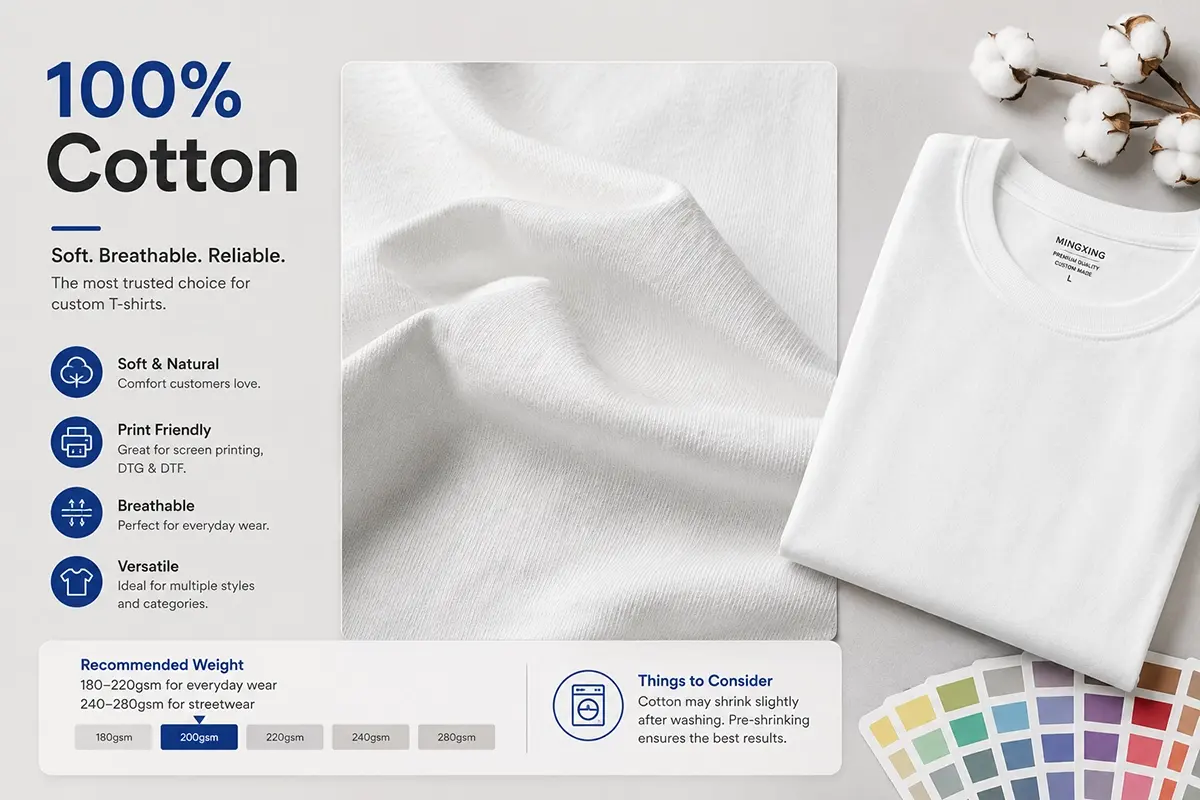
100% cotton is the most widely used fabric in custom T-shirt manufacturing because it delivers the most consistent results across different markets. It strikes the best balance between comfort, print performance, and production stability.
For most brands—especially those entering the market—it is the safest and most reliable starting point.
Best Features
- Soft, natural feel that customers prefer
- Excellent compatibility with screen printing, DTG, and DTF
- Strong breathability for everyday wear
- Versatile across multiple product categories
Best Custom T-shirt Projects
100% cotton works best for:
- Fashion brands and retail collections
- Streetwear products
- Private label apparel
- Merchandise and branded clothing
Recommended Fabric Weight
For most projects, cotton T-shirts in the 180–220gsm range provide the best balance between comfort and structure. Heavier fabrics around 240–280gsm are often used for streetwear or oversized styles.
Things to Consider
Cotton may shrink slightly after washing if not pre-treated, so fabric finishing and pre-shrinking processes are important.
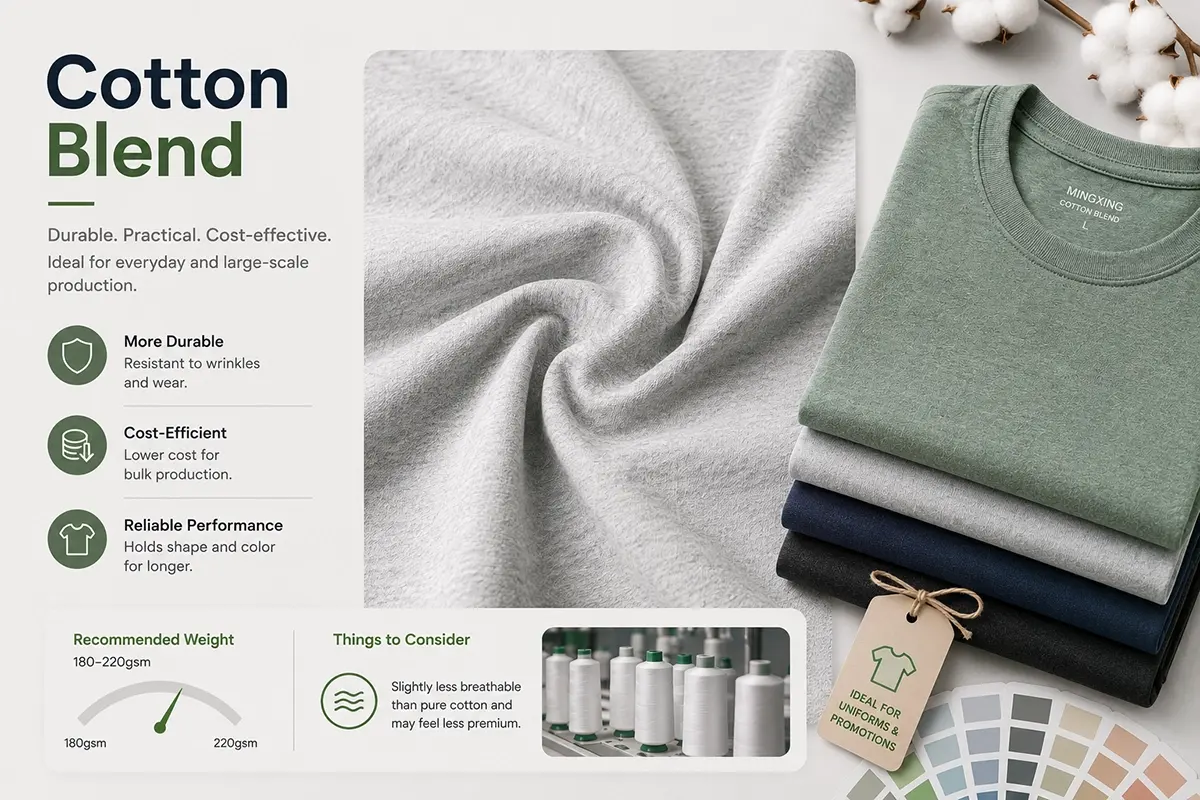
Cotton Blend
Why We Recommend It
Cotton blends combine cotton with synthetic fibres to improve durability and reduce cost, making them highly practical for large-scale production.
Best Features
- More resistant to wrinkles and wear
- Better durability than pure cotton
- More cost-efficient for bulk orders
Best Custom T-shirt Projects
Cotton blends are commonly used for:
- Promotional campaigns
- Corporate uniforms
- Event T-shirts
- Budget-friendly product lines
Recommended Fabric Weight
Blended fabrics in the 180–220gsm range are typically used for uniforms and promotional apparel, offering durability without sacrificing too much comfort.
Things to Consider
Blends are slightly less breathable than pure cotton and may not deliver the same premium feel.
Polyester
Why We Recommend It
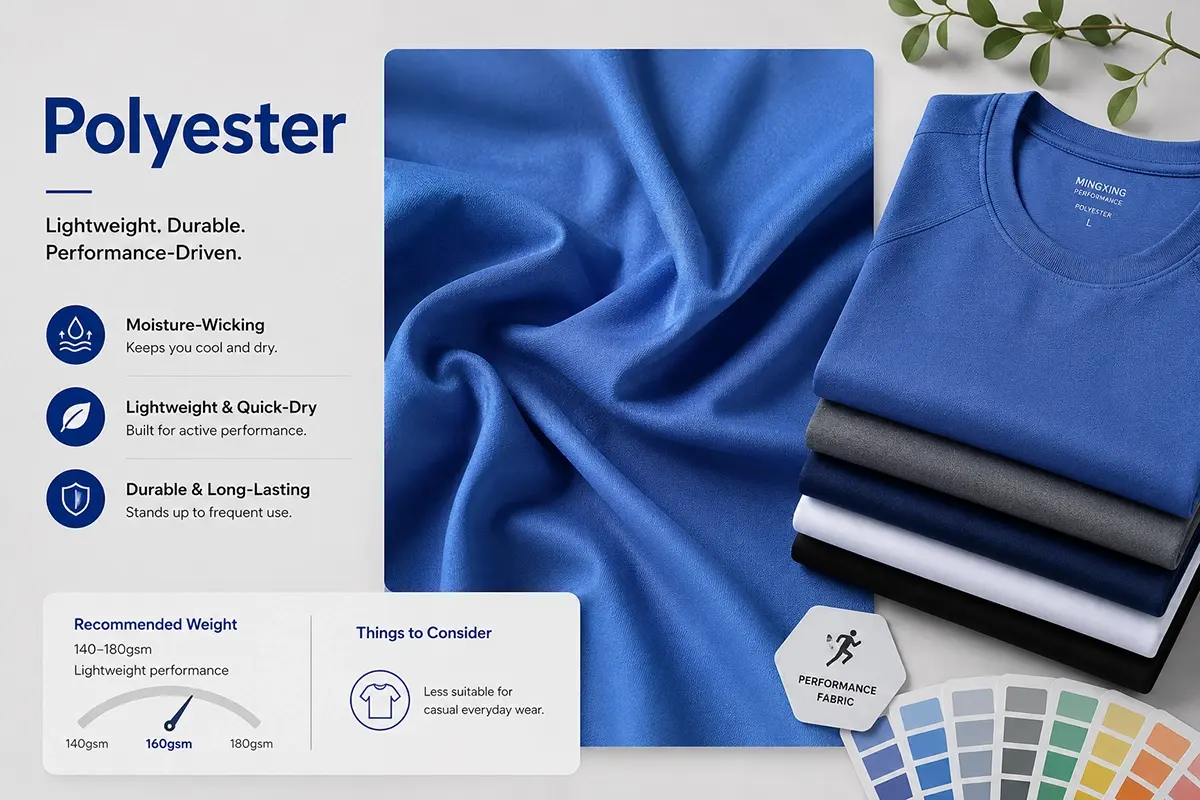
Polyester is essential for performance-based apparel. It is engineered for durability and moisture management, which makes it ideal for activewear.
Best Features
- Excellent moisture-wicking performance
- Lightweight and quick-drying
- Highly durable under frequent use
Best Custom T-shirt Projects
Polyester is best suited for:
- Sportswear and gym apparel
- Team uniforms
- Outdoor performance clothing
Recommended Fabric Weight
Polyester T-shirts are typically produced in the 140–180gsm range, depending on whether the focus is lightweight performance or slightly heavier teamwear.
Things to Consider
Polyester is less comfortable for casual everyday wear and may not feel as premium as cotton.
Tri-blend
Why We Recommend It
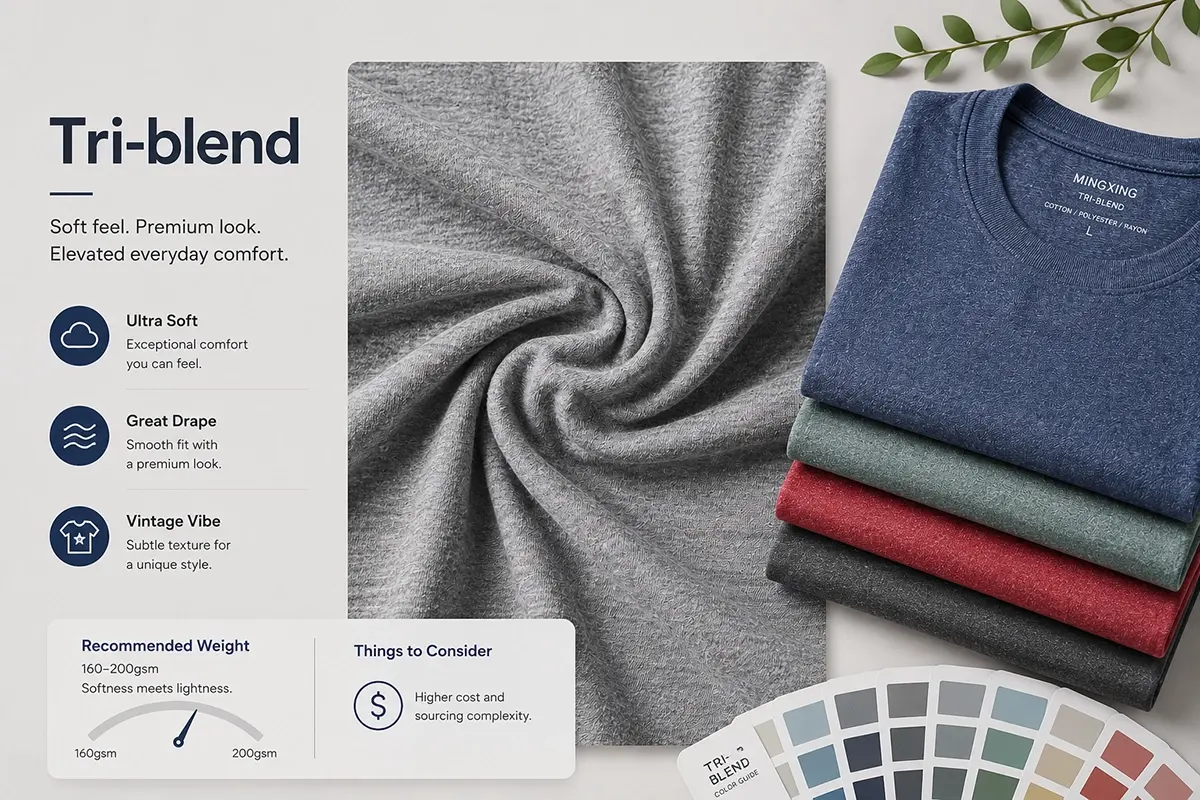
Tri-blend fabrics combine cotton, polyester, and rayon to create a softer and more premium texture.
Best Features
- Extremely soft hand feel
- Smooth drape and improved fit
- Slight vintage or washed appearance
Best Custom T-shirt Projects
Tri-blend works well for:
- Premium lifestyle brands
- Boutique fashion labels
- High-end merchandise
Recommended Fabric Weight
Tri-blend fabrics are typically used in the 160–200gsm range, balancing softness with a lightweight feel.
Things to Consider
Higher cost and slightly more complex sourcing compared to standard fabrics.
Bamboo Viscose
Why We Recommend It
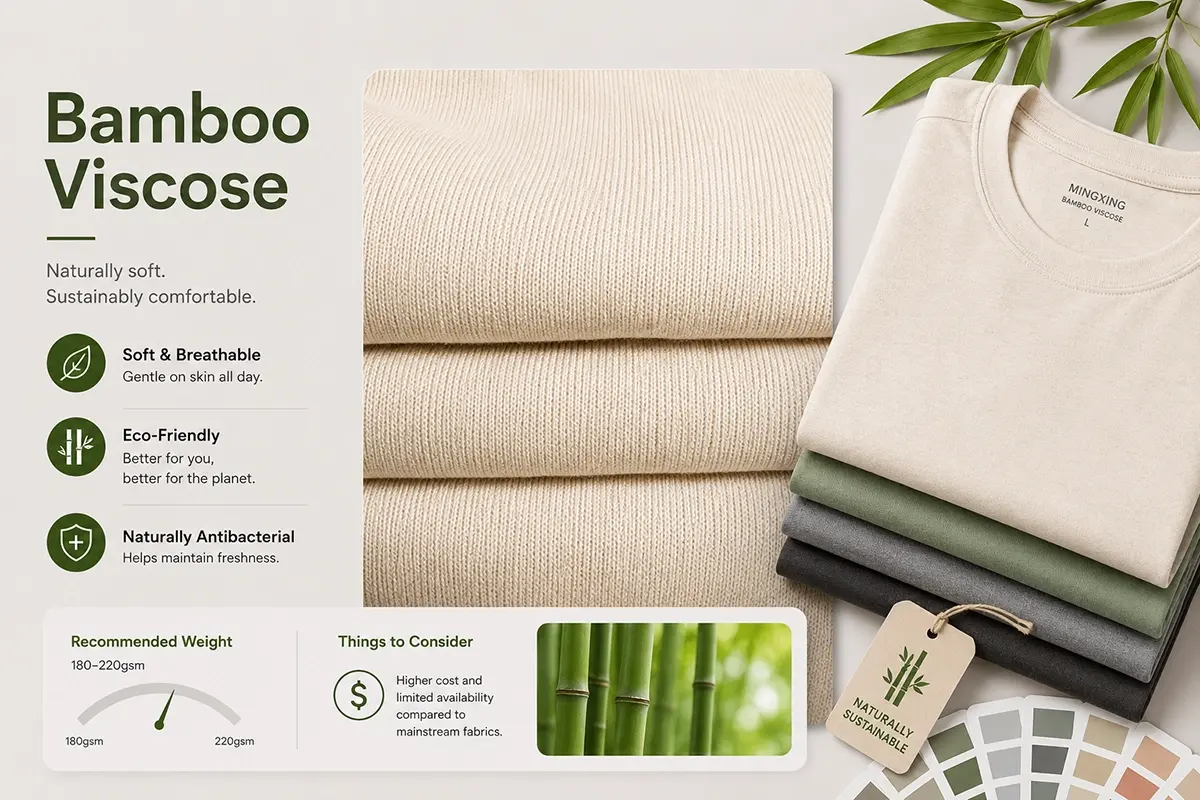
Bamboo viscose is often chosen by brands that want to emphasise sustainability and comfort.
Best Features
- Soft and breathable
- Eco-friendly positioning
- Naturally antibacterial properties
Best Custom T-shirt Projects
This fabric is suitable for:
- Eco-conscious brands
- Premium niche products
- Sustainable fashion collections
Recommended Fabric Weight
Most bamboo T-shirts fall in the 180–220gsm range, offering a balance of softness and structure.
Things to Consider
Higher cost and limited availability compared to mainstream fabrics.
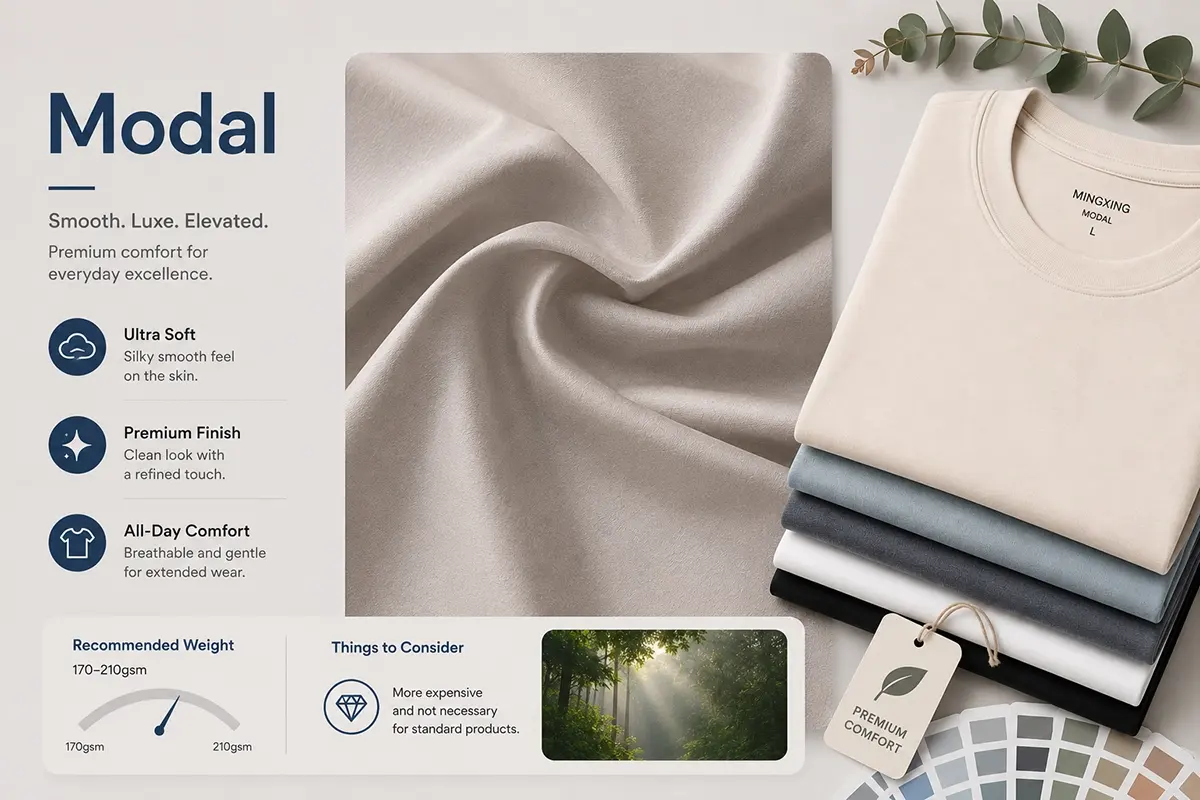
Modal
Why We Recommend It
Modal is a premium fabric known for its ultra-smooth texture and refined appearance.
Best Features
- Extremely soft and silky feel
- Clean, premium finish
- Comfortable for extended wear
Best Custom T-shirt Projects
Modal is ideal for:
- Luxury basics
- High-end fashion
- Premium branded apparel
Recommended Fabric Weight
Modal fabrics are typically used in the 170–210gsm range, providing a smooth and lightweight feel.
Things to Consider
More expensive and not necessary for standard or budget products.
Fabric Comparison at a Glance
| Fabric | Comfort | Durability | Printing | Sustainability | Cost |
|---|---|---|---|---|---|
| Cotton | ⭐⭐⭐⭐⭐ | ⭐⭐⭐⭐ | ⭐⭐⭐⭐⭐ | ⭐⭐⭐ | $$ |
| Blend | ⭐⭐⭐⭐ | ⭐⭐⭐⭐⭐ | ⭐⭐⭐⭐ | ⭐⭐⭐ | $ |
| Polyester | ⭐⭐⭐ | ⭐⭐⭐⭐⭐ | ⭐⭐⭐ | ⭐⭐ | $ |
| Tri-blend | ⭐⭐⭐⭐⭐ | ⭐⭐⭐⭐ | ⭐⭐⭐⭐ | ⭐⭐⭐ | $$$ |
| Bamboo | ⭐⭐⭐⭐⭐ | ⭐⭐⭐ | ⭐⭐⭐⭐ | ⭐⭐⭐⭐⭐ | $$$ |
| Modal | ⭐⭐⭐⭐⭐ | ⭐⭐⭐ | ⭐⭐⭐⭐ | ⭐⭐⭐⭐ | $$$ |
Which Fabric Is Best for Different Custom T-shirt Projects?
| Project Type | Recommended Fabric |
|---|---|
| Fashion Brand | 100% Cotton |
| Streetwear | Heavyweight Cotton |
| Promotional | Cotton Blend |
| Corporate Uniform | Cotton Blend |
| Sportswear | Polyester |
| Gym Apparel | Polyester |
| Premium Lifestyle | Tri-blend |
| Eco Brand | Organic Cotton |
| Luxury Basics | Modal |
Our Final Recommendation
If you are unsure where to start, choose 100% combed cotton. It consistently delivers the best balance of comfort, print quality, and customer satisfaction.
From there, you can expand into blends, polyester, or premium fabrics depending on your brand positioning and product strategy.
Need Help Choosing the Right Fabric for Your Custom T-shirts?
Selecting the right fabric becomes much easier when you align your material choice with your product goals and target market.
As an experienced custom clothing manufacturer, Mingxing Clothing supports fabric sourcing, sampling, and full-scale production.
You can contact Mingxing Clothing to get tailored recommendations for your next custom T-shirt project.
FAQS
What is the best fabric for custom T-shirts?
100% combed cotton is the best overall option for most projects due to its comfort, print compatibility, and versatility.
Is cotton better than polyester for custom T-shirts?
Cotton is better for everyday wear and fashion, while polyester is more suitable for sports and performance use.
Are cotton blends good for custom T-shirts?
Yes, cotton blends are durable and cost-effective, making them ideal for uniforms and promotional apparel.
Which fabric is best for printing T-shirts?
100% cotton provides the best surface for most printing methods.
Can I use different fabrics for different T-shirt products?
Yes, many brands use different fabrics depending on product type, such as cotton for retail and polyester for sportswear.
Share With
Related Articles



Hot Products