Should You Work with Multiple Factories at Once?
🤔 When Does It Make Sense to Use More Than One Manufacturer?
If you’re scaling fast, launching new product lines, or facing bottlenecks, you may be wondering:
Should I stick with one trusted factory—or diversify to more?
📢 Buyer quote: “When we crossed 1,000 units per month, relying on just one factory felt risky. A small disruption could break our timeline.”
📖 Related: How to Work with a Clothing Manufacturer Effectively?
✅ Pros & Cons of Multi-Factory Sourcing
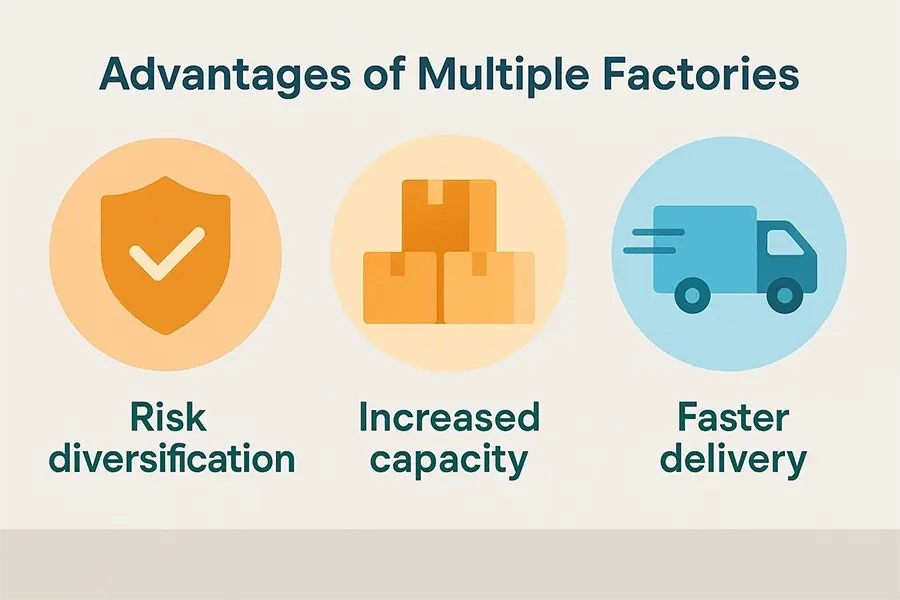
✅ Pros⚠️ Cons
| ✅ Pros | ⚠️ Cons |
|---|---|
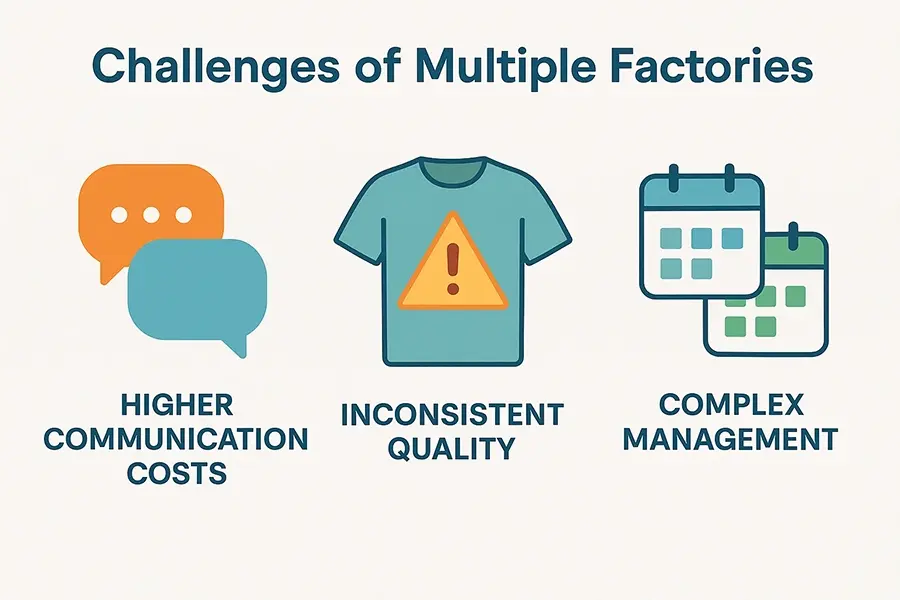
| Better production capacity | Higher communication complexity |
| Reduces risk from single-factory delays | Harder to maintain consistent QC |
| Test different strengths (e.g. knits vs jackets) | More time spent on onboarding |
| Ability to compare pricing/service | Split shipments can raise logistics costs |
| Shortens lead time when factories run in parallel | Managing timelines becomes harder |
| ✅ Pros | ⚠️ Cons |
|---|---|
| Better production capacity | Higher communication complexity |
| Reduces risk from single-factory delays | Harder to maintain consistent QC |
| Test different strengths (e.g. knits vs jackets) | More time spent on onboarding |
| Ability to compare pricing/service | Split shipments can raise logistics costs |
| Shortens lead time when factories run in parallel | Managing timelines becomes harder |
📦 How to Split Orders Between Suppliers Strategically
If you decide to work with multiple factories, use smart segmentation strategies:
🧵 By Product Category
- Example: Factory A makes fleece products; Factory B handles lightweight woven shirts
- ✅ Benefit: Each supplier works within their strength
- ⚠️ Watch for: Consistent branding across SKUs
🌍 By Target Market or Region
- Use one factory for US orders, another for EU or APAC
- ✅ Benefit: Easier to manage local logistics and compliance
- ⚠️ Watch for: Overlapping factory calendars (holidays, closures)
📊 By Order Type (R&D vs Bulk)
- Factory A handles development and small batches
- Factory B handles scaled reorders
- ✅ Benefit: Faster sampling and more predictable production
- ⚠️ Watch for: Sample-to-production consistency gap
📖 Related: How to Handle Sample Revisions with Clothing Manufacturers?
🔄 Single Factory vs Multi-Factory: Which One Is Right for You?
🔍 OEM vs Private Label vs White Label Comparison
| Buyer Type | Recommended Approach | Why |
|---|---|---|
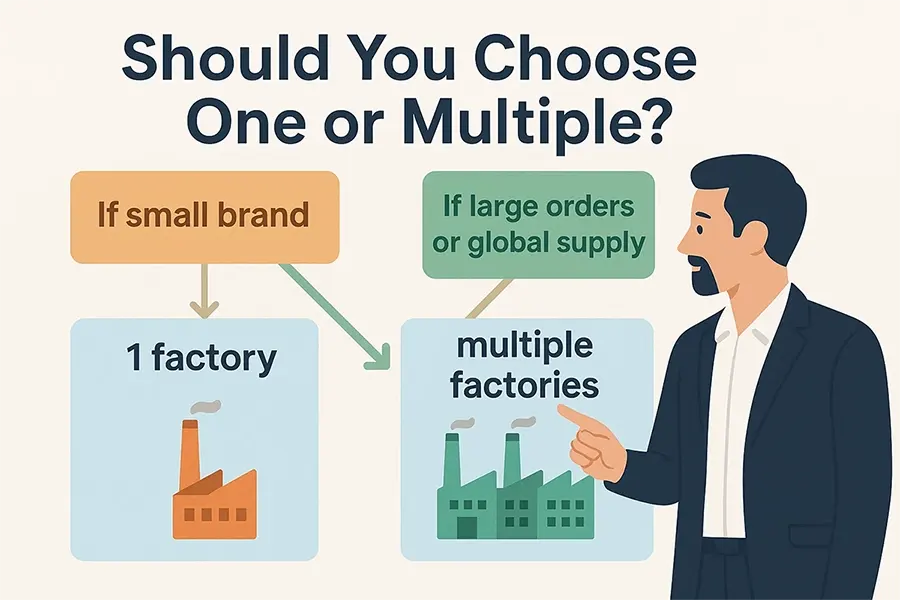
| Startup brand | Stick with one trusted partner | Simpler, faster communication |
| Growing DTC brand | Start testing a second supplier | Build flexibility + benchmark options |
| Wholesale / multi-style label | Use multiple factories strategically | You need capacity + specialization |
| Fashion agency | Dedicated vendors per category | Helps manage diverse client projects |
| Buyer Type | Recommended Approach | Why |
|---|---|---|
| Startup brand | Stick with one trusted partner | Simpler, faster communication |
| Growing DTC brand | Start testing a second supplier | Build flexibility + benchmark options |
| Wholesale / multi-style label | Use multiple factories strategically | You need capacity + specialization |
| Fashion agency | Dedicated vendors per category | Helps manage diverse client projects |
📖 Related: MOQ Negotiation Tips for Custom Apparel Orders
📩 Call to Action
Considering adding a second supplier?
🎁 Download our Multi-Factory Vetting & Comparison Sheet to evaluate factories and plan your sourcing structure.
🙋♀️ FAQs: Managing Multiple Manufacturers
Should I split my first order across two factories?
No—build a relationship with one supplier first. Test others later with low-risk styles.
How do I keep product quality consistent across factories?
Use the same tech pack, fabric source, and QC checklist. Share feedback transparently with both.
What’s the best way to compare two manufacturers?
Run the same style through both factories. Compare lead time, sampling, and finishing.
Can I negotiate better prices by mentioning other factories?
Yes, but do it respectfully. Transparency can help, but avoid sounding like you’re playing factories against each other.
How do I manage communication across multiple suppliers?
Use structured tools like Trello or Google Sheets to track status, deadlines, and file versions.
Share With
Related Articles
Hot Products