Quick answer
The most useful T-shirt types are defined in three different ways: by neckline or opening, by construction detail, and by fit or proportion. These labels can overlap. A single product can be a crew-neck, drop-shoulder, oversized T-shirt at the same time. Choose the combination that supports the intended customer, fabric, decoration and use, then convert the style name into measurements and approve a physical sample before bulk production.
How T-shirt types are classified
Style names are useful for searching and discussing references, but they are not complete production specifications. “Oversized” describes a silhouette; “V-neck” describes a neckline; “raglan” describes how the sleeve joins the body. Treating them as separate layers makes a design brief clearer and prevents one label from being mistaken for a complete pattern.
15 types of T-shirts at a glance
This table separates the defining feature from the production details that still need to be confirmed. The groups are not a ranking, and a finished T-shirt may appear in more than one row.
| Type | Defining feature | Common direction | Specify before sampling |
|---|---|---|---|
| 1. Crew-neck | Round neck opening with a bound or ribbed edge | Core casual, uniform and graphic T-shirts | Neck width, front drop, rib width and recovery |
| 2. V-neck | Neck opening forms a V at center front | Layering, fashion basics and a more open neckline | V depth, angle, point construction and binding |
| 3. Scoop-neck | Wider and deeper rounded opening | Relaxed, fashion or layering styles | Opening width, depth, stretch and coverage |
| 4. Henley | Short front placket with buttons or snaps | Elevated basics and casual layering | Placket length, closure, reinforcement and neck trim |
| 5. Pocket | Patch pocket on the front body | Utility-inspired basics and branding details | Pocket size, position, grain and print alignment |
| 6. Ringer | Contrast neck and sleeve bands | Retro, team and color-block designs | Band fabric, width, stretch and colorfastness |
| 7. Raglan-sleeve | Sleeve seam runs from underarm toward neckline | Sport, baseball and contrast-sleeve styles | Seam line, sleeve volume, color blocking and mobility |
| 8. Drop-shoulder | Shoulder seam sits beyond the natural shoulder | Streetwear, relaxed and boxy silhouettes | Shoulder width, armhole position and sleeve length |
| 9. Long-sleeve | Sleeves extend to the wrist area | Layering, cooler seasons and sleeve graphics | Sleeve length, opening, cuff and elbow ease |
| 10. Regular fit | Balanced ease through chest and body | Core programs and broad customer ranges | Chest width, body length, shoulder width and grading |
| 11. Slim fit | Closer shape through chest and waist | Fitted basics and streamlined layering | Ease, stretch, waist suppression and size range |
| 12. Oversized | Deliberately increased volume and ease | Streetwear and relaxed unisex collections | Width, shoulder drop, sleeve proportion and length |
| 13. Boxy | Wide, straight body with compact proportion | Structured fashion and contemporary basics | Width-to-length ratio, hem and sleeve balance |
| 14. Cropped | Body length intentionally shortened | Fashion, layering and high-waist styling | Finished length by size, hem and rise reference |
| 15. Longline | Body length intentionally extended | Layering and elongated streetwear silhouettes | Front/back length, side slit, sweep and movement |
Neckline and opening styles
The neckline sits close to the face and is one of the first details a customer notices. It also undergoes repeated stretching during dressing, so shape, trim, stitch method and recovery should be developed together.
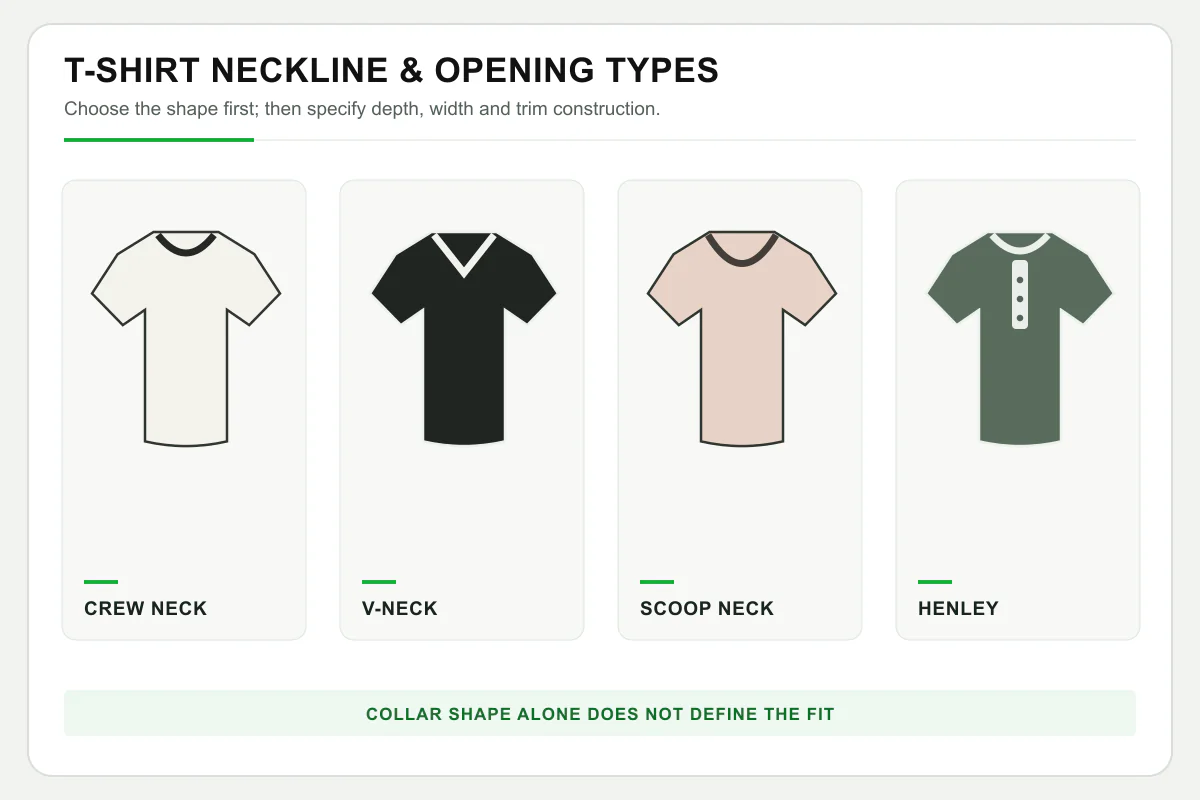
1. Crew-neck T-shirt
A crew neck has a rounded opening that sits relatively close to the base of the neck. It is a versatile starting point for everyday, uniform, merchandise and graphic T-shirts because it works across many fits and fabrics.
Specify: neck width, front and back drop, rib or binding width, trim composition, stretch and recovery. A heavy body fabric paired with a narrow collar or a collar with insufficient recovery can distort the intended appearance.
2. V-neck T-shirt
A V-neck drops to a point at center front. The depth and angle can range from a modest everyday opening to a deeper fashion neckline, so the name alone does not describe coverage.
Specify: V depth from the high point shoulder or neckline reference, opening width, point construction and binding method. Inspect the center point for puckering, twisting or an uneven join.
3. Scoop-neck T-shirt
A scoop neck is wider and deeper than a typical crew neck while keeping a rounded shape. It can create a relaxed or fashion-led appearance, but the larger opening places more demand on trim recovery and shoulder stability.
Specify: opening width and depth, shoulder coverage, trim stretch and whether the neckline should lie flat or have a softer rolled character. Test the selected fabric after washing because the opening can grow if recovery is weak.
4. Henley T-shirt
A Henley adds a short button or snap placket to a collarless neckline. It introduces more pattern pieces and sewing operations than a plain neck opening and can shift the product toward an elevated basic or casual layering piece.
Specify: placket length and width, button count, closure size, reinforcement, neckline finish and whether the placket is functional. Check alignment, bulk and the way the opening sits both closed and open.
Construction and sleeve details
These types describe visible components or seam positions. They can be combined with the neckline and fit choices above, but each one changes the pattern, sewing sequence or placement area.
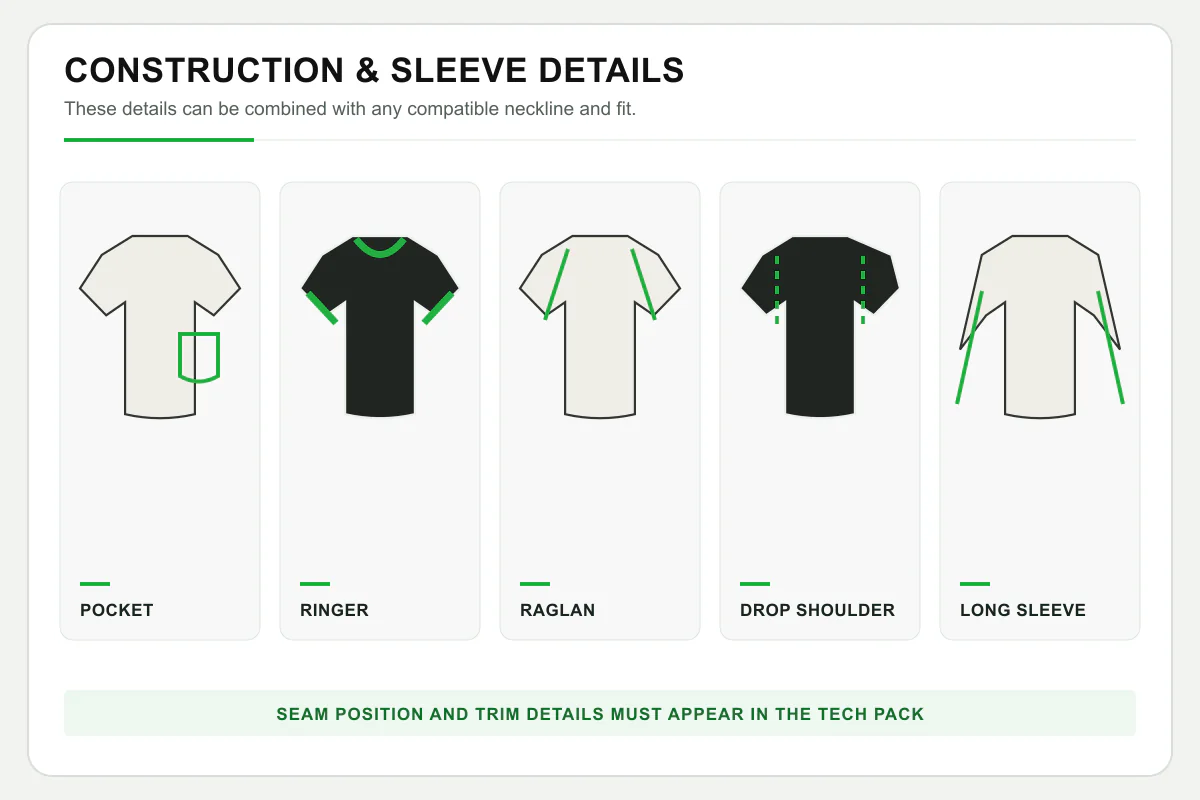
5. Pocket T-shirt
A pocket T-shirt adds a patch pocket, normally on the chest. The detail can be functional, decorative or used as a controlled branding area. Pattern matching and print alignment become important when the fabric has stripes, checks or all-over artwork.
Specify: pocket dimensions, shape, position from neckline and center front, top-edge finish, reinforcement and whether decoration sits on the pocket or body. Confirm placement on more than one garment size.
6. Ringer T-shirt
A ringer T-shirt uses contrast bands at the neckline and sleeve openings. The contrast creates a retro or team-inspired look without requiring a printed color block.
Specify: band width, finished circumference, fabric composition, color and stretch. Test dark and light colors together for colorfastness, and confirm that the sleeve bands do not feel restrictive.
7. Raglan-sleeve T-shirt
A raglan sleeve continues toward the neckline rather than joining at a conventional shoulder armhole. The diagonal seam changes the visual line and provides a natural area for contrast fabric or color blocking.
Specify: the raglan seam path, sleeve volume, underarm shape, mobility and color arrangement. Print or embroidery placement must be checked against the diagonal seams instead of using a standard set-in-sleeve template.
8. Drop-shoulder T-shirt
A drop-shoulder style moves the shoulder seam beyond the natural shoulder point. It is common in relaxed, boxy and oversized T-shirts, but the amount of drop should be controlled rather than assumed from a reference photo.
Specify: shoulder width, armhole position, sleeve length from the new seam and the intended relationship to body width. Increasing shoulder width without rebalancing sleeve length can make the sleeves sit lower and change the upper-body proportion.
9. Long-sleeve T-shirt
A long-sleeve T-shirt extends the sleeve toward the wrist and may finish with a plain hem or fitted cuff. It adds space for sleeve graphics and supports cooler-season or layered programs.
Specify: sleeve length, bicep width, elbow ease, opening or cuff dimensions and finished position on the wrist. If sleeve prints are planned, approve their orientation and distance from the cuff across the graded size range.
Fit and proportion types
Fit labels describe an overall impression, not a universal block. Width, length, shoulder position, sleeve volume and grading determine whether the sample actually reads as regular, slim, oversized, boxy, cropped or longline.
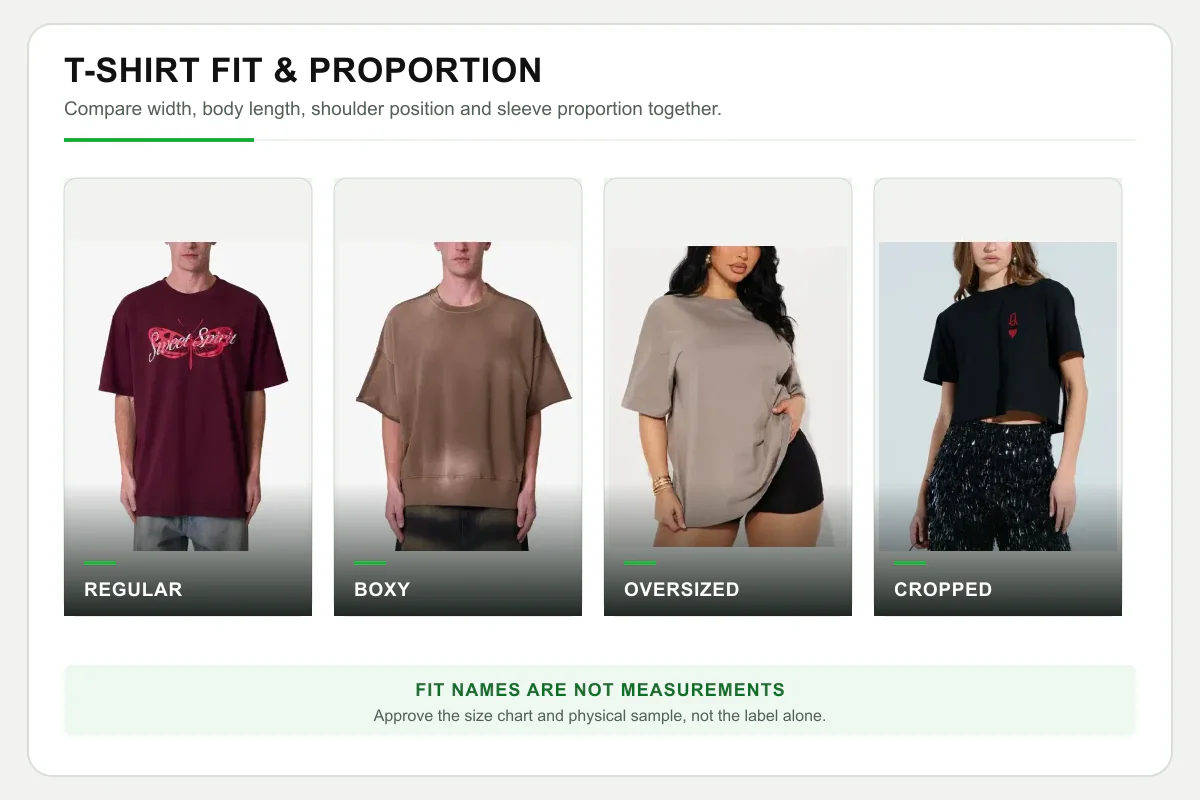
10. Regular-fit T-shirt
A regular fit uses balanced ease through the chest and body with a familiar shoulder and body length. It is a practical base for core collections, uniforms and programs that need a broad size range.
Specify: chest width, shoulder width and seam position, body length, sleeve length and the amount of ease expected at the base size. Do not assume a supplier's standard block matches the brand's existing fit.
11. Slim-fit T-shirt
A slim fit sits closer through the chest, waist and sleeve. It may rely on pattern shaping, stretch in the fabric or both. “Slim” should not automatically mean tight across every size.
Specify: body ease, waist shape, sleeve width, fabric stretch and recovery, and how the fit should grade at larger sizes. Wear-test the sample for reach, sitting and dressing comfort.
12. Oversized T-shirt
An oversized T-shirt deliberately increases volume, often through a wider body, dropped shoulder and fuller sleeve. The body length may be standard, extended or compact, which is why oversized and longline are not synonyms.
Specify: chest width, total shoulder width, how far the shoulder seam extends beyond the natural shoulder point, sleeve length and opening, body length and intended drape. Fabric weight and finish influence whether the silhouette hangs softly or holds a stronger structure.
13. Boxy T-shirt
A boxy T-shirt combines a wide, straighter body with a comparatively compact length. It can feel spacious without using the long sleeves or extended body sometimes associated with oversized styling.
Specify: width-to-length ratio, shoulder, sleeve projection, hem sweep and the target position on the torso. A reference garment is especially useful because brands use “boxy” for several different balances.
14. Cropped T-shirt
A cropped T-shirt shortens the body so the hem sits higher than a conventional tee. The actual position can range from slightly shortened to above the waist, and it changes with garment size and the wearer's proportions.
Specify: finished front and back length by size, intended waistband or rise reference, hem finish and whether the body should be fitted or relaxed. Approve the crop on a fit model or representative wearer rather than from a flat measurement alone.
15. Longline T-shirt
A longline T-shirt extends the body below a regular length. The hem may be straight, curved, stepped or split at the sides, and the extra length changes movement and layering.
Specify: front and back length, sweep, hem shape, side-slit height and the point where the garment should finish on the body. Check that the extended section does not twist or cling after washing.
How to turn a style name into a T-shirt specification
Start with a base size and record the measurement method as carefully as the number. Chest width or half-chest measurements taken at different distances below the armhole cannot be compared directly. Use diagrams, written definitions and the same prepared garment condition for the tech pack, sample and inspection.
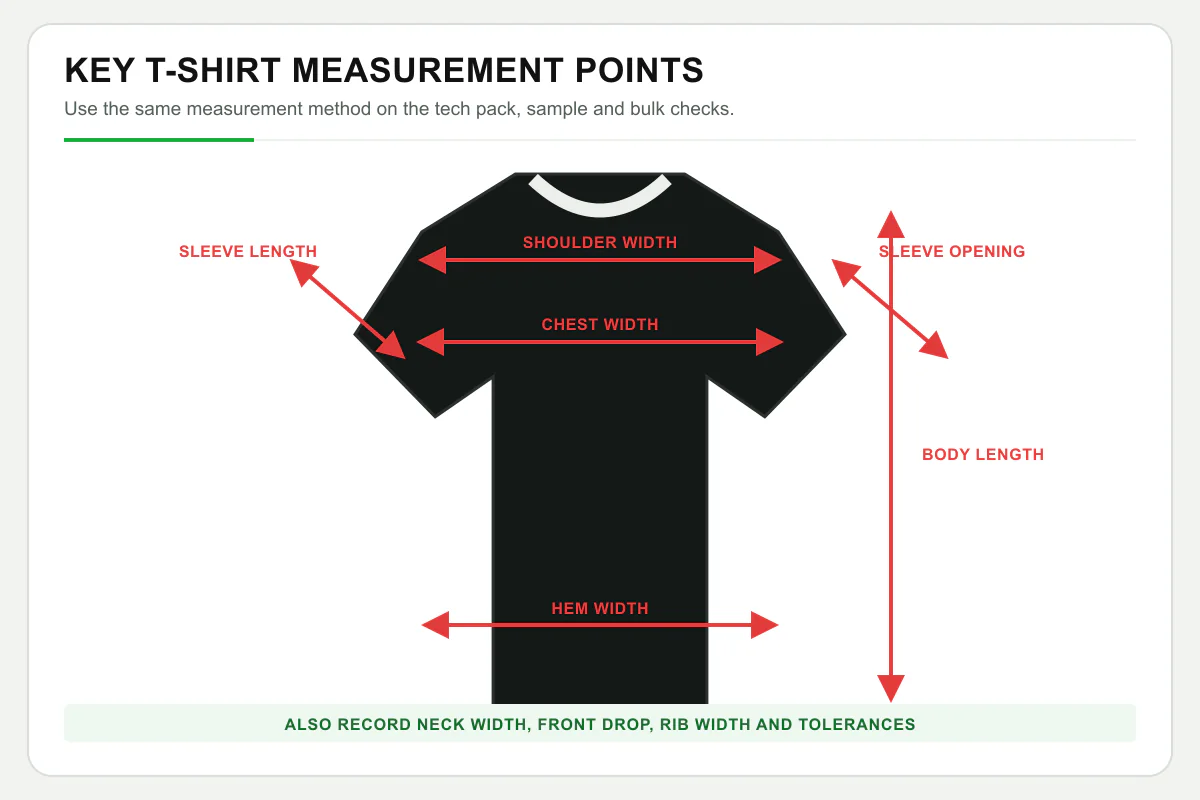
- Neck: neck width, front drop, back drop, trim width and finished opening stretch.
- Upper body: shoulder width, chest width, armhole depth and cross-front or cross-back when relevant.
- Length: body length from the high point shoulder (HPS), center-back length or another clearly drawn reference.
- Sleeve: length from the stated point, bicep width, opening and cuff dimensions.
- Hem: sweep or half-hem, shape, side-slit dimensions and finish.
- Control: tolerance, grading rule, shrinkage allowance and the approved sample reference.
If the block or grading still needs development, the product development process can connect the reference garment, pattern, size chart and sample revisions before bulk production.
How fabric changes the same T-shirt type
The same pattern can look different in two fabrics. A soft, light jersey may drape and cling; a heavier compact jersey may hold a boxier silhouette; stretch and recovery affect slim fits and neck openings. Finish, wash and shrinkage can also change the final dimensions.
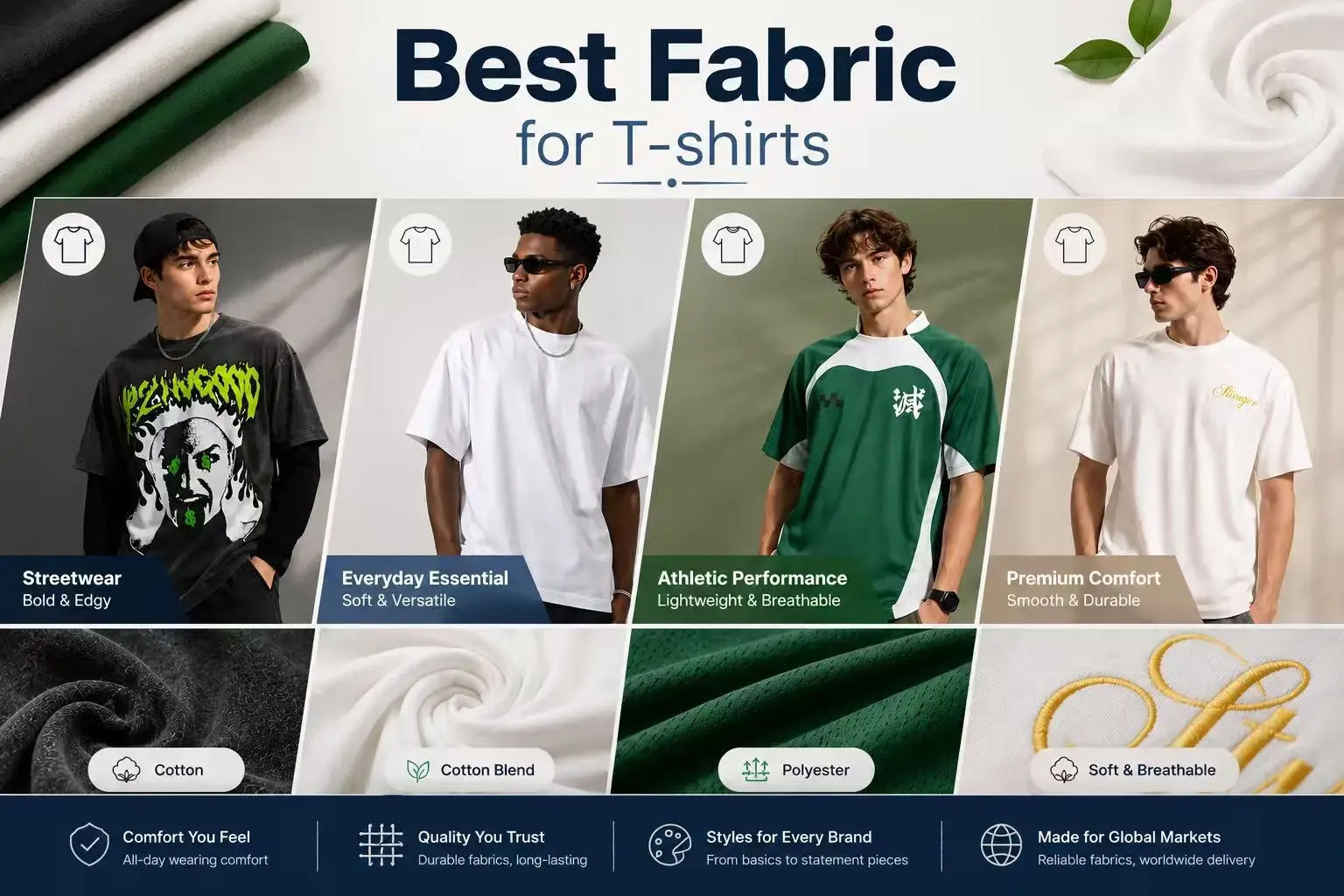
Use the T-shirt fabric selection guide to compare fiber, knit structure, weight and product goal. Fabric should be approved together with the fit rather than selected from GSM or fiber name alone.
How T-shirt type affects decoration and placement
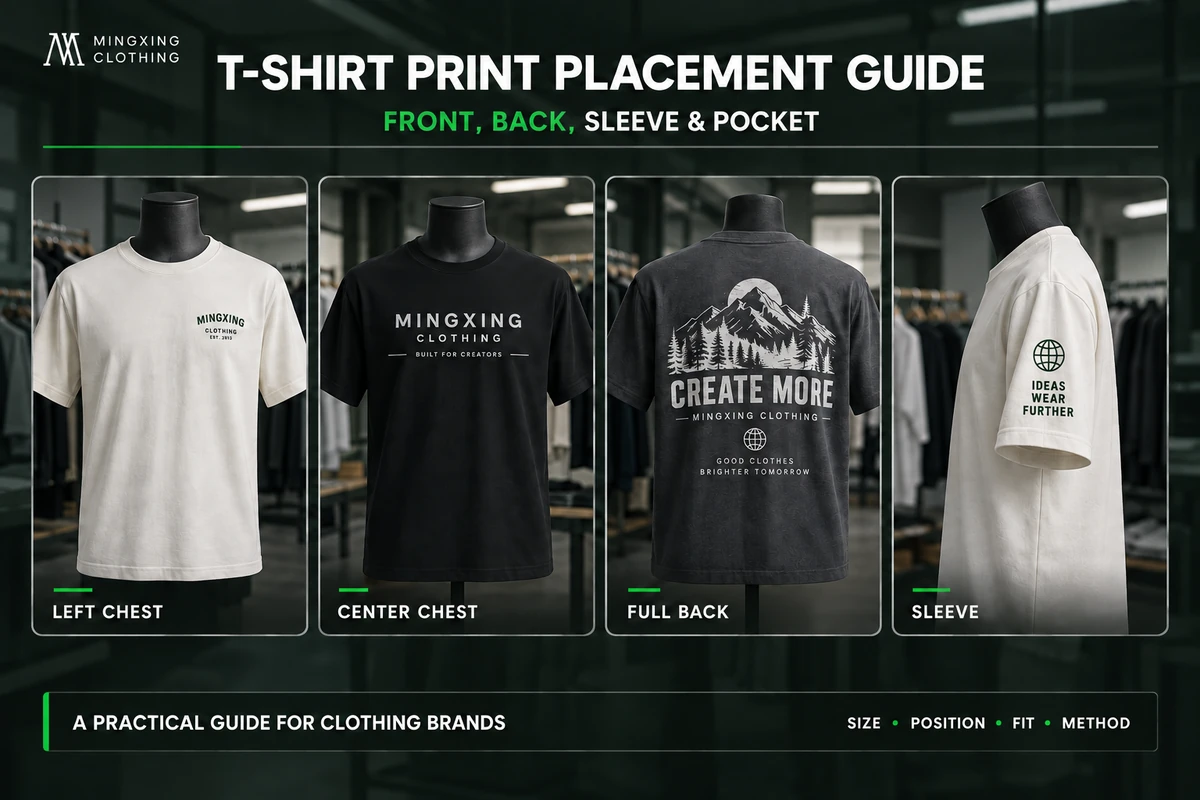
Fit and construction change the usable decoration area. A chest print that looks centered on a regular set-in-sleeve T-shirt may appear too low or too narrow on a cropped, boxy or drop-shoulder style. Pockets, plackets and raglan seams can interrupt artwork or limit embroidery hoop placement and the available embroidery area.
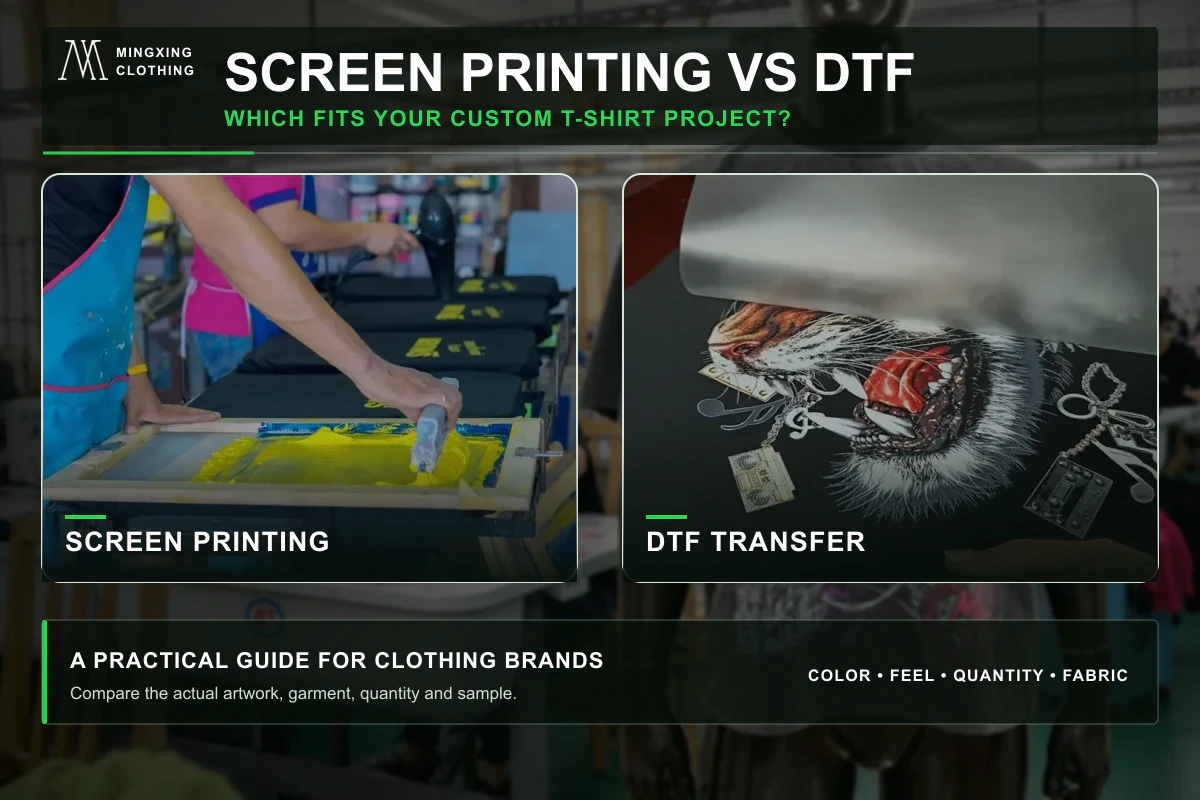
Prepare the location brief with our T-shirt print placement guide . When the method is still open, compare artwork, fabric and quantity in the screen printing vs DTF guide . For printing, embroidery and specialty options, see customized craftsmanship .
What to approve before bulk production
A good reference image helps communicate direction, but bulk production needs approval against measurable specifications. Review the complete T-shirt—fabric, fit, neckline, construction, decoration and branding—as one sample.
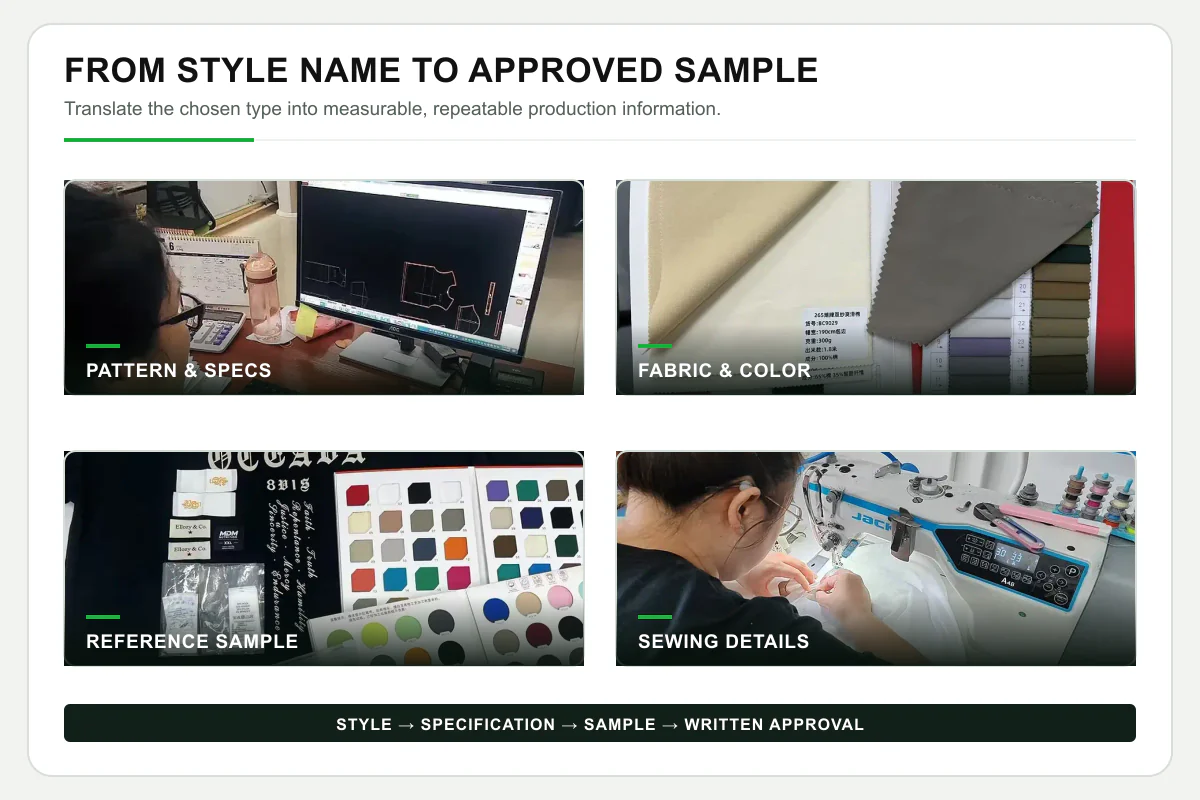
- Pattern and measurements: compare the sample with the approved size chart and measurement method.
- Fabric and shrinkage: confirm composition, weight, color, hand feel, finish and required wash result.
- Neck and seams: inspect shape, symmetry, recovery, puckering, twisting and reinforcement.
- Fit on body: review front, side and back views plus movement relevant to the product.
- Decoration: confirm artwork version, color, size, placement, surface feel and agreed tests.
- Written approval: identify the approved sample and record every accepted revision before production starts.
Mingxing's custom T-shirt manufacturing program supports fit, fabric, construction, printing, labels and sample development as one coordinated project.
Frequently asked questions
What are the main types of T-shirts?
T-shirts can be grouped by neckline or opening, construction details and fit. Common examples include crew-neck, V-neck, Henley, pocket, raglan, drop-shoulder, regular, slim, oversized, boxy, cropped and longline styles. One garment can combine several of these types.
What is the difference between an oversized and a boxy T-shirt?
Oversized describes deliberately increased volume and may include a wider body, dropped shoulder and fuller sleeve. Boxy usually emphasizes a wide, straight body with a more compact length. A T-shirt can be both oversized and boxy, but the terms do not guarantee the same measurements.
Which T-shirt fit works best for a clothing brand?
The right fit depends on the target customer, styling, fabric, price point and use. A regular fit can support a broad core range, while oversized, boxy, slim or cropped fits create a more specific silhouette. Test the chosen block on representative wearers and approve the graded size range.
How do I stop a T-shirt neckline from stretching out?
Specify a suitable trim fabric, finished opening dimensions, rib width, stretch and recovery, then review the sewing method and shoulder stabilization. The body fabric, wash process and neckline size also matter, so check the finished sample after the agreed wash test.
Does a heavier T-shirt fabric always make a better T-shirt?
No. Heavier fabric can support a structured boxy or oversized shape, while a lighter fabric may be better for drape, layering or warm-weather use. Quality depends on the fabric, construction, finish and intended product rather than weight alone.
What measurements should a T-shirt tech pack include?
Common points include neck width and drop, shoulder, chest width, body length, armhole, sleeve length, bicep, sleeve opening and hem width. Add the exact measurement method, tolerances, grading rules and any style-specific points such as pocket position, placket length or side-slit height.