Quick answer
Puff print is normally a specialty screen-print effect. Standard screen printing is formulated and deposited to remain comparatively flat, while puff ink or a puff base expands during heating to create a raised surface. Choose a flat screen print when artwork definition, small text, controlled layers or a less dimensional finish matter most. Choose puff when selected bold shapes need visible height and texture. In both cases, approve the actual print on the production garment because ink system, deposit, fabric, underbase and curing conditions change the result.
Puff print and standard screen print: the core relationship
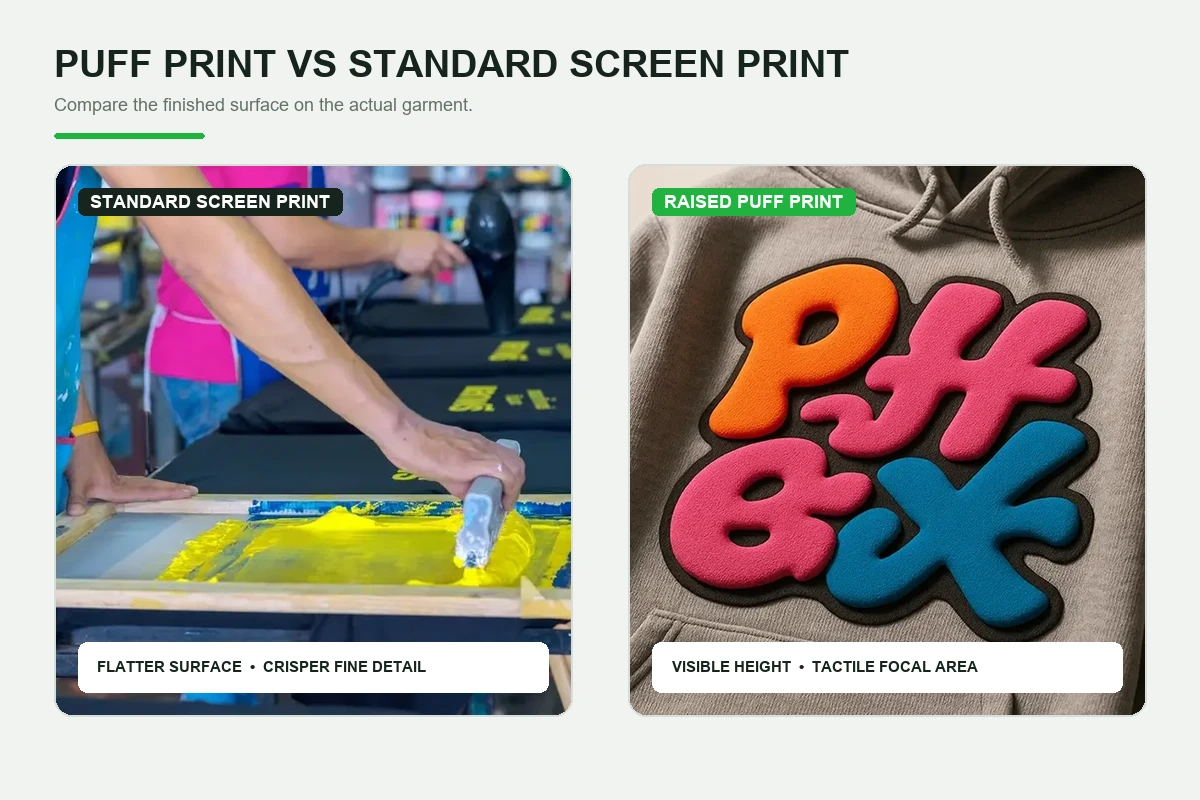
The phrase “puff print vs screen print” can sound as though the two are unrelated methods. In garment production, the more useful comparison is between a standard flat screen-printed finish and a puff screen-printed finish. Both normally begin with artwork separations, a stencil on mesh and ink transferred through a screen. The difference appears in the ink system, deposit and heat response.
A conventional screen print can use different ink chemistries, underbases and deposits, so it does not have one fixed hand feel. It may be relatively soft and light or more opaque and noticeable. Puff contains an expanding component or uses a ready-made expanding base. When the printed film reaches the selected product's activation and cure window, it gains loft and changes the edge, surface and perceived color.
For projects that already have a raised-effect direction, a custom puff printing service can review the artwork, garment and sample target together. If the intended result is flat and opaque, the screen printing service is the closer production path.
Puff print vs screen print at a glance
The right choice depends on the finished garment and artwork. The table compares approval priorities rather than promising one universal recipe.
Swipe sideways to view the full comparison.
| Decision point | Standard screen print | Puff screen print |
|---|---|---|
| Surface | Comparatively flat; feel changes with ink, underbase and deposit. | Raised and tactile; height changes with the selected system and setup. |
| Artwork detail | Better starting point for fine lines, small text and close negative spaces. | Expansion can soften edges and close small gaps; bold shapes are easier to control. |
| Color and layers | Supports spot-color, halftone and multicolor separations when registration is controlled. | Finished color and loft must be approved after expansion; print order affects layered effects. |
| Garment interaction | Ink compatibility, dye migration, stretch and surface still require testing. | Expansion adds sensitivity to fabric weight, surface, stretch and puckering. |
| Production control | Screen, stencil, deposit, flash and cure follow the chosen flat-ink system. | The same controls also determine height, edge definition and whether the puff remains stable. |
| Approval reference | Approve color, opacity, registration, hand feel, adhesion and washed appearance. | Approve those points plus loft, closed gaps, collapse, puckering and height consistency. |
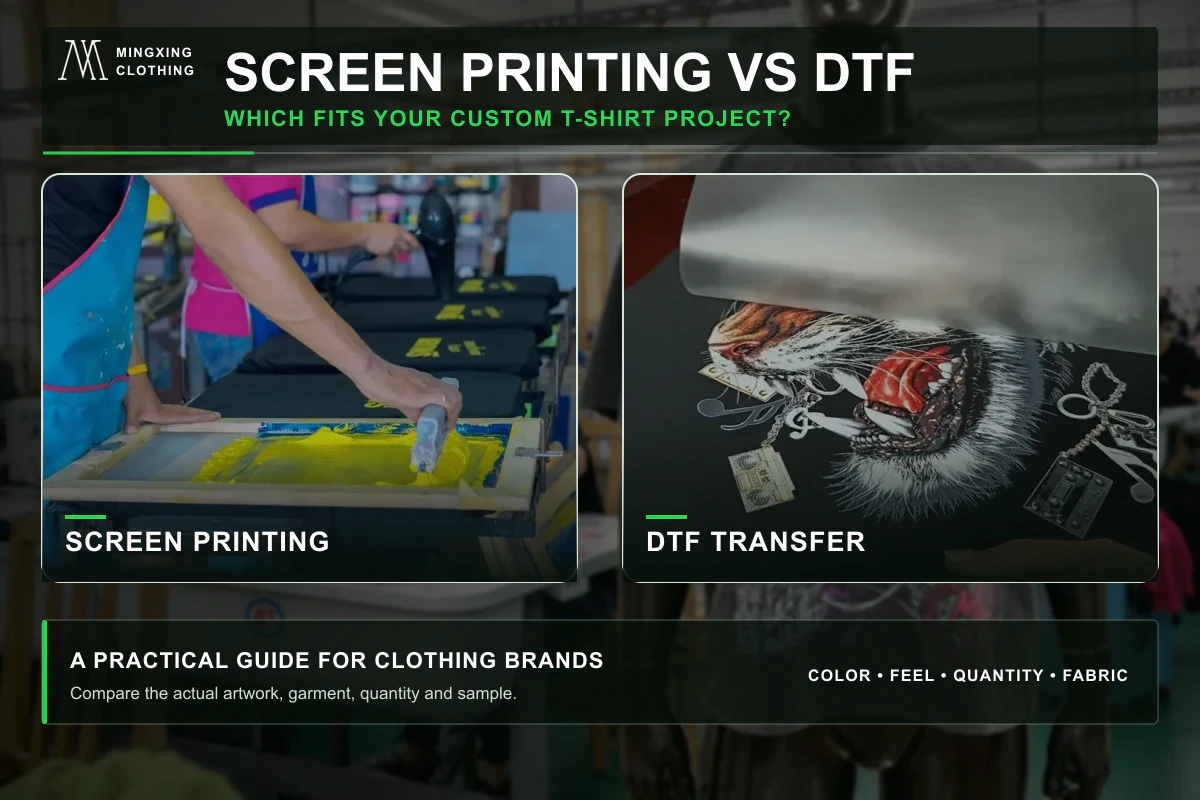
If the project is still comparing a screen-printed ink layer with a transfer, use the separate guide to screen printing and DTF. Puff is a specialty screen-print decision with different artwork and process controls.
How the two finishes are produced
Standard screen printing
The artwork is separated into printable colors or layers. Each screen carries a stencil for one separation, and ink is pushed through the open mesh onto the garment. Depending on garment color and ink system, the print may use a direct layer, an underbase, multiple passes or controlled flashing between colors. The finished ink film is then cured according to the selected product and verified on the actual garment.
Screen printing can produce solid spot colors, fine linework, halftones and multicolor graphics, but capability still depends on artwork scale, mesh, stencil, ink deposit and registration. “Flat” describes the intended surface relationship here; it does not guarantee a completely weightless hand feel.
Puff screen printing
Puff uses an expanding additive mixed into a compatible ink or a ready-made puff base. The wet print may initially look flatter than the approved result. During heating, the expanding component activates and the ink gains height. The full ink film must still reach the product-specific cure requirement without being driven outside its stable processing window.
Puff height is affected by the amount of ink deposited as well as the ink formulation. Screen mesh and thread, stencil thickness, squeegee setup, number of passes, underbase, flash sequence and final cure all matter. This is why a supplier's recipe for one puff product should not be copied as a universal factory setting.
Artwork rules: detail, spacing and separations
Puff expands outward as well as upward. Fine strokes can become softer, sharp points can round off, and narrow negative spaces can partly close. Small text, compact counters inside letters and dense halftones therefore need more development than a bold wordmark or simple icon.
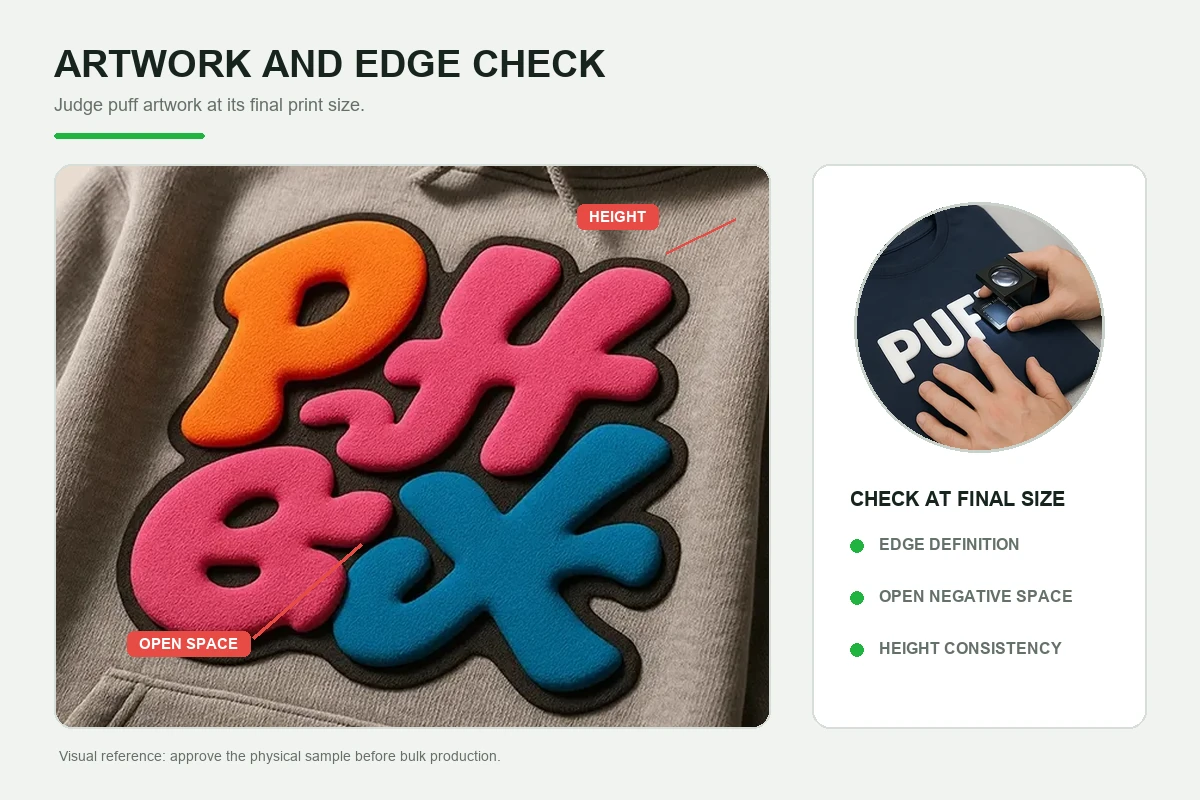
There is no single minimum line width or text size that works for every puff system. Judge the art at the final print dimensions, not only as a large image on a monitor. If a detail must remain crisp, keep it in a conventional ink separation and reserve puff for the focal area.
Mixed artwork is possible. A design may use flat colors for outlines and detailed information, with puff applied to one word, emblem or shape. The printer should receive separate, clearly named color layers and confirm the print order. Printing over or beside puff changes registration and surface behavior, so the approved sample must reflect the intended production sequence.
Fabric, garment color and placement
Approve both methods on the production fabric. Fiber content is only a starting point: fabric weight, knit structure, surface texture, stretch, dye, garment washing and finishing treatments can all change adhesion, coverage, expansion and color.
For printed jersey projects, the custom printed T-shirts page connects fabric, fit and artwork development. For fleece applications, review the raised effect together with the garment construction through custom printed hoodies.
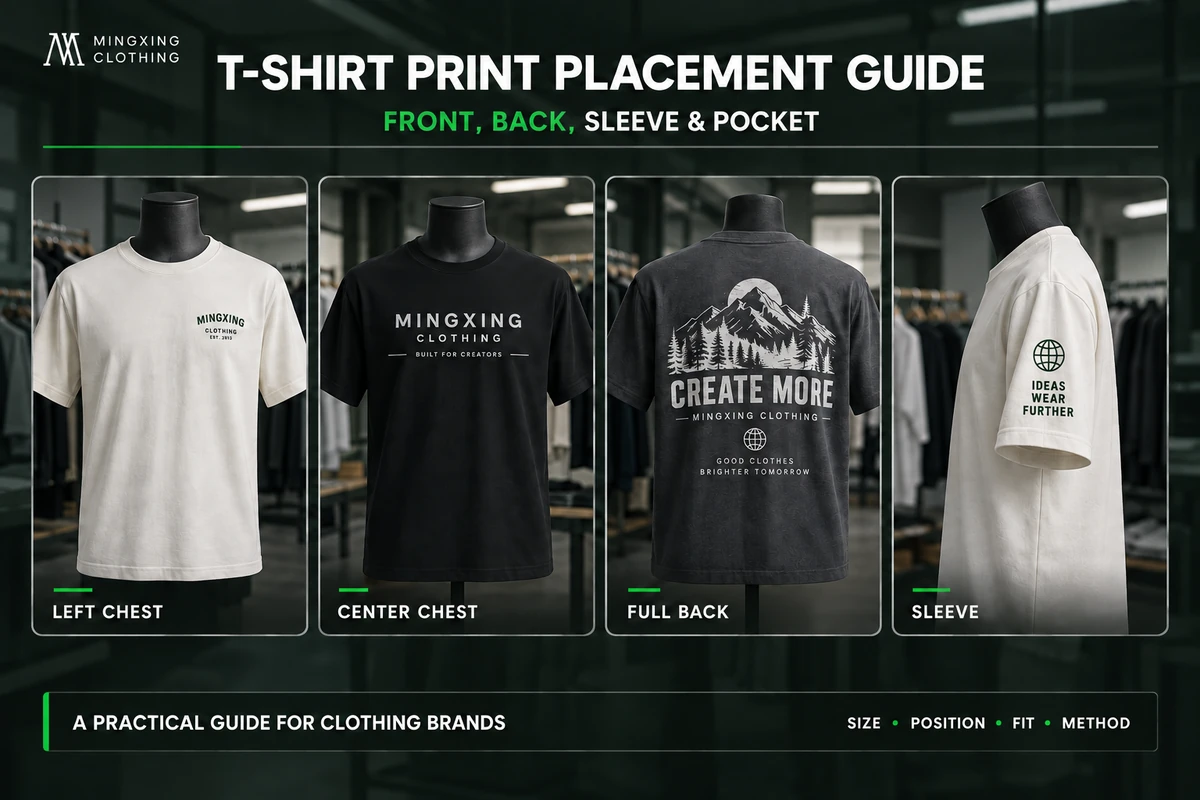
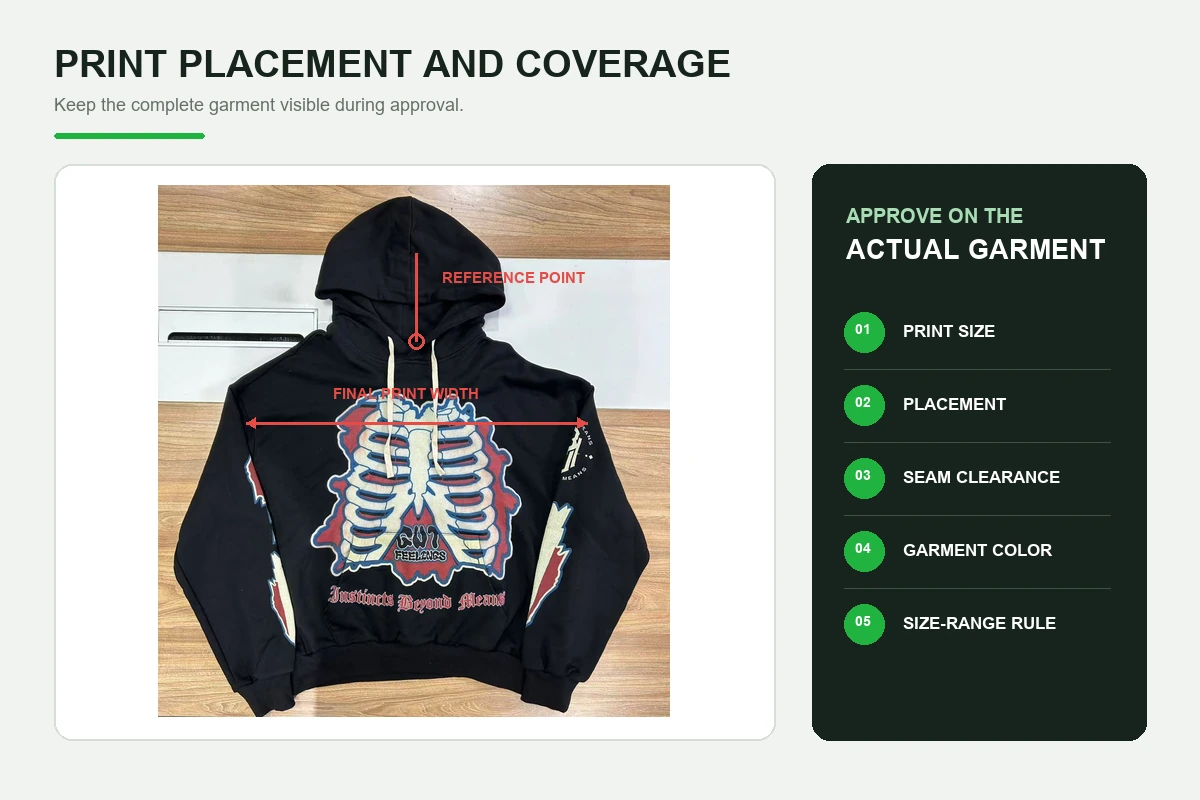
Placement also changes the result. Avoid assuming that one setting will behave identically over seams, pocket edges, zippers, rib or uneven panel joins. Confirm the finished width and height, the garment reference point and the distance from that point. The T-shirt print placement guide explains how to turn a placement name into measurable instructions.
Hand feel, coverage and visual impact
Puff creates a raised surface that can be seen in side light and felt by hand. Standard screen printing remains flatter, but its feel varies with ink type, underbase, color opacity and total deposit. A large solid flat graphic may feel more noticeable than a small puff accent, so compare the printed area as well as the method name.
Production controls that change the puff result
A puff sample is a record of a complete setup, not only an ink color. If the factory changes the ink system, deposit, underbase, flash or cure, the height and appearance may change even when the artwork file is identical.
- Ink system: record the chosen puff base or compatible additive and the flat inks used in the same artwork.
- Screen and stencil: preserve the approved mesh, thread and stencil construction because they influence the deposited volume.
- Print sequence: record direct-to-fabric or underbase construction, color order, passes and any flash between layers.
- Heat control: follow the technical data for the selected products and confirm the whole ink film reaches the intended cure condition.
- Garment reference: use the approved fabric, color and finish; a replacement blank can change expansion, dye migration and hand feel.
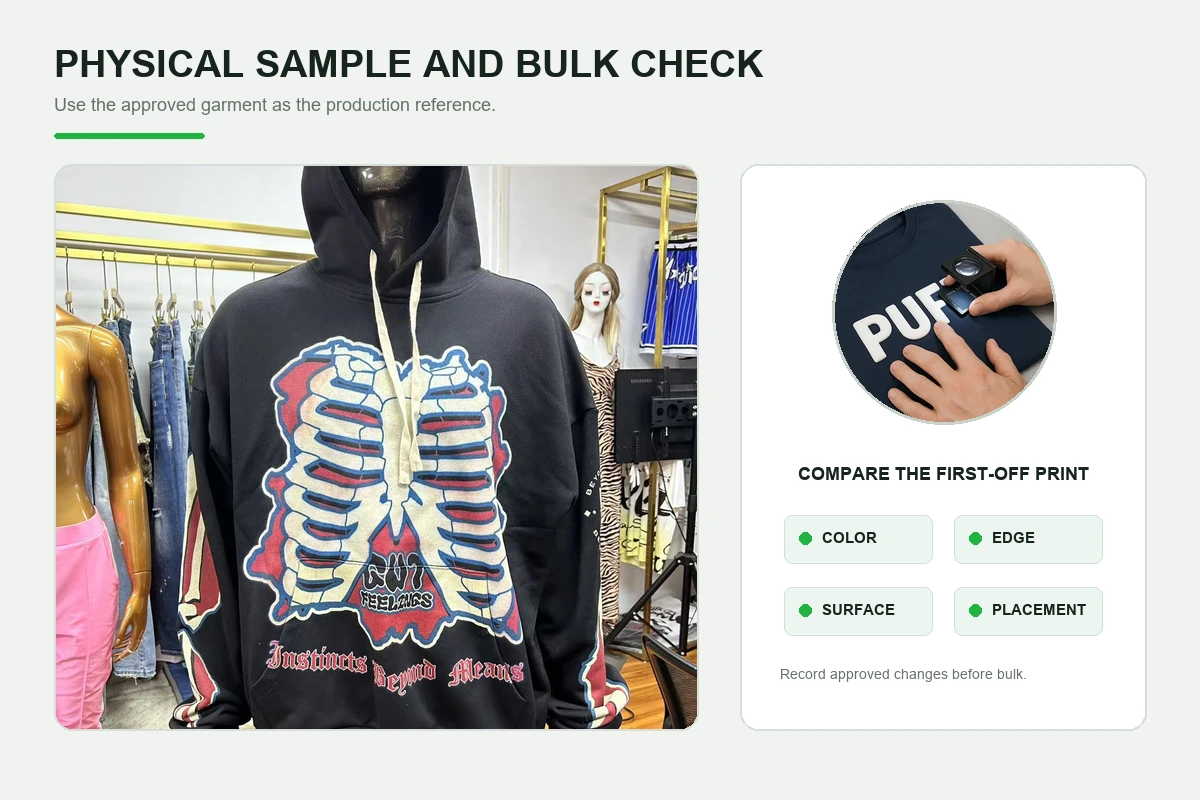
- First-off comparison: compare the first bulk prints with the signed sample before the full run continues.
A higher puff is not automatically a better puff. Excessive deposit or heat can reduce edge definition, close gaps, distort the garment or collapse an unstable expanded film. The approved result should be defined visually and by testing, not by asking for the maximum possible height.
Durability, wash testing and bulk consistency
Neither method has one guaranteed wash life. Standard and puff prints both depend on ink compatibility, adhesion and complete cure. Puff adds the need to evaluate whether the expanded film retains its height and structure after laundering.
Wash the actual decorated garment according to the agreed care direction and compare it with an unwashed control. Inspect adhesion, cracking, flaking, color change, dye migration, edge definition, loft retention, collapsed areas and garment puckering. If a laboratory method is required, name the method and acceptance criteria in the project brief rather than using the word “wash test” alone.
Approve a physical sample, then control the bulk run
The sample should freeze the garment style, fabric, color, artwork scale, placement, puff separations, flat separations, target color, layer construction and finished surface. The factory can then compare a first-off bulk print with that reference before continuing production.
Minor surface variation may be more visible in a raised effect than in a flat graphic. Agree which differences are acceptable before bulk production, especially across garment sizes, colorways or fabric lots. A larger size may also require a placement rule rather than simply enlarging the artwork.
How to choose for your clothing project
Method selection should follow the garment and the selling idea. A subtle flat print may suit a lightweight retail T-shirt, while a focused puff wordmark may support a heavyweight streetwear hoodie. Mingxing's printing and embellishment options can be reviewed alongside the garment rather than as an isolated decoration menu.
What to send for a useful sample brief
A method name alone is not enough for accurate sampling. Send the following information together so the artwork, garment and approval target can be reviewed as one project.
When the garment, artwork or surface effect still needs development, connect the brief with the product development process. This allows sample comments, garment measurements and decoration changes to be recorded together.
Frequently asked questions
Is puff print a type of screen printing?
Yes. Puff is normally produced as a specialty screen-print effect. The ink or base expands during heating, while a conventional screen-print layer is intended to remain comparatively flat.
Is puff print as durable as regular screen printing?
It can be durable when the ink system matches the garment and the full ink film is correctly cured. Approve durability through adhesion and wash testing on the production garment instead of relying on a universal wash-count promise.
Can puff print reproduce fine details and small text?
Some detailed artwork is possible, but puff expands outward and can close small gaps or soften fine edges. Important small text and intricate lines are often safer as conventional screen-print layers unless a physical puff sample proves the detail.
Can puff print be used on polyester?
It may be possible with a compatible ink and underbase system. Polyester and sublimated garments can present dye-migration and heat-response risks, so test the exact fabric and color before bulk production.
Does puff ink need an underbase?
Not always. Some products perform best directly on fabric, while other systems allow printing over an underbase. Because an underbase can change loft, color and cure behavior, approve the intended layer construction in sampling.
Can puff print cover a large area?
Yes, but a large solid area may pucker lightweight fabric, feel heavy or expand beyond the intended artwork edge. Dividing the area or using a controlled pattern may improve stability, subject to testing.
Can puff print be combined with normal screen-print colors?
Yes. Puff can be limited to selected design elements and combined with flatter ink layers. Print order, flashing and overprinting must be planned because they can change puff height, color and detail.
What should a brand approve before bulk puff printing?
Approve the actual garment, artwork size, placement, puff separations, flat layers, cured color, texture, edge definition and washed sample. Compare the first bulk print with that approved physical reference.