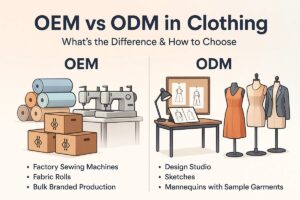
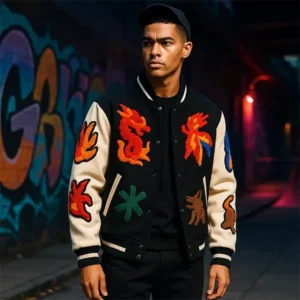
Launching or scaling a fashion brand means making strategic choices — one of the most critical is whether to use OEM (Original Equipment Manufacturer) or ODM (Original Design Manufacturer). These models differ in control, customisation, speed, and cost. So, how do you choose the right one for your clothing business?
Let’s break it down so you can make a confident, informed decision.
🧩 First, Define Your Brand Goals
Your choice between OEM and ODM depends largely on what your fashion brand aims to achieve.
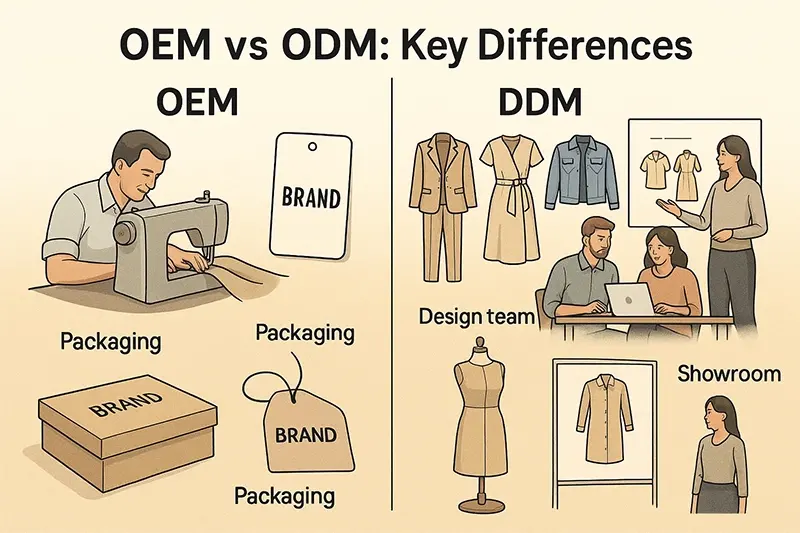
OEM fits brands that:
- Want 100% design originality.
- Have a design team or designer partner.
- Seek long-term brand positioning and identity.
ODM suits brands that:
- Need to launch fast
- Prefer low startup investment
- Want a low-risk way to test new markets
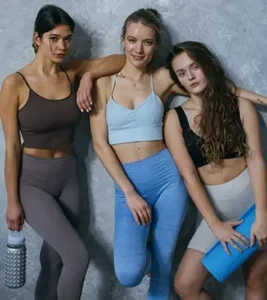
👉 For instance, if you’re launching a high-end fashion line with unique cuts and silhouettes, OEM is essential. But if you’re testing athleisure basics for an eCommerce store, ODM in clothing gets you started faster.
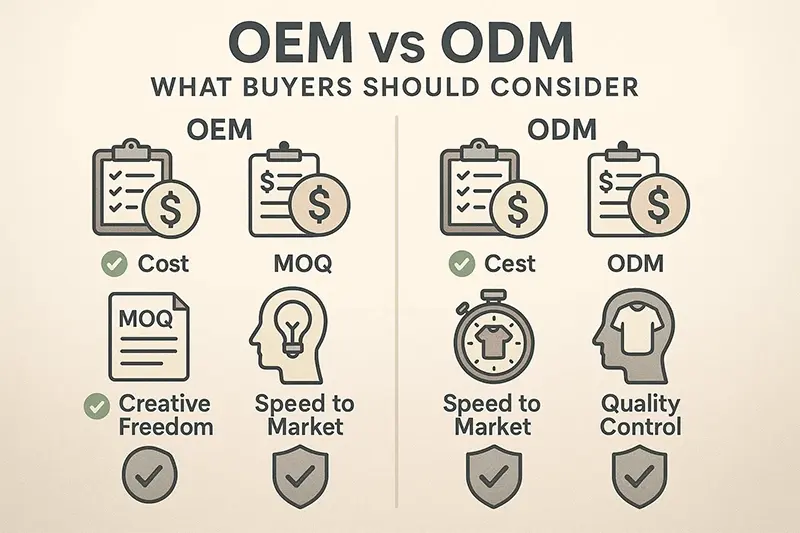
🧩 Compare Key Factors Side-by-Side
🧩 Real Scenario: How Our Clients Decide
One of our European clients, a sustainable fashion brand, chose OEM manufacturing because they had strict requirements for fabric sourcing, stitching details, and eco-certifications.
Meanwhile, a North American e-commerce startup opted for ODM tracksuits to test their idea. They modified only the colour palette and added logos, allowing them to start selling in just 3 weeks.
🧠 Each model serves a purpose — it’s about matching the model to your current brand stage.
🧩 Cost Considerations
Don’t just think in terms of price per unit. Think about:
- Time-to-market costs (delayed launch = lost sales)
- Sampling costs (OEM requires more development rounds)
- Design investment (OEM often needs a tech pack and size chart)
If you’re short on time or budget, ODM manufacturing can give you a market-ready solution at a lower upfront cost.
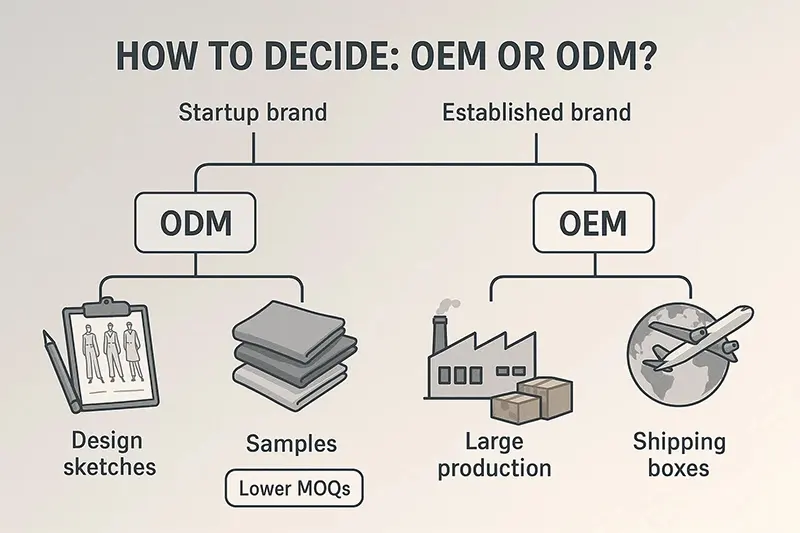
✅ Summary: A Simple Decision Flow
Ask yourself these questions:
- Do I have unique designs or a design team? → Go OEM
- Do I want to test a trend quickly? → Go ODM
- Is full brand control important? → Go OEM
- Am I looking to launch fast with low MOQ? → Go ODM
Mingxing Clothing supports both paths, helping over 100+ apparel brands scale through flexible OEM and ODM solutions.
💡 Need help deciding? Contact us now for a free consultation to explore both models risk-free.
❓FAQs About Choosing OEM or ODM