Choosing the right production model is one of the most important decisions for any apparel brand. For new buyers, the terms OEM and ODM can often seem confusing, but understanding the difference can have a direct impact on your costs, branding, and long-term growth.
Let’s break it down clearly.
🧩 What Does OEM and ODM Mean in Apparel?
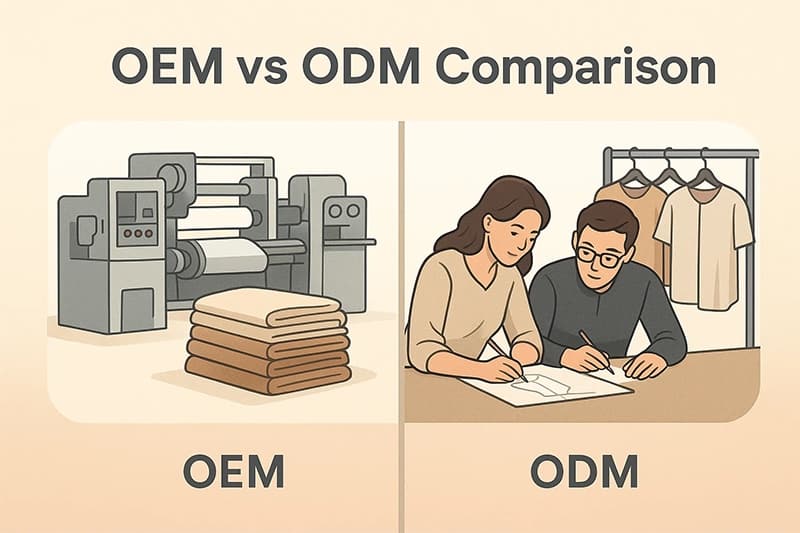
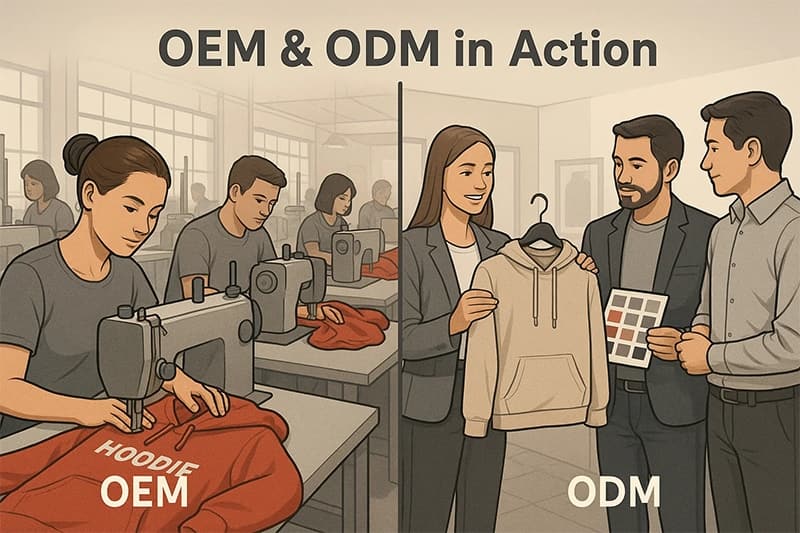
OEM (Original Equipment Manufacturer) means the factory produces clothing based entirely on your custom design, including fabric, tech pack, trims, and branding.
ODM (Original Design Manufacturer) means the factory already has ready-made designs you can customize with minor changes, such as adding your label or selecting colors.
In short:
- OEM = You create the design
- ODM = You pick from their design
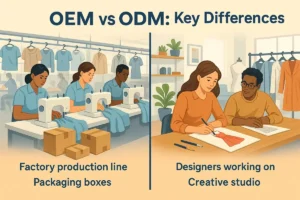
🔍 Key Differences Between OEM and ODM in Clothing
As you can see, OEM allows more uniqueness, while ODM offers speed and lower risk.
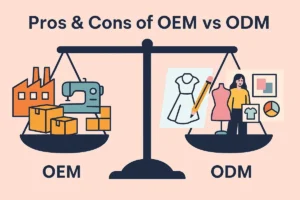
👍 Pros & Cons of OEM vs ODM for Fashion Brands
✅ Pros of OEM:
- Full design control
- High brand differentiation
- Suited for premium or niche styles
❌ Cons of OEM:
- Requires technical knowledge
- Longer lead time
- Higher sampling & development cost
✅ Pros of ODM:
- Quicker turnaround
- Cost-effective for small brands
- Lower risk for market testing
❌ Cons of ODM:
- Limited originality
- Shared designs with other brands
- Less suitable for high-end positioning
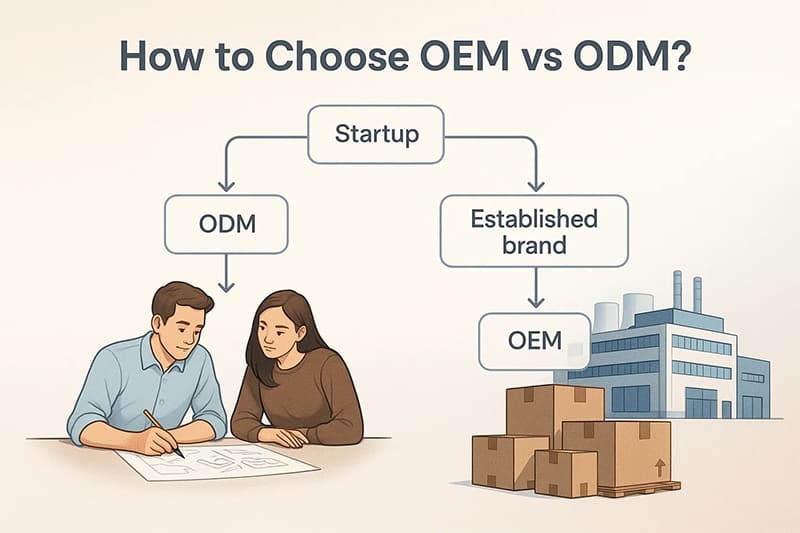
🧭 Which Option Is Better for Your Business Stage?
At Mingxing Clothing, we support both OEM and ODM models, helping clients evolve from basic customisation to full-scale, original collections.
🧵 Case Example: Why OEM Works Best for Startup Brand X
One of our startup clients came to us with a complete tech pack and a strong brand vision. We supported them through fabric sourcing, sampling, and full-scale OEM production. After a successful launch, they reported a 38% higher profit margin compared to their previous ODM-based supplier.
This shows how OEM can unlock growth when your brand is ready.
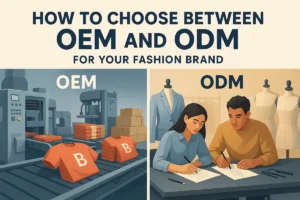
✅ Final Advice: How to Choose the Right Manufacturing Model
Ask yourself:
- Do I have a unique design concept?
- Do I need fast market entry?
- What is my budget and MOQ flexibility?
If you’re still unsure, feel free to contact our team for a free consultation. We’re happy to walk you through the pros and cons based on your current stage.
❓FAQs About OEM and ODM in Clothing Manufacturing