OEM stands for Original Equipment Manufacturer in the clothing industry.
It refers to a production model where a brand provides the design, specifications, or sample, and a factory manufactures garments strictly based on those requirements.
This model is widely used in global apparel supply chains because it separates design responsibility from production execution.
To better understand how garments are developed, it is useful to first learn about the clothing manufacturing process.
What Is OEM in Clothing?
In clothing manufacturing, OEM means production based entirely on brand-provided specifications.
The brand defines design direction, materials, sizing, and construction details.
The factory does not redesign or modify the product; it strictly follows instructions during production.
This makes OEM a production-focused model in which control remains entirely on the brand side.
To better understand how OEM differs from other models, you can also explore ODM vs OEM differences in apparel manufacturing.
How OEM Works in Clothing
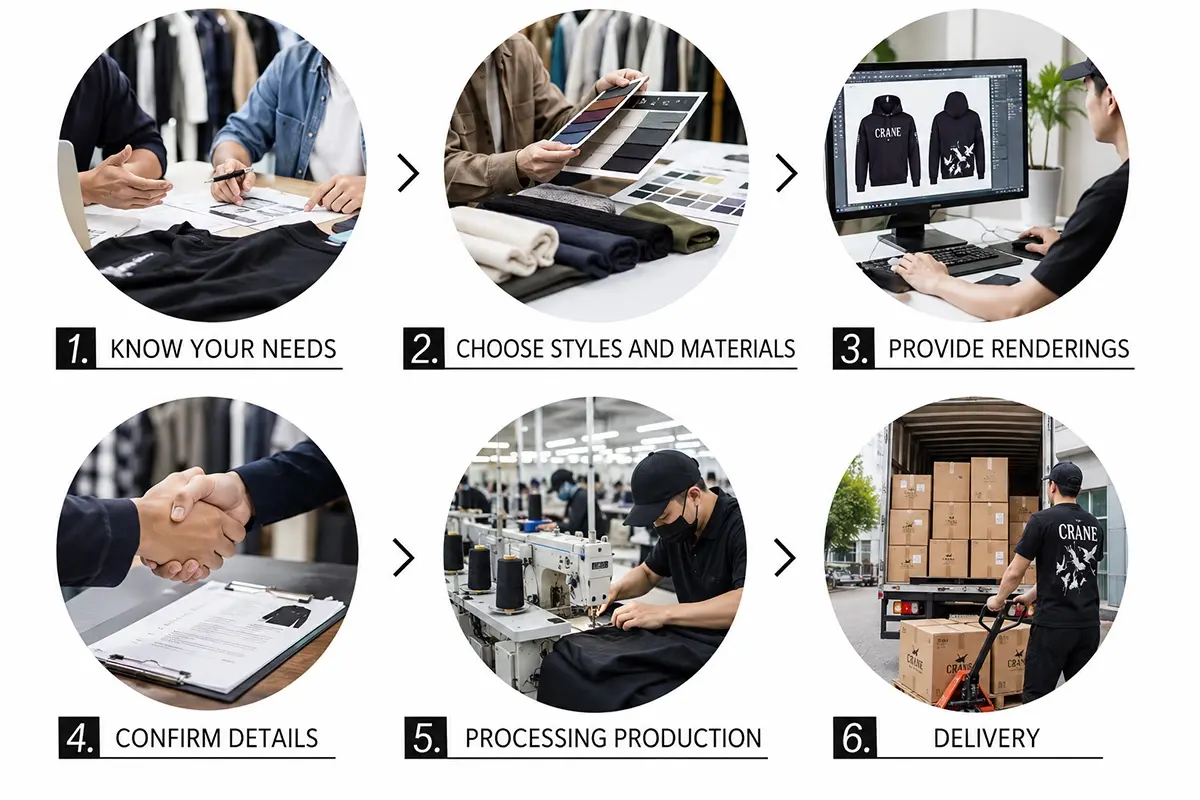
OEM production follows a structured workflow:
- The brand provides design files, sketches, or technical requirements
- The factory develops a sample based on these instructions
- After approval, bulk production begins using confirmed materials and construction details
- Garments are produced consistently according to the approved standard
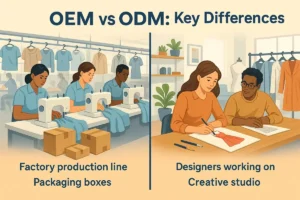
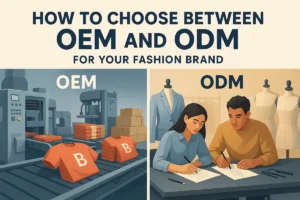
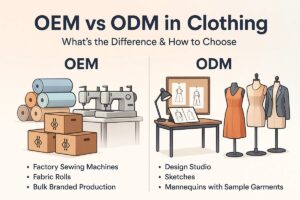
OEM means brand designs, factory produces.
ODM means the factory designs and produces.
Examples of OEM in Clothing
OEM is widely used in T-shirts, hoodies, and sportswear.
For example, a brand designs a hoodie collection and sends specifications to a factory for production.
A sportswear brand defines fabric performance and sizing requirements while the factory handles manufacturing.
The factory does not change the design but follows instructions strictly.
Why Brands Use OEM Manufacturing
OEM is used because it separates design from production.
It allows brands to focus on product development and branding.
At the same time, manufacturers ensure stable and consistent production quality.
This model is widely used in global apparel supply chains.
Final Note
Understanding OEM helps clarify how clothing production is structured.
It is also useful to compare OEM with other manufacturing models, such as ODM.
If you want to explore OEM production in practice, you can contact Mingxing Clothing.
FAQ