Quick answer
Choose screen printing when the artwork, ink system and repeat quantity justify preparing screens and you want tight control over spot colors or specialty effects. Choose DTF when you need detailed full-color artwork, several variants or flexible quantities without making a screen for every color. Neither method is automatically better for every T-shirt. Confirm the decision with the actual artwork, fabric, print size, color standard, expected quantity and an approved sample.
Screen printing vs DTF at a glance
The most useful comparison starts with the project, not the process name. The table below shows the usual decision pattern, while the final result still depends on the ink or transfer system, equipment, operator, garment and curing settings.
| Decision point | Screen printing | DTF printing | What to confirm |
|---|---|---|---|
| Artwork | Strong fit for solid spot colors, bold graphics and artwork prepared as color separations | Strong fit for detailed, multicolor and gradient artwork produced as a digital transfer | Smallest detail, transparent edges, color count and required color match |
| Setup | A separate screen is normally prepared for each print color; registration is required | The design is printed to film, powdered, cured and heat pressed onto the garment | Artwork preparation, sample setup and repeat-order consistency |
| Quantity | Setup can be spread across repeat units when the specification stays stable | Flexible for small runs, variants and on-demand additions because screens are not prepared per color | Total pieces per design, garment color, location and size—not only total order quantity |
| Surface and feel | Changes with ink type, mesh, underbase, number of layers and coverage | A film-and-adhesive layer is transferred to the surface; large solid areas can feel more noticeable | Print area, breathability, stretch and hand-feel sample |
| Fabric | Ink chemistry and cure settings must suit the garment and its dye system | Heat, pressure, adhesive and transfer settings must suit the garment | Dye migration, heat sensitivity, surface texture and stretch |
| Durability | Depends on ink choice, preparation and complete cure | Depends on transfer quality, powder cure, press settings and adhesion | Wash, stretch and appearance tests on the production fabric |
If the garment specification is still open, settle the fit, fabric, color and size range through the custom printed T-shirt program before comparing decoration quotations. A method comparison built on two different garments is not a like-for-like test.
How screen printing and DTF work
The production steps explain many of the differences in cost, artwork preparation and surface feel. This overview is intentionally brief; the comparison sections below turn those steps into practical sourcing decisions.
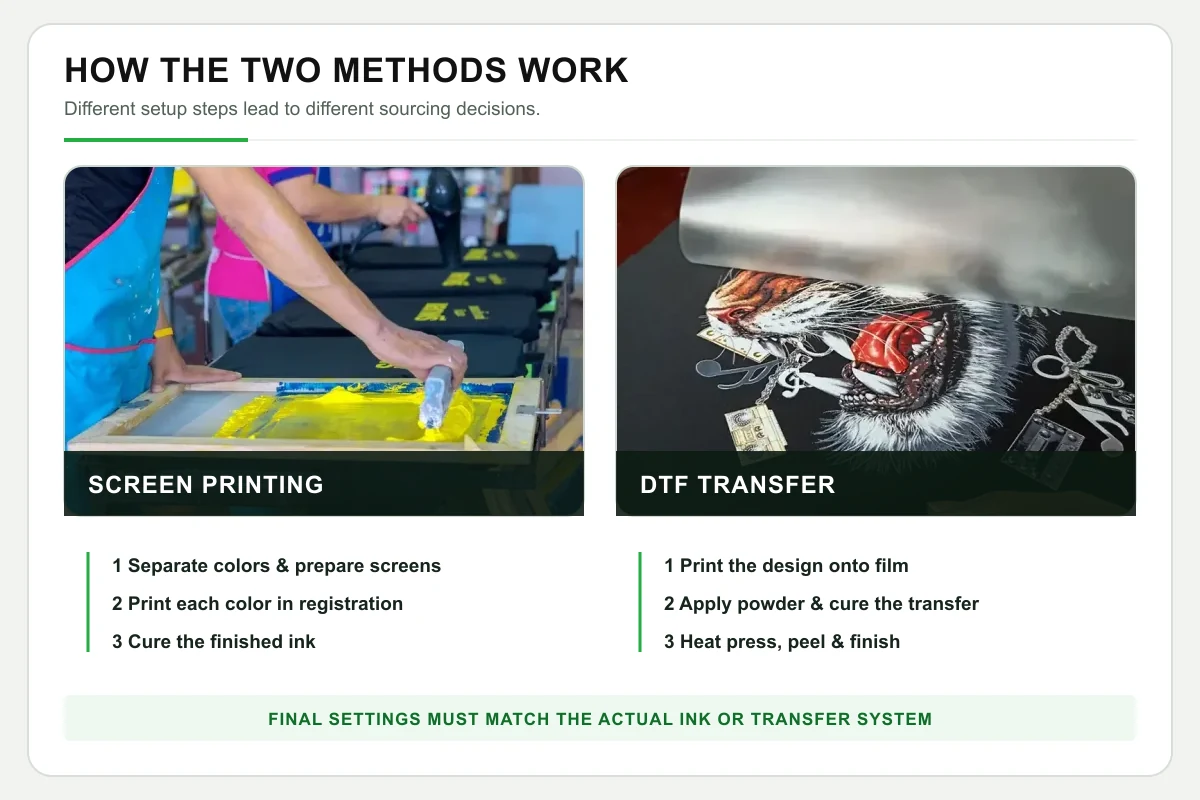
Screen printing
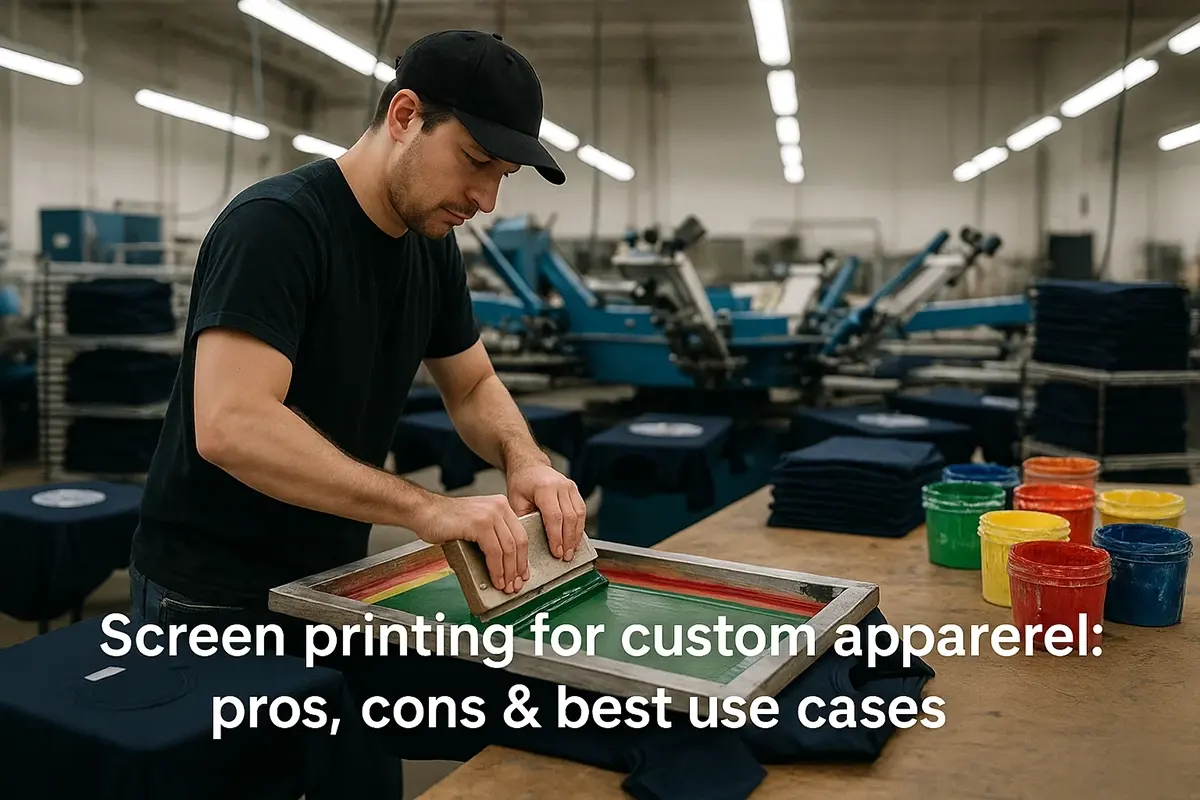
Screen printing pushes ink through a stencil on mesh onto the garment. Multi-color artwork is separated into print colors, and each color normally uses its own screen. The screens are registered so the layers align, test prints are checked, and the finished ink is cured according to the ink system. If you need a deeper process overview, see our screen printing guide for custom apparel.
DTF printing
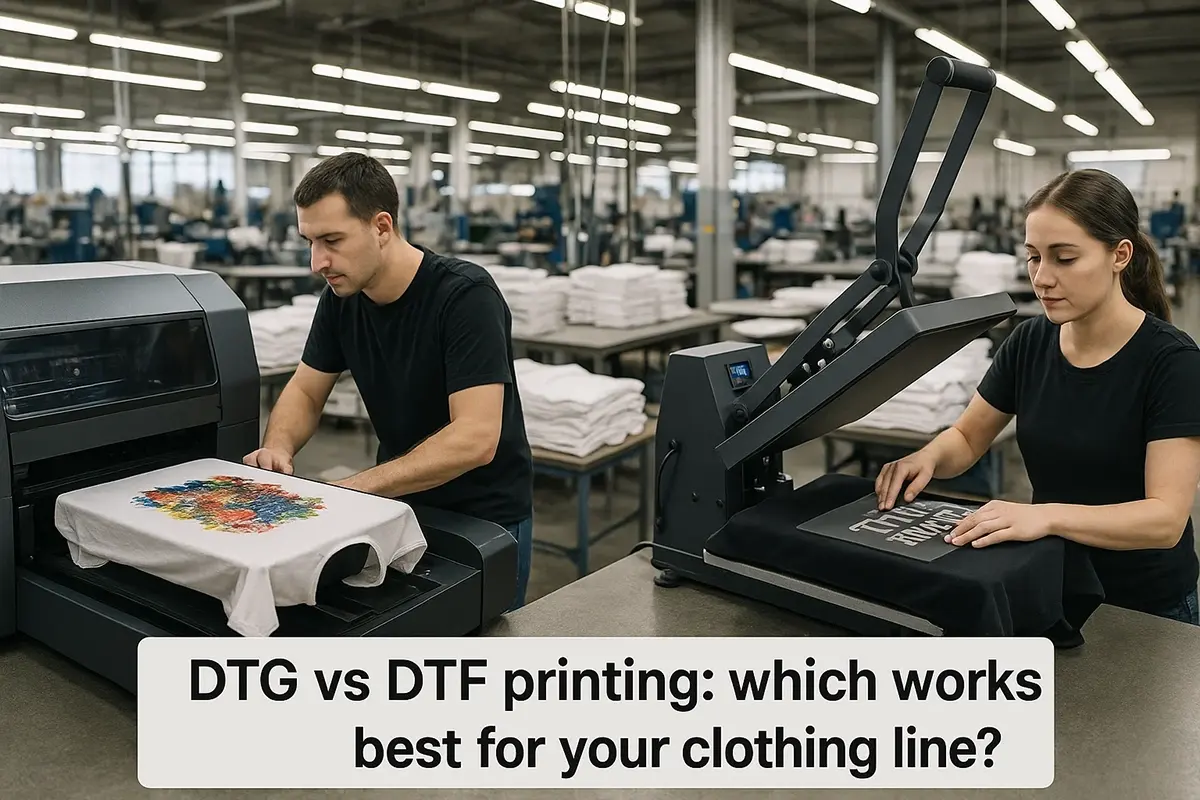
DTF, or direct-to-film, prints the image onto a transfer film. Adhesive powder is applied and cured, then the design is transferred to the garment with a heat press and the carrier is removed according to the system instructions. The exact print, powder, cure, press and peel settings work as one controlled process. Mingxing's DTF printing service page shows where this method fits in a custom apparel project.
For a wider view of printing, embroidery and special finishes, use the customized craftsmanship overview. It helps keep the decoration choice connected to fabric, construction and sample approval.
Artwork and color: spot graphics, gradients and fine detail
Artwork is usually the fastest way to narrow the choice. Send the original vector or high-resolution raster file rather than judging from a compressed mockup. The printer needs to see the actual edges, gradients, small text and transparent areas.
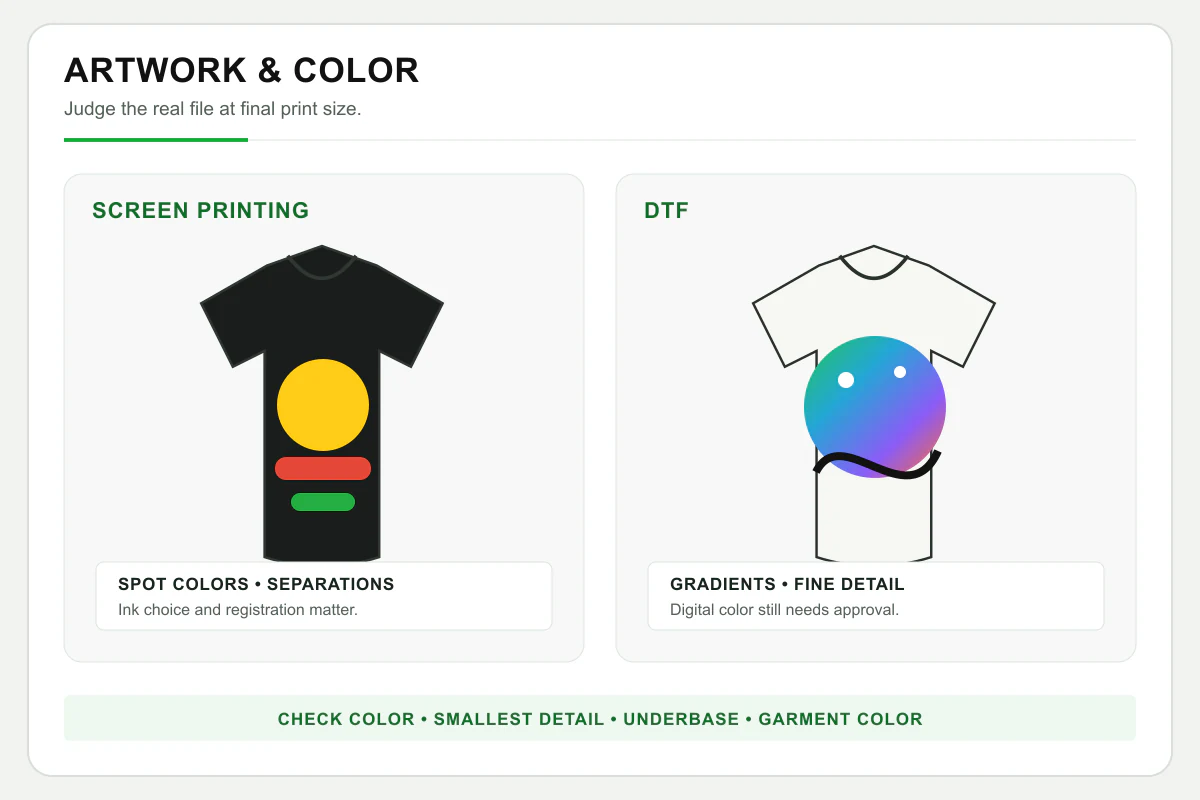
Screen printing is not limited to flat one-color art. Halftones, process methods and simulated-process separations can reproduce complex images, but they require skilled separation, screen capacity and controlled registration. DTF does not remove the need for color management either. A monitor, printed film and finished garment can differ, especially when a white layer and garment color affect the result.
- Provide a target: include Pantone or physical color references when color matching matters, and state whether a visual match or a formal standard is expected.
- Check minimum detail: approve small text, thin lines, distressed textures and free-floating elements at final output size.
- Confirm the underbase: dark garments commonly need white beneath color. That choice changes opacity, layers and hand feel.
- Separate variants: record every artwork, garment color, print size and location as a distinct production combination.
Fabric and garment compatibility
Both methods can work across common T-shirt fabrics, but compatibility is a test result rather than a fabric-name promise. Fiber content alone does not describe the dye, finish, stretch, texture, coating or heat response of a garment. Use the intended production fabric for approval.
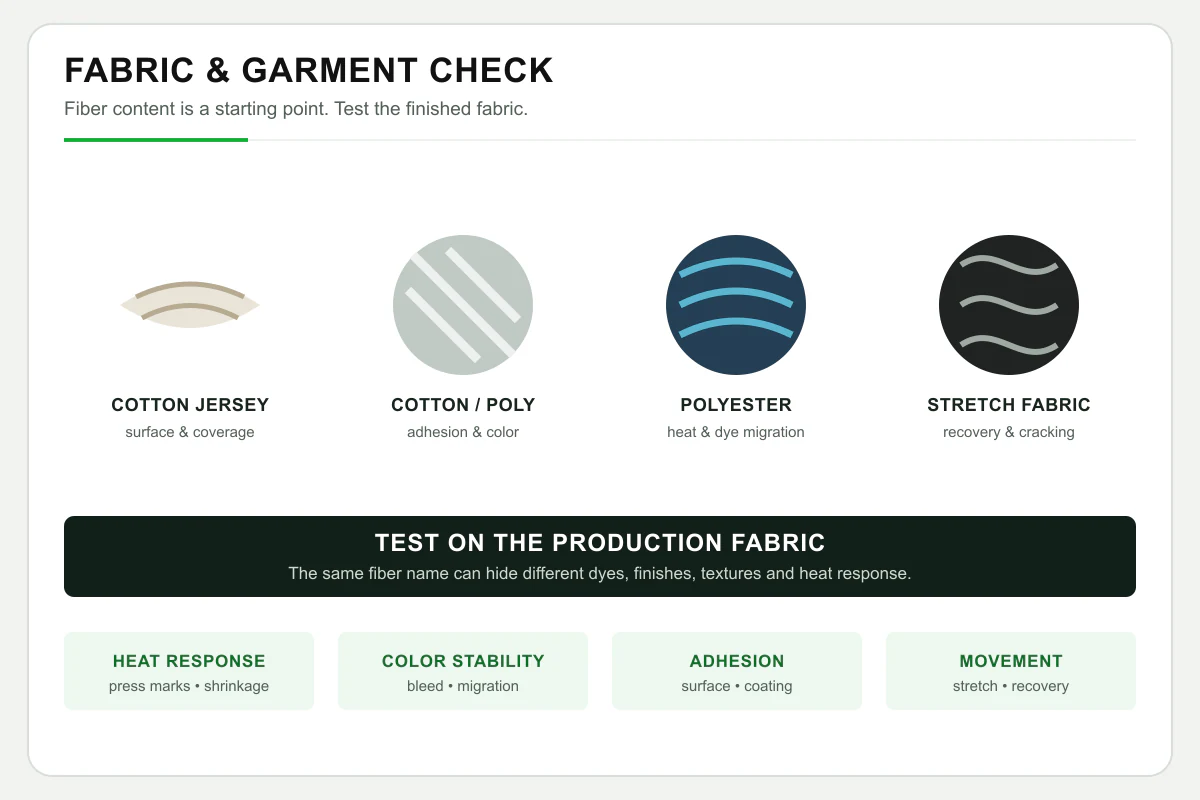
For fabric weight, construction and fiber-selection context, use our best fabric guide for custom T-shirts. If the garment itself is still being developed, settle the fabric and wash treatment before locking the decoration specification.
Print feel, breathability, stretch and coverage
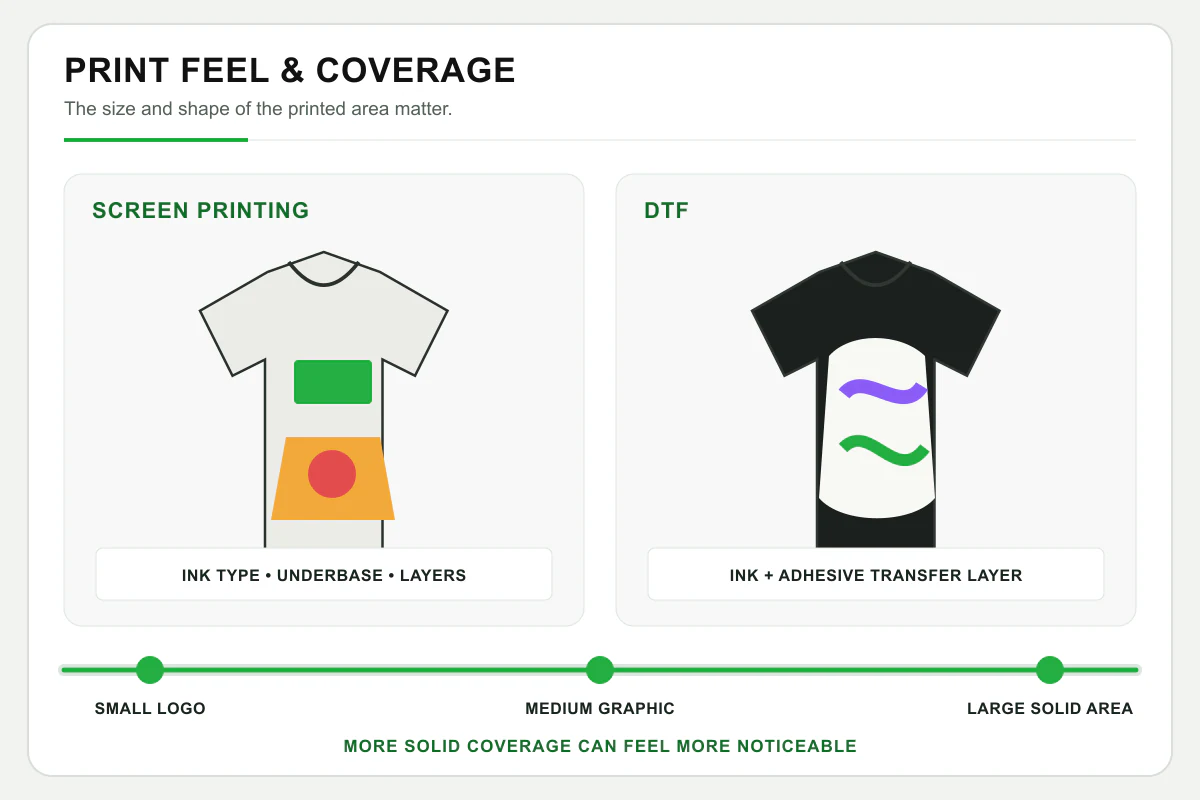
Method names do not describe hand feel on their own. A small logo and a large solid rectangle behave differently, even when produced by the same process. Print feel also changes with the ink or transfer system, underbase, number of layers, fabric surface and curing.
Screen printing hand feel
Screen printing can range from a light deposit to a deliberately raised or textured finish. Water-based, plastisol, discharge and specialty systems do not feel or behave the same, and not every ink is suitable for every garment. Ask which ink system, underbase and cure approach the sample represents.
DTF hand feel
DTF places ink and adhesive as a transferred layer on the fabric surface. Small, broken-up artwork can feel different from one large solid block. If softness or airflow matters, review artwork that reduces unnecessary solid coverage, then compare it on the intended fabric.
Quantity, setup and repeat-order cost
There is no reliable universal order threshold where screen printing becomes cheaper than DTF. The crossover changes with color count, artwork size, garment color, underbase, print locations, transfer layout, spoilage allowance, equipment and local labor. Compare complete quotations built from the same brief.
For a useful quotation, split quantity by artwork, garment style, garment color, size range and print location. State whether repeats must match a previous approval, and keep the approved artwork and sample reference available for the reorder.
Which method lasts longer?
Neither label guarantees better durability. A properly prepared and cured screen print can perform well; a correctly produced and applied DTF transfer can also perform well. Failures usually point to a specific combination of preparation, cure, press settings, adhesion, fabric, dye, stretch or care—not the method name alone.
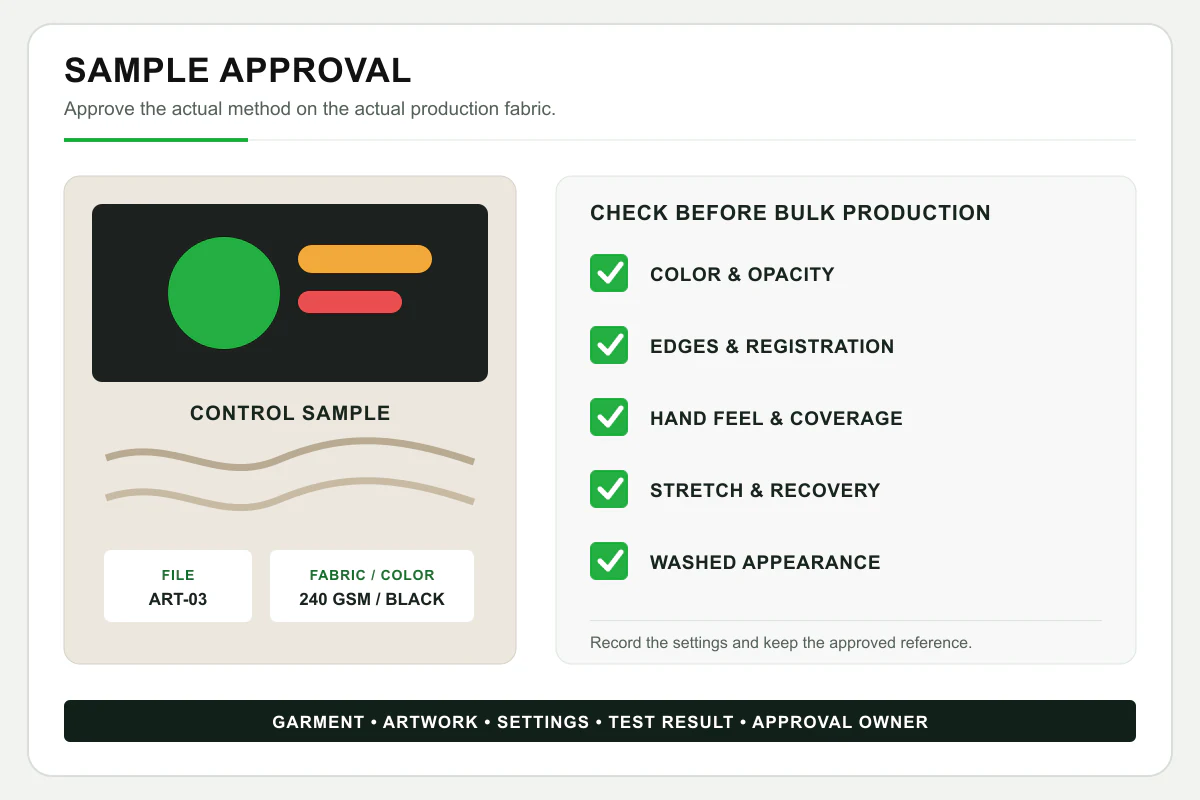
- Appearance: check opacity, color, registration, fine detail, edge quality and any unwanted dye change.
- Adhesion or cure: follow the agreed process settings, then inspect lifting, flaking, powder residue, under-cure or over-cure symptoms.
- Stretch and recovery: test movement relevant to the garment after the print has cooled or settled as required by the ink or transfer system.
- Wash test: agree the wash conditions and number of cycles, then compare cracking, peeling, fading, abrasion and hand feel with the approved control sample.
- Production consistency: compare pieces from the start, middle and end of the run when consistency is critical.
Record the test garment, fabric lot or color, artwork version, print settings and result. Without those details, a successful sample is difficult to reproduce and a failed sample is difficult to diagnose.
How to choose for your custom T-shirt project
Use the following scenarios as a shortlisting tool, then approve the actual method through sampling.
If you are comparing DTF with direct-to-garment printing instead, use the separate DTG vs DTF guide. Keeping those decisions separate prevents three processes with different workflows from being reduced to one generic comparison.
What to send for an accurate method recommendation
A factory can make a better recommendation when the brief shows the whole production combination. Send these items together rather than asking which method is cheaper in general.
When the garment, artwork and decoration are being developed together, use the product development process to keep fabric, construction, placement and print approval aligned.
Frequently asked questions
Is DTF better than screen printing?
DTF is better suited to some detailed, multicolor or flexible-quantity projects, while screen printing can be a better fit for stable repeat artwork, controlled spot colors or specific ink effects. Compare them using the same garment, artwork size, quantity and test requirements.
Which lasts longer, screen printing or DTF?
Neither method has a universal durability advantage. Screen printing depends on ink selection and complete cure; DTF depends on transfer production, adhesive cure and correct heat-press application. Approve wash and stretch performance on the intended fabric.
Is DTF better for small orders?
DTF often suits small or variable orders because it does not require a separate screen for each color. The final cost still depends on print size, transfer coverage, garment, locations and the number of artwork variants, so request a project-specific quotation.
Can screen printing reproduce gradients and photographs?
Yes. Halftones, CMYK and simulated-process separations can reproduce tonal or full-color artwork, but they require suitable artwork preparation, screens, registration, ink choices and press control. Ask the printer to assess the actual file rather than assuming it must be DTF.
Which method feels softer on a T-shirt?
Hand feel depends on print coverage and the exact ink or transfer system. Screen printing can range from light to intentionally raised; DTF adds a transferred ink-and-adhesive layer. Compare equal-size samples on the same fabric, especially for large solid artwork.
Can DTF and screen printing be used on polyester?
Both may be possible with a suitable system and tested settings. Polyester can introduce dye migration and heat sensitivity, so the fabric color, finish, stretch, temperature and cure or press process must be checked on the actual garment before bulk production.