Finding the right fabric is one of the most important decisions in clothing development. The materials you choose directly affect product quality, cost, and production lead time.
This guide explains how to source fabric step by step—from defining requirements to supplier selection, testing, and sampling—so you can reduce risks before bulk production.
Fabric Sourcing Journey (Overview)
Fabric Requirements
↓
Supplier Search
↓
Fabric Selection
↓
Testing
↓
Sampling
↓
Approval
↓
Bulk Production
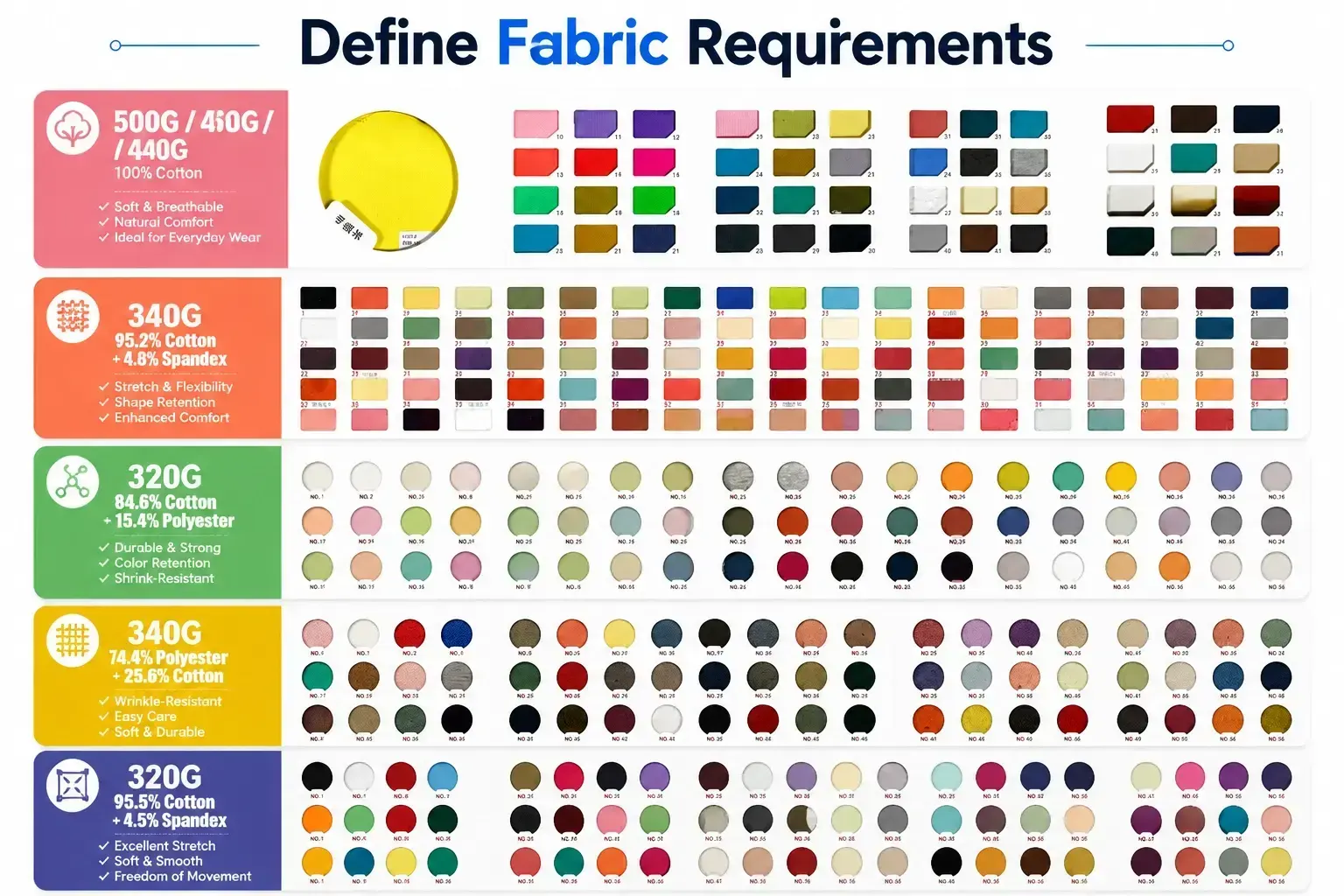
Step 1. Define Fabric Requirements
Before contacting suppliers, you need to clearly define what fabric your product requires.
Key factors include:
- Fabric composition (cotton, polyester, blends)
- Fabric weight (GSM)
- Color and dye method
- Stretch and recovery
- Fabric width
- Shrinkage expectations
- Surface finish
Clear requirements reduce misunderstandings and speed up sourcing.
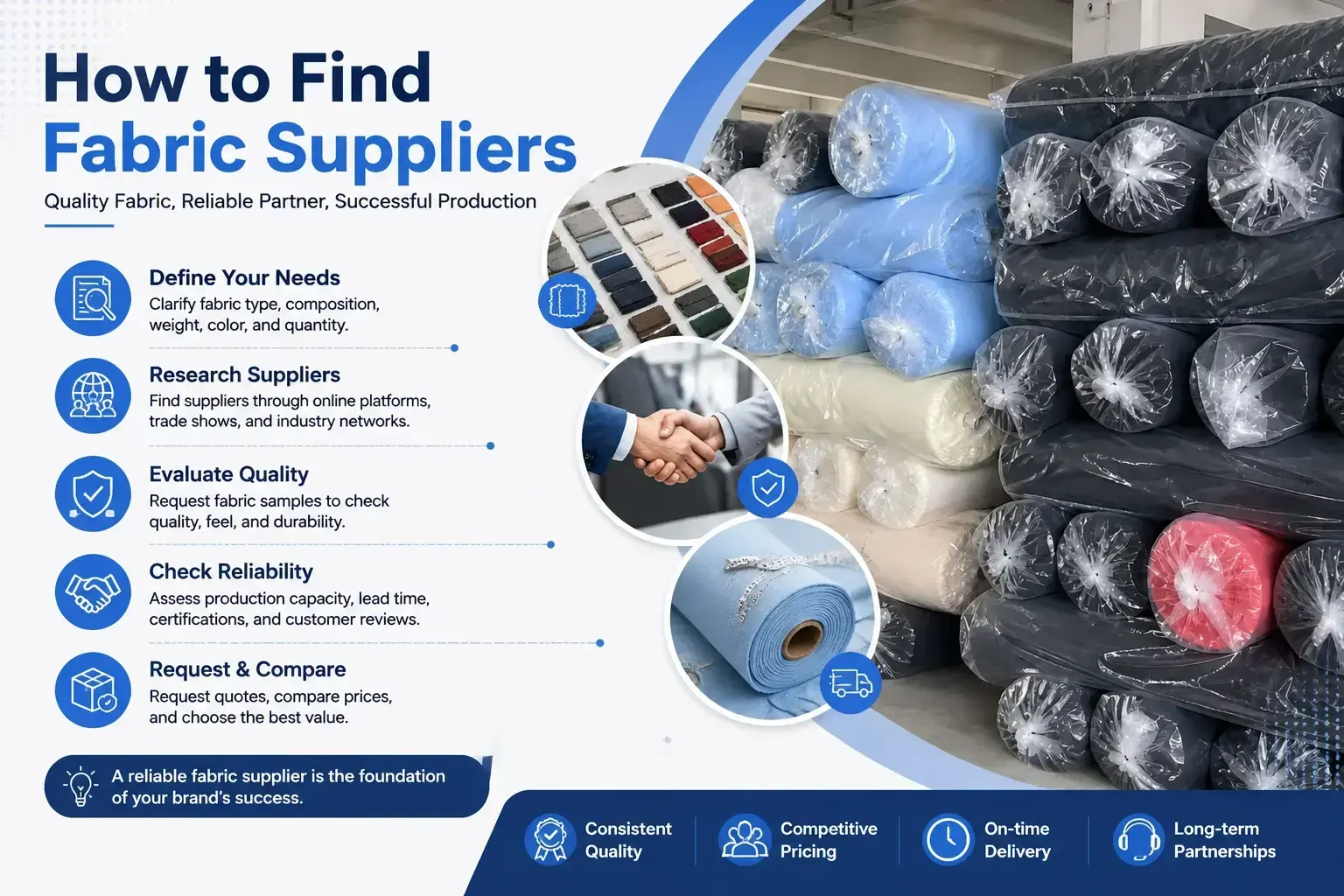
Step 2. How to Find Fabric Suppliers
Fabric can be sourced through multiple channels, depending on your project needs.
Common sourcing methods:
- Fabric markets (China, Korea, Vietnam)
- Direct mills
- Clothing manufacturers
- Sourcing agents
- Trade shows
- Online platforms
Working with an experienced apparel manufacturer can simplify supplier selection and reduce sourcing risks.
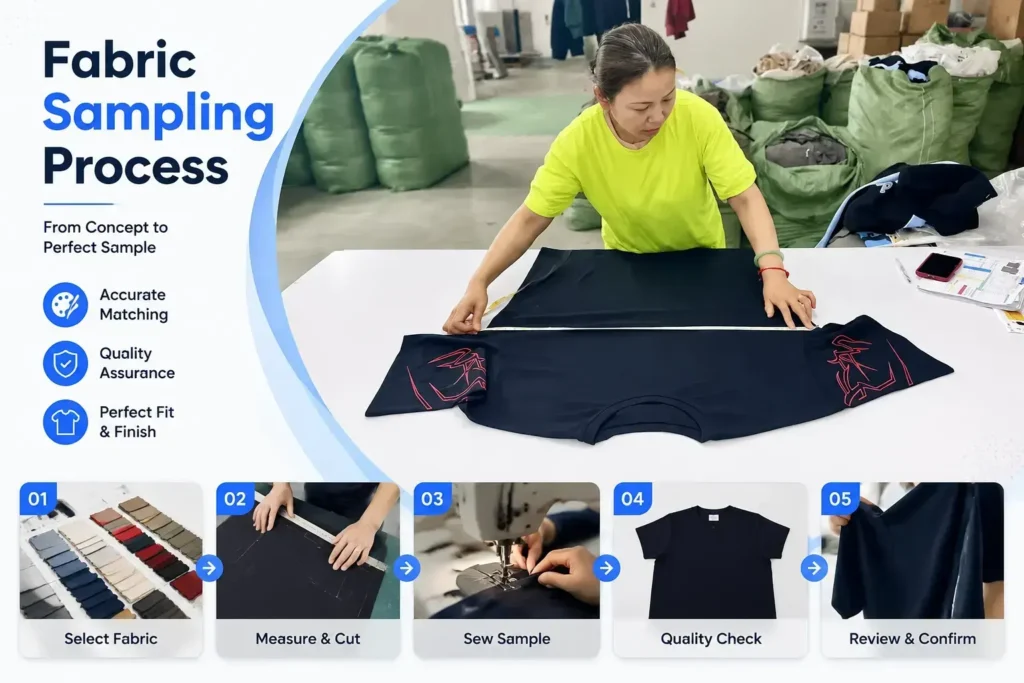
Step 4. Fabric Sampling Process
Once fabric is selected, sampling begins.
This stage allows you to test:
- Fit and sizing
- Stitching quality
- Print or embroidery placement
- Overall garment structure
Understanding garment sample development helps reduce revisions and shorten the development cycle.
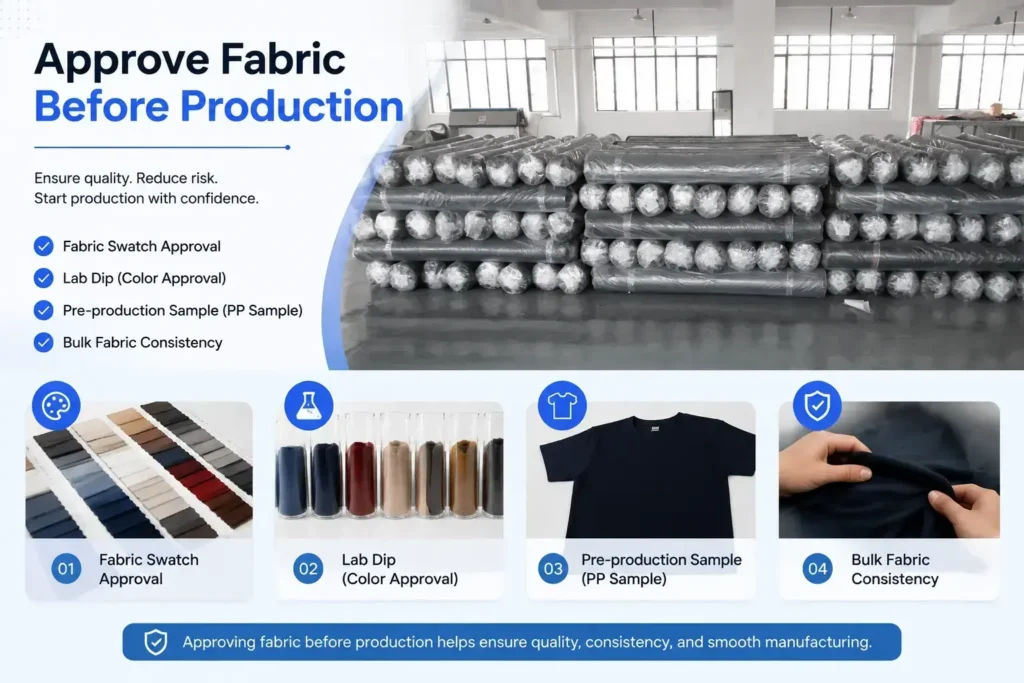
Step 5. Approve Fabric Before Production
Before bulk production starts, all fabric-related elements must be confirmed.
Key approvals include:
- Fabric swatch approval
- Lab dip (color approval)
- Pre-production sample (PP sample)
- Bulk fabric consistency
Skipping this step increases the risk of defects and costly rework.
Delays in early stages can impact the entire production schedule, so planning ahead is critical.
Should You Source Fabric Yourself?
YES — If:
- You need unique or custom materials
- You want full control over fabric quality
- Your brand focuses on differentiation
NO — If:
- Your manufacturer already has reliable suppliers
- You want faster production
- You prefer lower sourcing risk
Choosing the right sourcing approach depends on your product strategy and experience level.
Common Fabric Sourcing Mistakes
Avoid these common mistakes:
✘ Choosing fabric based only on price
✘ Not testing shrinkage
✘ Ignoring color variation
✘ Skipping sample verification
✘ Not confirming MOQ
✘ Rushing into bulk production
These mistakes often lead to delays, defects, and additional costs.
Fabric Sourcing Approval Checklist
Before moving to production, confirm:
- Fabric composition verified
- GSM confirmed
- Color approved
- Shrinkage tested
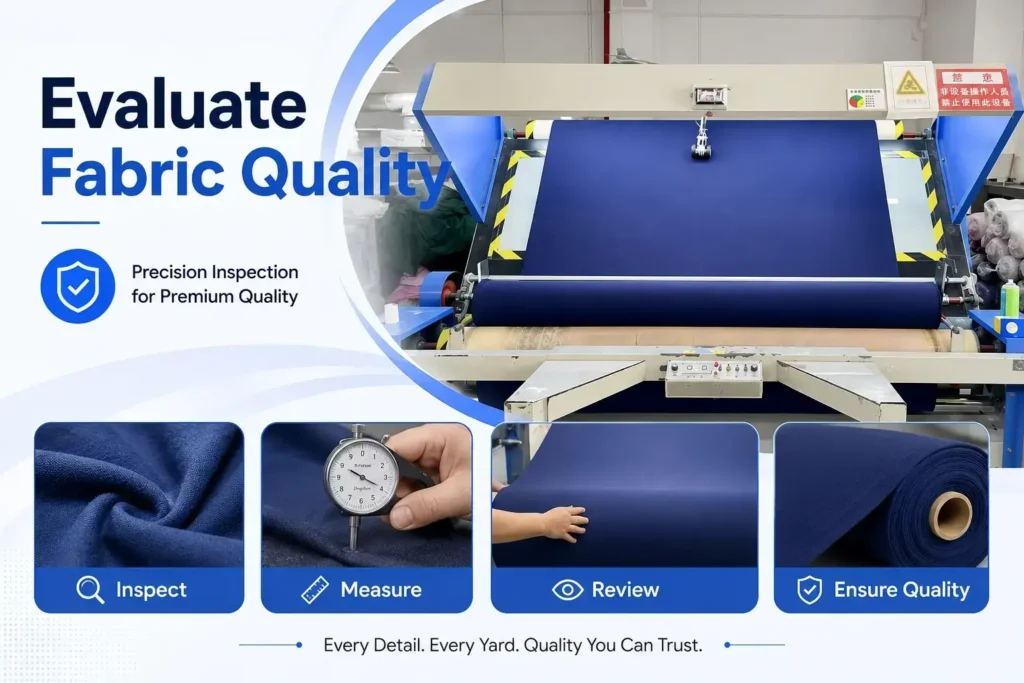
- Fabric quality approved
- MOQ confirmed
- Lead time confirmed
- Sample approved
- Bulk fabric reserved
This checklist helps ensure a smooth transition into production.
How Mingxing Supports Fabric Sourcing
Mingxing Clothing supports brands throughout the entire fabric sourcing process:
- Fabric recommendation based on product type
- Supplier sourcing and evaluation
- Fabric testing coordination
- Sample development support
- Production planning and execution
We help reduce sourcing risks and improve production efficiency.
Final Note
Fabric sourcing is not just about finding materials—it is about making the right decisions before production begins.
With clear requirements, proper testing, and structured sampling, brands can avoid costly mistakes and ensure better production outcomes.
Need help sourcing fabrics for your next project? Contact Mingxing Clothing to discuss fabric selection, sampling, and production planning.
FAQ