A business plan for a clothing brand is not just a document for investors. It is the foundation that connects your idea to real production.
It helps define your products, budget, sourcing strategy, manufacturing plan, and timeline before you start.
Before working with a custom clothing manufacturer, a clear business plan reduces risk and keeps your project aligned from design to production.
Why Every Clothing Brand Needs a Business Plan
A business plan gives structure to your brand idea and turns it into an executable process.
Without it, most clothing startups face the same issues:
- Unclear product direction
- Budget miscalculation
- Supplier mismatch
- Production delays
A clear plan ensures every decision is connected, from product design to final delivery.
What Should a Clothing Brand Business Plan Include?
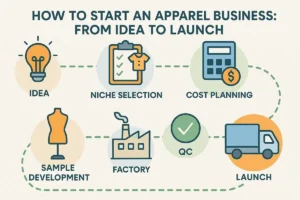
A strong clothing business plan should cover all key areas, from the initial idea to production.
Here is a practical framework:
This framework ensures your plan is not theoretical but actionable.
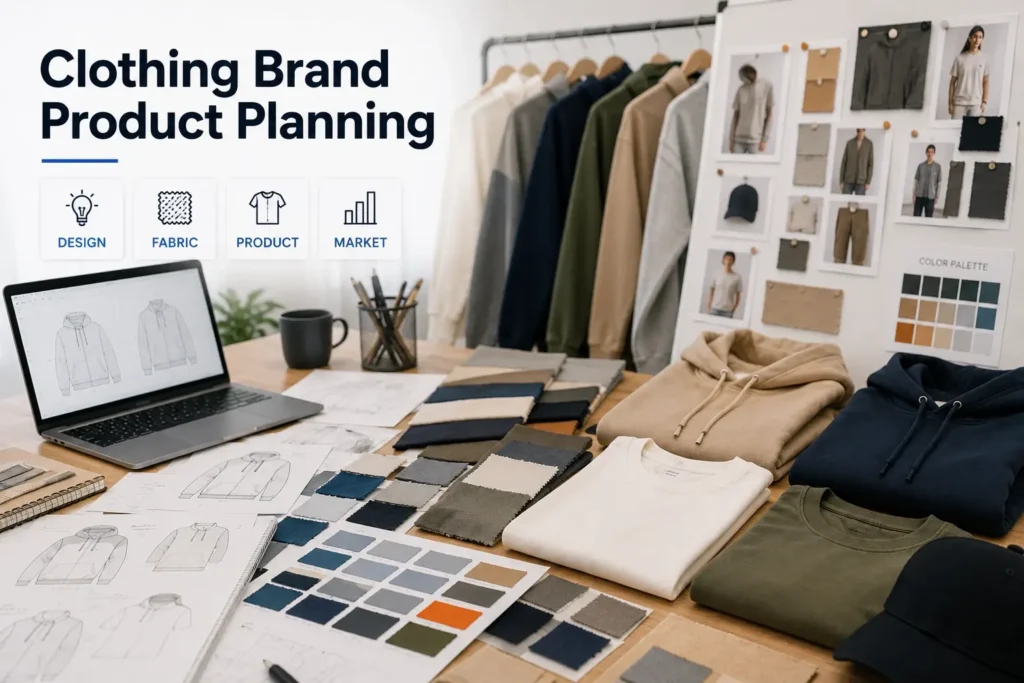
Define Your Product Strategy Before Production
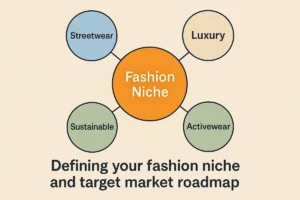
Your product strategy is the starting point of your entire business plan.
It determines:
- What you will sell
- Who you sell to
- How you position your brand
Key elements include:
- Product type (T-shirts, hoodies, sets)
- SKU quantity
- Target price range
- Style direction
Your sourcing and manufacturing decisions will depend entirely on this stage.
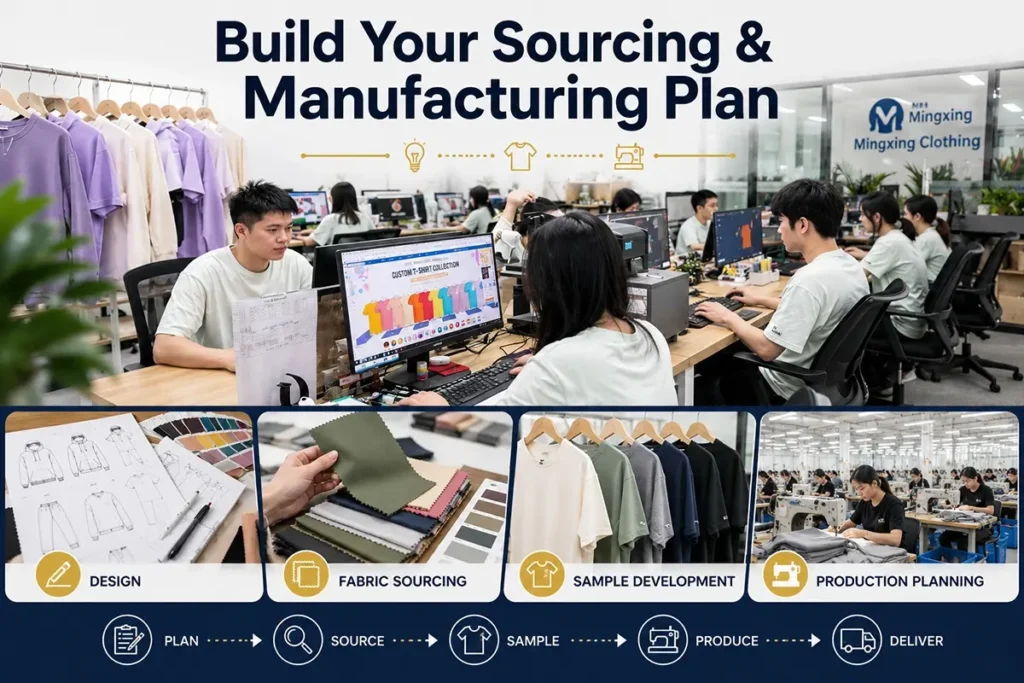
Build Your Sourcing and Manufacturing Plan
This is where most clothing business plans fail.
A real plan must include how you will actually produce your products.
Your manufacturing plan should cover:
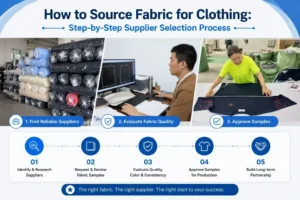
- Fabric selection
- Supplier sourcing
- Sampling process
- MOQ requirements
- Production setup
- Lead time
For example, understanding MOQ in clothing manufacturing helps you decide whether your product plan is realistic.
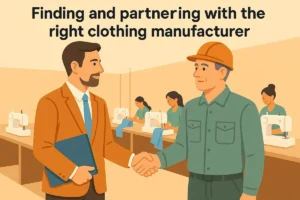
At this stage, working with an experienced OEM clothing manufacturing partner can significantly reduce mistakes.
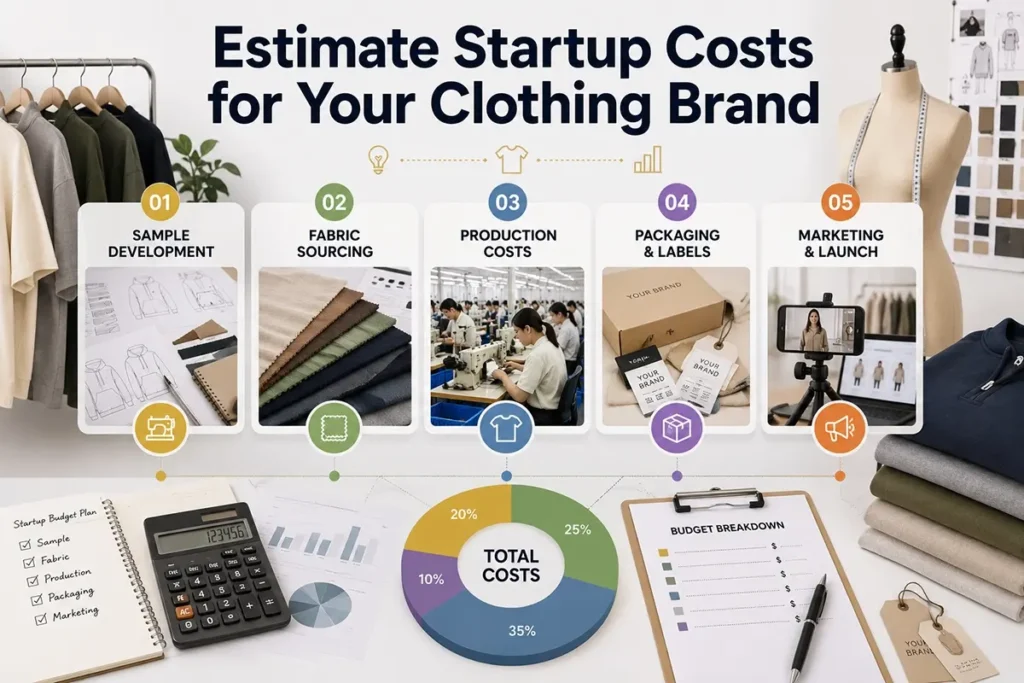
Estimate Startup Costs for Your Clothing Brand
A business plan must clearly define cost structure, not just rough numbers.
Your startup cost typically includes:
- Sample development
- Fabric sourcing
- Bulk production
- Packaging
- Shipping
- Marketing
Instead of focusing on exact numbers, focus on cost categories and how they scale with production.
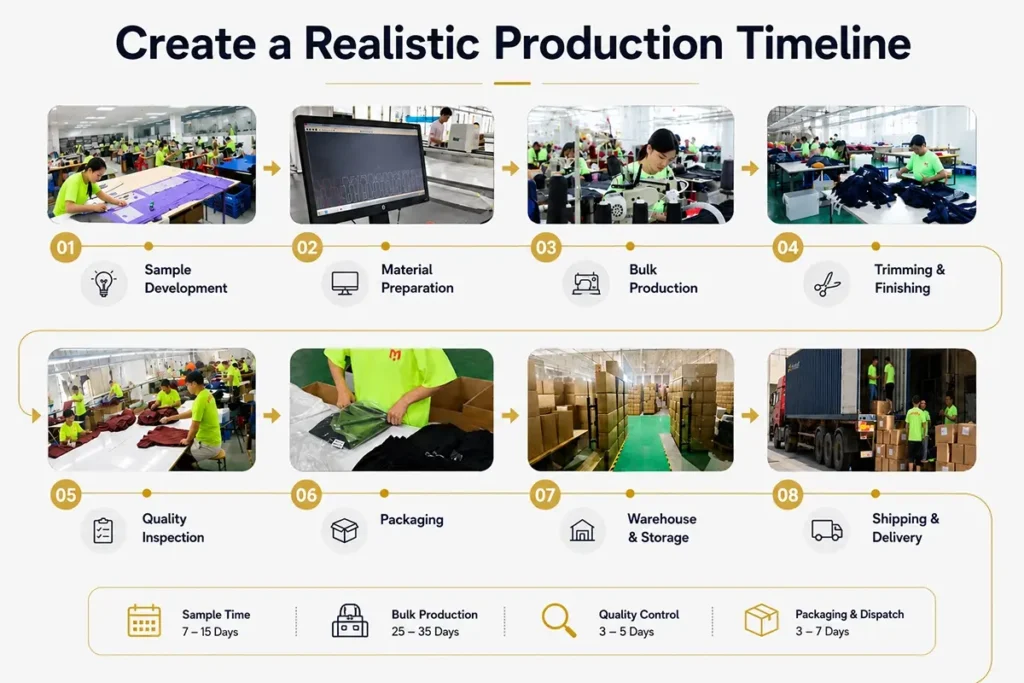
Create a Realistic Production Timeline
A clothing business plan should always include a clear timeline.
A typical production process looks like this:
- Idea & concept
- Tech pack creation
- Fabric sourcing
- Sample development
- Sample revision
- Bulk production
- Quality control
- Shipping
Each step affects your launch timing and cash flow.
Common Mistakes in Clothing Brand Business Plans
Many clothing startups make avoidable mistakes due to poor planning.
Common issues include:
- No clear budget structure
- Ignoring MOQ requirements
- No supplier strategy
- Missing production timeline
- No risk planning
These problems usually lead to delays, cost overruns, or failed product launches.
How to Turn a Business Plan into Production
A business plan becomes valuable only when it can be executed.
Before contacting a factory, you should prepare:
- Product design or tech pack
- Logo and branding files
- Fabric ideas or references
- Target price
- Estimated quantity
- Timeline
At this stage, understanding the differences among OEM, Private Label, and White Label helps you choose the right production model.
Once everything is ready, you can confidently move into production discussions.
Contact for Production Planning
If you are planning to launch a clothing brand and need support with product development, sourcing, or manufacturing, contact Mingxing Clothing to discuss your project.
FAQs