To start clothing production, you need a complete set of documents that define your product, materials, and order details.
At minimum, most manufacturers require a tech pack, size chart, fabric information, artwork files, and order details before sampling or production can begin.
Before working with a custom clothing manufacturer, preparing these documents helps reduce errors, speed up sampling, and ensure accurate production.
Quick Checklist: Documents Needed Before Clothing Production
This is the complete list of documents typically required:
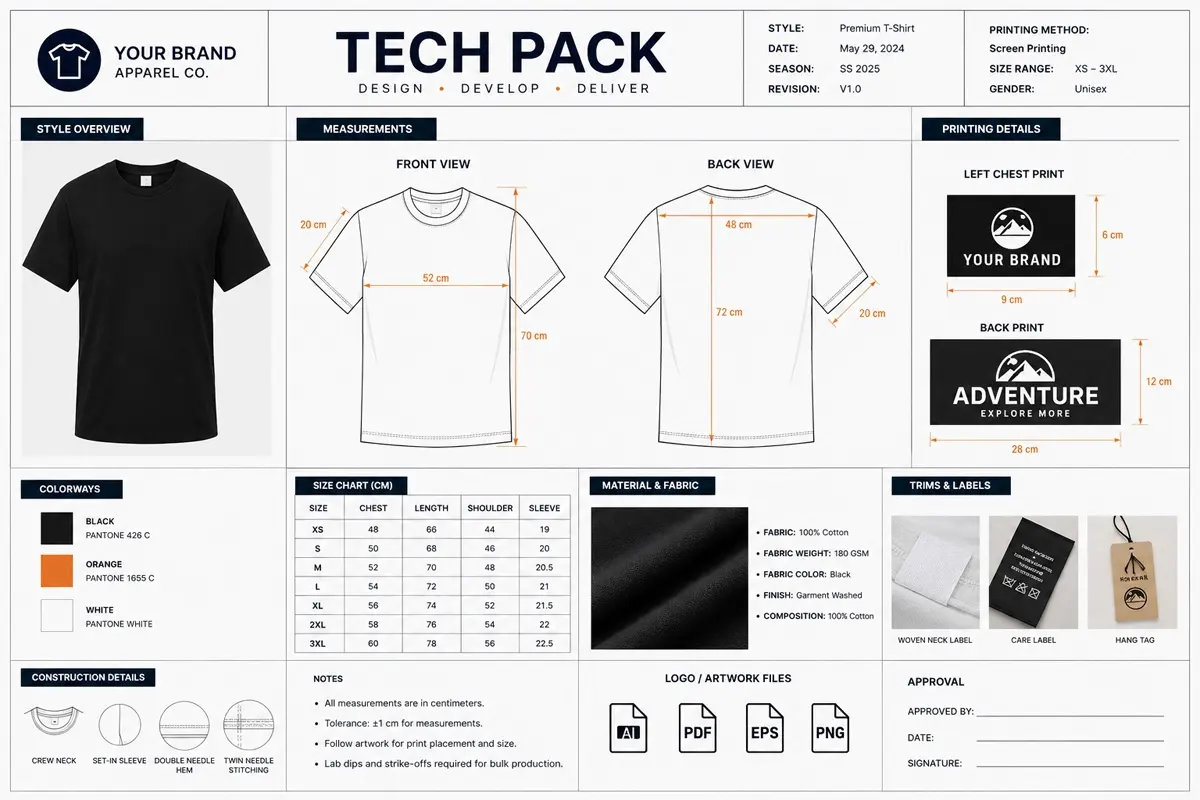
Tech Pack (Technical Specification Sheet)
The tech pack is the most important document in clothing production.
It tells the factory exactly what to make.
A complete tech pack includes:
- Technical sketches (front and back)
- Measurements and specifications
- Fabric and trim details
- Construction notes
- Artwork placement
- Label and packaging instructions
- Measurement tolerance
Without a clear tech pack, factories must make assumptions, which often leads to errors and delays.
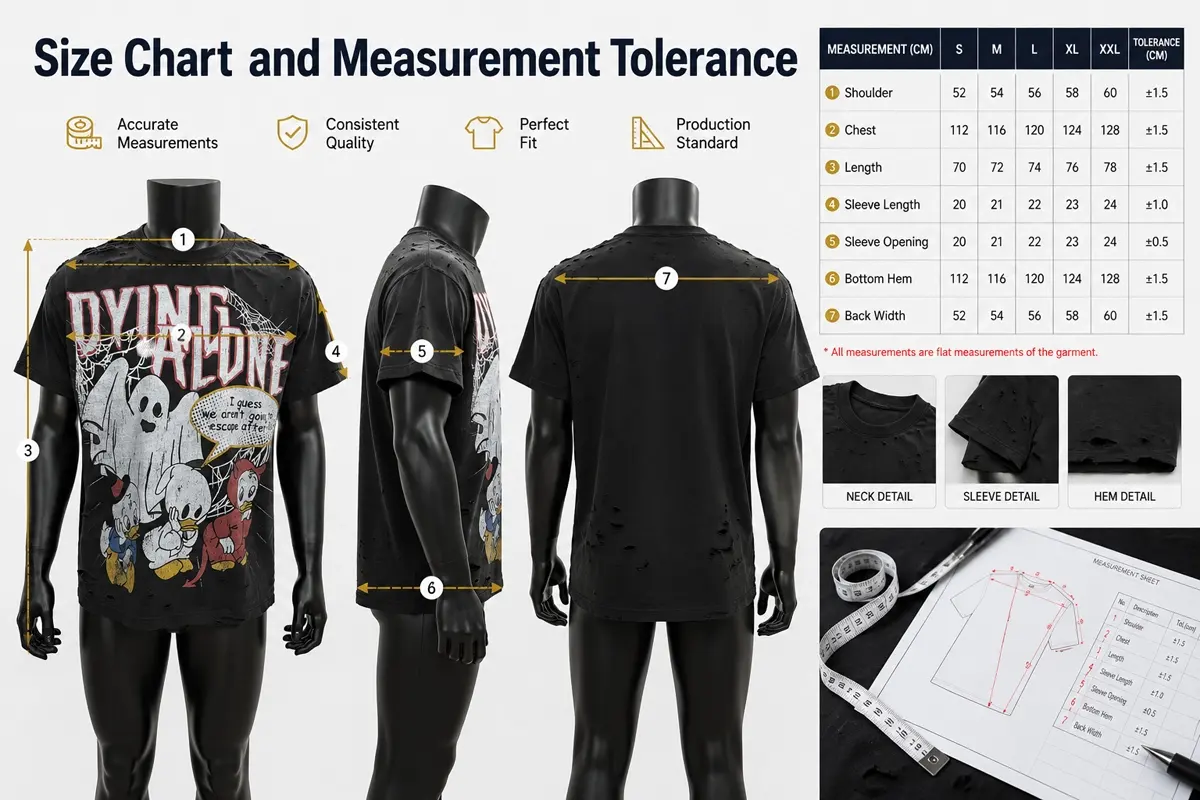
Size Chart and Measurement Tolerance
A size chart ensures your product fits correctly across all sizes.
It should define:
- Base size
- Grading rules
- Measurement points
- Tolerance range
Tolerance is critical because small measurement differences are normal in production.
Without it, even correct garments may be rejected or misunderstood.
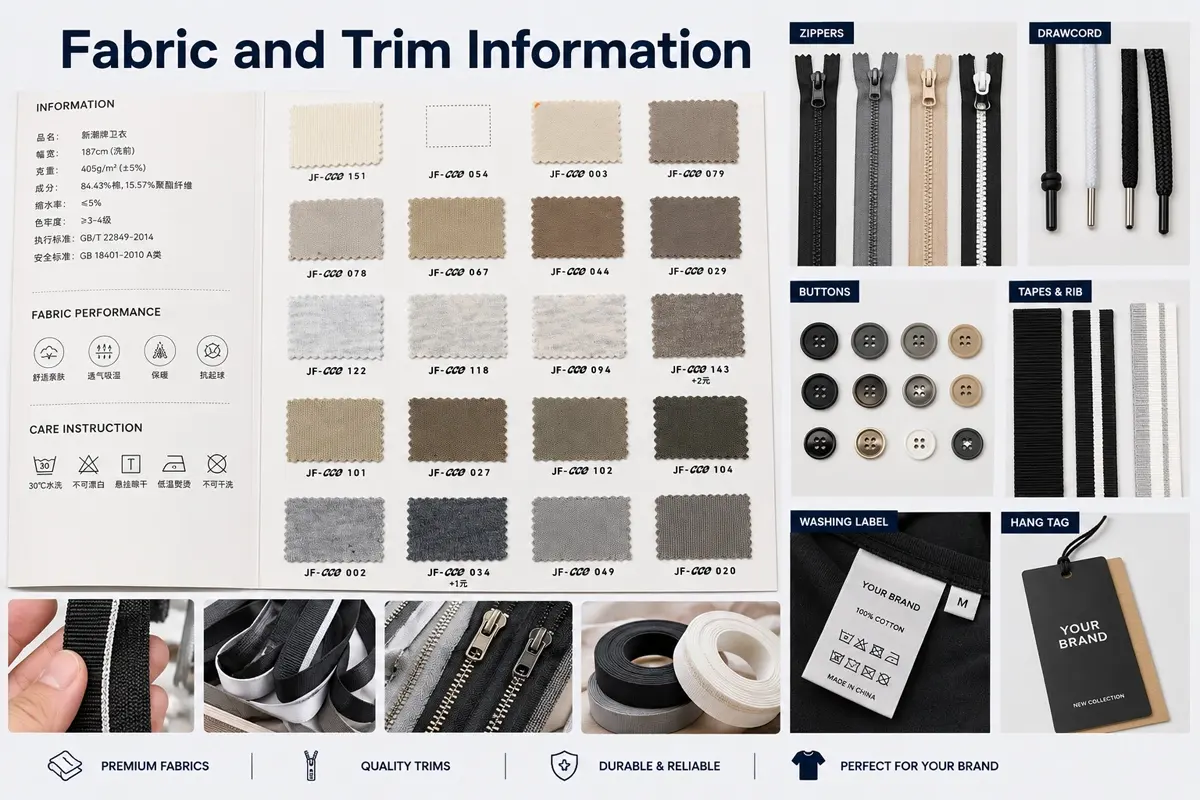
Fabric and Trim Information
Fabric and trims determine product quality, cost, and production feasibility.
You should specify:
- Fabric composition
- GSM (fabric weight)
- Color and dye method
- Fabric finish
- Trims (zipper, buttons, drawcord, elastic)
- Lab dip or color approval
Providing clear fabric details helps avoid sourcing errors and delays.
When working with a custom clothing manufacturer, fabric clarity is essential for accurate sampling.
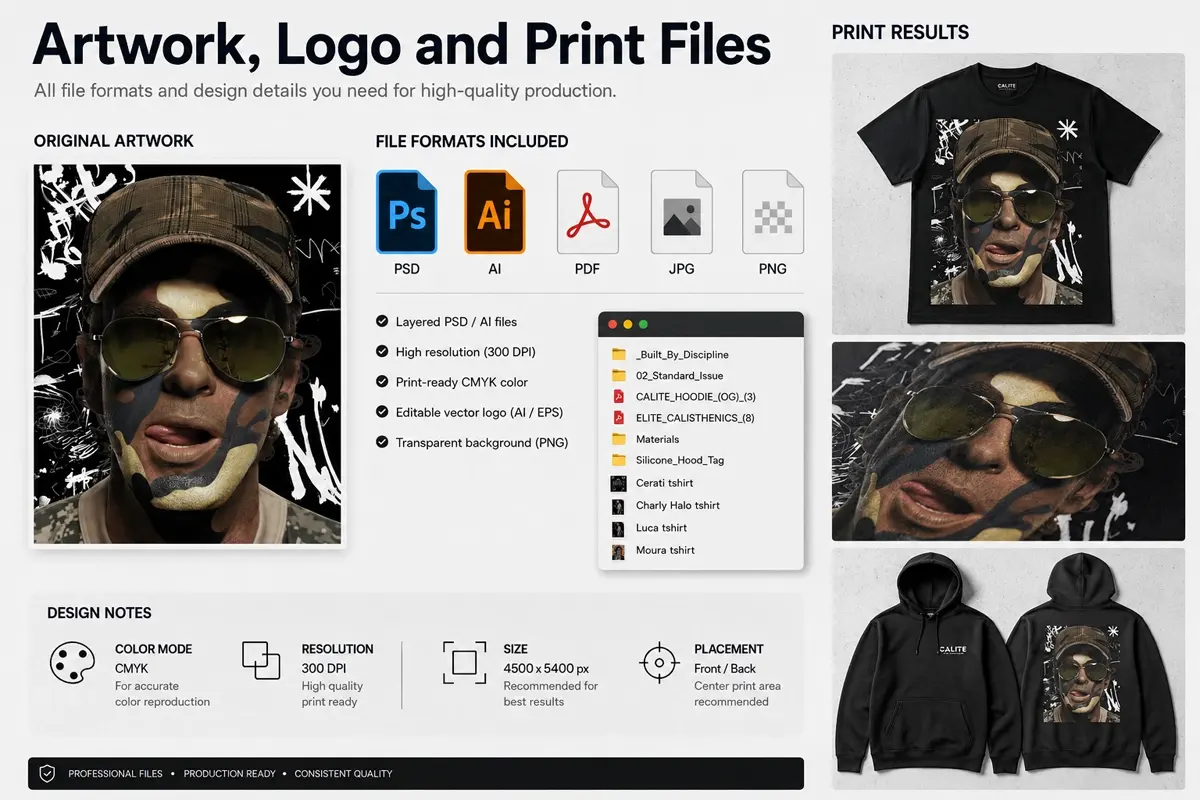
Artwork, Logo and Print Files
Artwork files control how your design appears on the final product.
You should provide:
- Vector files (AI, PDF, SVG)
- Logo placement
- Print size
- Embroidery position
- Color reference
Low-resolution images or unclear placement instructions are one of the most common production issues.
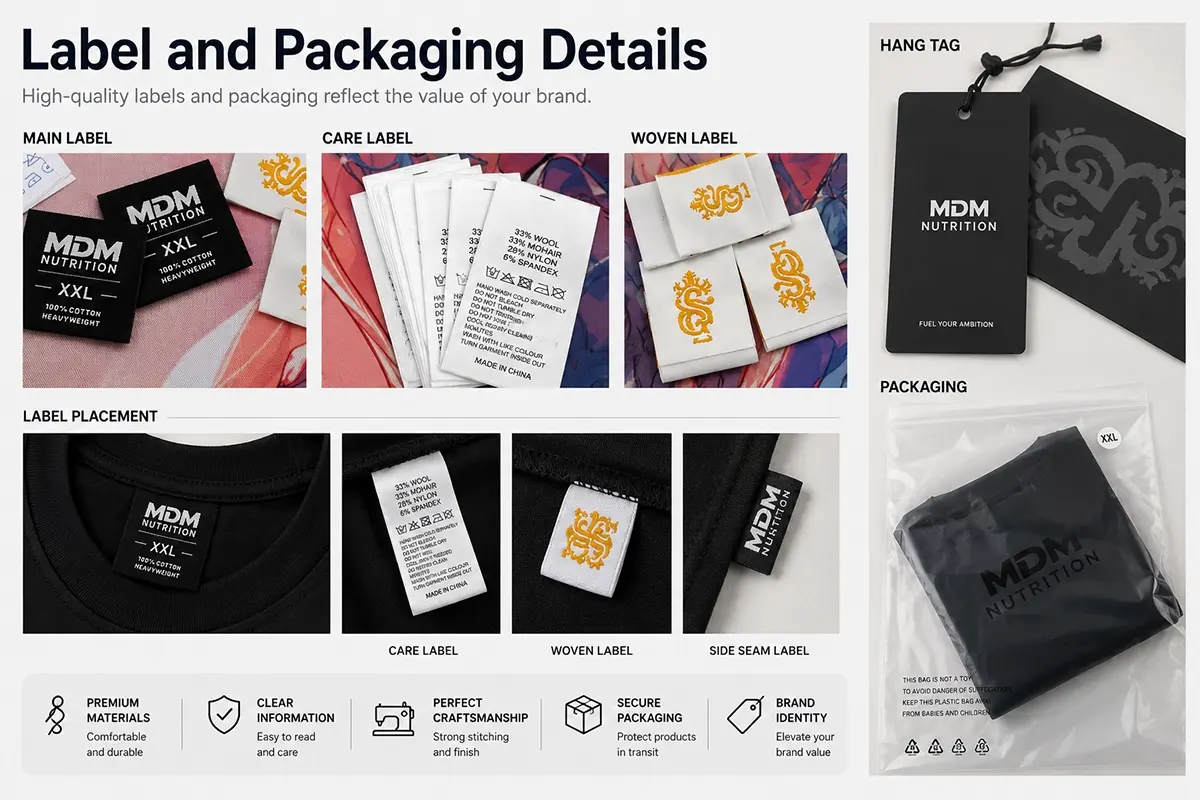
Label and Packaging Details
Label and packaging details define your brand presentation.
This includes:
- Main label
- Care label
- Hang tag
- Poly bag
- Carton mark
- Barcode (if required)
These details are often confirmed after sampling but before bulk production.
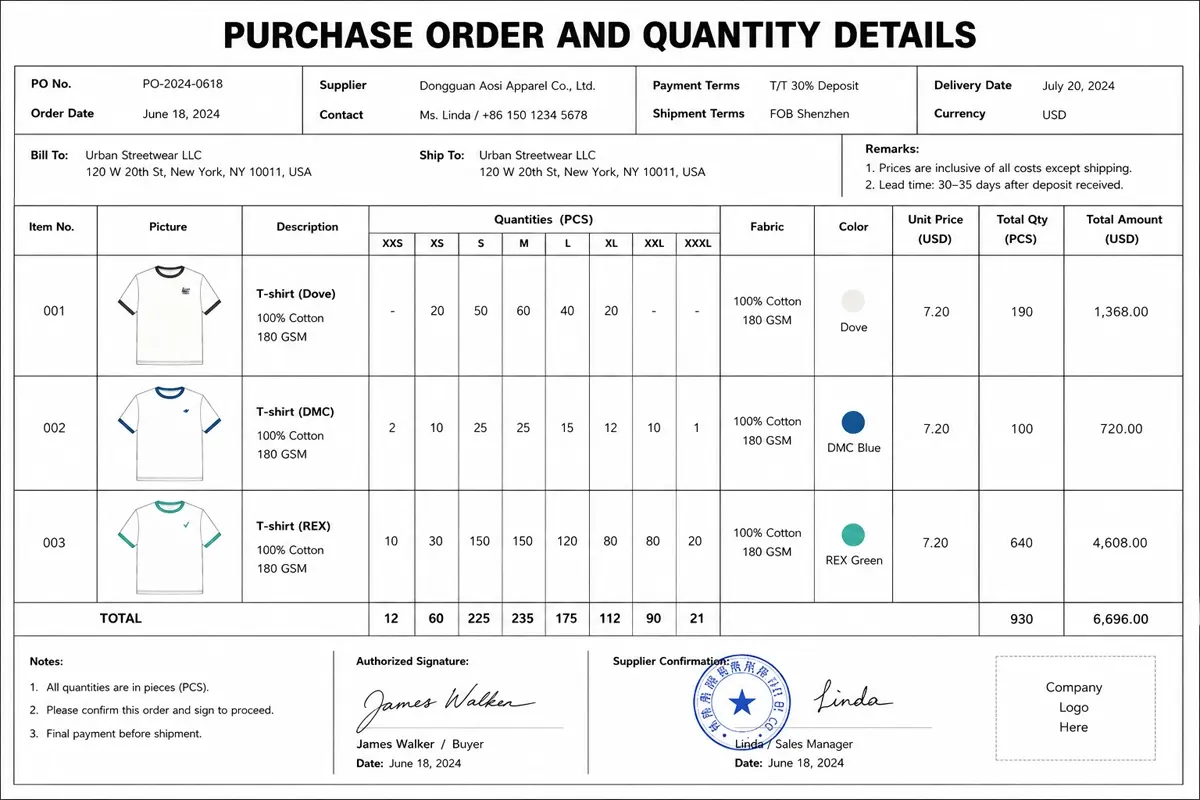
Purchase Order and Quantity Details
The purchase order confirms your production requirements.
It should include:
- Style number
- Color options
- Size breakdown
- Total quantity
- Unit price
- Delivery date
- Shipping address
This document ensures both you and the factory are aligned before production starts.
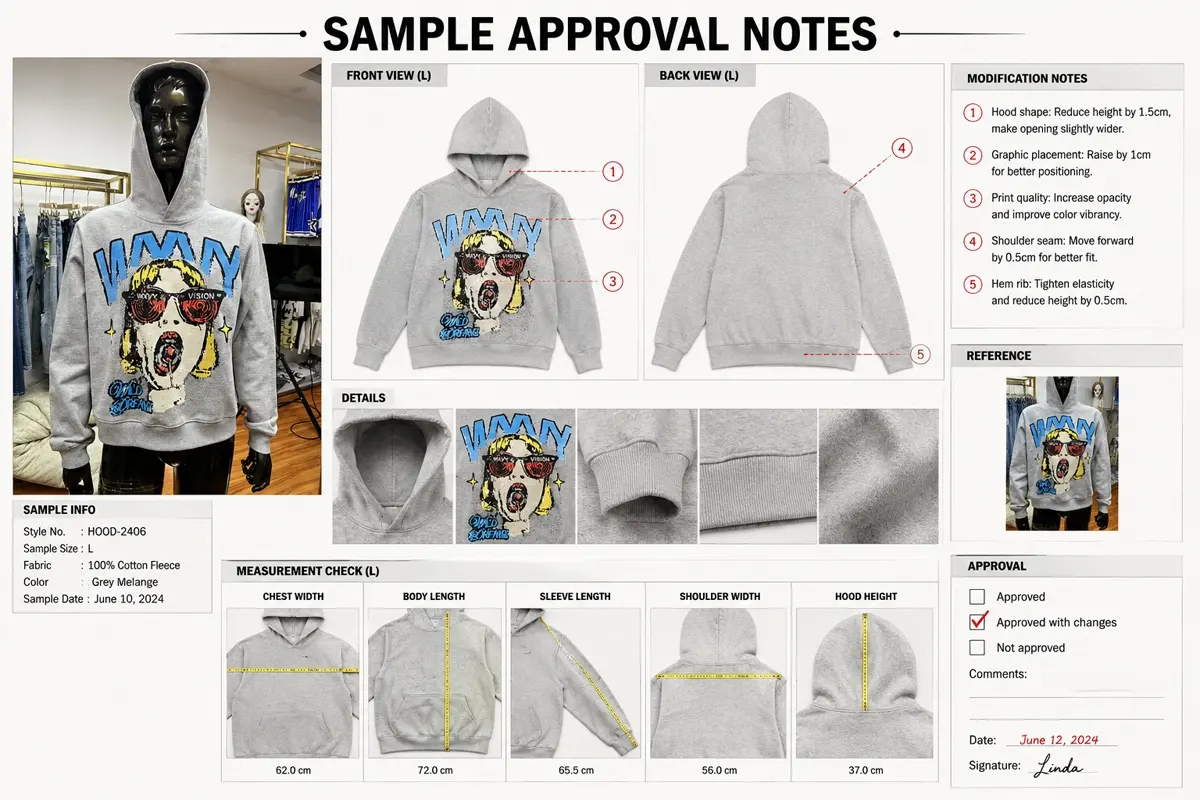
Sample Approval Notes
After receiving samples, you should document all feedback before bulk production.
This includes:
- Fit adjustments
- Fabric confirmation
- Color approval
- Print or embroidery changes
- Packaging confirmation
Clear approval notes prevent repeated mistakes during bulk production.
If you need help refining samples, working with teams that offer sample development support can improve accuracy before final production.
Required vs Optional Documents
Not all documents are required at the same stage.
Here is a simplified breakdown:
Required Documents
- Tech Pack
- Size Chart
- Fabric Details
- Artwork Files
- Quantity Breakdown
Optional but Useful
- Brand Guide
- Packaging Guide
- Reference Samples
- Color Cards
- Testing Requirements
Understanding this helps you start production even if some details are not finalised.
Common Mistakes When Sending Production Documents
Many production issues come from incomplete or incorrect documents.
Common mistakes include:
- Sending low-resolution artwork
- Missing measurement tolerance
- Unclear fabric details
- Changing specifications after sample approval
- Not confirming packaging before bulk production
Avoiding these issues can save both time and cost.
How Mingxing Clothing Helps Review Production Documents
Before sampling or bulk production, reviewing your documents can significantly reduce errors.
Mingxing Clothing can help review your tech pack, size chart, fabric details, and artwork files to ensure everything is ready for production.
For brands working with OEM clothing manufacturing, this step helps align expectations before production begins.
Contact for Production Preparation
If you are preparing documents for clothing production and want to ensure everything is complete and production-ready, contact Mingxing Clothing to review your files and plan your next steps.
FAQs