Manufacturing custom clothing involves multiple steps, each with its own timeline. Whether you are ordering T-shirts, hoodies or tracksuits, understanding the custom apparel lead time helps you plan approvals, production and delivery without relying on one misleading total.
So, how long does it take to manufacture clothing? At Mingxing Clothing, the standard garment sample lead time is 10–15 working days, and standard bulk production is 25–30 working days after the required project details and approvals are confirmed. Buyer review, revisions, material development and international freight sit around those factory stages and must be planned separately.
Planning principle: A clothing production lead time should state where the clock starts, where it ends and which buyer, material and logistics stages are outside that clock.
Factors That Affect Lead Time
Before comparing dates, keep the original six variables in view:
- Sample approval delays
- Fabric and material availability
- Order complexity, including embroidery and cut-and-sew work
- Quantity ordered
- Communication speed and responsiveness
- Peak and off-season production schedules
This article focuses on the timing of each stage. For a deeper explanation of why schedules change, read what affects clothing production lead time.
China scheduling note: When planning a clothing production lead time in China, count quoted working days separately from weekends, public holidays, buyer approval time and international transit.
Sample Production Timeline
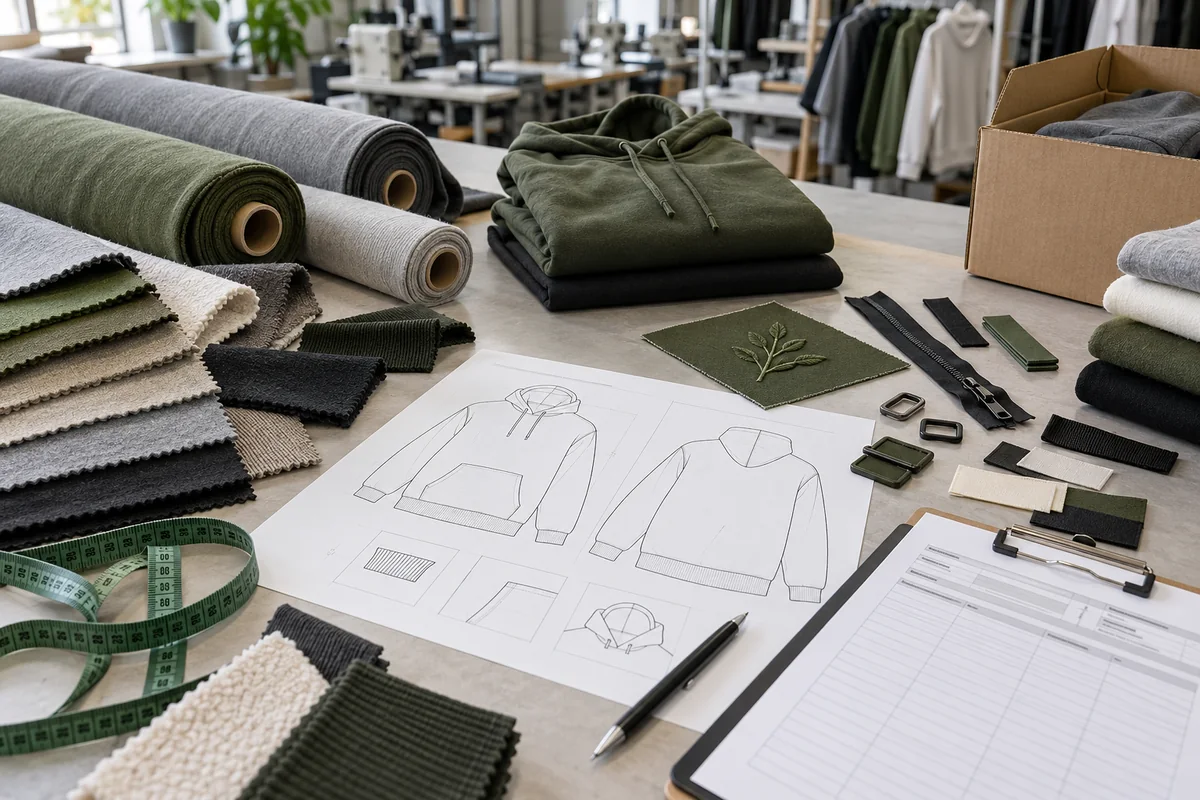
Sample making is the first physical milestone. Mingxing’s standard sample production lead time is 10–15 working days after the required project details and sample payment are confirmed.
- Clock starts: the necessary tech pack, measurements, artwork and material direction are clear enough to begin, and the sample arrangement is confirmed.
- Clock ends: the garment sample is ready for dispatch.
- Quoted separately: special material development, testing, additional sample rounds and any process that needs a project-specific schedule.
- Outside the sample-making clock: courier transit and the buyer’s review time.
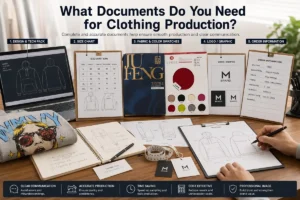
Tip: A complete tech pack and prompt written feedback reduce avoidable back-and-forth. Mingxing’s product development process explains how specifications and samples are prepared for approval.
Bulk Clothing Production Lead Time
Once the sample and final production details are approved, standard bulk production takes 25–30 working days. This is the normal planning window for Mingxing, not a promise that every product, material or decoration can begin immediately.
The standard garment MOQ is 100 pieces per design per color. Qualified startup projects may begin from 50 pieces. A fabric mill, custom color, trim or special process may have a separate minimum and preparation schedule.
Swipe horizontally to read the full table.
| Production Stage | Standard Mingxing Timing | Clock Starts | Clock Ends |
|---|---|---|---|
| Garment sample | 10–15 working days | Required project details and sample payment are confirmed. | The sample is ready for dispatch; courier and buyer review time are separate. |
| Bulk apparel production | 25–30 working days | The approved sample, final order details, materials, artwork and production arrangement are confirmed. | The agreed factory production milestone is reached; freight remains separate. |
Sample lead time vs bulk production lead time: These clocks are consecutive only when approval, materials and order confirmation are ready. A delayed review or revision creates a gap between them.
Clothing Manufacturing Timeline: Stage by Stage
A useful custom clothing production timeline separates factory work from buyer-controlled and carrier-controlled time. The stage map below shows what must be ready before the next milestone can begin.
- Confirm the brief
- Confirm materials
- Make the sample
- Review and approve
- Produce the bulk order
- Inspect and dispatch
Stage-by-stage planning table
Swipe horizontally to read the full table.
| Stage | Timing Basis | What Must Be Ready | Output or Decision |
|---|---|---|---|
| 1. Tech pack and brief review | Project-specific; before the sample clock | Garment type, measurements, artwork, quantity by color, target market and required date. | Open questions are identified and the sample scope can be confirmed. |
| 2. Fabric, trims and decoration confirmation | Depends on stock, custom development and supplier availability | Material direction, color, labels, hardware, print or embroidery method. | The sample can use an agreed material and construction direction. |
| 3. Garment sample production | 10–15 working days | Required project details and sample payment confirmed. | Sample ready for dispatch. |
| 4. Sample transit, review and revisions | Buyer- and carrier-controlled; not included in sample production | Courier plan and a structured review against the latest specification. | Approval, consolidated comments or a confirmed revision round. |
| 5. Production readiness | Project-specific; between sample and bulk clocks | Approved sample, final sizes, colors, artwork, materials, quantity and order terms. | Bulk production start can be scheduled. |
| 6. Bulk production | 25–30 working days | Final approvals, materials and production arrangement confirmed. | Bulk sewing and finishing reach the agreed production-completion milestone. |
| 7. Final QC, packing and dispatch | Confirm the scope in the project schedule | Inspection standard, packaging, marks, shipping documents and booking instructions. | Goods are cleared for the agreed dispatch method. |
| 8. Freight, customs and last-mile delivery | Carrier- and destination-dependent; outside factory production lead time | Live freight option, documents, destination requirements and receiving plan. | Goods arrive at the buyer’s warehouse or nominated destination. |
How Far in Advance to Order Custom Apparel
Start with the date the goods must arrive at your warehouse—not the launch date printed on a marketing calendar. Then work backward through destination handling, freight, factory dispatch, bulk production, approvals and sample development.
Swipe horizontally to read the full table.
| Work Backward From | Time to Reserve | What the Buyer Should Confirm |
|---|---|---|
| Required warehouse arrival | Set the non-negotiable arrival date first. | Receiving location, launch buffer and any retailer or event deadline. |
| Freight, customs and last mile | Use a current logistics estimate plus a realistic receiving buffer. | Destination, shipping method, importer responsibilities and required documents. |
| Factory release and dispatch | Confirm the inspection, packing and booking sequence in the order plan. | QC standard, packaging, carton marks and forwarder instructions. |
| Bulk production | Reserve 25–30 working days after all start conditions are met. | Approved sample, final order, materials, artwork and production arrangement. |
| Approval and material readiness | Add project-specific time between the sample and bulk clocks. | Feedback speed, revision risk, custom colors, trims and testing. |
| Sample production | Reserve 10–15 working days per confirmed sample round. | Tech pack, measurements, artwork, material direction and sample payment. |
| Project kickoff | Allow time before the sample clock for quotation and open questions. | Quantity by design and color, target cost, delivery date and decision makers. |
First order vs reorder: A true reorder may skip some development work, but material availability, dye-lot consistency, trims and the current production slot still need reconfirmation. Do not automatically copy the first order’s calendar.
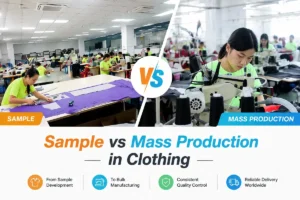
For the complete manufacturing sequence behind these milestones, see the step-by-step guide to manufacturing custom apparel and the comparison of clothing samples versus mass production.
How to Speed Up Your Lead Time
The original five actions remain the most practical ways to shorten the schedule without weakening approvals:
- Provide complete tech packs and size charts.
- Confirm design details early.
- Choose available fabrics or trims when they meet the brief.
- Review and approve samples without avoidable delay.
- Respond quickly to supplier questions and production updates.
Mingxing Clothing can review the garment type, quantity, materials, decoration and required date before confirming whether the proposed apparel manufacturing lead time is practical. Any shorter schedule must be assessed against actual project readiness and available capacity.
Startup projects often need more sampling decisions and adjustments, while established repeat programs may already have approved references. Both still need current material availability and production capacity confirmed.

Your next step
Turn your delivery date into a workable production plan
Send the garment type, quantity by design and color, tech pack or reference, material and decoration requirements, delivery market and required arrival date. Mingxing can identify the sample, approval, bulk production and logistics milestones that need to be confirmed.
FAQs About Custom Clothing Lead Time
Can you deliver in less than 3 weeks?
Less than three weeks is not a standard commitment. Mingxing’s standard garment sample lead time is 10–15 working days, while standard bulk production is 25–30 working days after the required approvals and production conditions are confirmed. A shorter schedule can only be assessed after the sample status, materials, decoration, quantity and available capacity are reviewed.
What delays production the most?
Unclear tech packs, slow sample feedback and unavailable or custom-developed materials are common causes of delay. Production also cannot start until the required sample, artwork, color, trims and order details are approved.
Does quantity affect lead time?
Yes, but quantity is only one variable. Product construction, materials, decoration, color count and factory scheduling also matter. Mingxing’s standard bulk production window is 25–30 working days, with the project quotation confirming the applicable schedule.
How early should I place my order?
Work backward from the required warehouse arrival date. Allow 10–15 working days for sample production, time for transit, review and any revisions, project-specific material and approval time, 25–30 working days for bulk production, and separate freight, customs and last-mile delivery time.
Can I track my production progress?
Yes. Agree the reporting milestones and update frequency in the order plan so you know when materials, production, inspection, packing and dispatch reach their scheduled checkpoints.