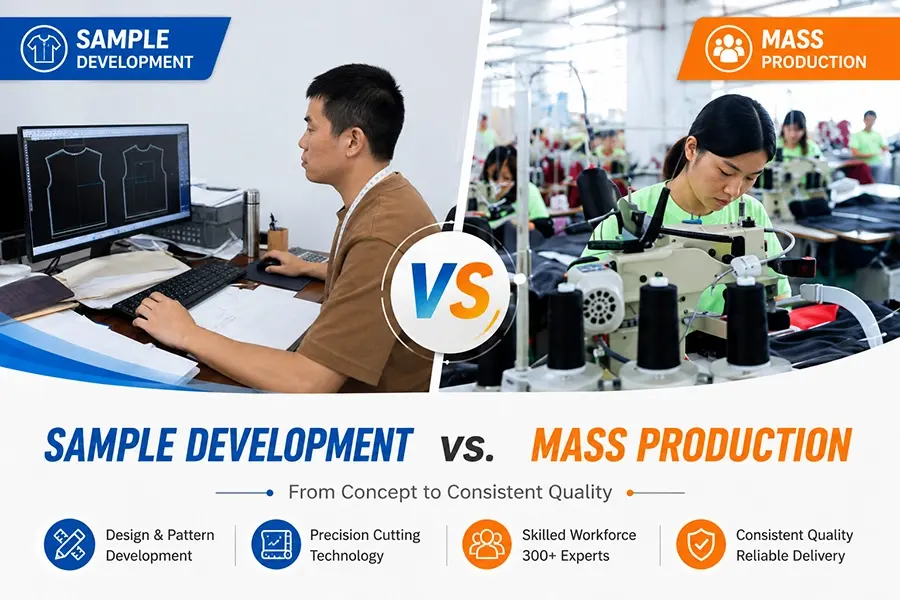
Sample production and mass production serve different roles in clothing manufacturing, affecting your timeline, cost, and production risk.
Understanding the clothing sampling process helps brands plan development more effectively and decide when it is the right time to move into bulk production.
Sample vs Mass Production at a Glance
Why Sample Production Costs More Than Mass Production
Sample production has a higher unit cost because each piece requires individual development and lacks economies of scale.
Key Reasons
- Pattern Development
- Each sample requires new pattern creation.
- Material Purchasing
- Small quantities prevent bulk pricing.
- Printing Setup
- Setup cost is not shared across units.
- Manual Adjustments
- Samples often involve detailed manual work.
- Revisions
- Multiple versions increase total development cost.
Providing a clear tech pack can significantly reduce unnecessary revisions and lower overall sample development costs.
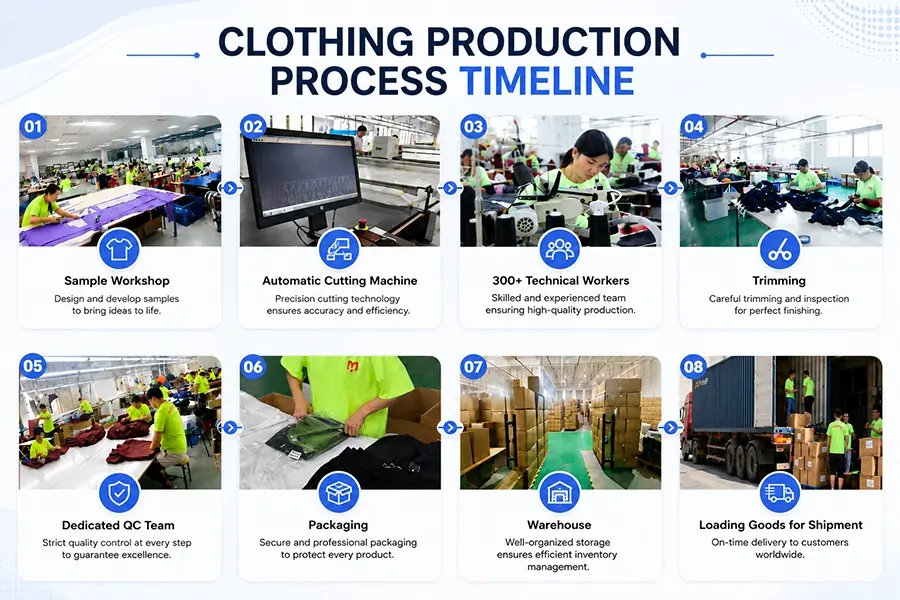
How the Production Process Changes from Sample to Bulk
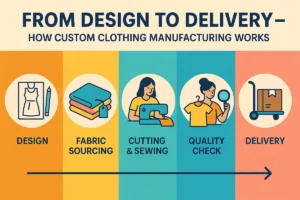
Production becomes more structured and efficient when moving from sampling to bulk manufacturing.
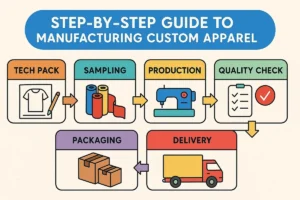
Typical Flow
Tech Pack
↓
Sample Development
↓
Revisions
↓
Approval
↓
Mass Production
↓
Quality Control
↓
Packaging
↓
Shipping
When Should You Move to Mass Production?
Moving into bulk production should only happen after all key elements of the product are finalized.
You should move to mass production when:
- Sample is fully approved
- Size and fit are confirmed
- Fabric and trims are locked
- Printing or embroidery is finalized
- Packaging is confirmed
- Production quantity is defined
At this stage, production becomes predictable and scalable.
Are You Ready for Mass Production?
Use this checklist before starting bulk production:
✔ Sample approved
✔ Size chart confirmed
✔ Fabric confirmed
✔ Logo and printing approved
✔ Packaging finalized
✔ Quantity confirmed
✔ Shipping plan prepared
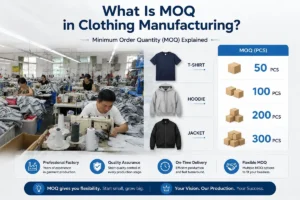
Before starting bulk production, brands should also understand how minimum order quantities (MOQ) affect production efficiency and cost.
How to Reduce Sample Costs and Development Time
Sample development can be optimized with better preparation and communication.
Practical Tips
- Provide a complete tech pack
- Use available fabrics when possible
- Minimize design changes
- Approve samples quickly
- Combine shipments
- Work with experienced manufacturers
These steps reduce both development time and cost.
Final Note
Sample production helps ensure your product is correct, while mass production ensures your business can scale efficiently.
Understanding the transition between these stages helps reduce risk, control costs, and improve production planning.
Once your sample is approved, moving into bulk production becomes much more predictable. Contact Mingxing Clothing to discuss your production timeline and next steps.
FAQ