Quick answer
A clothing bill of materials, or BOM, is the controlled list of physical components needed to make a garment. It identifies the fabrics, trims, thread, fasteners, labels, hardware and packing materials, together with the specification, color, placement, unit and required quantity for each item. The BOM is normally one part of a larger tech pack; it does not replace the garment drawings, measurements or construction instructions.
What is a clothing BOM?
A clothing BOM connects a design with the exact materials that must be sourced and assembled. A useful row does more than name an item. It tells the team which component is intended, where it is used, how it is measured, which color or supplier reference applies and whether the information is proposed, confirmed or approved.
That shared reference matters because several people may touch the same style: the brand, product developer, technical designer, merchandiser, sourcing team, sample room, purchasing team and production factory. If one person means a navy two-way zipper and another prices a standard black zipper, the style no longer has one controlled material definition.
A BOM can begin before every value is final. Early rows may contain a documented TBC or TBD, provided the file names the person responsible for confirmation and the milestone when the value must be closed. A visible assumption is safer than an unverified number that looks approved.
What a BOM controls in apparel production
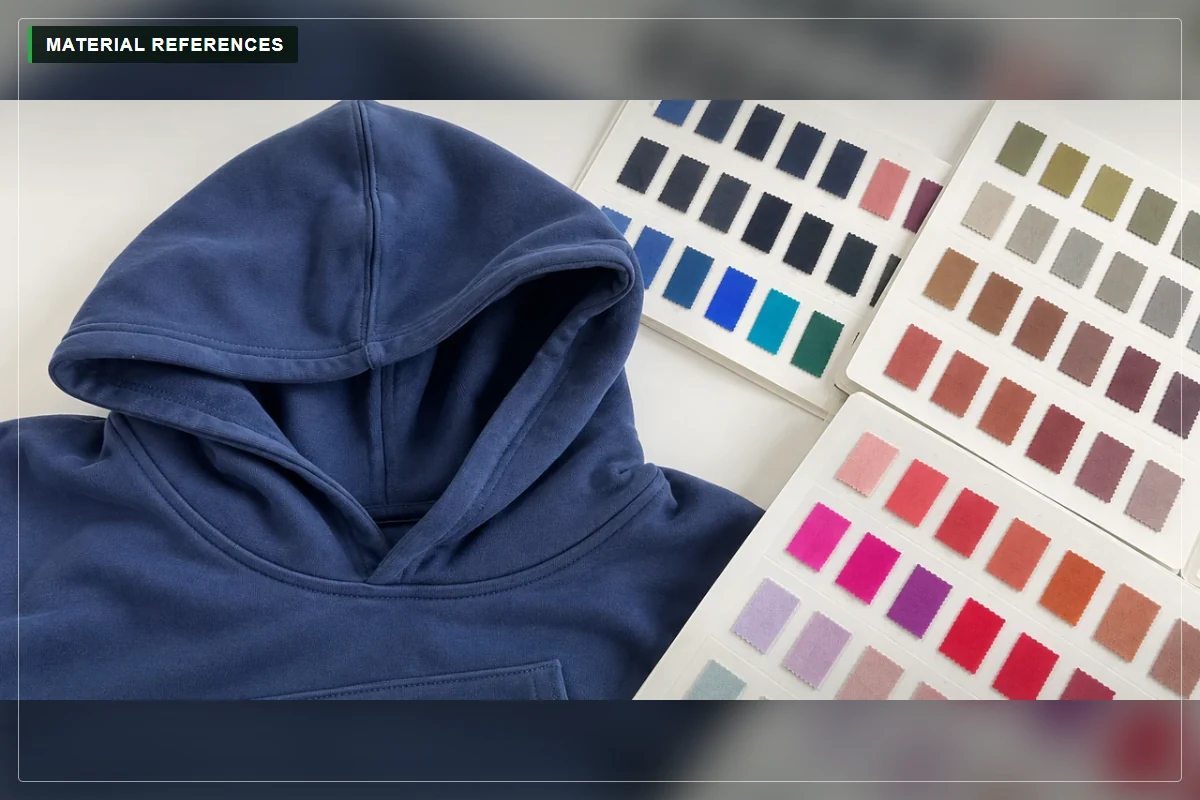
The BOM gives quotation, material sourcing, sample development, purchasing and bulk checks the same component list. During an early quote, it shows which details are known and which costs are based on assumptions. During sampling, it records the actual fabric, rib, zipper, labels and packing materials used. Before bulk production, the approved version becomes a purchasing and inspection reference.
BOM vs tech pack, spec sheet and cost sheet
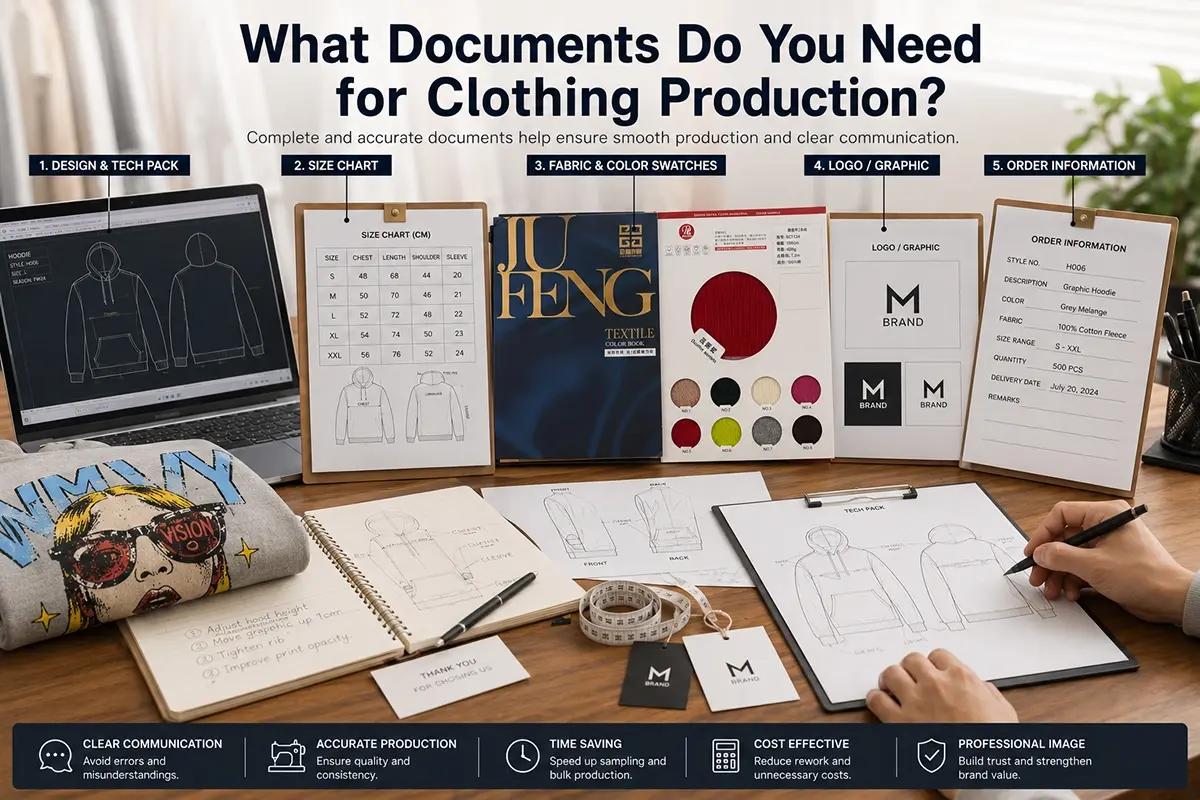
A BOM is often confused with the whole tech pack. The distinction is practical: the BOM controls the physical material list, while the tech pack is the broader garment instruction set. Mingxing's guide to documents needed for clothing production explains how these files work together.
Swipe horizontally to view the full table.
| Document | What it controls | What it does not replace |
|---|---|---|
| BOM | Physical materials and components, their specification, placement, unit and quantity. | Garment drawings, measurement tolerances and sewing instructions. |
| Tech pack | The complete garment instruction set, normally including drawings, BOM, measurements, construction, artwork and revisions. | Commercial order terms or an approved physical sample. |
| Measurement/spec sheet | Points of measure, size values, grade rules and tolerances. | Material sourcing and component identity. |
| Cost sheet | Material, labor, decoration, testing, overhead and other commercial cost calculations. | The detailed material specification or full garment instructions. |
| Purchase order | Commercial order quantities, price, delivery, payment and agreed terms. | Technical approval of the garment and its components. |
A BOM may include unit prices and material extensions, but the material total is not automatically the complete garment price. Cutting, sewing, decoration, testing, overhead, packing and commercial terms may be controlled in a quotation or cost sheet.
What belongs in a clothing BOM
Every physical component used for the finished garment should be represented in the controlled material system. The exact categories vary by product, but the team should be able to trace each fabric, trim, label and packing item to an approved specification.
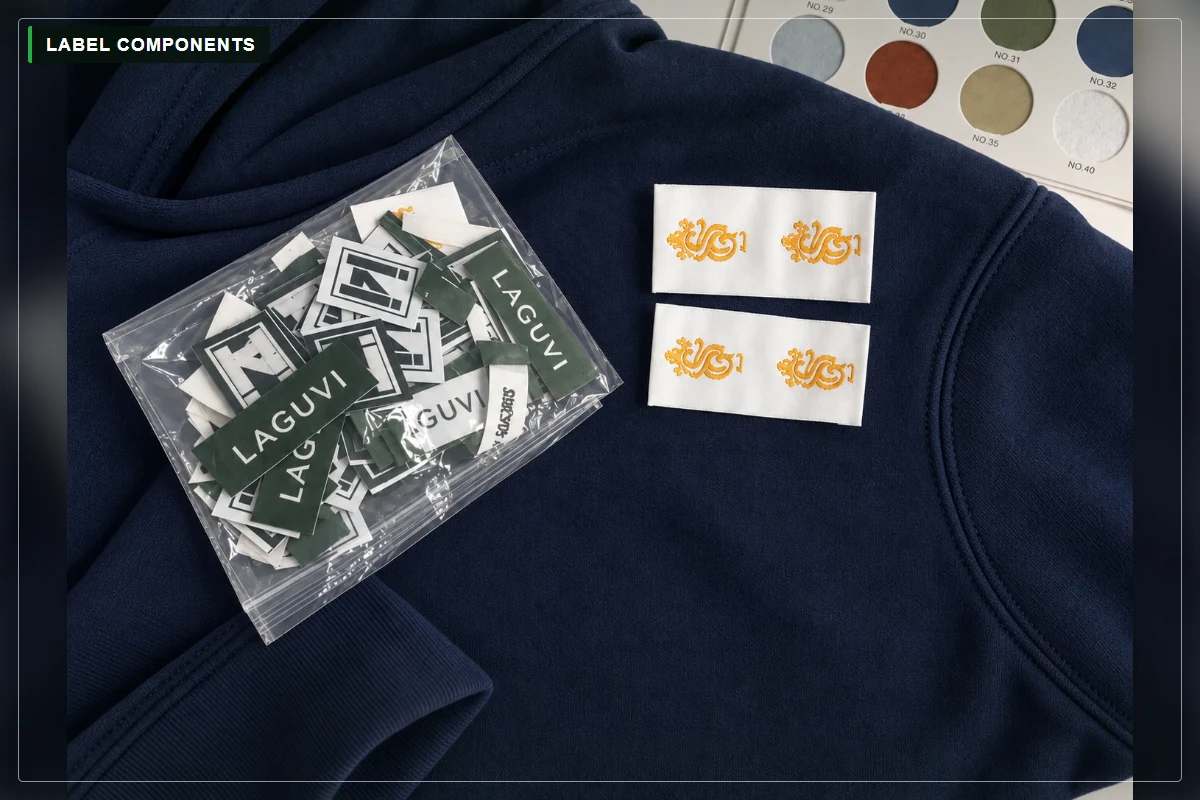
Labels need more than the words “main label” or “care label.” Record the material, finished dimensions, fold type, artwork revision, print or weave colors, placement and quantity. The BOM controls the approved component, but it does not by itself prove that the wording complies with every destination market. Fiber content, care instructions, country-of-origin wording and other legal requirements must be reviewed for the markets where the garment will be sold.
Fields every useful apparel BOM should define
There is no single mandatory BOM layout for every clothing company. A practical file separates style-level control from line-item detail and keeps the terms consistent across revisions.
Style-level information
- Brand or customer, style name, style number and product category.
- Season or collection when used, sample size, size range and colorways.
- BOM revision, issue date, working status, preparer and approver.
- Linked tech-pack, artwork, measurement and packing-document revisions.
Line-item information
- Stable item number or component code, category and clear component name.
- Full material specification, placement or purpose and approved supplier or sourcing owner.
- Supplier article number, controlled color reference and unit of measure.
- Consumption or quantity per garment plus the sizes and colorways to which the row applies.
- Approval status, approved substitute when allowed, and linked drawing or artwork reference.
How much detail is enough?
Write a specification that another qualified person can use to source the intended item. “Black cotton” is too broad for a shell fabric. A useful fabric row can identify fiber composition, knit or weave construction, weight, usable width, finish, controlled color, supplier article, placement, unit and whether consumption is provisional or confirmed.
The same rule applies to trims. “Metal zipper” does not define length, gauge or type, tooth and tape color, puller, finish, supplier reference or placement. The BOM should remove avoidable choices while clearly marking decisions that remain open.
A practical hoodie BOM example
The table below is illustrative. It shows the level of control a custom hoodie may need without pretending that one fabric consumption, supplier or trim size works for every style.
Swipe horizontally to view the full table.
| Item | Example specification | Placement | Unit | Consumption status |
|---|---|---|---|---|
| Shell fabric | Fleece; composition, construction, weight, usable width, finish and approved color to be stated. | Body, sleeves and hood | m or kg | Confirm after pattern and marker review. |
| Rib | Rib construction, composition, weight and controlled color reference. | Cuffs and bottom band | m | Confirm by size range. |
| Drawcord | Material, profile, width, finish and color. | Hood channel | m or pc | Confirm finished length. |
| Eyelet | Material, internal diameter, color and finish. | Hood opening | pc | Confirm design quantity. |
| Sewing thread | Thread type, size or ticket and approved color. | Defined operations | cone or m | Factory to confirm. |
| Main label | Material, finished size, fold and artwork revision. | Back neck | pc | Normally fixed by design. |
| Care/content label | Material, dimensions, languages and approved artwork revision. | Side seam | pc | Destination dependent. |
| Individual bag | Material, dimensions and warning or sticker requirement. | One packed garment | pc | Confirm packing specification. |
Leaving an uncertain value as a documented TBC is safer than inserting an unverified number. The row should identify who will confirm it and at which milestone.
How to manage colorways, sizes and material exceptions
One base style does not always equal one identical BOM. A white colorway may use different thread, zipper tape or label colors from a black colorway. Larger sizes may require more shell fabric, rib or elastic while the number of buttons remains unchanged. A style can manage this through one base BOM with a colorway-and-size matrix, variant BOMs or clearly controlled exception rows.
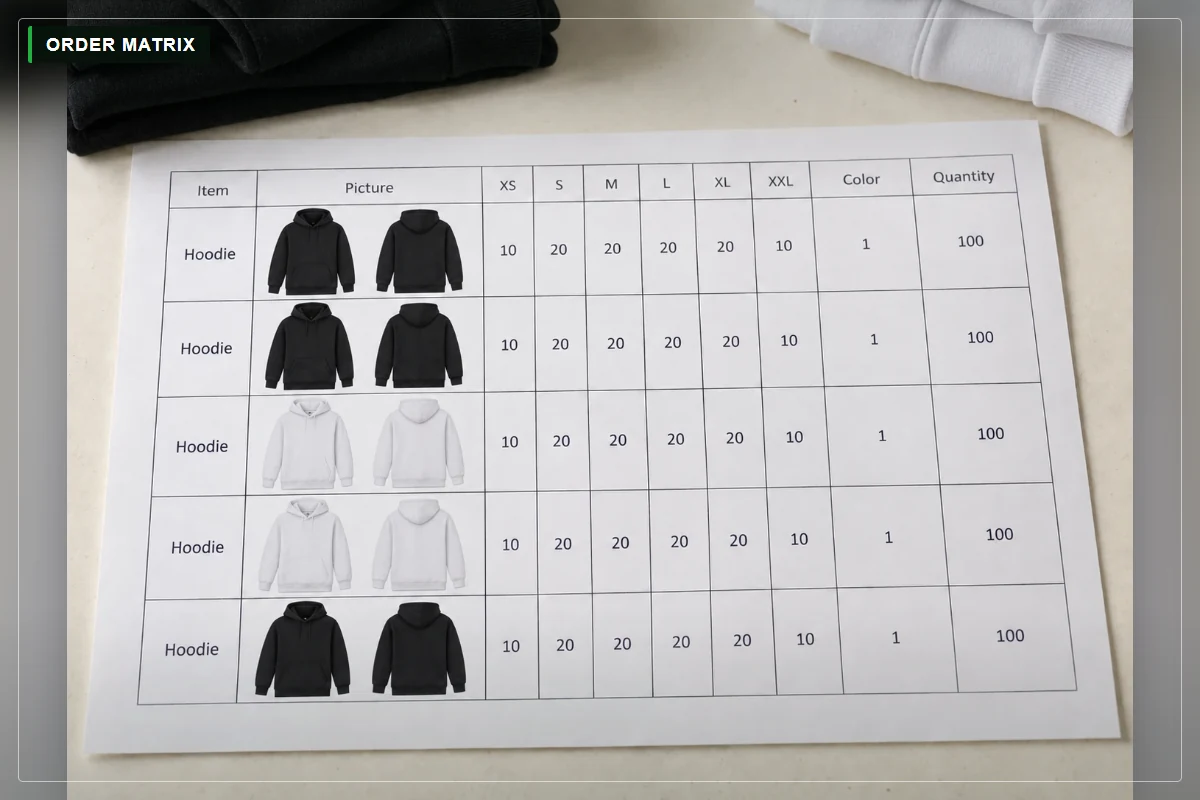
This image shows an order quantity matrix, not a BOM. The order matrix tells the team how many garments are required in each color and size; the BOM tells the team which components and per-garment quantities apply to those variants. Purchasing combines the two sets of information.
Consumption, allowance, MOQ and material cost
These values answer different questions and should not be combined into one vague “quantity” column. Consumption per garment records what one unit requires. Garment order quantity records how many units will be made. An approved allowance covers project-specific loss or safety needs. Purchase quantity is what will actually be ordered after MOQ and supplier order multiples are considered.
Fabric consumption should be confirmed from the approved pattern, usable fabric width, marker or agreed calculation method. Allowance depends on material behavior, finish, shrinkage, cutting plan, size ratio and supplier conditions. A universal fabric-wastage percentage is not reliable for every garment.
Do not force the same fabric consumption across all sizes unless the approved calculation supports it. Likewise, do not multiply a net component quantity and call the result the full FOB price. Material price is only one part of the commercial calculation.
Keep units consistent
Each line should state its unit: meters, yards, kilograms, pieces, pairs, sets or another controlled measure. If purchasing uses a different unit from consumption, record the conversion method. A row measured in meters cannot be safely totaled with a supplier order stated only in rolls.
How a BOM changes from quotation to bulk production
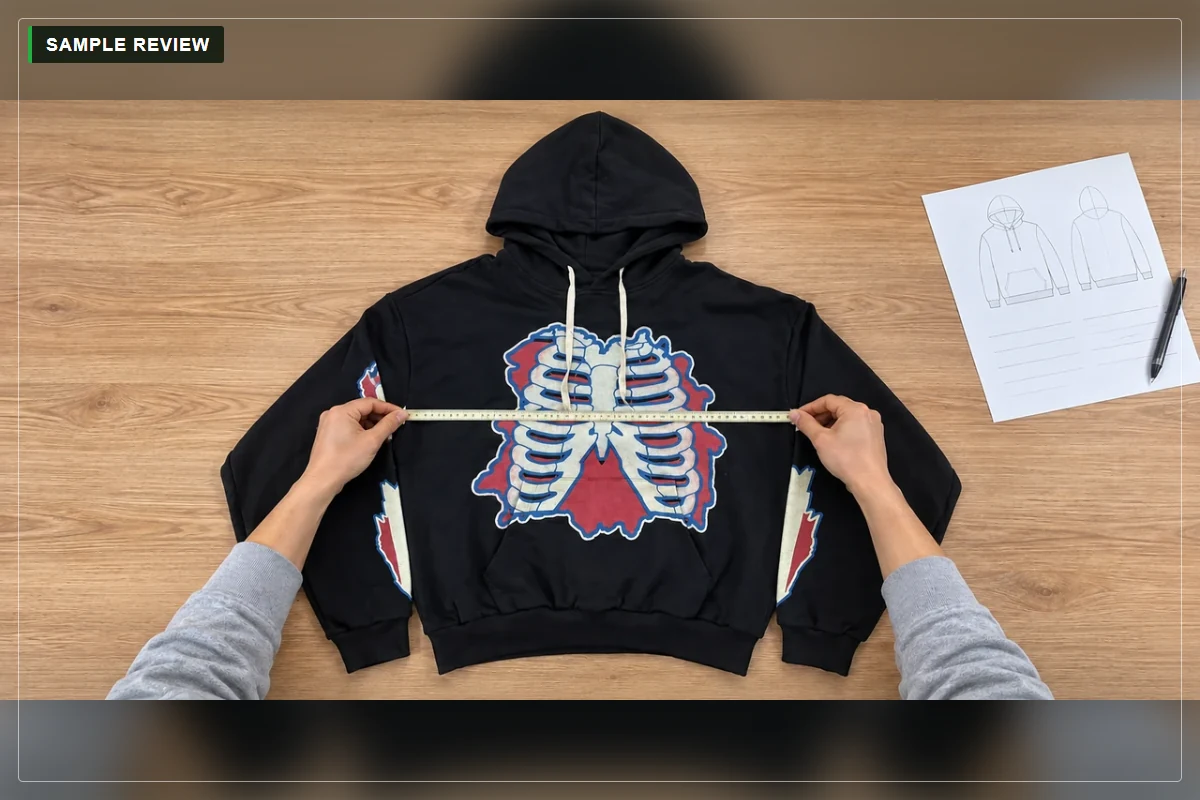
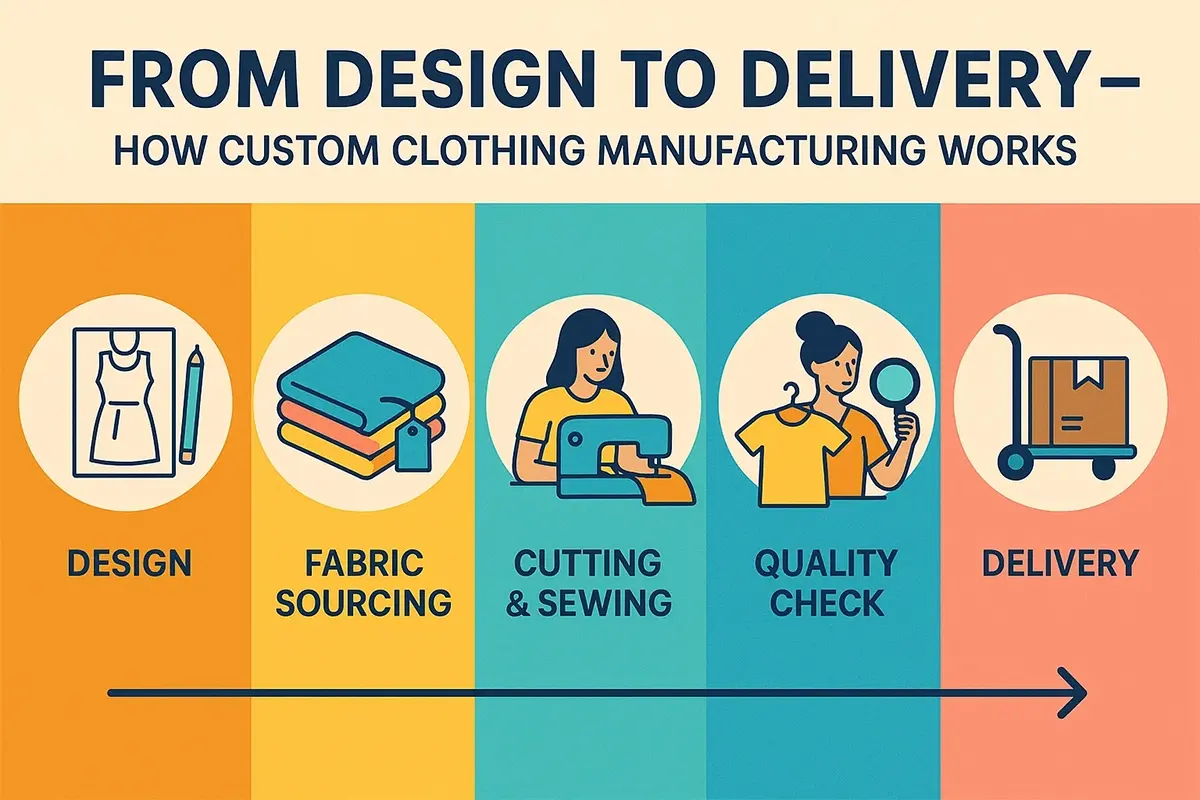
Never silently overwrite an approved BOM. Update the revision, date, changed rows and approver, then confirm that the tech pack, sample record, cost sheet and purchasing information point to the same version. Mingxing's custom clothing manufacturing process shows where development approval connects with material purchasing and bulk production.
When a supplier proposes a replacement, record the proposed article, reason, price or lead-time effect and approval result. A substitute should not inherit approval merely because its color looks similar in a message or photo.
Common clothing BOM mistakes
- Vague material names: “grey fleece,” “button” or “metal zipper” cannot identify one controlled component.
- Missing small items: thread, reinforcement, interfacing, tag attachments and packing stickers are easy to omit.
- No placement: the same tape, label or fabric can serve different purposes within one garment.
- Mixed units: meters, kilograms, pieces and rolls are used without a stated conversion.
- One color field for every variant: component colors are assumed rather than mapped to each garment colorway.
- One consumption for every size: size effects are ignored before pattern and marker confirmation.
- Blank cells without ownership: an empty value is mistaken for permission for the factory to decide.
- No sourcing owner: nominated and factory-sourced items are not separated.
- Uncontrolled substitution: a material changes but the sample, cost and BOM revision do not.
- BOM treated as the whole tech pack: measurements, construction and artwork controls are missing.
- Conflicting versions: the BOM, trim card, physical sample and purchase order point to different revisions.
Factory-ready clothing BOM checklist
Brands can begin apparel product development with sketches, references or an early tech pack. The factory can help confirm sourcing, construction and consumption, but the brand should approve the final materials and any proposed alternatives before bulk production.
Frequently asked questions
What does BOM stand for in clothing?
BOM stands for bill of materials. In clothing production, it is the controlled list of fabrics, trims, thread, labels, hardware and packing components required for a garment.
Is a clothing BOM the same as a tech pack?
No. The BOM is usually one part of the tech pack. The full tech pack can also include technical drawings, measurements, grade rules, construction instructions, artwork, placement and revision information.
What should be included in an apparel BOM?
Include every controlled physical component plus enough information to identify, source and place it. Typical fields include item code, category, specification, supplier reference, color, placement, unit, consumption, variant applicability and approval status.
Does a clothing BOM include labels and packaging?
It commonly includes labels and individual packing materials. Some companies manage carton details or complete packing instructions in a separate controlled specification. The important point is that ownership is clear and the documents do not conflict.
Do I need exact fabric consumption before the first sample?
Not always. Early consumption can be provisional when the final pattern, fabric width or marker is not available. Mark it as provisional or TBC, state the calculation basis and assign the confirmation milestone.