Why Clothing Manufacturers Reject Projects
Many apparel brands assume that if they are willing to pay, a manufacturer will accept their project.
In reality, factories reject potential orders every day.
This does not necessarily mean the project is bad. In many cases, the project simply does not fit the factory’s production model, capabilities, or business requirements.
Understanding why projects get rejected can help you work more effectively with an experienced OEM clothing factory and improve your chances of finding the right manufacturing partner.
Quick Answer: Why Do Manufacturers Reject Projects?
Most clothing manufacturers reject projects for one or more of the following reasons:
- The MOQ is too low
- Product requirements are unclear
- Product development is too complex
- The delivery timeline is unrealistic
- The project does not match the factory’s expertise
- Communication creates too much production risk
The good news is that many of these issues can be solved before contacting a manufacturer.
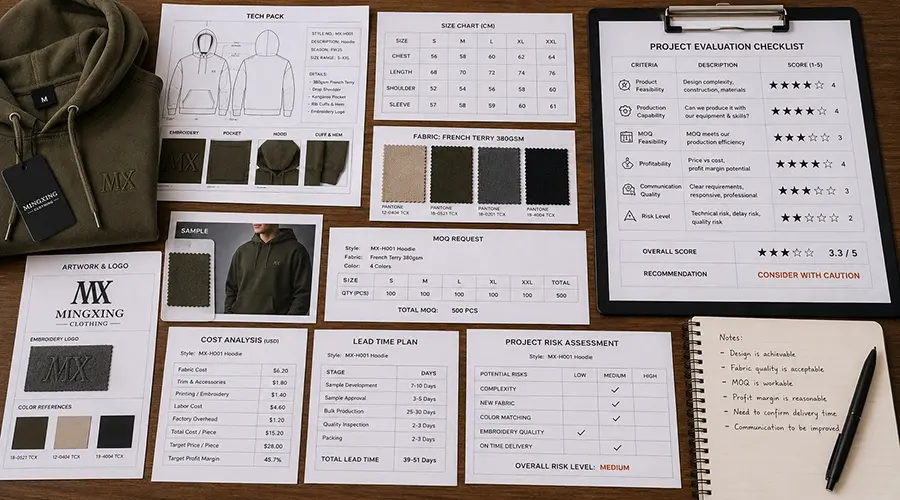
Factory Perspective: How Manufacturers Evaluate New Projects
Before accepting a project, manufacturers typically ask a simple question:
“Can we produce this project efficiently, profitably, and successfully?”
To answer that question, factories usually evaluate:
- Quantity requirements
- Product complexity
- Fabric and material requirements
- Production timeline
- Profitability
- Product category fit
- Communication quality
If multiple areas create uncertainty or excessive risk, the factory may decline the project even before discussing pricing.
Understanding this evaluation process helps buyers approach manufacturers more effectively.
The 6 Most Common Reasons Manufacturers Reject Projects
MOQ Doesn’t Match Production Requirements
This is one of the most common reasons.
A buyer may request:
- 30 pieces
- Custom fabric
- Custom labels
- Custom packaging
- Multiple colors
While technically possible, the project may not be commercially viable for the factory.
Manufacturers must balance setup costs, labour, material purchasing, and production efficiency. If the quantity is too low, the factory may decline the project.
Product Information Is Incomplete
Many inquiries arrive with very little information.
For example:
- No tech pack
- No size chart
- No fabric details
- No logo files
- No reference images
Without sufficient information, a factory cannot accurately evaluate the project.
The more complete your project information is, the easier it becomes for manufacturers to provide realistic feedback and quotations.
Product Development Is Too Complex
Some buyers attempt to develop highly customised products with very limited budgets or quantities.
Examples include:
- Custom fabrics
- Special washes
- Complex embroidery
- Multiple trims
- Unique garment construction
Complex projects require more development time, more sampling work, and greater production risk.
Not every factory is willing to take on that risk.
The Timeline Is Unrealistic
Factories operate on production schedules.
Projects that normally require:
- 10–15 working days for samples
- 30–35 working days for bulk production
cannot usually be completed in a fraction of that time.
When delivery expectations are unrealistic, many manufacturers prefer to decline the project rather than make promises they cannot keep.
The Factory Is Not the Right Fit
Not every manufacturer specialises in the same products.
Examples include:
- Activewear manufacturers
- Streetwear manufacturers
- Fashion apparel manufacturers
- Uniform manufacturers
A factory may be reliable and experienced but still be the wrong choice for your specific product category.
Reviewing a supplier’s apparel manufacturing experience before requesting quotations can save significant time for both sides.
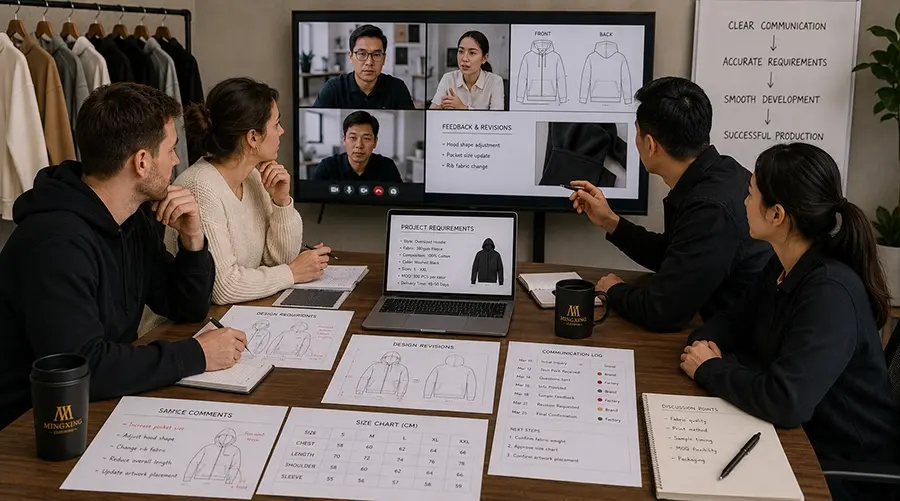
Communication Creates Too Much Risk
Factories look for reliable customers just as buyers look for reliable suppliers.
Common concerns include:
- Constantly changing requirements
- Incomplete information
- Unclear expectations
- Frequent design changes
When communication creates excessive uncertainty, manufacturers may decide not to proceed.
Which Problems Can Be Fixed and Which Cannot?
Not every rejection means the project is impossible.
Some issues can be resolved relatively easily, while others may require finding a different manufacturing partner.
Reason: Can It Be Fixed?
| Reason | Can It Be Fixed? |
|---|---|
| Low MOQ | ✅ Usually |
| Missing Tech Pack | ✅ Yes |
| Incomplete Product Information | ✅ Yes |
| Unrealistic Timeline | ✅ Usually |
| Communication Problems | ✅ Usually |
| Wrong Factory Type | ❌ Often No |
| Product Outside Factory Expertise | ❌ Often No |
Understanding the difference can help you decide whether to improve the project or continue searching for a more suitable supplier.
How to Improve Your Approval Chances
The projects most manufacturers prefer are usually easy to evaluate and easy to execute.
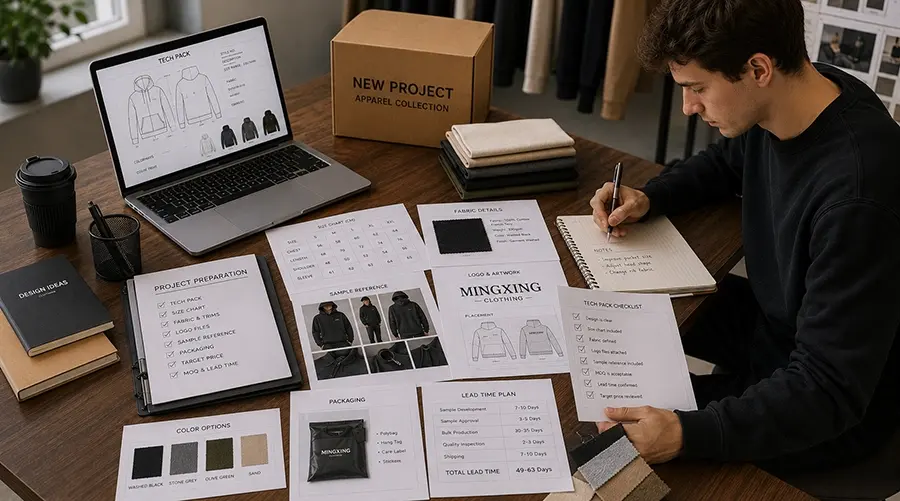
Before contacting factories, prepare:
- Tech pack
- Size chart
- Reference images
- Fabric requirements
- Quantity estimates
- Logo files
- Target delivery timeline
Clear information reduces uncertainty and increases the likelihood of receiving positive responses.
Project Evaluation Framework
| Evaluation Area | What Manufacturers Look For |
|---|---|
| MOQ | Commercially viable quantities |
| Product Information | Complete and accurate details |
| Product Complexity | Realistic development requirements |
| Timeline | Achievable production schedule |
| Product Category | Match with factory expertise |
| Communication | Clear and consistent requirements |
The more areas you satisfy, the more attractive your project becomes.
Before Contacting Any Manufacturer
Use this quick checklist before sending inquiries.
✓ Do you have a tech pack or clear reference images?
✓ Do you know your target quantity?
✓ Have you defined fabric requirements?
✓ Is your timeline realistic?
✓ Does the factory specialise in similar products?
✓ Can you clearly explain your project?
Completing these steps often improves response quality and approval rates.
Can a Rejected Project Become Approved Later?
Absolutely.
Many projects are rejected because they are not ready yet, not because they are impossible.
For example:
- Increasing the quantity
- Simplifying customization
- Providing better documentation
- Adjusting timelines
can often transform a rejected project into an acceptable one.
In many cases, improving project readiness is enough to change the outcome.
Ready to Discuss Your Clothing Project?
Manufacturers are more likely to support projects that are well prepared and commercially realistic.
If you’re planning a new clothing line and would like feedback on your product requirements, quantities, and development options, Contact Mingxing Clothing.
FAQs
Will clothing manufacturers work with startup brands?
Yes. Many factories work with startups when project requirements are realistic and aligned with production capabilities.
Is low MOQ the main reason projects get rejected?
It is one of the most common reasons, but incomplete information and unrealistic expectations are also major factors.
Why do some factories stop replying after the first conversation?
In many cases, the factory does not have enough information to evaluate the project or believes the project is not a suitable fit.
Do manufacturers reject projects from first-time buyers?
Not usually. Most factories care more about project readiness and commercial viability than whether the buyer is new.
Can I approach the same factory again after being rejected?
Yes. If the project becomes better prepared or more commercially viable, many manufacturers are willing to reconsider it.
Share With
Related Articles
Hot Products