Choosing a leather jacket manufacturer in China starts with the material route, not the supplier list. A genuine-hide program, a PU or faux-leather fashion jacket, and an OEM design developed from a tech pack require different sourcing evidence, sample checks and repeat-order controls.
This guide compares ten suppliers using their published leather or jacket services, then shows how to assess hides, coated materials, fit, lining, hardware, workmanship, testing, packing and bulk consistency. Mingxing Clothing appears first as the publisher. The order is for presentation and is not an independent quality ranking.
How this guide was prepared: Supplier-published product and service information was reviewed in October 2026. Public pages show what each business says it offers, but they do not independently prove factory ownership, leather grade, certifications, capacity, quality or the commercial terms that will apply to your order. Website screenshots retained from the earlier article may show older page layouts.
Mingxing Clothing
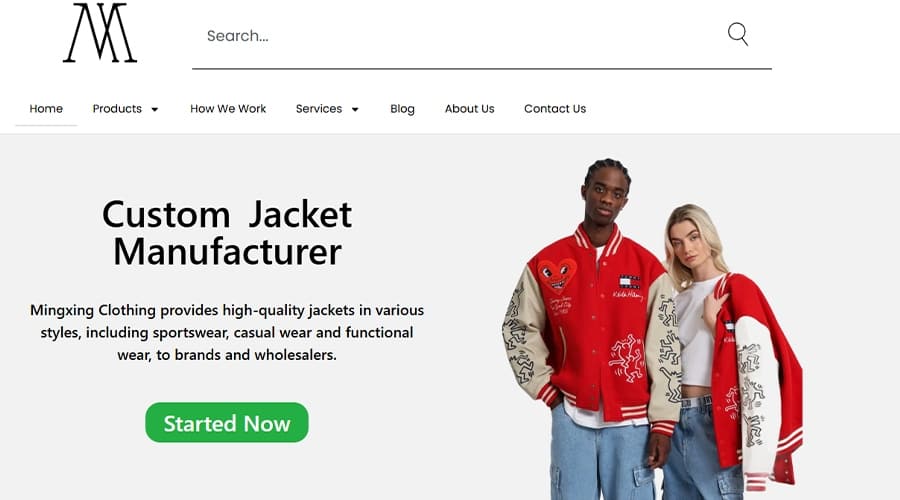
Mingxing Clothing publishes made-to-order jacket development for genuine leather, PU and suede-look directions, together with custom fit, lining, panels, zippers, trims, decoration, private labels and packaging. The service is aimed at OEM and ODM programs rather than ready-stock leather jackets or dropshipping.
What to confirm: Name the exact shell material and backing, intended finish, thickness or weight range, lining, insulation, hardware and target fit. Ask the quotation to identify any material assumption or substitute, then approve a complete sample made with the intended production materials before bulk cutting.
Buyers can review Mingxing’s custom leather jacket options while preparing the material and sample brief.
JIMJACKETS
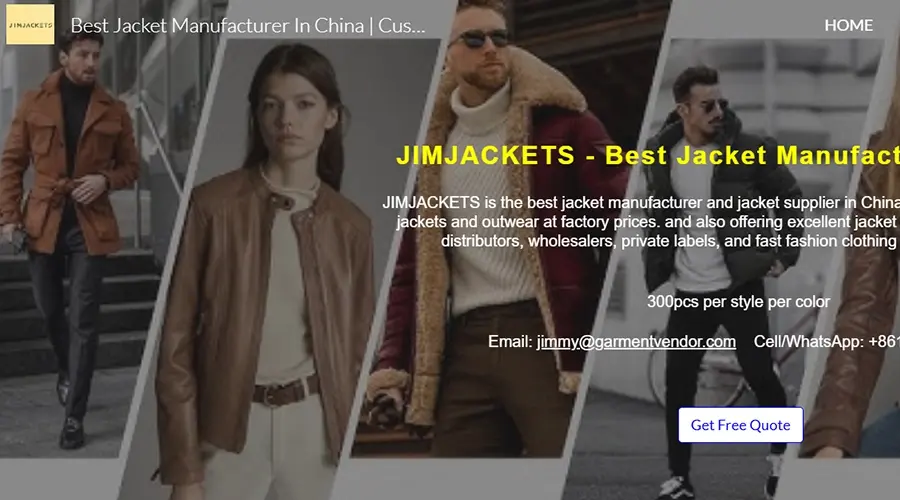
JIMJACKETS presents custom leather-jacket OEM, ODM and private-label services for biker, bomber, varsity, oversized and other silhouettes. Its public page describes development choices including material, pattern, color, hardware, lining, stitching, pockets, labels and packaging.
What to confirm: Request the legal material description rather than the word “leather” alone. Confirm whether the quote uses genuine hide, PU, another coated textile or a mixed construction; identify the production entity and location; and approve the exact zipper, snap, lining and branded trim on the sample.
Fangyuan
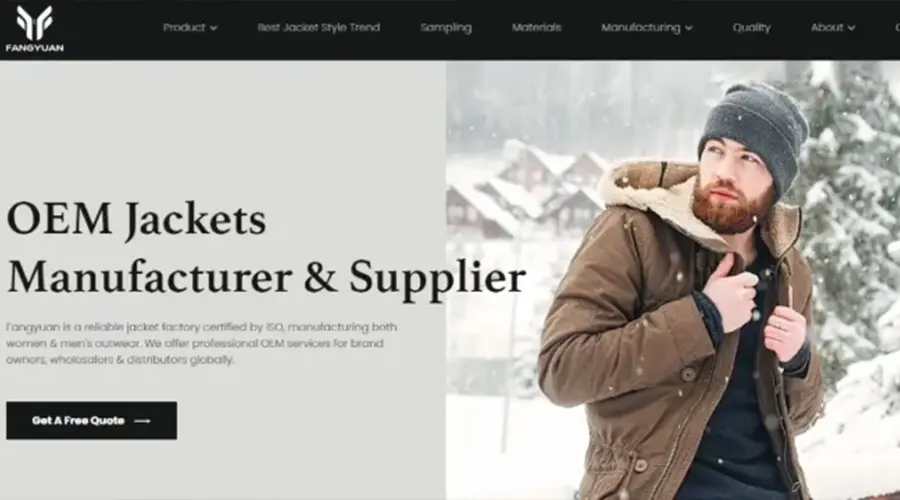
Fangyuan presents OEM outerwear manufacturing across several jacket categories and includes leather jackets in its published range. It may be useful for buyers comparing a leather or leather-look style alongside a wider outerwear program.
What to confirm: Because the public range is broader than leather alone, request recent production evidence for a jacket close to your material and construction. Confirm whether hide selection, leather cutting and edge finishing are handled at the quoted site or by a specialist partner, and ask who is responsible for material and final-garment inspection.
Dalian Takka Fashion
Dalian Takka Fashion’s official site describes leather-garment production as its main specialization and also presents knitted parts, fabric garments and accessories. That combination may suit leather bombers or mixed-material styles that require rib, lining or textile components.
What to confirm: Ask which legal entity and production line will make the order, what leather or coated material is proposed, and which components are produced in-house or sourced. Review shade grouping, panel matching, rib recovery and trim compatibility on a pre-production sample.
DANIFIEL
DANIFIEL publicly focuses on men’s genuine leather jackets in Haining and describes OEM, ODM, private-label and wholesale programs using goatskin, full-grain cowhide and sheepskin. Its published focus makes it relevant to buyers seeking a genuine leather manufacturer rather than a general fashion-jacket supplier.
What to confirm: Request the species, grain or split description, finish, thickness range, origin information available for the hides, and the documents that will accompany the order. Approve the range of natural grain, scars and shade variation that is acceptable across panels and finished jackets.
Danke Leather
Danke Leather presents private-label jackets and coats in traditional leather as well as vegan or faux-leather categories. Its public range can help a buyer compare genuine-hide and synthetic routes with one potential supplier.
What to confirm: Treat “vegan,” “eco leather” and “faux leather” as marketing descriptions until the exact substrate, coating, fiber content and test evidence are stated. For genuine leather, request hide details and traceability; for coated materials, confirm thickness, backing, surface finish, flexing and hydrolysis expectations for the target market.
QYOURECLO
QYOURECLO publishes custom development for leather and leather-look jackets from a tech pack, reference garment or images. Its service information covers pattern shape, lining, hardware, labels, packaging, patches, embroidery and other streetwear or private-label details.
What to confirm: Ask which materials and jacket operations the quoted production site handles regularly. Put shoulder shape, armhole depth, chest ease, sleeve pitch, body length, lining construction and hardware placement into the measurement and construction specification, then review them during movement and layering tests.
Valtin Apparel
Valtin Apparel presents a broad custom-jacket service that includes leather styles and PU leather, along with silhouette development, insulation, zippers and private labeling. It is more relevant to a mixed outerwear or leather-look program than to a buyer who requires a proven genuine-hide specialist.
What to confirm: Identify whether the proposal is genuine leather, PU or another leather-look material and request a physical swatch before sampling. Confirm lining, insulation, closure specifications and the factory or partner responsible for the quoted jacket.
Lever Style
Lever Style presents a Pan-Asian apparel manufacturing network and lists leather and outerwear among its product categories. This model may interest established buyers who want sourcing coordination across a wider product portfolio rather than one small leather-jacket line.
What to confirm: The network spans more than one country, so ask which production site, contracting entity and material supplier will handle the order. Request site-specific capability, compliance documents, sample responsibility and a clear approval path for any subcontracted process.
Dixiao
Dixiao presents custom jacket manufacturing in China and includes leather jackets within a broader OEM outerwear service. Its public positioning is relevant to fashion brands that want to compare leather-look or mixed-material jackets with other jacket categories.
What to confirm: Request current examples using the same shell type, lining and hardware complexity as your design. Confirm the exact material specification, where specialized leather operations occur, who owns the pattern and approved sample records, and how bulk materials will be matched to the approved lot.
Compare the suppliers at a glance
The table summarizes each supplier’s published route and the item a buyer should verify before shortlisting. It does not replace a quotation, material review, sample, audit or inspection.
Swipe horizontally to read the full table.
| Supplier | Published route | What to verify |
|---|---|---|
| Mingxing Clothing | OEM/ODM leather, PU and suede-look jackets | Exact material, construction and production-material sample. |
| JIMJACKETS | Custom leather-jacket OEM, ODM and private label | Legal material description, production entity and branded trims. |
| Fangyuan | Broad OEM outerwear range including leather jackets | Recent relevant work and responsibility for leather processes. |
| Dalian Takka Fashion | Leather garments plus textile and knitted components | Site, material, panel matching, rib and trim controls. |
| DANIFIEL | Men’s genuine leather OEM, ODM and private label | Hide species, grade description, traceability and variation standard. |
| Danke Leather | Traditional, vegan and faux-leather categories | Exact composition and route-specific material evidence. |
| QYOURECLO | Leather and leather-look private-label development | Production site, pattern balance, lining and hardware specification. |
| Valtin Apparel | Broad custom jackets including PU and leather styles | Material swatch, responsible site, lining and closures. |
| Lever Style | Pan-Asian network listing leather and outerwear | Country, factory, contracting entity and subcontracting controls. |
| Dixiao | Custom OEM jackets with a leather category | Comparable examples, specialized operations and bulk-lot matching. |
Choose genuine leather, PU or another faux leather
A search for a China factory for genuine leather clothing can lead to suppliers using very different material terms. Put the legal composition and construction in the brief before comparing price. “Leather-look,” “vegan leather” and “eco leather” do not identify one material by themselves.
Swipe horizontally to compare the material routes.
| Material route | What changes | Evidence to request |
|---|---|---|
| Genuine leather | Natural grain, shade and thickness variation must be controlled across hides and panels. | Species, grain or split description, finish, thickness range, supplier or tannery information available, lot records and an approved variation standard. |
| PU leather | A textile backing and polyurethane surface create a more uniform fashion material, but performance depends on the coating and backing. | Layer construction, backing fiber, thickness, finish, color standard and appropriate flexing, adhesion, abrasion or hydrolysis evidence. |
| Other faux or leather-look material | The term may cover PU, PVC, bio-based blends or other coated and laminated textiles. | Exact composition, supplier datasheet, claim wording, care method, restricted-substance documents and tests agreed for the intended market. |
Compare cowhide, sheepskin and goatskin by the finished result
Cowhide is often selected when the design needs more body, while sheepskin can produce a lighter, softer hand and goatskin can balance flexibility with a distinct grain. These are useful starting points, not grades. Tanning, finish, thickness, hide selection and panel matching can change the result, so compare actual swatches and finished samples from the proposed lot.
Define grade and traceability in documents
Words such as full grain, top grain, corrected grain, split and bonded describe different constructions, but supplier usage is not always consistent. Ask for the written material name, species, finish, thickness tolerance, source information available, purchase or batch records and any test report required for your market. If origin, recycled content or chemical compliance will appear in marketing, agree exactly what evidence supports the claim.
Build a leather jacket specification suppliers can quote
For buyers comparing a custom leather jacket manufacturer or an OEM leather jacket manufacturer in Asia, the same brief is the fairest way to compare quotations. Record the shell, fit, internal construction, trims and acceptance checks instead of asking for a generic price per jacket.
Control thickness, hand feel, color and batch variation
Set the target thickness or weight range appropriate to the selected material, describe the hand feel and drape, and approve a physical color standard. For natural hides, agree the acceptable grain, marks and shade range and how panels will be grouped. For coated materials, approve gloss, texture, backing and stretch. Ask the supplier how the bulk lot will be compared with the approved swatch.
Specify fit, layering and movement
State whether the jacket is fitted, regular, cropped, oversized or designed for protective layers. Provide chest, shoulder, back width, armhole, sleeve pitch, bicep, cuff, body length and hem measurements by size. During the fitting, check reaching forward, raising the arms, sitting and closing the jacket over the intended layer; a static front photo cannot show mobility.
Define lining, insulation, zippers and hardware
List lining fiber and construction, quilt pattern, insulation type or weight if used, pocket bags, facing, rib and internal labels. Specify zipper brand or performance level, tape and tooth finish, puller, snaps, buckles, eyelets and any branded hardware. Approve function, color and plating together because one substitute can change appearance and durability.
Record seams, reinforcement and edge finishing
Mark seam type, stitch density, topstitch width, reinforcement points, panel joins, pocket construction and stress areas. State whether exposed leather edges are painted, folded, bound, skived or left raw, and approve the edge color and finish. Inspect symmetry, skipped stitches, puckering, needle damage and lining attachment on the physical sample.
Place branding without weakening the jacket
Provide dimensions and placement for embroidery, patches, embossing, print, metal badges and custom pullers. Test the decoration on the actual shell because needle holes, heat, pressure and adhesives affect genuine hide and coated synthetics differently. Keep label, care and packaging artwork in the same approval record.
If the material or construction is still open, use the apparel product development process to organize swatches, trims, pattern work and sample decisions before requesting final bulk pricing.
Approve the sample and testing plan before bulk cutting
Use staged approval when the material is expensive or difficult to replace. Start with a shell swatch and color standard, review a fit sample when necessary, then approve a pre-production jacket using the intended shell, lining, hardware, branding and packaging. Record every revision in one signed specification rather than relying on chat messages.
Agree tests according to the material, end use and destination market. Relevant checks may include colorfastness to rubbing, finish adhesion, flexing, abrasion, seam strength, zipper or snap function, lining performance and restricted substances. A PU or faux-leather jacket may also need an agreed aging or hydrolysis test. Name the method, laboratory, sample source and pass criteria in writing; do not accept a generic “tested” claim.
Before shipment, inspect measurements, panel shade, surface defects, seam and edge finishing, lining, pockets, hardware operation, branding and packing against the approved sample. Define the inspection level, defect categories and remedy before production begins.
Plan packing, moisture control and repeat orders
Leather and coated materials should be packed only after the finish is stable and the garment is dry. Agree folding, protective tissue or sleeves, hardware protection, ventilation, carton lining and any moisture-control material for the shell and transit conditions. Confirm carton storage and shipping route, and avoid packing a damp jacket into a sealed environment where odor, transfer, mildew or surface damage can develop.
For repeat orders, keep a sealed reference swatch and approved jacket together with the material code, supplier, lot, finish recipe, pattern version, hardware codes, lining, thread, labels and packing specification. If the original material is unavailable, require a new swatch and risk review before accepting a substitute. Matching a product name alone does not guarantee the same color, hand or performance.
Chinese leather jacket brands and manufacturers are different searches
Someone searching for Chinese leather jacket brands may want a consumer label and a finished jacket to buy. A sourcing buyer needs the legal supplier, production site, material route, development service, commercial terms and evidence behind a private-label order. A brand may outsource production, while a manufacturer may not sell a consumer collection.
Use brand searches for design and market research, but use manufacturer and factory terms to build the production shortlist. Then verify the actual contracting entity and site rather than assuming that every China leather jacket seller owns the factory shown on its website.
Use one leather jacket brief to compare ten suppliers
Send each supplier the same tech pack or reference, size chart, material route, color standard, acceptable variation, lining, insulation, hardware, branding, labels, packaging, quantity by color and size, testing needs and destination market. Ask the supplier to return the brief with every assumption, exclusion and substitute marked.
Compare the written response, material evidence, sample and inspection plan together. The lowest headline price is not comparable if it uses a different hide grade, PU construction, zipper, lining, test plan or packing method.
Your next step
Turn your leather jacket reference into a sample-ready brief
Send the jacket style, fit reference, genuine or faux-leather direction, lining, hardware, branding and estimated quantity. We will review what is defined and identify the decisions still needed before sampling.
Frequently asked questions
How do I choose a leather jacket manufacturer in China?
First decide whether the shell will be genuine leather, PU or another faux-leather material. Give shortlisted suppliers the same measurements, material specification, lining, hardware, branding, quantity and testing brief. Compare their written assumptions, material evidence, production site and a complete approved sample before choosing.
What is the difference between genuine leather, PU and faux leather jackets?
Genuine leather is made from animal hide and naturally varies in grain, shade and thickness. PU leather usually uses a textile backing with a polyurethane surface. Faux leather is a broader term that may include PU, PVC, bio-based blends or other leather-look materials, so the exact composition must be stated.
How can a buyer verify the leather type and grade?
Request the written species, grain or split description, finish, thickness range, supplier or tannery information available, batch records and relevant test reports. Compare those documents with a physical swatch and the finished sample. Use an independent laboratory when a material claim is important to compliance or marketing.
What should be approved in a leather jacket sample?
Approve the shell material and acceptable variation, color, fit and movement, measurements, lining or insulation, seams, edge finishing, pockets, zippers, snaps, branded trims, decoration, labels and packaging. Keep the signed specification and approved jacket as the bulk-production reference.
How should leather jackets be packed and controlled for repeat orders?
Pack only dry, stable garments and agree folding, surface and hardware protection, ventilation, carton lining and moisture control for the material and shipping route. For repeat orders, retain the material code, lot, approved swatch, pattern version, trim codes and finished reference; approve any replacement material before production.