Choosing a dress manufacturer in China starts with the dress you need to make. A lightweight shirt dress, a stretch bodycon style, a lined satin occasion dress and a structured corset dress require different fabrics, pattern work, machines, sample checks and finishing standards, even when every supplier describes itself as an OEM factory.
This guide compares ten China dress manufacturers and suppliers using their published services, then turns the shortlist into a practical sourcing process. Mingxing Clothing appears first as the publisher. The remaining order is for presentation and is not an independent quality ranking.
How this guide was prepared: Supplier-published product and service information was reviewed for this update. Public pages show what each business says it offers; they do not independently prove factory ownership, current capacity, certifications, quality or the commercial terms that will apply to your order. Confirm the legal entity, production site, materials, sample process and quotation before placing an order.
How we compared the dress manufacturers
The shortlist starts with relevance to custom dresses and womenswear, then examines the production route each supplier publishes. A useful profile should help buyers understand what the supplier may be suited to and what still requires direct verification.
- Dress focus: casual, shirt, bodycon, maxi, occasion, evening, active or broader womenswear.
- Development support: tech-pack review, pattern work, grading, fabric sourcing, samples, decoration and packaging.
- Production evidence: named manufacturing base, process information, quality controls and relevant dress examples.
- Buyer fit: the dress program the published capability appears most relevant to.
- Items to verify: site, MOQ, lead time, fabric, lining, closures, subcontracting, inspection and repeat-order control.
Mingxing Clothing

Mingxing Clothing publishes made-to-order dress development for casual, maxi, wrap, shirt, knit, woven and occasionwear directions. Its current service page covers cotton, linen, chiffon, satin, crepe, rayon and stretch blends, together with pattern development, fit review, lining, cups, boning, zippers, printing, embroidery, labels and packaging. This route may suit brands that need an OEM or ODM program developed from a tech pack, reference garment or design direction rather than ready stock or dropshipping.
What to confirm: Define the silhouette, target fit, base-size measurements, fabric, lining, closure, trims, decoration and order split. Mingxing currently publishes a 100-piece MOQ per design and color, a 10–15-working-day sample estimate and a 25–30-working-day bulk estimate. Request a dated EXW quotation because fabric availability and construction can change the final schedule and price.
Review the custom dress manufacturing options before preparing the sample brief.
H&Fourwing

H&Fourwing presents a specialist women’s apparel route covering fluid bias-cut dresses, structured and fully lined styles, placement prints, embroidery, hand beading and tassel details. Its public information describes fabric sourcing, pattern development, sampling, production and final quality control, with a starting MOQ of 200 pieces per color and style. The published focus may suit premium fashion collections where fit, drape, tailoring or decorative execution requires more attention than a basic cut-and-sew dress.
What to confirm: Request current examples using the intended fabric, lining and construction. Confirm sample stages, material minimums, handwork tolerances, inspection responsibility and whether specialist embellishment is completed internally or by an approved partner.
Hongyu Apparel
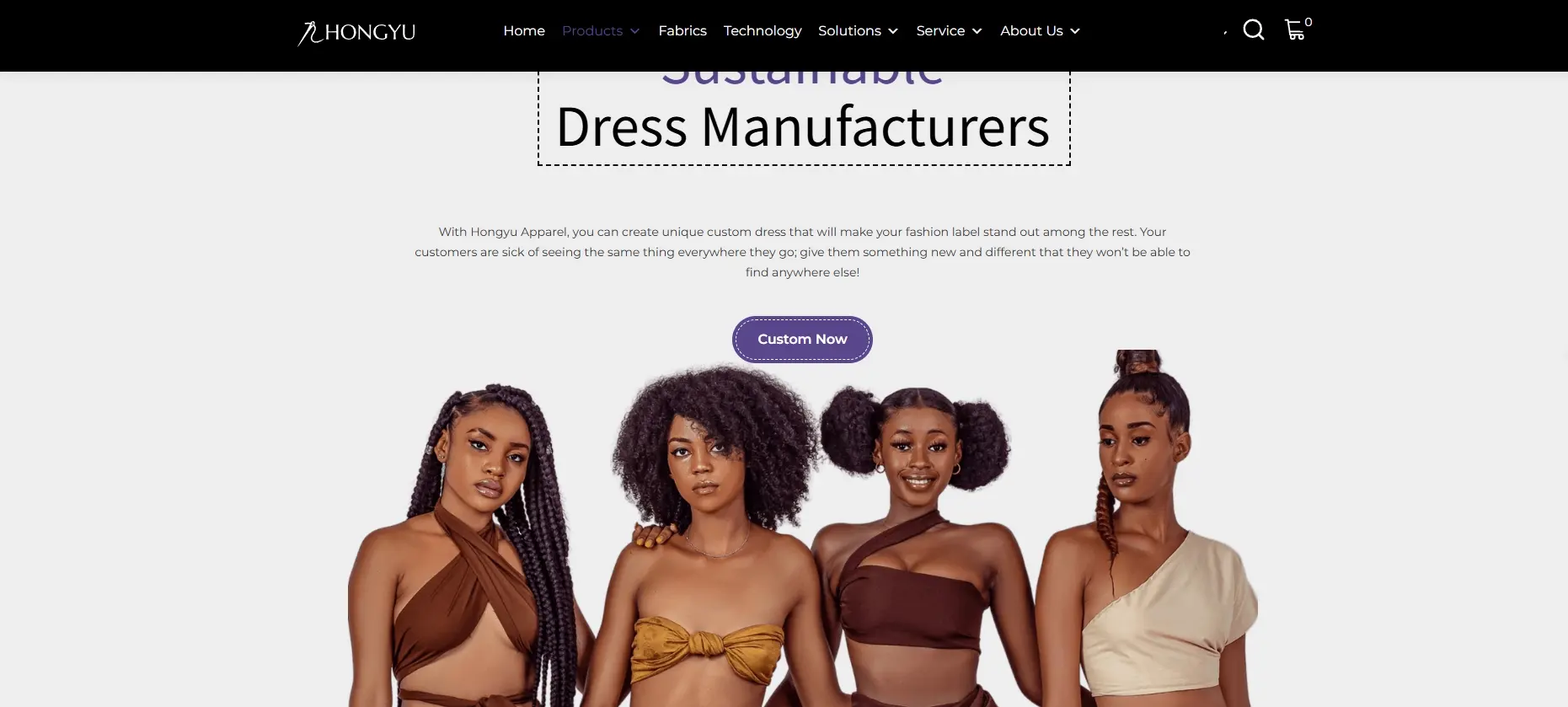
Hongyu Apparel publishes broad cut-and-sew private-label manufacturing that includes dresses, material sourcing, pattern work, samples, labels, tags and packaging. Its current information separates ready-made wholesale, logo customization and original cut-and-sew development. For cut-and-sew projects, it publishes a 100-piece MOQ per design and color, sample timing around 8–15 days and bulk timing around 24–30 days. This broader route may suit collections that combine dresses with tops, sets or other apparel categories.
What to confirm: State whether the project uses an existing base, a modified style or an original pattern. Ask Hongyu to separate the MOQ, sample route, fabric assumptions, production site and inspection responsibility for the exact dress instead of applying one general service description.
MGOO Fashion

MGOO Fashion presents two routes: customizable ready blanks and fully bespoke OEM or ODM manufacturing. Its bespoke service covers concept review, development, material sourcing, pattern and fit work, production and private-label presentation across several apparel categories. This model may suit brands developing dresses alongside a wider collection, but broad multi-category capability does not by itself prove experience with a specific lined, bias-cut, corseted or embellished dress.
What to confirm: Identify the legal contracting entity, assigned production site and any partner factory used for specialist dress work. Request recent examples using comparable fabric and construction, then approve the pattern, fit, lining, trims, quantity split, testing and packaging in writing.
Yotex Apparel

Yotex Apparel currently focuses on functional apparel, activewear, sportswear and related knit categories rather than broad fashion dresses. Its published services include product development, fabric sourcing, pattern opening, sampling, bulk manufacturing, inspection and private-label packaging. The clearest dress-related fit is therefore a stretch tennis dress, active dress, built-in-short style or coordinated performance collection rather than a structured woven occasion dress.
What to confirm: Request recent samples using the same knit, stretch level, opacity, support construction and silhouette. Confirm fabric recovery, shrinkage, seam type, built-in components, grading, production location and whether the quoted minimum applies by style and color. Woven, lined or embellished projects need separate evidence.
Yaroad Clothing

Yaroad Clothing publishes private-label support covering sample making, pattern work, fabric sourcing, grading, bulk production, quality control and packing across custom clothing categories. Its public FAQ states that most production starts around 300 units per style and color and that samples are commonly completed in one to two weeks. This route may suit buyers that can meet a larger style-color minimum and want dresses developed within a broader private-label workflow.
What to confirm: Request dress examples using comparable knit or woven materials and confirm whether the published MOQ applies per style and color. Document the base-size fit, grading, lining, closure, label, packaging and approved sample before bulk production begins.
MMS Clothing

MMS Clothing presents custom design, OEM or ODM production, quality checks and delivery support from Chengdu. Its public information promotes very low opening quantities for some projects and gives a broad 30–60-day reference for bulk orders. The route may interest early-stage buyers, but fabric minimums, original pattern work, grading, dress complexity and commercial viability can make the practical minimum higher than the headline figure.
What to confirm: Ask whether the quoted quantity uses a ready base or an original custom pattern. Request comparable dress samples, production-site information and a quotation that separates development, garment, labels, packaging, testing and delivery costs.
Arlisman Garment

Arlisman Garment publishes OEM and ODM development across knit and woven clothing, with current public categories more strongly associated with menswear and casual apparel than specialist women’s dresses. Its broader manufacturing route may still interest buyers combining straightforward dresses with shirts, trousers or casual collection pieces. Because dress specialization is not the clearest part of its public positioning, the supplier should be screened through direct product evidence rather than a general factory claim.
What to confirm: Request recently produced women’s dresses using comparable fabric and construction. Confirm the pattern team’s womenswear experience, base-size fit, grading, lining, invisible zipper, pressing, finishing and final inspection. Do not assume that general apparel experience automatically covers fit-sensitive dresses.
Valtin Apparel

Valtin Apparel publishes custom womenswear and dress manufacturing from concept and material sourcing through pattern work, sampling, revisions, bulk production and quality control. Its dress information covers customizable women’s clothing, a sample estimate of 7–15 days and opening quantities described as low as 100 pieces. This route may suit growing fashion brands seeking casual, fashion-led or occasion dresses with fabric, fit and decoration support.
What to confirm: Ask whether the published minimum applies per style and color and whether the selected fabric is stock, mill-order or custom dyed. Approve the base pattern, size grading, lining, closures, trims and production-material sample before bulk cutting.
ODMYA

ODMYA presents large-scale OEM and ODM garment manufacturing and publishes a dedicated dress category covering casual, evening and work-dress directions in multiple fabrics. Its dress page states an MOQ of 100 pieces and describes design, material procurement, production and delivery support. The published model may suit buyers seeking a broader manufacturing organization, but the actual factory, line allocation and dress-specific quality controls should be confirmed for the quoted program.
What to confirm: Request comparable recent dress examples and identify the exact production site assigned to the order. Confirm the style-color MOQ, sample stages, material source, pattern and grading responsibility, subcontracted operations, inspection plan and the approved sample that will control bulk production.
Quick comparison of the ten suppliers
The table summarizes each supplier’s published focus and the first point a buyer should verify. It is a shortlisting aid, not a substitute for a current quotation, physical sample, audit or inspection.
Swipe horizontally to read the full table.
| Supplier | Published Focus | Potential Buyer Fit | Confirm First |
|---|---|---|---|
| Mingxing Clothing | Custom knit and woven dresses, OEM/ODM | Private-label dress collections | Fabric, fit, construction, MOQ and dated EXW schedule |
| H&Fourwing | Premium women’s dresses and complex details | Designer and premium collections | Material minimums, handwork and inspection responsibility |
| Hongyu Apparel | Broad cut-and-sew apparel including dresses | Multi-category private-label collections | Custom route, site and dress-specific evidence |
| MGOO Fashion | Blanks plus bespoke OEM/ODM development | Multi-category fashion brands | Assigned site, comparable dresses and subcontracting |
| Yotex Apparel | Functional apparel and stretch categories | Active and tennis dresses | Dress examples, fabric recovery, MOQ and site |
| Yaroad Clothing | Private-label custom clothing | Programs able to meet larger style minimums | MOQ by color, fit, grading and closures |
| MMS Clothing | Custom clothing with flexible entry routes | Early-stage product development | Original-pattern MOQ, site and complete costing |
| Arlisman Garment | General knit and woven apparel | Straightforward dresses in mixed collections | Current womenswear evidence and pattern capability |
| Valtin Apparel | Custom dresses and womenswear | Fashion-led growing brands | Style-color MOQ, fabric route and grading |
| ODMYA | Large-scale multi-category OEM/ODM | Commercial dress programs | Exact production site, line allocation and QC plan |
China dress manufacturer, factory or supplier?
Search results use these terms loosely. A China dress factory normally refers to the site that cuts, sews, finishes and packs the garment. A manufacturer may operate that site or manage production through more than one facility. A China dress supplier may add product development, sourcing, quality control and export coordination while using a partner factory.
None of the labels is automatically better. Ask for the legal contracting entity, the address where the order will be produced, the processes completed there, any subcontracted operation and the person responsible for final quality. If a factory video, audit or certificate is part of the decision, make sure it identifies the same entity and site named in the quotation.
Match the supplier to the dress type
Casual, shirt and day dresses
Define the base fabric, opacity, shrinkage, seam construction, placket, collar, sleeve, pocket, hem and intended ease. For washed cotton, linen or rayon styles, approve the finished-garment measurements and appearance after the planned wash or pressing process.
Stretch, bodycon and active dresses
Specify stretch in both directions, recovery, fabric weight, opacity, compression, seam type and any built-in bra, shorts or support panel. Test the actual color because lighter shades may require a lining or different fabric weight.
Maxi, bias-cut and fluid dresses
Control grain direction, panel balance, hanging growth, hem level, drape and lining compatibility. Long or bias-cut styles should be allowed to relax before final hemming, and the measurement method must state how the garment is positioned.
Evening, corset and embellished dresses
Define cups, boning, underwire, lining, mesh, closure, support points and skin-contact comfort. Beading, sequins, lace, appliqué and handwork require placement references, attachment tolerances, weight review and an inspection method agreed before production.
Prepare one dress brief for every shortlisted supplier
Use the same brief so quotations are comparable. Include a tech pack or clear reference, intended customer and fit, base-size measurements, grading rules, fabric, lining, closures, internal support, trims, decoration, labels, packaging, quantity by color and size, destination market, testing and target date.
- Mark every specification that is fixed and every point where the supplier may propose an alternative.
- Ask the supplier to return the brief with assumptions, exclusions and substitutes highlighted.
- Separate sample charges, fabric minimums, tooling, testing, labels, packaging and freight from the unit price.
- Request a production timeline with approval deadlines rather than one undivided lead-time promise.
If important specifications are still open, use the product development process to organize fabric, pattern, fit, trims and sample decisions before requesting final bulk pricing.
Approve fit and construction before bulk production
A dress sample should be reviewed on a suitable fit model or body form, not only laid flat. Check bust, waist, hip, shoulder, armhole, neckline, sleeve movement, length, hem balance, closure and ease. Review whether the fabric drapes as intended and whether the lining, zipper, seams and internal support hold the silhouette without pulling, twisting or showing through.
A photo sample can show appearance, but it cannot prove fit, movement, fabric recovery, lining comfort or closure function. Record each correction in one approval log and identify the pattern version used for the next sample. The final pre-production sample should use approved production materials wherever possible.
Control bulk production and repeat dress orders
Approve a production-material sample when the fabric, lining, stretch, print, dye lot or embellishment can vary. During bulk production, check incoming fabric, shade grouping, cut components, first output, measurements, workmanship and packing rather than waiting for the final cartons.

For repeat orders, retain the fabric code, approved color, lining, pattern version, zipper and trim codes, thread, labels, packaging and approved garment. If a material becomes unavailable, require a new swatch, compatibility review and written approval. A similar material name does not guarantee the same color, drape, opacity, shrinkage or recovery.
Use the same decision record for all ten suppliers
Score each response against the same criteria: relevant dress evidence, material specification, sample quality, pattern and fit capability, communication, price completeness, timing, production-site transparency, inspection plan and repeat-order control. Record unanswered questions and substitutions instead of relying on a general impression of the website.
The strongest shortlist is usually small. Send two or three suppliers the same final brief, compare the resulting samples and keep one approved specification as the reference for bulk production.
YOUR NEXT STEP
Turn your dress idea into a sample-ready brief
Send the silhouette, fit reference, fabric, lining, closures, trims, branding and estimated quantity. We will review what is defined and identify the decisions still needed before sampling.
Frequently asked questions
How do I choose a dress manufacturer in China?
Match suppliers to the exact dress type, then send the same fabric, construction, fit, quantity, testing and packaging brief. Compare their written assumptions, production site, relevant examples and a physical sample before choosing.
What is the typical MOQ for custom dress manufacturing?
MOQ varies by fabric, color, construction and supplier. Published starting quantities can range from small development runs to 200–300 pieces per style or color. Mingxing’s standard MOQ is 100 pieces per design and color, with a 50-piece startup trial considered for suitable projects.
What should a custom dress quotation include?
It should identify the fabric, lining, closures, trims, decoration, labels, packaging, size and color split, MOQ, sample charges, testing, unit price, payment terms, approval deadlines, production schedule and delivery basis. Every assumption or proposed substitute should be marked.
What should be checked in a dress sample?
Check bust, waist, hip, shoulder, armhole, neckline, sleeve movement, length, hem balance and overall ease on a suitable fit model. Also review drape, opacity, lining coverage, closure function, seam quality, internal support, decoration placement and measurements against the approved specification.
How can I verify a Chinese dress manufacturer?
Confirm the legal company, production address, processes completed there, responsible contact and current site-specific documents. Review recent comparable dresses, request a production-material sample, and use a factory audit or independent inspection when the order risk justifies it.