Production problems can happen even after careful planning.
A shipment may be delayed, measurements may be incorrect, or logos may not match approved artwork. The key is not avoiding every problem, but knowing how to respond when issues occur.
Whether you’re working with Mingxing Clothing or another clothing manufacturer, handling problems quickly and professionally can help protect your order, timeline, and budget.
Identify the Problem Before Contacting the Factory
Many buyers react immediately when they discover a problem.
Before contacting the factory, take time to understand exactly what happened.
Gather clear information about:
- What the issue is
- How many pieces are affected
- Whether the issue affects function or appearance
- Whether the issue affects the entire order or only part of it
The more specific you are, the easier it will be to find a solution.
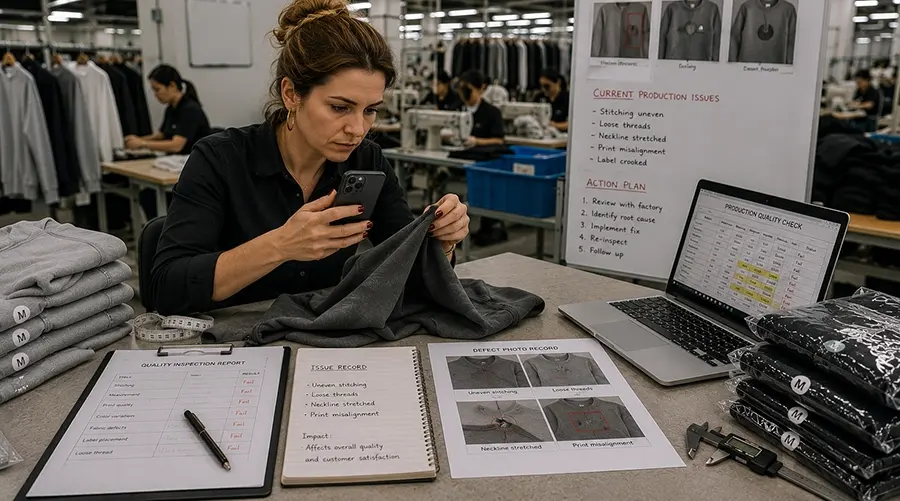
Document the Issue Clearly
Good documentation helps avoid misunderstandings.
Instead of saying:
The quality is bad.
Provide evidence.
Collect These Materials
- Photos
- Videos
- Measurement records
- Quantity reports
- Packaging photos
- Comparison photos against approved samples
Clear evidence helps both parties focus on facts rather than opinions.
Communicate with the Factory Professionally
Production issues are easier to solve when communication remains professional.
Avoid emotional messages or accusations.
Instead, explain:
- What happened
- What evidence supports the issue
- What outcome you expect
Most factories are willing to work toward a solution when the problem is clearly presented.
Common Production Problems and Solutions
Production Delays
Possible causes:
- Fabric delays
- Printing delays
- Capacity shortages
- Holiday schedules
Possible solutions:
- Revised production schedule
- Partial shipment
- Priority production arrangement
Measurement Problems
Possible causes:
- Cutting errors
- Sewing inconsistencies
- Incorrect grading
Possible solutions:
- Rework affected units
- Replace affected units
- Agree on acceptable tolerance levels
Logo or Artwork Mistakes
Possible causes:
- Incorrect artwork file
- Production error
- Approval misunderstanding
Possible solutions:
- Reprint
- Re-embroider
- Replace affected pieces
Quantity Shortages
Possible causes:
- Production losses
- Packing mistakes
- Counting errors
Possible solutions:
- Produce replacement units
- Ship remaining units later
- Adjust invoice accordingly
Know When to Request Rework
Not every issue requires a complete remake.
Focus on problems that affect:
- Product quality
- Product function
- Brand image
- Customer experience
Minor issues that do not affect the product may not justify major delays or additional costs.
The goal is to find a practical solution rather than a perfect one.
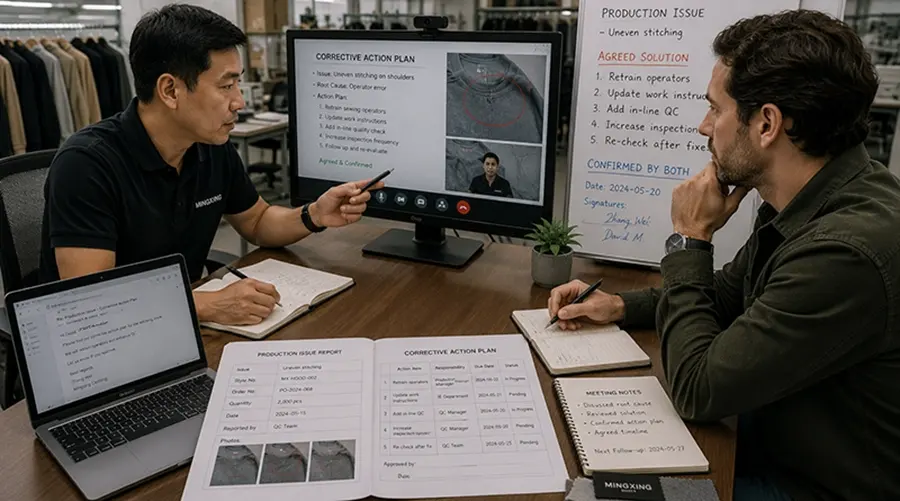
Agree on a Solution in Writing
Once a solution is discussed, document the agreement.
Confirm:
- What will be corrected
- Who is responsible
- Completion timeline
- Additional costs (if any)
Written confirmation helps prevent future misunderstandings.
Production Problem Resolution Framework
Ready to Work More Effectively with a Clothing Manufacturer?
Production issues are part of apparel manufacturing, especially as order volumes increase.
The most successful buyers are not the ones who never face problems. They are the ones who identify issues early, communicate clearly, and work with manufacturers to find practical solutions.
Contact Mingxing Clothing
FAQs