Quick answer
The best private label clothing manufacturer for a startup depends on the product, order quantity, and development support you need. Existing garments with custom branding can suit a market test; original fits, fabrics, and construction require custom development. Sweaters and other knitwear may need specialist yarn and stitch expertise. Compare the MOQ per style and color, material minimums, sample scope, and total delivered cost before choosing a supplier.
If you want to test a graphic-led brand, existing garments with custom labels may be enough. If your product depends on a particular fit, fabric, or construction, you need a supplier that can develop it. A knitwear collection introduces another set of decisions, including yarn, gauge, and stitch structure.
This guide compares 10 manufacturers and apparel service providers across those routes. Start with the comparison table, then use the profiles to identify which businesses are worth contacting for your product.
A low minimum order quantity only helps when it applies to the garment and customization you actually need.
Private Label Clothing Manufacturers for Startups: Quick Comparison
Published minimums are starting points, not quotations. Confirm the quantity, color allocation, materials, and development scope for your project.
Scroll horizontally if needed to view all four columns.
| Supplier | Consider for | Production route | Published MOQ guidance |
|---|---|---|---|
| Mingxing Clothing | Original garments needing development and production support | OEM/ODM custom apparel | Standard 100 pieces per style/color; separate material minimums may apply |
| OEM Fashion | Custom clothing projects requiring coordinated services | Development, sampling, and manufacturing | Homepage states 100 pieces per design/color |
| Billoomi Fashion | Small runs of qualifying simple styles | Custom manufacturing and CMT | Plain styles without printing or embroidery: 25 per style; other services have different minimums |
| Create Fashion Brand | Portugal-based production or premium blank customization | Original development, customized blanks, and stock blanks | Custom: 150 per style/color; blank customization: 100; stock blanks: no MOQ |
| The Evans Group | Designer collections needing patterns, samples, and production | Studio development and cut-and-sew manufacturing | Separate Studio and Factory programs |
| Hongyu Apparel | Comparing customized blanks with original garment development | Blank customization and cut-and-sew | Published programs include 50-piece blank orders and 100 per style/color for cut-and-sew |
| Appareify | Projects needing development-through-packaging support | Private label and custom manufacturing | Project-specific; no single numerical MOQ on the reviewed service pages |
| Apliiq | Testing branding and graphics on existing garments | On-demand decoration and relabeling | No minimum for its on-demand private-label service |
| Royal Apparel | Relabeling existing apparel or planning larger custom runs | Relabeling and full custom production | Relabeling: 250 per order and 72 per style/color; full custom: 1,200–2,400 per style/color |
| KnitSeek | Sweater, cardigan, and specialist knitwear collections | OEM/ODM knitwear development | Usually starts at 100 per style; yarn and color conditions apply |
How We Selected These Manufacturers
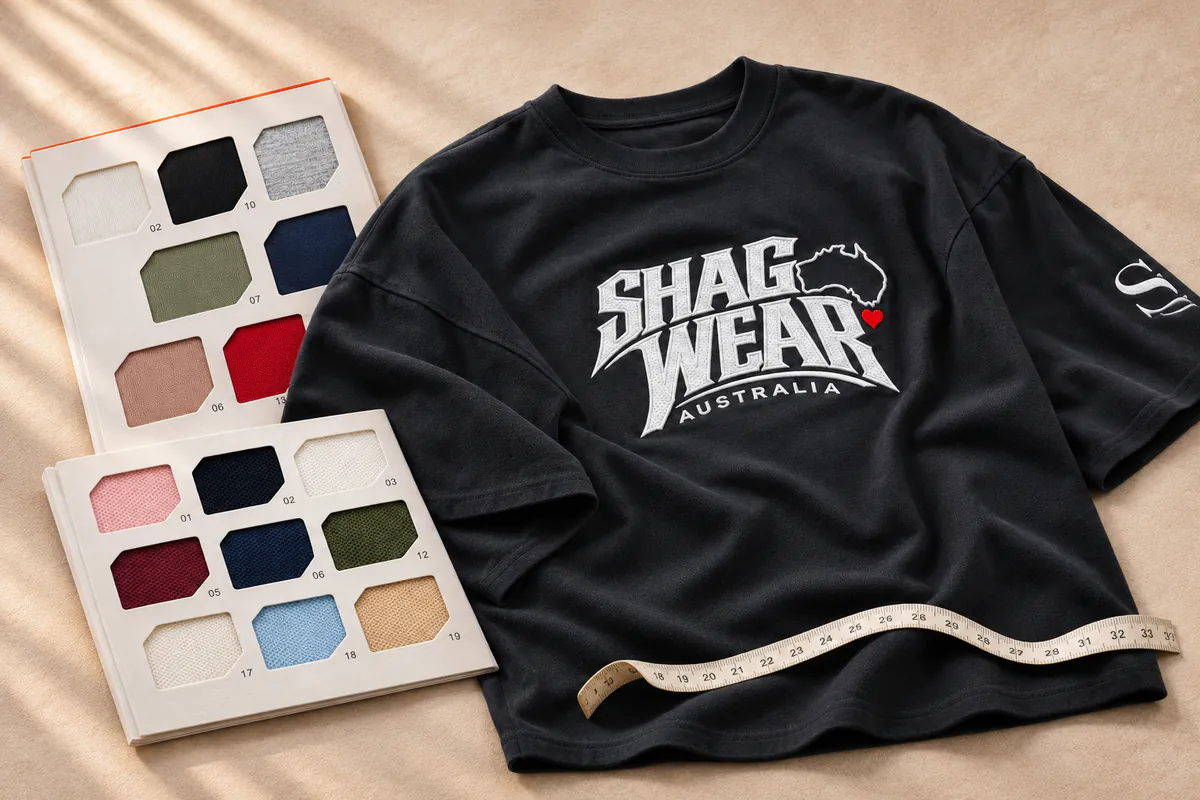
We selected these businesses to cover different startup production needs: branding existing garments, developing original clothing, producing designer collections, and creating specialist knitwear.
The comparison considers their published services, order conditions, and development support. The recommendations describe a potential fit for a project—not a guarantee of price, quality, or delivery.
Editorial disclosure: This guide is published by Mingxing Clothing and includes our own services. It is based on public supplier information, not independent factory audits or orders placed with every company. Numbering is for navigation and does not represent a tested quality ranking.
10 Private Label Clothing Manufacturers to Consider
1. Mingxing Clothing — Custom Apparel Development and Production
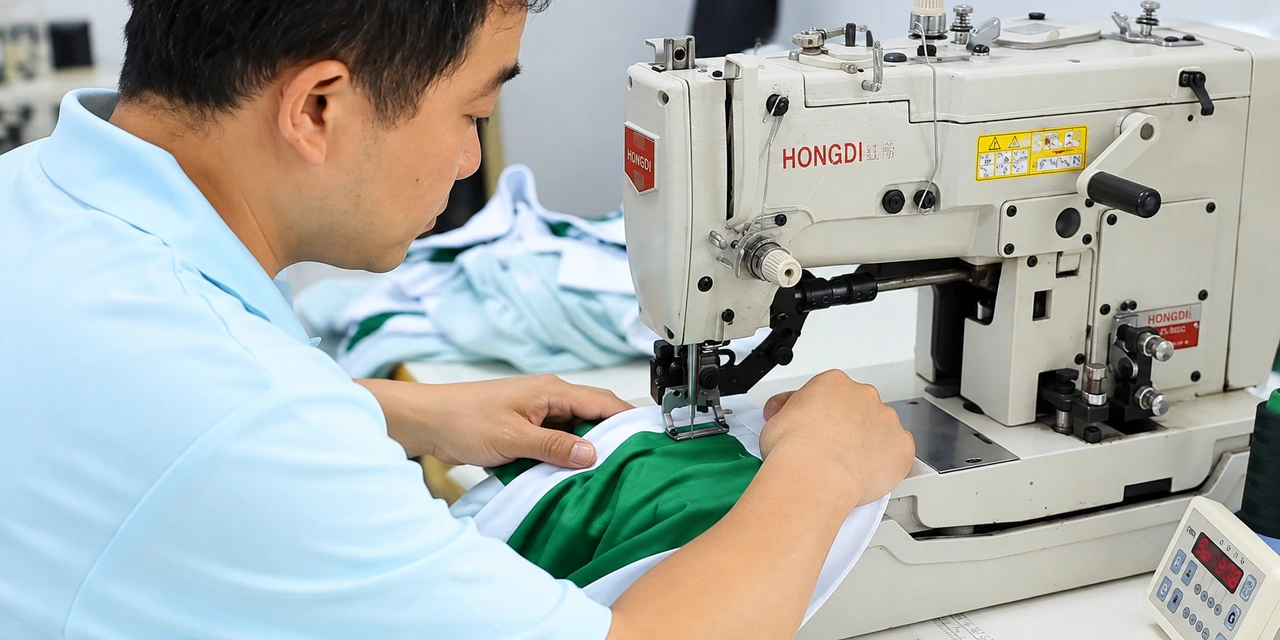
Mingxing Clothing provides OEM/ODM services covering development, material sourcing, sampling, manufacturing, and packing. Its categories include T-shirts, hoodies, jackets, tracksuits, pants, and dresses.
For a startup, this route is relevant when the product needs its own fabric, measurements, fit, or construction alongside branding. Our private label clothing manufacturing service explains that scope.
The standard MOQ is 100 pieces per style/color, with mixed sizes available. Custom fabrics or trims may have separate minimums. Samples normally take 10–15 working days after design, materials, and sample payment are confirmed; bulk production typically takes 25–30 working days after sample approval.
When contacting us, separate the details already decided from those needing development. That helps establish a workable sample plan.
Key question: Can the proposed fabric, trims, and color breakdown be supported at your planned quantity?
Official website: Mingxing Clothing.
2. OEM Fashion — Coordinated OEM and ODM Clothing Projects
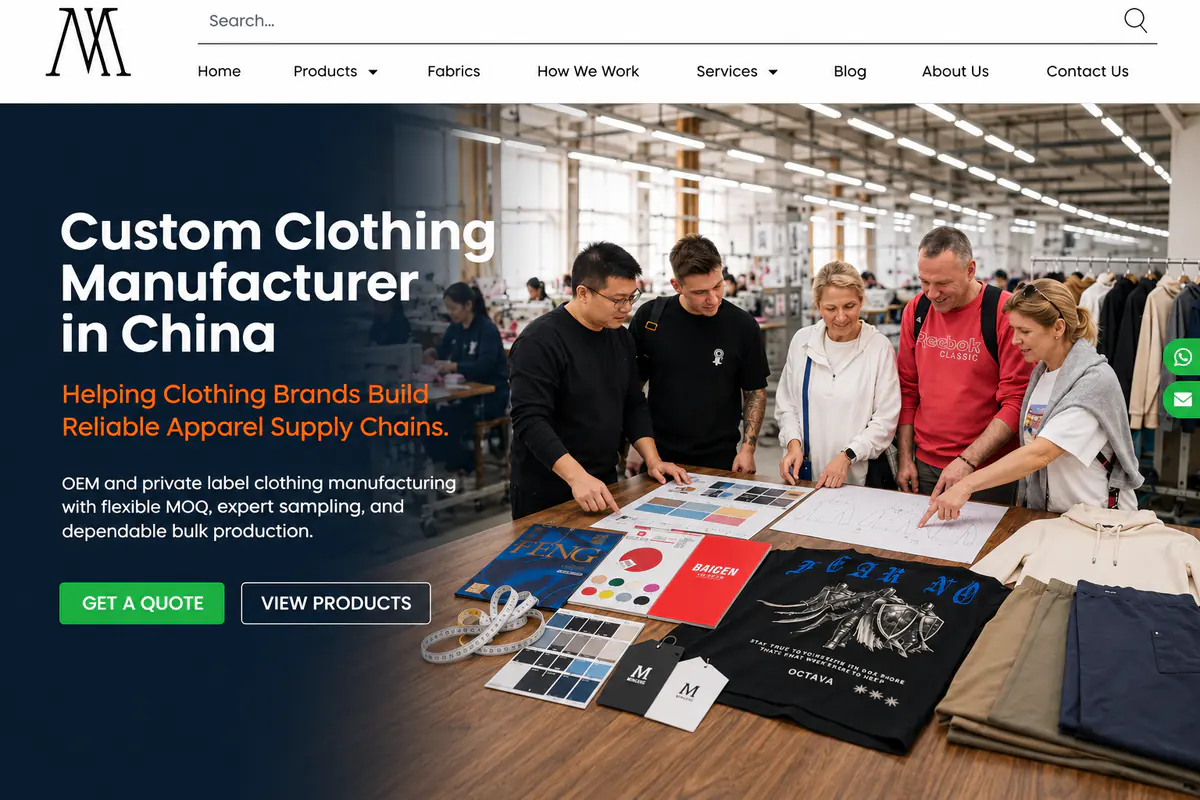
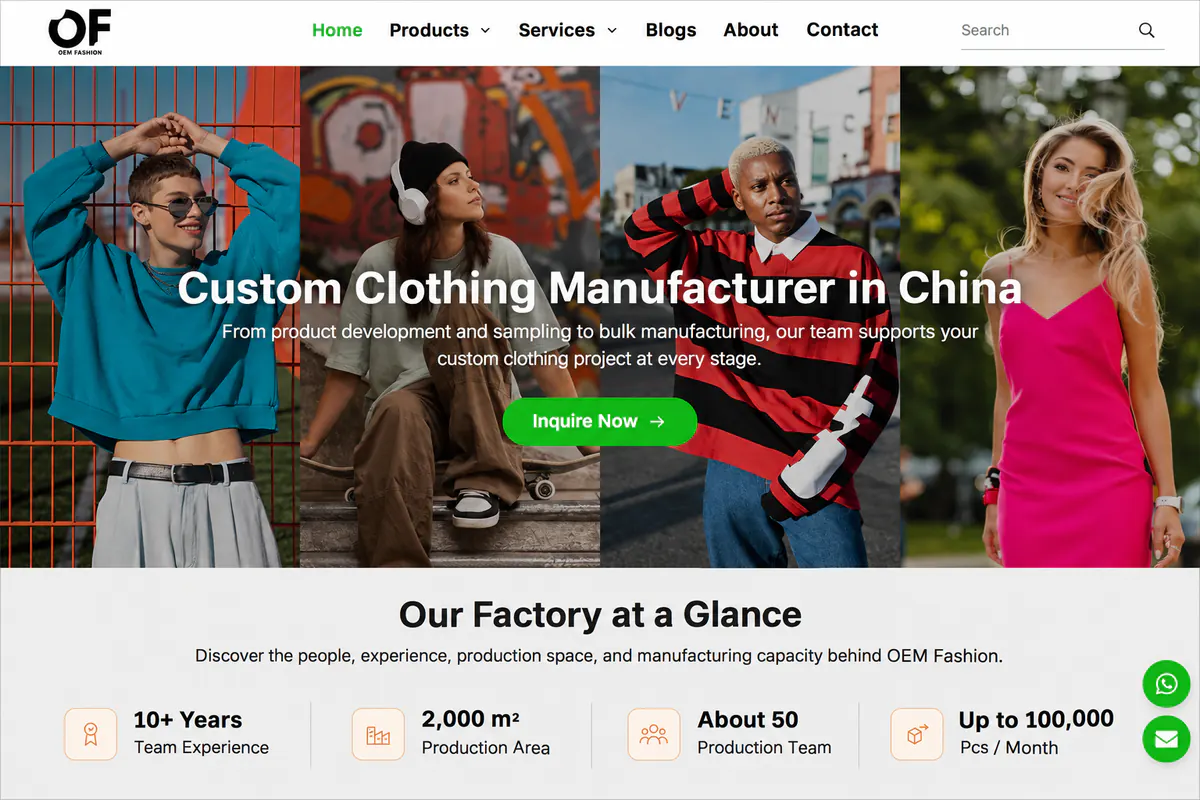
OEM Fashion presents services spanning product development, fabric selection, sampling, printing, embroidery, labels, packaging, and manufacturing.
Its homepage states an MOQ of 100 pieces per design/color, with mixed sizes allowed. Published sample timing is typically 10–15 working days, followed by approximately 25–30 working days for bulk production after sample approval, depending on the order.
Its homepage displays several garment categories, while its FAQ describes casual everyday womenswear as a primary focus. A startup should therefore assess experience with the specific garment rather than relying on the general service range.
Send a product reference and ask for comparable development or production examples.
Key question: What experience does the team have with your garment’s construction, materials, and finishing?
Official information: OEM Fashion services and FAQ.
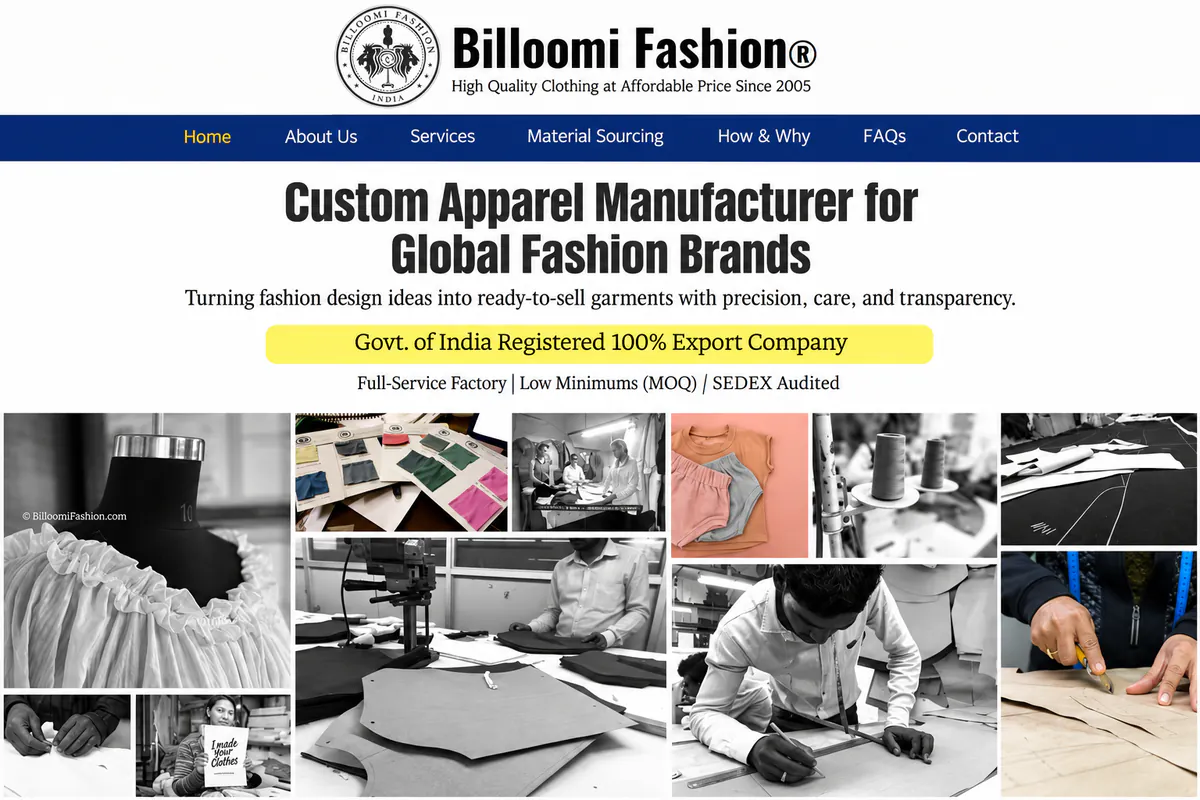
3. Billoomi Fashion — Small Runs of Qualifying Simple Styles
Billoomi Fashion publishes different minimums for different services, making it useful for startups comparing a simple first product with a more customized one.
Its FAQ lists 25 pieces per style, with mixed sizes, for single-color styles without printing or embroidery. Styles involving printing, embroidery, or denim washing effects start at 100 pieces per style.
CMT orders start at 200 pieces per style, with the buyer supplying fabrics, trims, and production-ready patterns. The company describes these minimums as indicative and states that it serves export customers rather than the Indian domestic market.
The 25-piece starting point deserves attention, but it should not be treated as a minimum for every product.
Key question: Which published service category applies to your finished design?
Official information: Billoomi Fashion’s minimums and sampling FAQ.
4. Create Fashion Brand — Portugal-Based Apparel Production
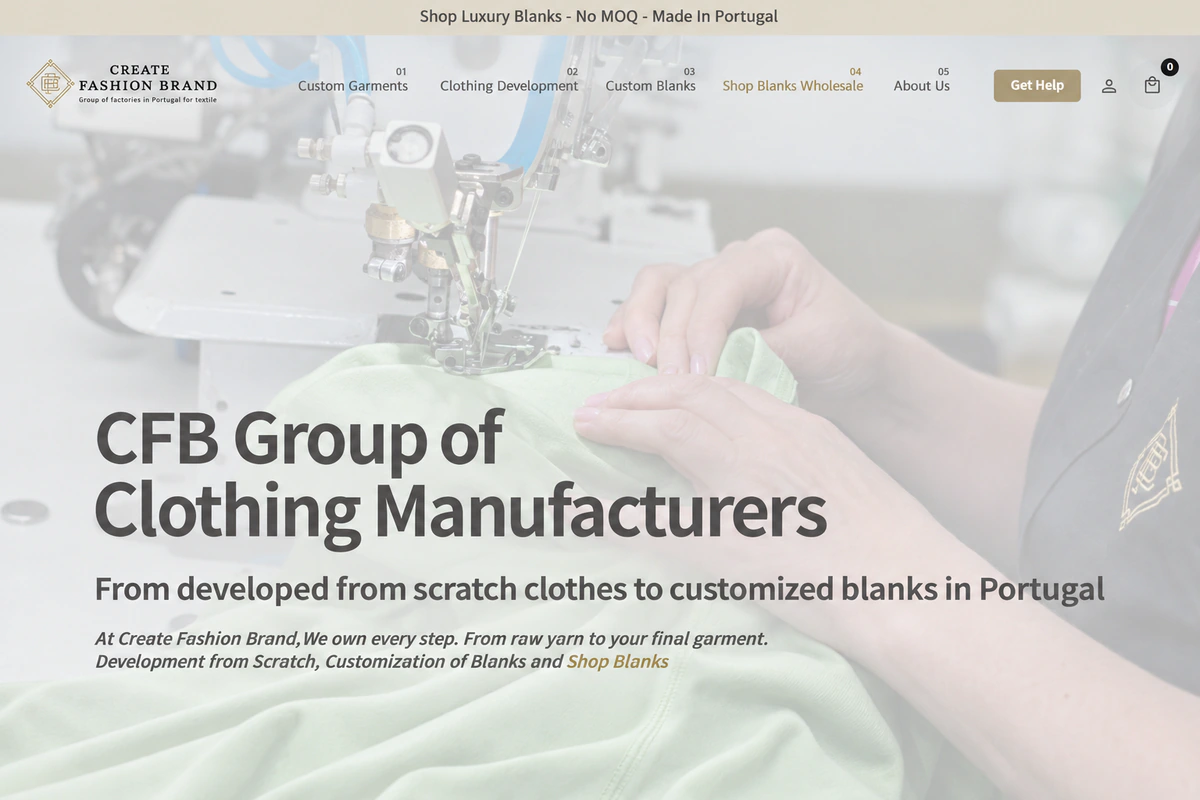
Create Fashion Brand, or CFB, gives buyers three routes: develop garments from scratch, customize its blank garments, or purchase stock blanks.
Its FAQ lists 150 units per style/color for full custom development and 100 units per style/color for blank customization. Stock blanks have no MOQ. The company states that its garments are produced in Portugal.
This distinction helps a startup decide where to invest. If an existing base garment already meets the brief, branding it may be sufficient. An original fit, fabric, or construction calls for a custom-development discussion.
Compare the scope of those routes before comparing their prices.
Key question: Do your proposed changes fit the blank-customization program, or require original development?
Official information: CFB’s production options and MOQ.
5. The Evans Group — Design Development and Small-Batch Production
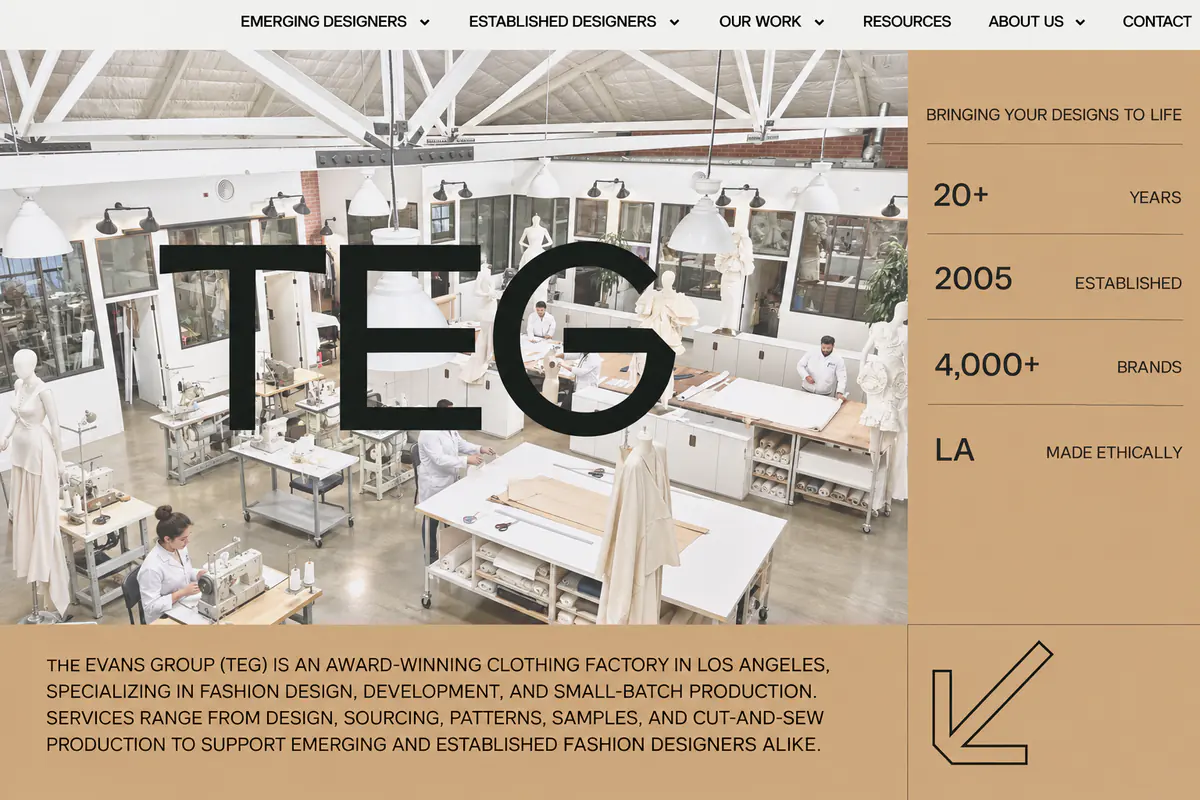
The Evans Group, or TEG, is a Los Angeles business offering design, sourcing, pattern making, samples, and cut-and-sew production.
Its development services are relevant to founders who have a collection concept but still need production-ready patterns, specifications, and approved fits.
TEG’s FAQ distinguishes Studio Level Production from Factory Level Production. It describes Studio runs of 1–50 pieces and Factory production starting at 50 pieces per style, including sizes and two colorways.
The important comparison is the complete development and production program. A small garment quantity can still involve substantial pattern, sample, and fitting work.
Key question: Which program fits your collection, and what development fees and deliverables does it include?
Official information: TEG’s development and production FAQ.
6. Hongyu Apparel — Blank Customization and Cut-and-Sew Options
Hongyu Apparel separates ready-made clothing, logo customization on blanks, and cut-and-sew manufacturing.
Its published company information lists 50-piece minimums for blank wholesale and logo customization, allowing mixed styles, sizes, and colors. Its cut-and-sew program lists 100 pieces per style/color. The homepage also notes that fabric selection can affect the MOQ.
That makes the starting garment important. Adding branding to an existing style and developing an original garment are different projects, even when both are described as custom clothing.
Establish which route the quotation covers before discussing decoration and packaging.
Key question: Are you selecting an existing product or paying to develop a new garment?
Official information: Hongyu Apparel’s service programs.
7. Appareify — Development Through Packaging
Appareify describes private label support from design and manufacturing through packaging. It also publishes guidance on low-MOQ production.
The reviewed low-MOQ page explains that design complexity and specialist production requirements affect minimum quantities. It does not provide one numerical MOQ applicable to all projects.
For a startup, the next step is a product-specific inquiry. Send the same brief used for other suppliers and request a written quantity requirement, development scope, and schedule.
This makes the response comparable with suppliers that publish starting figures. “Low MOQ” alone does not establish whether your particular order is feasible.
Key question: What minimum applies to your design, materials, and color breakdown?
Official information: Appareify’s private label service and MOQ guidance.
8. Apliiq — On-Demand Branding on Existing Garments
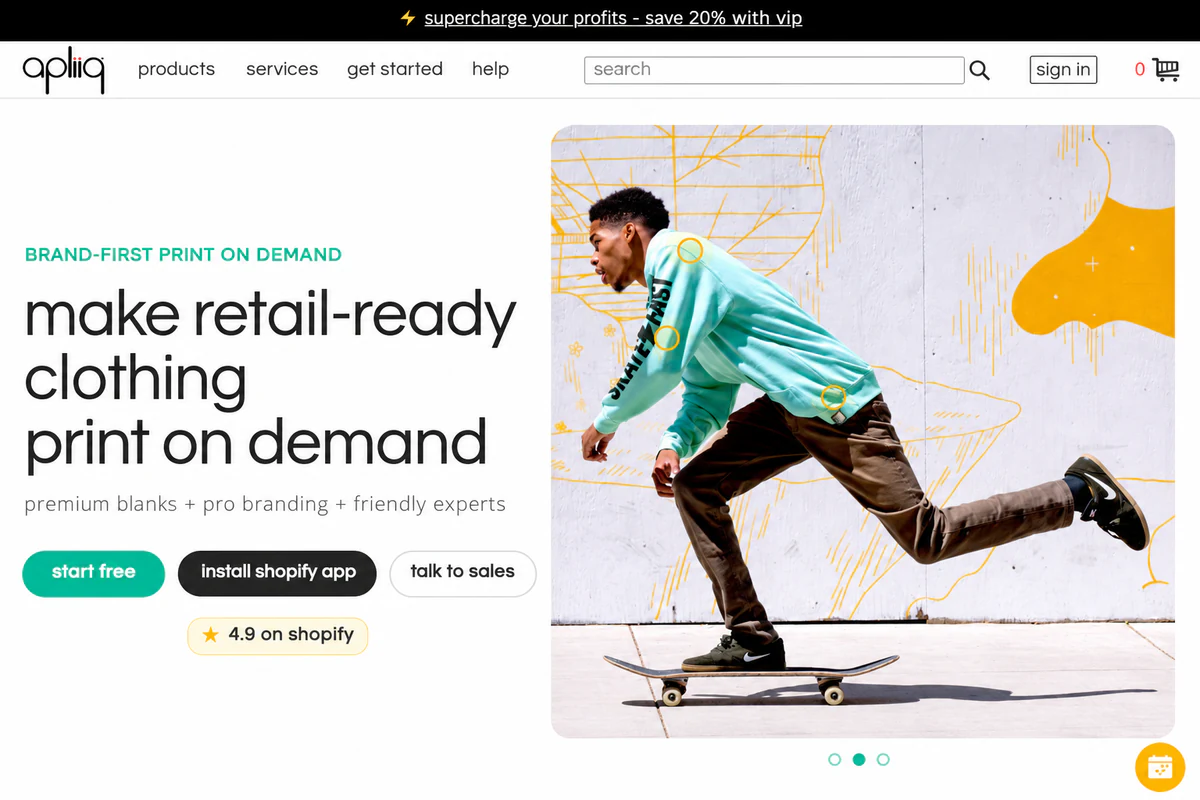
Apliiq offers private labeling on existing apparel, removing the original manufacturer tag and replacing it with a branded label. Its on-demand private-label service has no minimum quantity.
This route is worth considering when the first objective is testing a brand, graphic, or product selection using available garments.
The chosen catalog product defines the base fabric, fit, and construction. Additional branding services may have their own requirements, so check woven labels, patches, and other options separately.
Order a sample with the decoration and labeling you intend to sell. Evaluate the garment itself as well as its branding.
Key question: Does the available base garment meet your product promise without structural changes?
Official information: Apliiq’s on-demand private labeling.
9. Royal Apparel — Relabeling and Larger Custom Programs
Royal Apparel’s relabeling and full custom services have substantially different order requirements.
Its relabeling page lists at least 250 units per order and 72 units per style/color, with sizes in multiples of six. Its full custom page lists 1,200–2,400 units per style/color, depending on complexity, with an estimated lead time of 8–10 weeks after sample approval.
Those custom quantities may exceed a small startup test run. The relabeling program presents a different option, but the total order and style/color minimums still need to fit the collection.
Work through the complete quantity breakdown before selecting products.
Key question: Can your inventory plan support both the order minimum and each style/color minimum?
Official information: Royal Apparel relabeling and full custom production.
10. KnitSeek — Sweater and Knitwear Collections
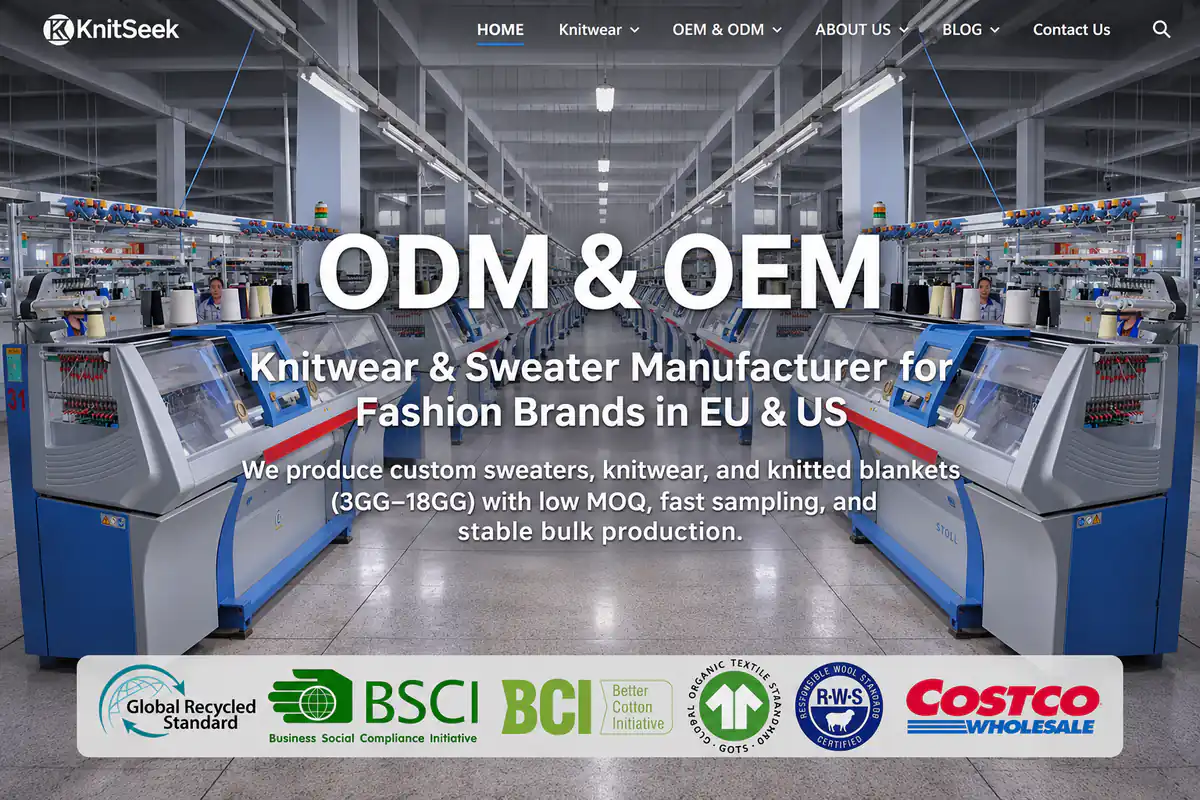
KnitSeek provides OEM/ODM knitwear development, including yarn sourcing, sampling, fit and size development, knitting, finishing, labels, and packaging.
It adds a specialist route for startups planning sweaters, cardigans, and other knitted products. These projects require decisions about yarn, gauge, and stitch construction alongside garment shape.
Its standard MOQ starts at 100 pieces per style. Final quantities and color allocation depend on yarn availability, sizes, construction, and customization. Sampling timing follows specification review; bulk production is typically planned for 25–45 days after sample approval and confirmation of materials and scheduling.
Discuss yarn availability early, especially for a small collection with several colors.
Key question: Can the chosen yarn and color allocation support your first-order quantity?
Official information: KnitSeek’s OEM/ODM knitwear service.
Which Manufacturing Route Fits Your Startup?
Existing Garments With Your Branding
Choose this route when an available garment already provides the fabric, fit, and construction your customer needs.
Apliiq represents an on-demand approach, while CFB, Hongyu, and Royal Apparel publish other blank-customization or relabeling programs with different conditions.
Your decisions can focus on decoration, labels, and presentation. Before proceeding, check whether the base product meets your expectations for measurements, feel, and appearance.
If the product depends on a distinctive silhouette or construction detail, establish whether an existing garment can deliver it.
Custom Cut-and-Sew Development
Original development is relevant when you need your own measurements, materials, or construction.
Suppliers such as Mingxing and OEM Fashion offer coordinated development and manufacturing services. Billoomi publishes service-specific small-order conditions, while TEG offers development-led Studio and Factory programs.
Allow for specifications, patterns, samples, revisions, and grading before bulk production. Our product development and sampling services explain the work involved in preparing a garment for manufacturing.
For a first collection, prioritize the styles that communicate your brand most clearly. Every additional style and color adds another development and inventory decision.
Specialist Product Development
A specialist becomes relevant when the product’s defining feature requires a particular process.
KnitSeek’s knitwear route illustrates this: yarn selection, gauge, and stitch structure help determine the finished sweater. These decisions cannot be resolved by comparing label options alone.
Use your product’s most important technical requirements to narrow the shortlist. Then request relevant samples or examples before choosing a development partner.
How to Compare Quotes for Your First Collection
Work Out the Real Minimum Order
Ask whether the MOQ applies per order, style, color, or material.
For example, 100 pieces per style/color means two styles in three colors could require 600 garments. Permission to mix sizes does not automatically allow mixed colors.
Check material minimums separately. Available stock materials may support a different quantity from a custom-developed fabric, yarn, or trim.
When reviewing fabric options for custom clothing, discuss composition, weight, color availability, and quantity together.
Compare the Complete Development Cost
Request separate figures for patterns, samples, revisions, grading, and bulk production where applicable.
Confirm what each charge includes and what happens if the design changes. A lower production unit price may be less useful when the development scope remains unclear.
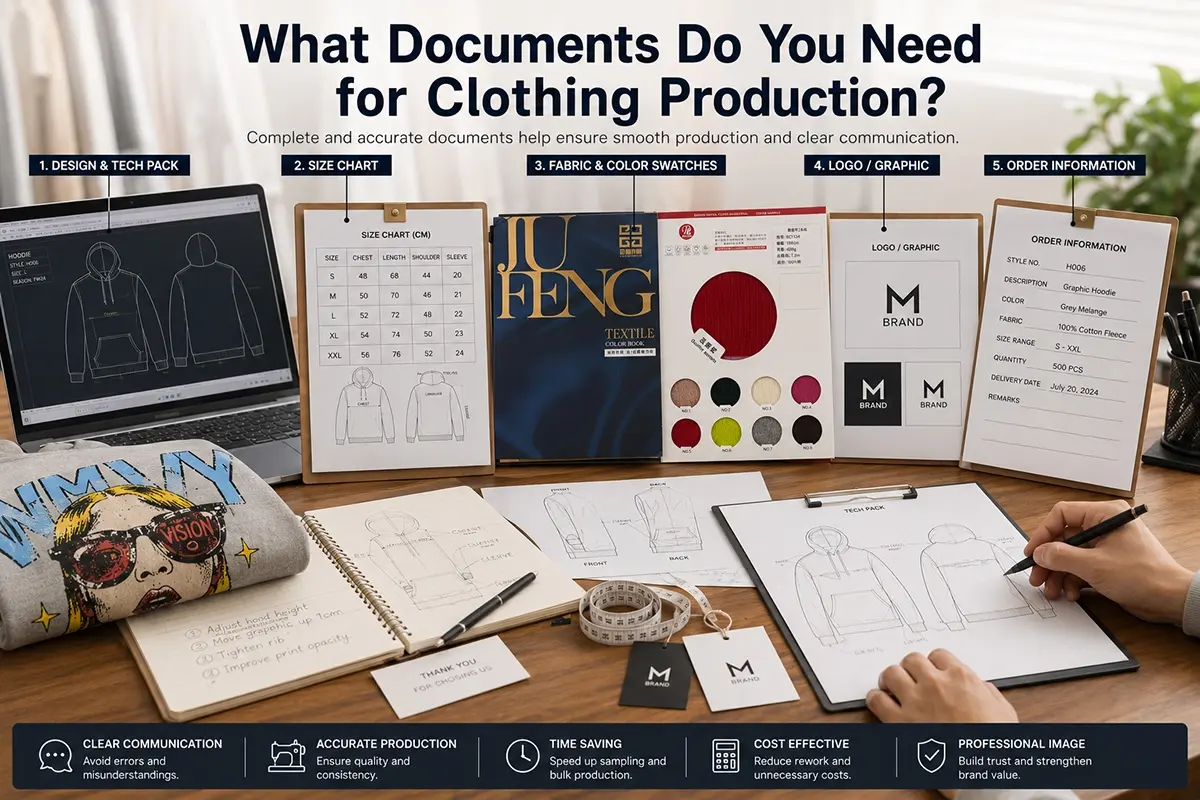
Also ask what documents and approved references will define the order. These should give both sides a consistent basis for production.
Specify Branding, Packaging, and Testing
List the labels and packing you need rather than assuming they are included.
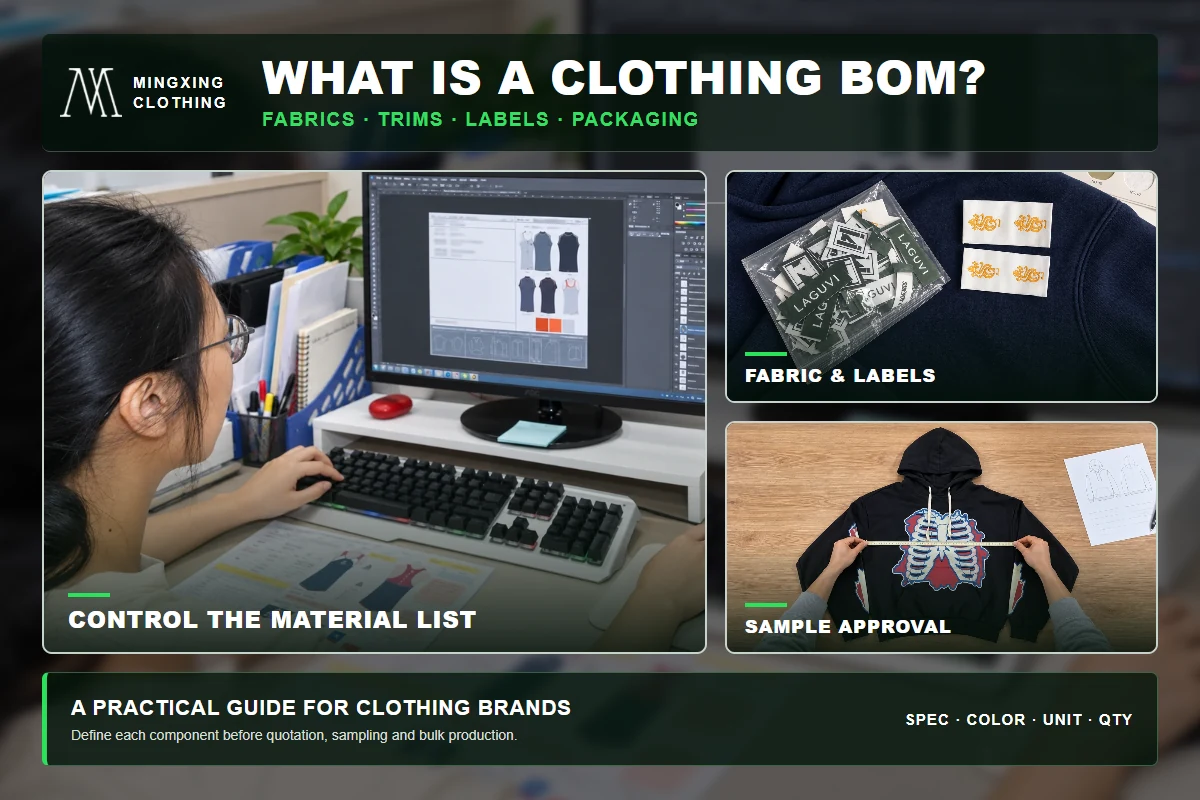
Main labels, care labels, hangtags, individual bags, and cartons should be identified in the quotation. If you need custom apparel packaging, provide its specifications before comparing prices.
For required testing, agree on the method, acceptance criteria, timing, and responsible party. Where certified materials are proposed, request documentation relevant to the material and order.
Build a Schedule Around Approval Points
Ask what must be confirmed before the production clock starts.
The quoted period may depend on sample approval, materials, payment, artwork, and production booking. Your launch schedule also needs time for development, revisions, inspection, and transport.
A shorter advertised production period does not necessarily produce an earlier arrival date if major decisions remain unresolved.
Compare Delivered Costs on the Same Basis
Clarify freight, insurance, destination clearance, duties, and the responsibilities assigned under the agreed delivery term.
Use the same destination and comparable delivery assumptions across quotations. That helps distinguish the manufacturing price from the total cost of receiving the order.
What to Send Before Requesting a Quote
Prepare a concise brief that lets a supplier assess the product and identify missing information.
- Garment type and reference: a tech pack, sketch, photograph, or reference sample.
- Quantity: expected pieces per style and color.
- Sizes: the intended range and any available measurement chart.
- Materials: preferred fabric or yarn, composition, weight, texture, and feel.
- Customization: printing, embroidery, washing, labels, trims, and packaging.
- Delivery: destination country and required arrival date.
If you have a target cost, explain whether it covers manufacturing or the delivered product.
You do not need every detail finalized for an initial conversation. Identify the decisions that still need support, such as fabric selection, fit, or construction, so the supplier can propose an appropriate development plan.
Frequently Asked Questions
Can I Start a Private Label Clothing Brand Without a Tech Pack?
Yes, depending on the service and the supplier’s development capabilities.
Existing garments may require limited product development. An original garment needs sufficiently clear specifications before production, even if the supplier helps prepare them.
Start with references and explain what you want to change. Ask who creates the technical documents, what that work costs, and which files you receive.
Can I Mix Sizes and Colors to Meet the MOQ?
Sometimes, but the rules vary.
A minimum may permit several sizes within one style/color while requiring a separate quantity for each additional color. Stock and custom materials can also have different conditions.
Send your proposed size and color breakdown and request written confirmation before planning inventory.
Is Private Labeling the Same as Custom Clothing Manufacturing?
Suppliers use “private label” to describe several services.
It may mean branding existing clothing, adapting an available product, or manufacturing an original garment for your label.
Describe the changes you need in fabric, fit, construction, graphics, and labeling. That gives a supplier enough context to identify the appropriate production route.
What Should I Approve Before Placing a Bulk Order?
For original development, agree on the production sample and the specifications defining the order.
These normally cover materials, colors, measurements, construction, artwork placement, labels, packaging, and the quantity and size breakdown. Establish quality criteria and the delivery schedule as well.
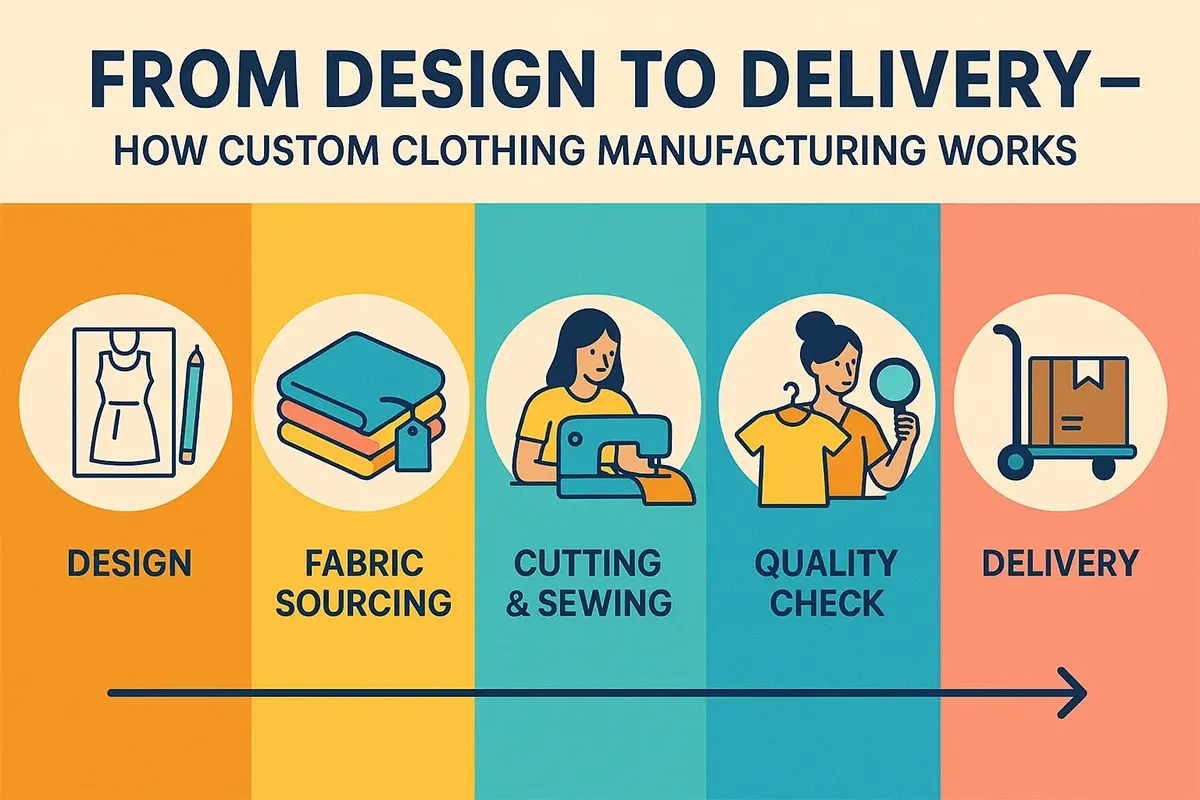
Review the clothing manufacturing process with your supplier so both sides understand the approval points.
For branded stock garments, approve a representative product with the intended decoration and labeling.
Discuss Your First Clothing Collection
Share your garment references, estimated quantities, and customization requirements with Mingxing Clothing. We’ll review the details and discuss a suitable development and production plan.
Discuss Your Project