Receiving a clothing sample is an exciting step in the product development process.
However, many clothing brands focus only on how the sample looks and overlook important details that can affect bulk production later.
Before approving any sample, buyers should follow a structured review process. This helps identify potential issues early and reduces costly mistakes during production.
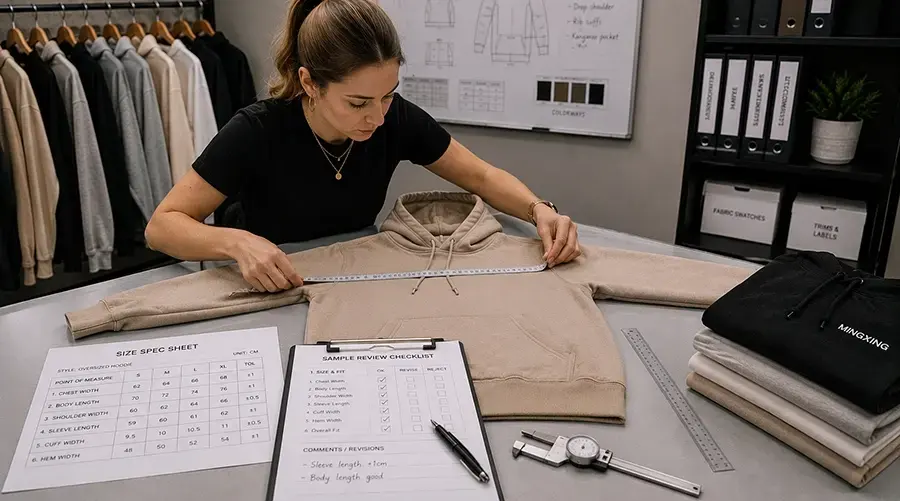
Check Measurements Before Anything Else
Many buyers immediately inspect fabric or logos.
In reality, measurements should be the first thing you verify.
If measurements are incorrect, even a perfectly made sample may not fit your target customer properly.
Check These Areas
- Chest width
- Body length
- Sleeve length
- Shoulder width
- Bottom opening
- Tolerance allowance
Always compare actual measurements against your approved size chart.
Even small deviations can become major sizing issues during bulk production.
Review Fabric Quality and Weight
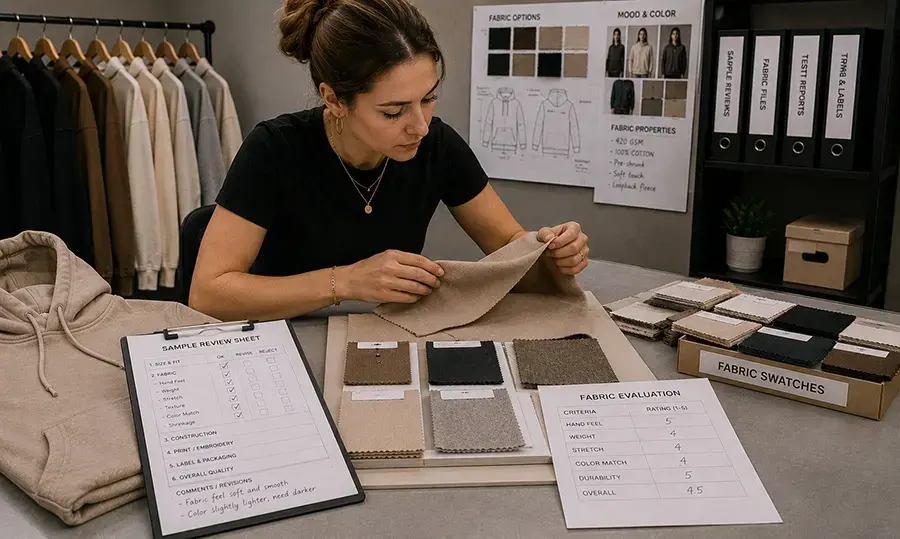
Once measurements are confirmed, move to the fabric evaluation stage.
Fabric influences comfort, durability, appearance, and retail positioning.
Check These Areas
- Fabric composition
- Fabric weight (GSM)
- Hand feel
- Stretch and recovery
- Thickness consistency
- Color accuracy
The fabric should match the specifications discussed during development.
A sample made with different fabric can create misleading expectations.
Inspect Stitching and Construction
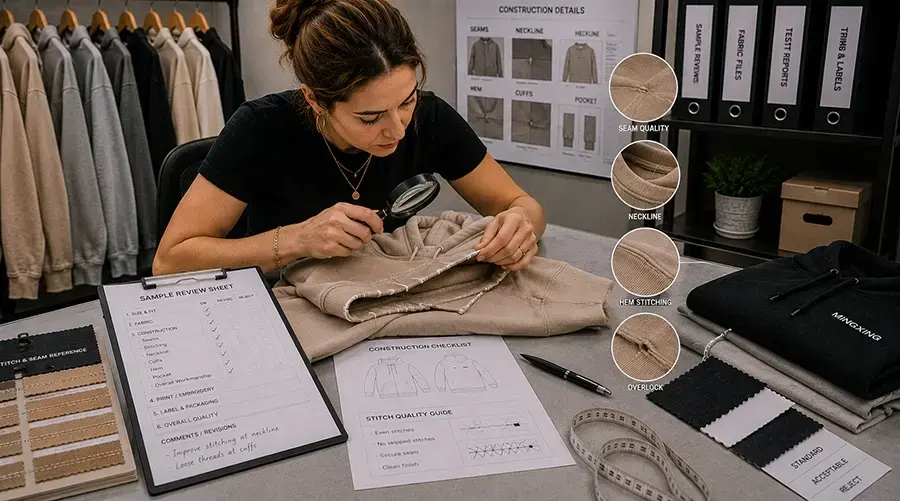
Good stitching is one of the clearest indicators of manufacturing quality.
Many production issues become visible when buyers carefully inspect garment construction.
Check These Areas
- Seam consistency
- Stitch density
- Loose threads
- Reinforcement points
- Inside finishing
- Symmetry
Pay special attention to stress areas such as shoulders, armholes, pockets, and side seams.
These areas often reveal construction weaknesses.
Evaluate Printing, Embroidery, and Logos
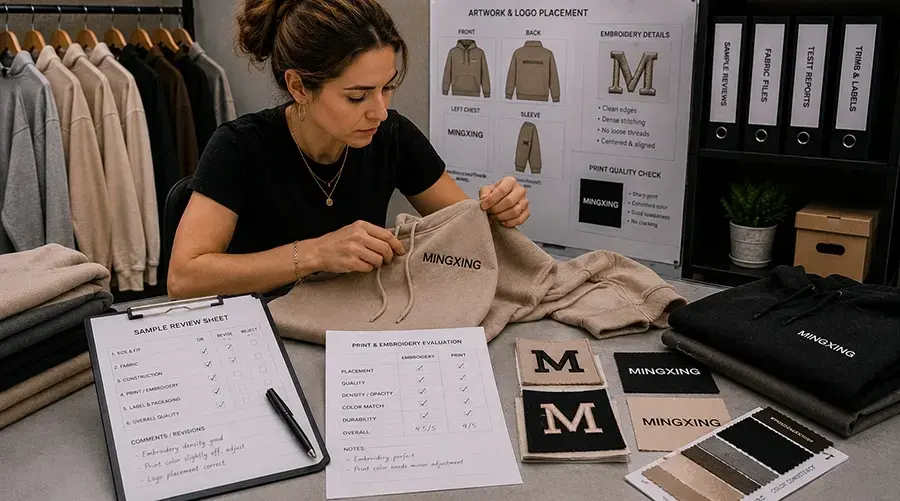
Branding details often receive the most attention from customers.
Even minor logo inconsistencies can affect the perceived quality of the final product.
Check These Areas
- Logo size
- Placement accuracy
- Print clarity
- Color matching
- Embroidery quality
- Durability
Compare all branding elements against the approved artwork and tech pack.
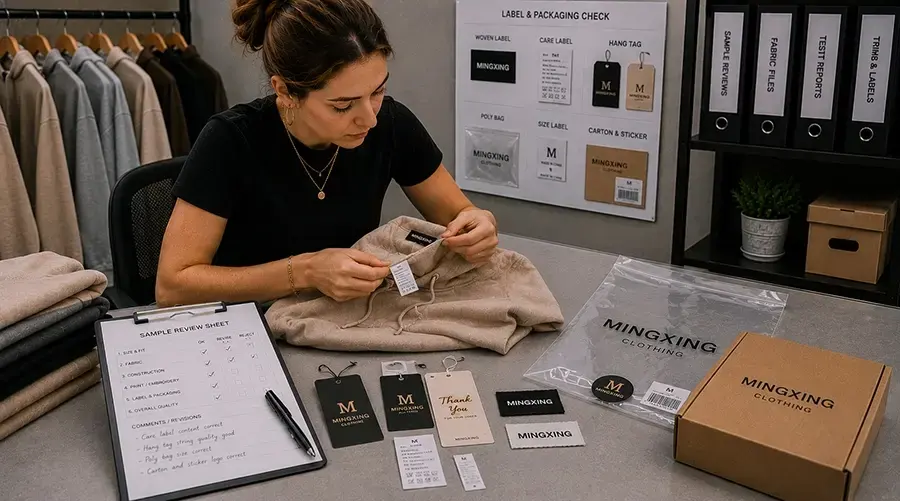
Check Labels, Packaging, and Branding Details
Many buyers focus only on the garment itself.
However, labels and packaging also influence customer experience.
Check These Areas
- Main labels
- Care labels
- Hang tags
- Poly bags
- Barcode labels
- Packaging presentation
Make sure all branding details are consistent with your brand requirements.
Common Sample Review Mistakes
Many first-time buyers make the same sample evaluation mistakes.
Avoid These Mistakes
- Checking appearance only
- Ignoring measurements
- Ignoring construction details
- Approving samples too quickly
- Skipping wear testing
- Ignoring packaging requirements
A sample should be reviewed as if it were a finished retail product.
Sample Approval Checklist
Before approving a sample, confirm all of the following:
- Measurements match the size chart
- Fabric meets requirements
- Stitching quality is acceptable
- Logos are accurate
- Labels are correct
- Packaging is approved
- Fit has been tested
- Revisions have been completed
Using a checklist helps ensure consistency and reduces approval errors.
Ready to Approve Your Clothing Sample?
A well-reviewed sample creates a smoother production process and reduces the risk of costly revisions later.
If you’re developing custom apparel and need guidance on sampling, fit approval, fabric selection, or production preparation, our team is ready to help.
Contact Mingxing Clothing
FAQs