Choosing a printed T-shirt manufacturer in China starts with the artwork, fabric and order plan rather than a supplier list alone. Screen printing, DTG, DTF, sublimation and heat transfer use different production routes, and the same graphic can change in color, hand feel, durability and cost when the garment or process changes.
This guide compares ten suppliers using their published T-shirt, printing and private-label services, then explains how sourcing teams can specify artwork, fabric, placement, samples, testing and repeat-order controls. Mingxing Clothing appears first as the publisher. The order is for presentation and is not an independent quality ranking.
How this guide was prepared: Supplier-published product and service information was reviewed in October 2026. Public pages show what each business says it offers, but they do not independently prove factory ownership, print equipment, capacity, certifications, quality or the commercial terms that will apply to your order. Existing supplier images retained from the earlier article may show older website or production layouts.
Mingxing Clothing
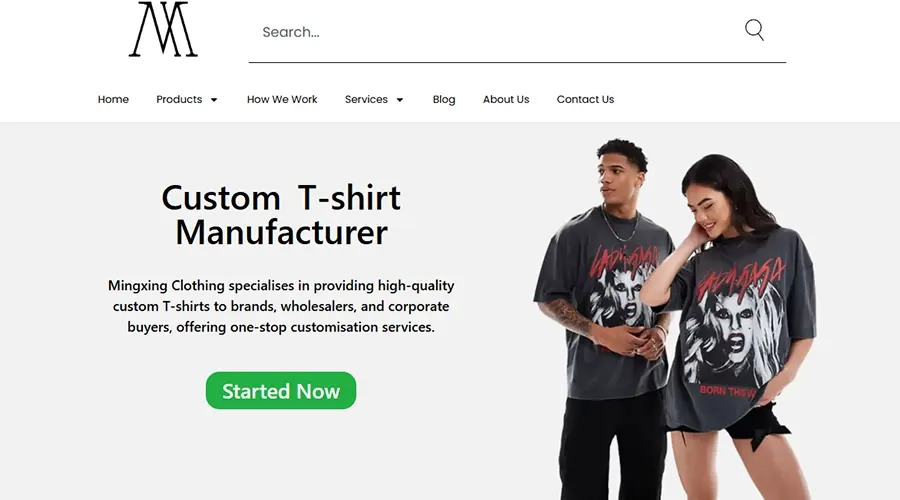
Mingxing Clothing publishes OEM and ODM T-shirt development for custom fabrics, fits, neck ribs, labels, packaging and decoration. Its printed T-shirt options include screen printing, DTG, DTF, puff printing and heat transfer for compatible fabrics and artwork. The standard MOQ is 100 pieces per design and color, with 50-piece startup trials available for suitable projects. Sample development normally takes 10–15 working days and bulk production 25–30 working days.
What to confirm: Send the artwork file, print dimensions and placement for every garment area. Define the fabric composition, GSM, color, fit, print method, color standard, label package and quantity by size. Ask the quotation to identify setup charges, exclusions and any proposed substitute, then approve a production-material sample before bulk manufacturing.
Buyers can review Mingxing’s custom printed T-shirt options while preparing the artwork and sample brief.
Taxon Apparel
Taxon Apparel publicly emphasizes sportswear and gym apparel customization. Its service information mentions screen printing, DTG and high-density silicone transfers together with labels, Pantone color matching and packaging. This published route may be relevant to buyers developing printed performance T-shirts or coordinated activewear rather than a basic promotional tee alone.
What to confirm: Request recent examples using the same knit, stretch level and print process as your design. Confirm which production site will cut and sew the garment, where printing will occur, whether the ink or transfer can stretch with the fabric, and which wash, adhesion or colorfastness checks will be used for the intended end use.
Wingtas Garments
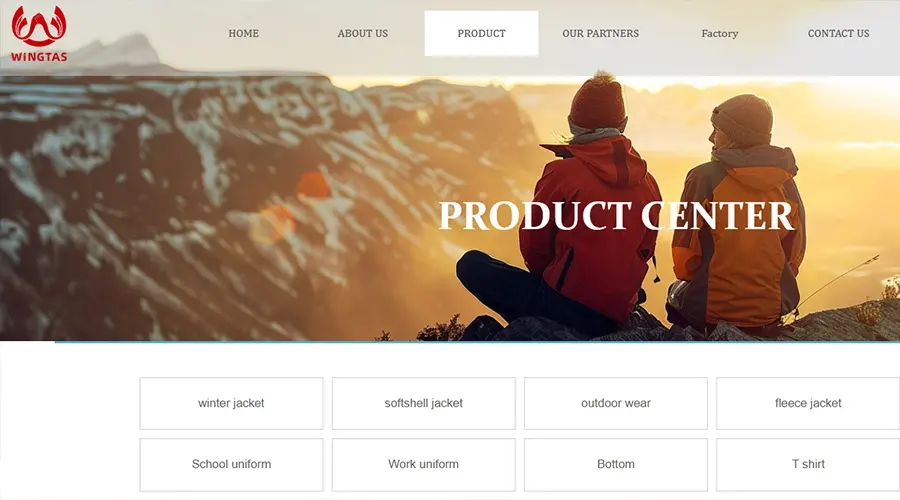
Wingtas presents a broad manufacturing range covering sportswear, outdoor clothing, workwear and T-shirts. Its public positioning may suit buyers who want printed tees within a larger uniform, teamwear or functional-apparel program. The website does not make a specialist printed T-shirt route as clear as a dedicated print provider, so the decoration process requires project-level verification.
What to confirm: Ask for comparable T-shirt and print samples, the garment and printing locations, the exact method proposed for your artwork, and responsibility for fabric and print inspection. Confirm whether lead times, minimums and testing differ between a repeat program and a first order, especially when several garment categories share one color standard.
MGOO Fashion Apparel
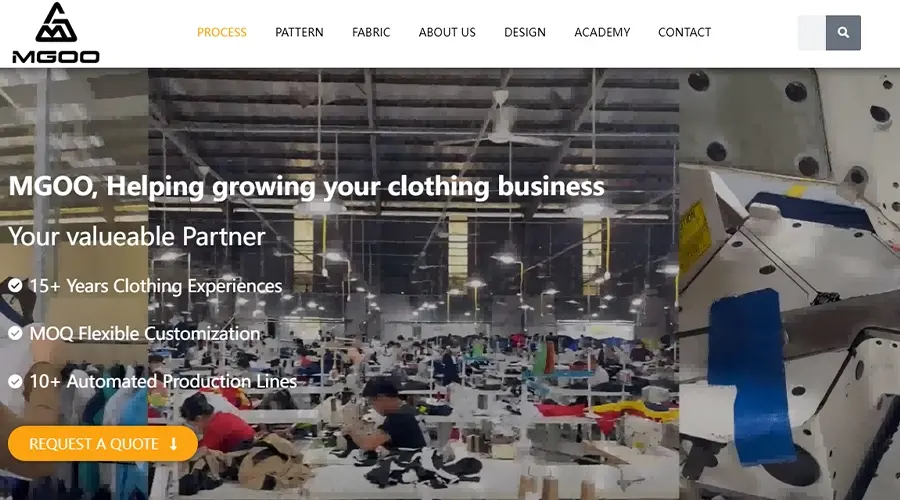
MGOO’s published services include T-shirts, fabric and accessory selection, printing or embroidery, custom labels and packaging. Its broader fashion-development positioning may interest brands that need a graphic tee to coordinate with hoodies, shorts or other collection pieces. Public information should be tied to the exact legal entity and production route quoted for the order.
What to confirm: Identify whether the proposal uses a stocked blank or a custom cut-and-sew T-shirt, which site will make the garment, and whether printing is in-house or assigned to a partner. Approve the actual fabric, neck rib, fit, ink or transfer system, artwork scale and packaging rather than relying on a general service list.
Kingfan
Kingfan publishes custom and wholesale T-shirt services together with private labeling, cut-and-sew manufacturing, all-over sublimation and several screen-printing effects. The range may suit buyers comparing conventional graphic tees with performance sublimation or raised and specialty prints. Each route changes the suitable fabric, artwork preparation, minimums and quality checks.
What to confirm: Ask which decoration techniques are produced at the quoted site and request a physical example using the proposed fabric and effect. For sublimation, confirm polyester content and panel alignment; for specialty screen prints, approve height, texture, cracking tolerance and curing; for stocked garments, verify availability and repeat-order continuity.
Appareify
Appareify presents a T-shirt manufacturing service covering several silhouettes and fabrics, private or white labeling, and printing options that include DTG, screen printing and sublimation. Its published range can help buyers compare a custom garment program with more than one decoration route, but the exact supplier and production arrangement should be identified before sampling.
What to confirm: Request the legal contracting entity, garment-production site and printing site for the quoted style. Match the print method to the fiber content and color, approve pretreatment and white-underbase decisions, and record the final artwork file, color targets, placement measurements, sample revisions and inspection responsibility in one specification.
Arlisman Garment
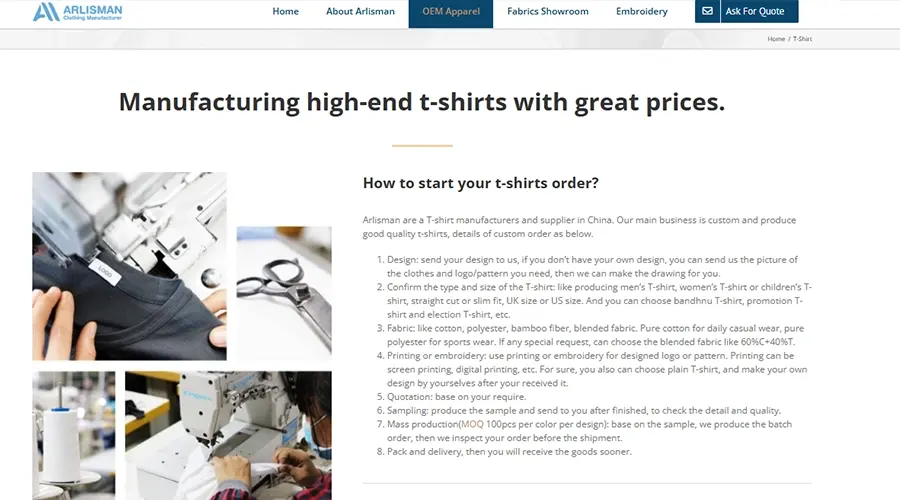
Arlisman publicly focuses on custom knit garments and presents T-shirts in cotton, polyester, bamboo and blended fabrics. Its T-shirt page describes screen or digital printing, embroidery, sampling and private-label details, and publishes a 100-piece minimum per color and design. This may fit menswear and core knit programs that need the garment and decoration developed together.
What to confirm: Ask which digital-print process is intended, which fabric preparation it needs and whether the proposed colorway requires a white base. Confirm shrinkage control, neck-rib recovery, print placement after washing, label and packaging charges, and whether the public minimum applies to your fabric, color count and artwork complexity.
SECXON
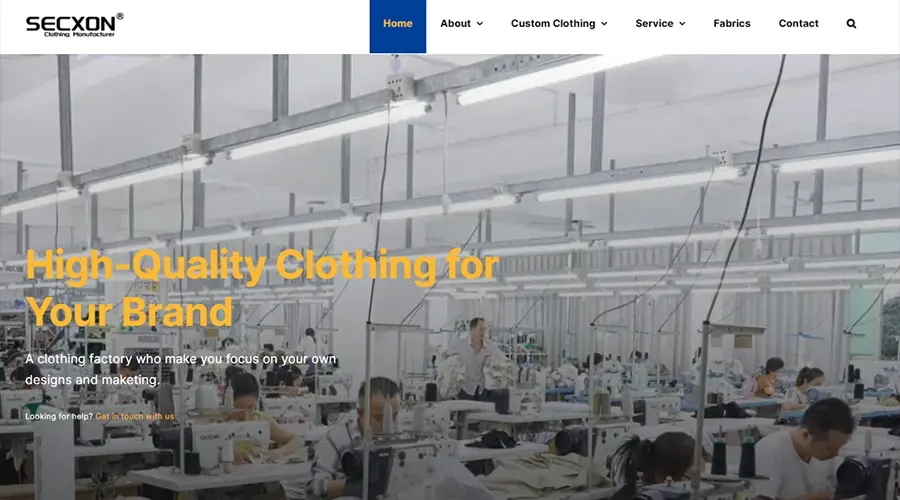
SECXON presents full-service knitwear manufacturing for T-shirts, tank tops, polos, sweatshirts and related garments. Its published company material lists screen printing, digital printing and heat transfer, while its website displays a 300-piece minimum as a general reference. This route may be more suitable for established knit programs than very small test orders.
What to confirm: Verify the minimum for the exact fabric, garment color, print method and number of artworks. Ask whether printing is completed at the garment facility or by a specialist partner, and review Pantone matching, print placement, curing, wash testing and bulk inspection. Any sustainability or compliance claim should be supported by current order-relevant documents.
Ningbo Apparel
Ningbo Apparel presents product development and private-label production across a network of partner factories, with knitted categories that include T-shirts and polos. Its model may interest established buyers sourcing several garment types through one coordination team. The company’s public contact information states that it does not work with new startups, and printing specialization is not clearly defined on the reviewed pages.
What to confirm: Identify the factory, country, legal entity and print provider assigned to the order. Request recent work using the same garment and decoration method, clarify who approves artwork and bulk color, and obtain site-specific capacity, compliance and quality information. Confirm account-size requirements before investing time in development.
Hongyu Apparel
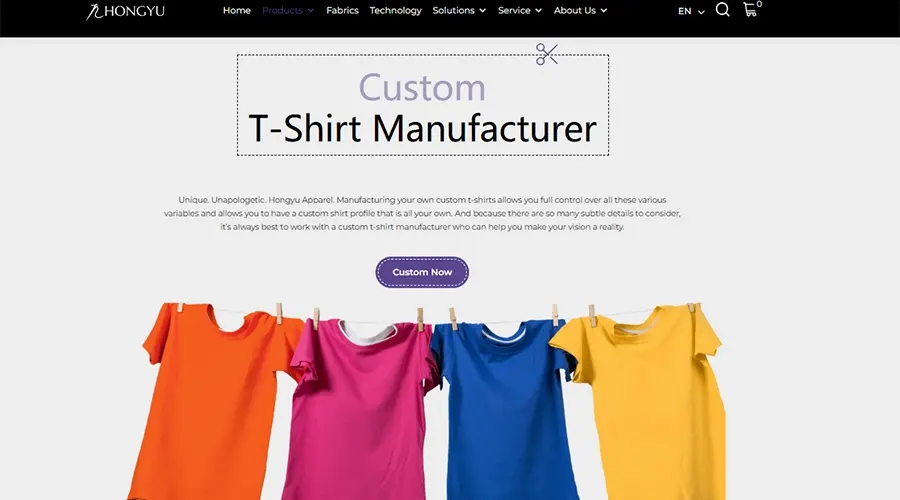
Hongyu Apparel publishes custom T-shirt development from design review and material sourcing through pattern making, sampling and production. Its page presents blank and customized T-shirt options and a general 100-piece minimum for blank tees. The service may be relevant to brands comparing an existing-base route with a more customized cut-and-sew product.
What to confirm: State whether the order needs an existing blank, a modified base or a new pattern. Ask for the minimum and price basis for the exact route, fabric and artwork, then confirm who performs printing, which method is proposed, how colors and placement will be approved, and what sample and bulk inspection records will be retained.
Compare the suppliers at a glance
The table summarizes each supplier’s published route and the item a buyer should verify before shortlisting. It does not replace a quotation, production-site review, print strike-off, approved garment sample or bulk inspection.
Swipe horizontally to read the full table.
| Supplier | Published route | What to verify |
|---|---|---|
| Mingxing Clothing | OEM/ODM T-shirts with screen, DTG, DTF, puff and transfer options | Production fabric, artwork, method, color, placement and complete approved sample. |
| Taxon Apparel | Sportswear customization with several print and transfer routes | Stretch compatibility, print site, testing and activewear experience. |
| Wingtas Garments | Broad sportswear, workwear, outdoor and T-shirt production | Comparable printed tees and responsibility for decoration quality. |
| MGOO Fashion Apparel | Fashion development with printing, labels and packaging | Legal entity, stocked or cut-and-sew route, and print location. |
| Kingfan | T-shirts, specialty screen prints and all-over sublimation | Fabric compatibility, physical effect sample and repeatability. |
| Appareify | T-shirt manufacturing with DTG, screen and sublimation options | Contracting entity, production sites, pretreatment and color controls. |
| Arlisman Garment | Custom knit T-shirts with screen, digital and embroidery routes | Exact digital process, shrinkage, labels and project-specific minimum. |
| SECXON | Knitwear production with screen, digital and heat-transfer services | Minimum, in-house or partner printing, tests and current documents. |
| Ningbo Apparel | Private-label knitwear through a partner-factory network | Assigned factory, print provider and account-size requirements. |
| Hongyu Apparel | Blank or custom T-shirt development and production | Product route, printing responsibility, minimum and approval records. |
Match the printing method to the artwork and fabric
A supplier cannot choose the right process from the words “custom printed T-shirt” alone. Quantity, number of colors, artwork detail, fabric fiber, garment color, print area, required hand feel and durability target all affect the route. Ask suppliers to state their assumptions before comparing price.
Swipe horizontally to compare the printing methods.
| Printing method | Strongest use case | Confirm before ordering |
|---|---|---|
| Screen printing | Medium or larger runs, solid colors and repeat graphics. | Color separations, screen and setup charges, ink system, underbase, curing and acceptable registration. |
| DTG | Detailed full-color artwork and smaller cotton-rich programs. | Fabric composition, pretreatment, white ink, color profile, wash result and print-area limits. |
| DTF | Detailed transfers across several compatible fabric types and placements. | Film and powder system, transfer temperature, edge feel, stretch, adhesion and pressing marks. |
| Sublimation | Polyester performance tees and all-over color graphics. | Polyester content, base color, panel printing, seam alignment, migration and shade consistency. |
| Heat transfer | Names, numbers, small runs and selected specialty finishes. | Transfer type, cut detail, pressing settings, carrier marks, stretch and wash durability. |
| Puff, foil or specialty screen print | Raised, reflective, metallic or tactile brand effects. | Effect height or gloss, texture, cracking tolerance, garment heat response and bulk consistency. |
Test the process on the actual production fabric
A print that works on a white cotton sample may behave differently on a dark garment, a cotton-poly blend, a high-stretch performance knit or a washed T-shirt. Approve the decoration on the intended fabric and color. Record any pretreatment, white underbase, blocker, curing or pressing requirement that changes the final hand feel or appearance.
Use legal and precise material descriptions
Specify fiber content, knit construction, GSM or weight tolerance, color standard, finish and shrinkage target. Terms such as “premium cotton,” “eco ink” and “high quality” are not measurable specifications. If organic, recycled or restricted-substance claims will appear in marketing, define the exact evidence required for the material, ink and finished order.
Build a print-ready T-shirt specification
Send each shortlisted supplier the same garment and artwork brief. A comparable quotation should use the same fabric, fit, size range, print process, number of colors, locations, labels, packaging, quantity and tests.
Lock the artwork file and color references
Provide the final vector or high-resolution file, required dimensions, color references and notes about gradients, transparency and fine detail. For screen printing, define spot colors and separations. For digital routes, agree how the screen preview will be converted into a physical print and how much color variation is acceptable.
Measure placement from fixed garment points
State the print width and height and measure its position from the neckline, center front or back, shoulder seam, sleeve seam or hem. A visual mockup alone is not enough. Decide whether artwork stays one physical size across the size range or scales by size, and approve front, back, sleeve and inside-neck placements separately.
Define the T-shirt before approving the graphic
Record the silhouette, body length, chest width, sleeve length, shoulder construction, neckline, rib dimensions, stitching and measurement tolerances. Test garment shrinkage before finalizing print placement because washing can move the design relative to the neck, hem and side seams.
Include labels and packaging in the approval record
List main label, care label, size label, printed neck label, hangtag, barcode, folding, bag and carton requirements. Mingxing quotations do not automatically include custom main labels, care labels or hangtags, so these items should be requested and priced explicitly rather than assumed.
If the garment, artwork or method still needs development, use the apparel product development process to organize fabric, fit, artwork and sample decisions before requesting final bulk pricing.
Compare printed T-shirt quotations on the same basis
A search for cheap T-shirt printing in China can produce prices that use different blanks, fabrics, print areas, ink systems, labels or quality checks. The lowest headline price is not comparable when one supplier quotes a stocked promotional blank and another quotes a custom cut-and-sew garment.
Identify every cost driver
Ask the quotation to state garment fabric and construction, number of print colors, total print area, number of placements, setup or screen charges, sample or strike-off cost, labels, hangtags, packaging, testing and shipping basis. Large artwork, multiple locations, specialty inks, individual names or numbers, and low quantities can change the unit cost or add setup charges.
Separate garment, decoration and one-time charges
A clear quotation shows what will repeat on every order and what applies only to development or setup. Confirm whether future reorders can reuse screens, separations or approved files, how long those records will be retained, and whether a change in garment color, artwork size or print position will trigger new setup work.
Approve print samples and tests before bulk production
Use a print strike-off when color, texture or technique needs approval before a complete garment is made. Then approve a pre-production sample using the intended fabric, garment color, print settings, labels and packaging. A printed image or digital mockup cannot replace the physical sample because it does not show hand feel, opacity, registration, stretch or curing.
Agree testing according to the fabric, ink, end use and destination market. Useful checks may include wash appearance, colorfastness to rubbing, adhesion, stretch or cracking, print migration, dimensional change and restricted substances. Name the test method, sample source and pass criteria instead of accepting a general “wash tested” statement.
During bulk production, compare color, artwork dimensions, placement, opacity, surface defects and curing with the approved sample. Inspect across sizes and more than one point in the run. Define defect categories, inspection level and remedy before production starts.
Control print consistency across repeat orders
Keep the approved garment and print sample together with the fabric code and lot, Pantone or physical color standard, artwork version, separation files, mesh or screen details when relevant, ink system, curing or pressing settings, placement measurements, label files and packaging specification.
If the fabric, ink, transfer film, print partner or production site changes, require a new strike-off and risk review. Matching the same artwork file does not guarantee the same color or hand feel when the substrate and process change. Repeat orders should be checked against the sealed physical reference, not a phone image from the previous shipment.
A T-shirt printer and a garment manufacturer provide different services
A local or online T-shirt printer may decorate ready-made blanks supplied by another company. A cut-and-sew manufacturer develops the fabric, pattern, fit, neck rib, construction, labels and packaging before decoration. Some suppliers offer both routes, while others coordinate printing through a specialist partner.
State whether you need blanks, private-label decoration on an existing base, or a fully custom OEM/ODM T-shirt. This keeps the page focused on printed T-shirt sourcing while the broader T-shirt manufacturer guide covers general supplier comparison.
Use one printed T-shirt brief to compare ten suppliers
Send the same tech pack or reference, size chart, fabric specification, garment color, artwork file, print dimensions, placements, color references, technique preference, quantity by color and size, labels, packaging, test requirements and destination market to every shortlisted supplier.
Ask each supplier to return the brief with all assumptions, exclusions, substitutes and subcontracted processes marked. Compare the written response, physical print evidence, complete sample and inspection plan together. This reveals meaningful differences that a unit price alone cannot show.
Your next step
Turn your printed T-shirt artwork into a sample-ready brief
Send your artwork, T-shirt reference, fabric or GSM direction, print size and placement, branding details and estimated quantity. We will review what is defined and identify the decisions still needed before sampling.
FAQs
How do I choose a printed T-shirt manufacturer in China?
Define the garment, fabric, artwork, print method, quantity, labels, packaging and testing needs first. Give shortlisted suppliers the same brief, then compare their production site, printing responsibility, relevant samples, written assumptions, complete pre-production sample and bulk quality plan.
Which is better for custom T-shirts: screen printing, DTG or DTF?
Screen printing often suits repeat graphics and medium or larger runs. DTG can reproduce detailed full-color artwork on suitable cotton-rich garments. DTF can handle detailed transfers on several compatible fabrics. The best option depends on fiber content, garment color, quantity, artwork, placement, hand feel and durability target.
What fabric is best for printed T-shirts?
Cotton jersey is widely used for screen printing and DTG, while polyester is the main route for sublimation. Blends and stretch fabrics can also be printed, but ink adhesion, migration, stretch and curing must be tested on the actual production fabric. Choose the fabric for the garment performance as well as the print method.
How can buyers test print durability before bulk production?
Approve a strike-off and a complete sample, then agree checks for washing, rubbing, adhesion, stretch, cracking, migration and dimensional change as relevant to the product. Record the test method, sample source and pass criteria, and keep the approved physical sample as the standard for bulk inspection.
What affects the MOQ and price of custom printed T-shirts?
Quantity, fabric, garment construction, number of colors, print area, number of placements, technique, specialty effects, labels, packaging, testing and setup all affect the quotation. Mingxing’s standard MOQ is 100 pieces per design and color, with 50-piece startup trials available for suitable projects.